How Does Asbestos Testing Work? Everything Property Owners Need to Know
If you’ve ever stood in an older building and wondered whether the materials around you might contain asbestos, you’re not alone. Understanding how does asbestos testing work is one of the most common questions we receive from property managers, landlords, and business owners across the UK — and getting a clear answer matters, because the stakes are genuinely high.
Asbestos-related diseases remain one of the leading causes of occupational death in Britain. The only way to know with certainty whether your building contains asbestos-containing materials (ACMs) is to test for them properly. This post walks you through every stage of the process — from the initial visual assessment right through to laboratory analysis — so you know exactly what to expect and what your legal obligations are.
Why Asbestos Testing Is a Legal Requirement, Not Just Good Practice
Under the Control of Asbestos Regulations, duty holders managing non-domestic premises are legally required to identify whether asbestos is present, assess its condition, and manage the risk accordingly. This isn’t optional — failure to comply can result in substantial fines and prosecution.
Asbestos was widely used in UK construction throughout the twentieth century, particularly in buildings constructed or refurbished before 2000. It was valued for its fire resistance, insulation properties, and durability. The problem is that when ACMs are disturbed or deteriorate, they release microscopic fibres into the air that can cause mesothelioma, asbestosis, and lung cancer when inhaled.
Testing is the only reliable way to confirm whether a material contains asbestos. Visual inspection alone — no matter how experienced the surveyor — cannot definitively identify asbestos. Lab analysis is always required to confirm its presence.
Stage One: Visual Inspection and Risk Assessment
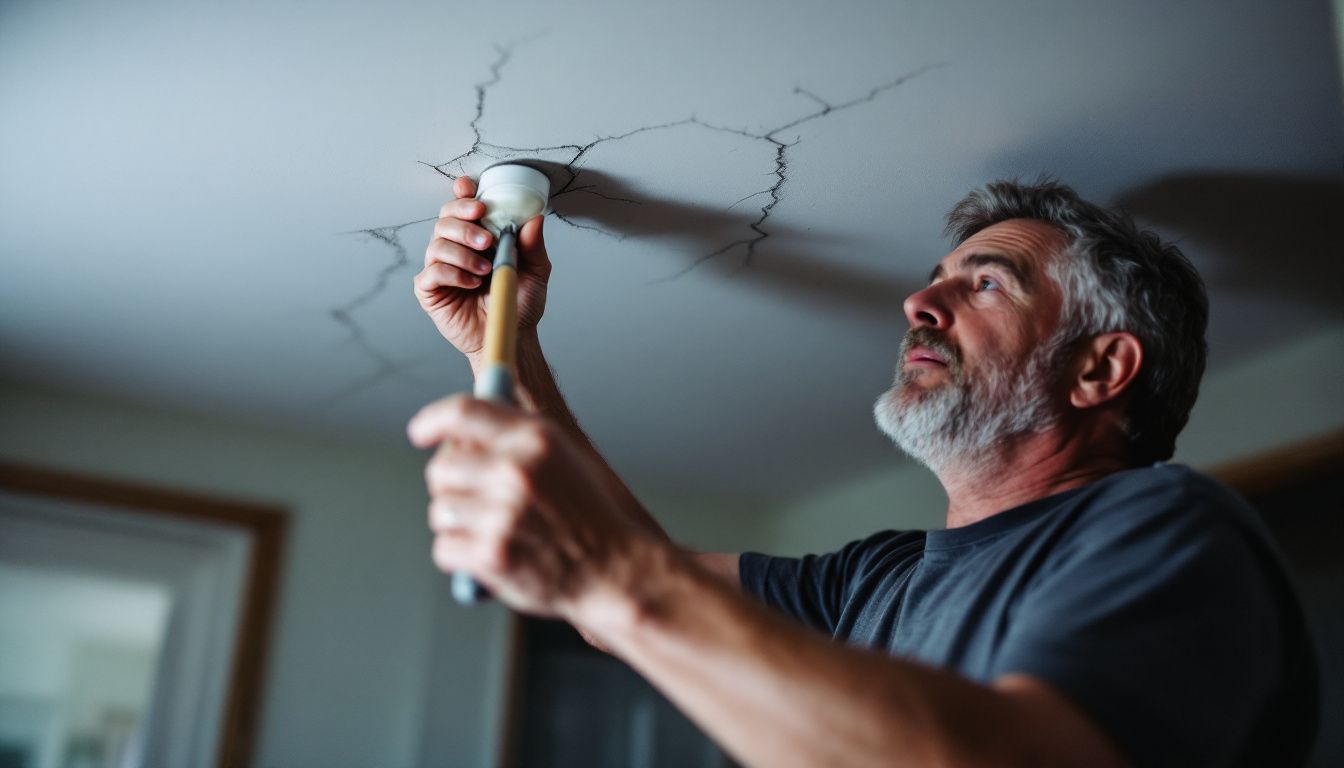
The testing process almost always begins with a thorough visual inspection of the property. A qualified surveyor will walk through the building, examining materials known to have historically contained asbestos — things like ceiling tiles, floor tiles, pipe lagging, textured coatings (such as Artex), roofing felt, and insulation boards.
During this stage, the surveyor is looking for visual clues: the age of the material, its physical appearance, its location within the building, and whether it shows signs of damage or deterioration. Materials commonly manufactured with asbestos during certain periods will be flagged for sampling.
A visual inspection is a starting point, not a conclusion. Even the most experienced surveyor cannot tell you whether a material contains asbestos just by looking at it. What the visual inspection does is identify which materials are suspicious and need to be sampled.
What Gets Flagged During a Visual Survey?
- Textured wall and ceiling coatings in pre-2000 buildings
- Insulation around boilers, pipes, and heating systems
- Ceiling tiles and floor tiles, particularly vinyl floor tiles
- Roofing sheets and guttering made from cement-based materials
- Partition walls and fire doors in commercial premises
- Sprayed coatings on structural steelwork
- Rope seals and gaskets in older plant rooms
Once suspicious materials are identified, the surveyor moves on to the sampling stage. The type of survey being carried out will also shape what happens next — a management survey focuses on materials likely to be disturbed during normal occupation, whereas a refurbishment or demolition survey is far more intrusive.
Stage Two: Sample Collection — How It’s Done Safely
This is where asbestos testing begins in earnest. A trained technician collects small samples from the suspect materials identified during the visual survey. This process requires strict safety controls, because disturbing a material that contains asbestos — even briefly — can release fibres.
Professional sample collection follows HSE guidance and involves appropriate personal protective equipment (PPE), including disposable coveralls, gloves, and a half-face respirator with a P3 filter. The area around the sample point is often dampened to suppress any fibre release, and the sample is taken quickly and carefully to minimise disturbance.
Once collected, the sample is sealed in a labelled, airtight container and logged with a unique reference number. The area where the sample was taken is then sealed with a small piece of tape or filler to prevent any residual fibres from becoming airborne.
How Many Samples Are Needed?
The number of samples required depends on the size of the property, the number of suspect materials, and the type of survey being conducted. As a general principle, each distinct material in each distinct location should be sampled separately — a single room might require multiple samples if several different suspect materials are present.
HSG264, the HSE’s guidance document on asbestos surveys, sets out the approach surveyors should follow when determining sample numbers and locations. Reputable surveyors will always err on the side of taking more samples rather than fewer — under-sampling can lead to missed ACMs, which creates ongoing risk.
Stage Three: Laboratory Analysis — The Science Behind the Results
Once samples have been collected, they are sent to an accredited laboratory for analysis. This is the definitive stage of the process — the point at which it’s confirmed whether asbestos is present, and if so, which type.
Laboratories used for asbestos analysis in the UK must be accredited by the United Kingdom Accreditation Service (UKAS). This accreditation ensures the laboratory meets the required standards for competence, impartiality, and consistent performance. Always check that any laboratory used for your samples holds current UKAS accreditation.
Polarised Light Microscopy (PLM)
The most widely used method for bulk sample analysis is Polarised Light Microscopy (PLM). A small portion of the sample is prepared and examined under a microscope using polarised light. Different types of asbestos fibres have distinct optical properties — they refract and reflect light in characteristic ways that allow an analyst to identify them.
PLM can identify all six regulated types of asbestos: chrysotile (white asbestos), amosite (brown asbestos), crocidolite (blue asbestos), anthophyllite, tremolite, and actinolite. It’s a reliable, cost-effective method for bulk material testing and is the standard approach used in UK laboratories for most survey samples.
Transmission Electron Microscopy (TEM)
For situations where greater sensitivity is required — particularly for air monitoring or where very low fibre concentrations need to be detected — Transmission Electron Microscopy (TEM) may be used. TEM uses a beam of electrons rather than light to image samples, allowing analysts to identify individual fibres at nanometre scale.
TEM is significantly more expensive than PLM and requires specialist equipment and expertise. It’s typically used in clearance air testing after asbestos removal work, or in situations where contamination is suspected but PLM has returned a negative result.
Phase Contrast Microscopy (PCM)
Phase Contrast Microscopy is used primarily for air sampling — measuring the concentration of airborne fibres in a given environment. It counts fibres rather than identifying them by type, so it doesn’t distinguish between asbestos and non-asbestos fibres.
PCM is used as part of the four-stage clearance procedure following licensed asbestos removal work. It provides a rapid indication of whether fibre levels in the air are within acceptable limits before an area is reoccupied.
Air Monitoring: Testing the Environment, Not Just the Materials
In some situations, testing the air itself is necessary — particularly during or after disturbance of known or suspected ACMs, or as part of a clearance inspection following removal work. Air monitoring involves drawing a measured volume of air through a filter membrane over a set period of time.
The filter is then analysed using PCM or TEM to count and, where necessary, identify the fibres present. Air monitoring is a specialist activity and should only be carried out by qualified professionals. It provides a snapshot of fibre concentrations at a particular moment in time and is a key component of demonstrating that an area is safe to reoccupy following remediation work.
DIY Asbestos Testing Kits: What You Need to Know
For homeowners who want to check a specific material in a domestic property, a DIY asbestos testing kit is an accessible option. These kits allow you to collect a small sample yourself and send it to an accredited laboratory for sample analysis.
A good quality testing kit will include everything you need: a sample collection bag, protective gloves, clear instructions, and a prepaid returns envelope. The laboratory will send you a written report confirming whether asbestos was detected and, if so, which type.
There are some important limitations to be aware of:
- DIY sampling carries a risk of fibre release if not done carefully — always follow the instructions precisely
- A DIY kit tests only the specific material you sample — it doesn’t give you a picture of the whole property
- Results from a DIY kit are not a substitute for a formal asbestos survey in commercial or rented properties
- If you are in any doubt about how to collect a sample safely, contact a professional surveyor instead
DIY kits are best suited to homeowners who want to check a single suspect material — for example, before undertaking renovation work. They are not appropriate for duty holders managing commercial premises, where a formal survey is required by law.
Understanding Your Laboratory Report
Once the laboratory has completed its analysis, you’ll receive a written report. Understanding what this report tells you is important for making informed decisions about risk management.
A typical laboratory report will include:
- Sample reference number — linking the result to a specific material and location in the property
- Material description — what the sample appeared to be (e.g. textured coating, insulation board)
- Analytical method used — PLM, TEM, or PCM
- Result — whether asbestos was detected, and if so, the fibre type(s) identified
- Reporting limit — the minimum concentration the method can reliably detect
- Analyst’s comments — any additional observations relevant to the result
If asbestos is confirmed, the report will identify the type present. This matters because different fibre types carry different levels of risk — crocidolite (blue asbestos) and amosite (brown asbestos) are generally considered more hazardous than chrysotile (white asbestos), though all types are dangerous and none should be treated as safe.
What Happens After a Positive Result?
A positive asbestos result doesn’t automatically mean the material needs to be removed immediately. The appropriate course of action depends on the condition of the material, its location, and the likelihood of it being disturbed.
ACMs in good condition and in locations where they are unlikely to be disturbed can often be managed in place — monitored regularly and recorded in an asbestos register. Materials that are damaged, deteriorating, or in areas where disturbance is likely will typically need to be either encapsulated or removed by a licensed contractor.
Your surveyor will provide recommendations based on the survey findings, and any removal work must be carried out in accordance with the Control of Asbestos Regulations. Licensed removal is required for the most hazardous materials, including sprayed coatings, lagging, and most insulation board.
Choosing the Right Type of Survey
The type of survey you need depends on what you’re trying to achieve. HSG264 defines two main types of asbestos survey, and understanding the difference is essential before you commission any work.
Management Survey
A management survey is the standard survey required for managing ACMs in an occupied building during normal use. It identifies ACMs that could be disturbed during everyday activities and assesses their condition. This is what most duty holders need to fulfil their legal obligations under the Control of Asbestos Regulations.
Refurbishment and Demolition Survey
A refurbishment or demolition survey is required before any work that will disturb the building fabric — whether that’s a minor refurbishment or full demolition. It is far more intrusive than a management survey and is designed to locate all ACMs in the relevant areas, including those that are hidden or inaccessible during normal occupation.
Getting the survey type wrong can have serious legal and safety consequences. If you’re unsure which survey applies to your situation, speak to a qualified surveyor before proceeding.
Where Asbestos Testing Is Available Across the UK
Supernova Asbestos Surveys provides professional asbestos testing services across the whole of the UK. Whether you’re managing a commercial property in the capital and need an asbestos survey London team to attend quickly, or you’re based in the north and need an asbestos survey Manchester appointment, we have qualified surveyors ready to help.
We also cover the Midlands extensively — if you need an asbestos survey Birmingham, our local team can be with you promptly. With over 50,000 surveys completed nationwide, we have the experience and accreditation to handle projects of any size or complexity.
Frequently Asked Questions
How does asbestos testing work in a commercial building?
In a commercial building, asbestos testing typically begins with a qualified surveyor carrying out a visual inspection to identify suspect materials. Small samples are then collected from those materials under strict safety controls and sent to a UKAS-accredited laboratory for analysis. The laboratory uses techniques such as Polarised Light Microscopy (PLM) to confirm whether asbestos is present and identify the fibre type. The surveyor then produces a report with findings and recommendations, which forms the basis of your asbestos management plan.
Can I test for asbestos myself at home?
Yes, for domestic properties, a DIY asbestos testing kit allows you to collect a sample from a specific suspect material and send it to an accredited laboratory for analysis. However, you must follow the instructions carefully to avoid releasing fibres during collection. DIY kits are suitable for checking a single material — they do not provide a whole-property assessment and are not a legal substitute for a formal survey in rented or commercial premises.
How long does asbestos testing take?
The on-site survey itself can typically be completed in a few hours for a standard commercial property, though larger or more complex buildings may take longer. Laboratory turnaround times vary — standard results are usually returned within five to seven working days, though many laboratories offer an expedited service if results are needed urgently. Your surveyor will be able to give you a realistic timescale before work begins.
What happens if asbestos is found?
A positive result does not automatically mean the material must be removed. If the ACM is in good condition and unlikely to be disturbed, it can often be managed in place and monitored as part of an ongoing asbestos management plan. If the material is damaged or in a high-risk location, encapsulation or removal by a licensed contractor will be recommended. Your surveyor will advise on the most appropriate course of action based on the specific findings.
Do I need a licensed contractor to remove asbestos?
It depends on the type and condition of the material. The most hazardous ACMs — including sprayed coatings, pipe lagging, and most insulation board — must be removed by a contractor licensed by the HSE under the Control of Asbestos Regulations. Some lower-risk materials may be removed by an unlicensed contractor following notification procedures, and a small category of materials can be handled without notification. A qualified surveyor will be able to advise which category applies to the materials identified in your building.
Get Professional Asbestos Testing From Supernova
If you need to understand how does asbestos testing work for your specific property — or you’re ready to book a survey — Supernova Asbestos Surveys is here to help. With over 50,000 surveys completed across the UK, our UKAS-accredited team provides fast, reliable results and clear, actionable reports.
Call us on 020 4586 0680 or visit asbestos-surveys.org.uk to get a quote or book your survey today. Don’t leave asbestos risk to chance — get the answers you need from people who know exactly what they’re doing.