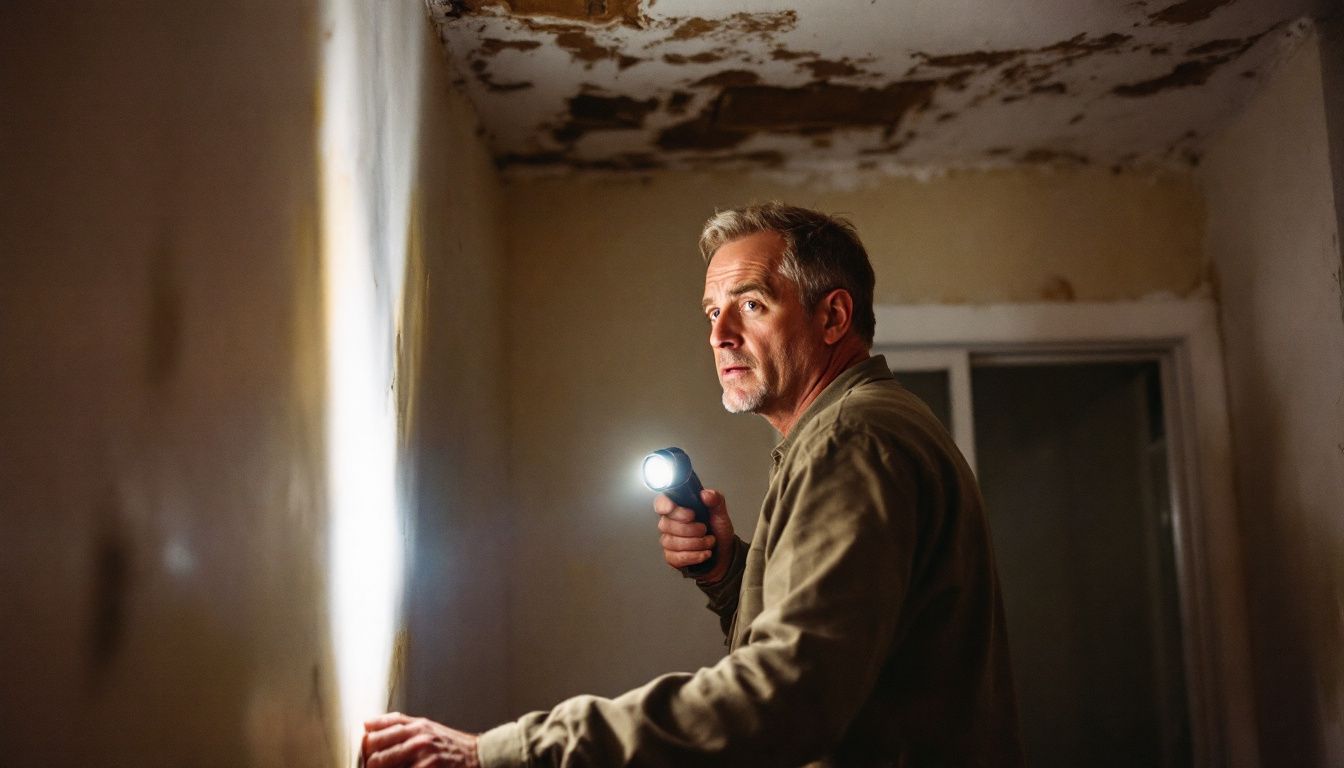
What the Asbestos Testing Process Actually Involves — and How to Prepare Your Property
If you own or manage a building constructed before 2000, the asbestos testing process is something you need to understand in practical, actionable terms. Asbestos-containing materials (ACMs) were used extensively throughout UK construction until the full ban in 1999, and disturbing them without knowing what you’re dealing with puts lives at risk.
Getting your property tested is straightforward when you know what to expect. This post walks you through every stage — from booking to report delivery — so you can approach the process with confidence and stay on the right side of UK law.
Why the Asbestos Testing Process Matters
Asbestos fibres are invisible to the naked eye. When materials containing asbestos are disturbed — during drilling, cutting, or renovation — those fibres become airborne and can be inhaled deep into the lungs. Long-term exposure is linked to mesothelioma, asbestosis, and lung cancer, all of which can take decades to develop after initial exposure.
You cannot identify asbestos by looking at a material. Textured coatings, floor tiles, pipe lagging, and cement sheeting can all contain asbestos and appear completely normal. Only laboratory analysis of a physical sample can confirm its presence or absence.
Under the Control of Asbestos Regulations, duty holders managing non-domestic premises are legally required to identify ACMs, assess their condition, and maintain an up-to-date asbestos register. Getting the testing process right is the foundation of that legal obligation — and the starting point for protecting everyone who uses your building.
Where Asbestos Is Commonly Found in UK Buildings
Before preparing your property for testing, it helps to know where surveyors typically look. Asbestos was used in a remarkably wide range of building products, so the list of potential locations is longer than most people expect.
Common locations include:
- Textured coatings such as Artex on ceilings and walls
- Floor tiles and the adhesive used beneath them
- Pipe and boiler insulation
- Roof tiles, soffits, and fascias
- Cement sheets used in outbuildings, garages, and roofing
- Ceiling tiles and partition boards
- Insulating board around fire doors and service ducts
- Rope seals and gaskets in older heating systems
Any pre-2000 building — residential or commercial — could contain ACMs in one or more of these locations. The age and type of construction will influence where a surveyor focuses their attention during the inspection.
The Different Types of Asbestos Survey
The asbestos testing process begins with selecting the right type of survey for your situation. There is no single survey that fits every circumstance, and choosing the wrong one could leave you non-compliant or unaware of genuine risks on your property.
Management Survey
A management survey is the standard survey for occupied buildings. It identifies ACMs that could be disturbed during normal use and maintenance, assesses their condition, and produces a risk-rated register. This is the survey most duty holders need to fulfil their ongoing legal obligations under the Control of Asbestos Regulations.
Refurbishment Survey
If you’re planning building work, a refurbishment survey is required before any work begins. This is a more intrusive survey — surveyors access areas that would normally remain undisturbed, including inside walls and above ceiling voids. It must be completed before contractors start work to protect them from unknowing exposure.
Demolition Survey
Before any structure is demolished, a demolition survey is legally required. This is the most thorough and intrusive type of survey, covering the entire building to ensure all ACMs are identified and safely managed or removed before demolition work proceeds.
Re-inspection Survey
Once ACMs have been identified and recorded, they need to be monitored over time. A re-inspection survey checks the condition of known ACMs and updates their risk rating. Most duty holders should arrange re-inspections annually, though the required frequency depends on the condition and type of material involved.
How to Prepare Your Property for Asbestos Testing
Preparation makes the surveyor’s job easier and your results more reliable. A poorly prepared property can lead to missed areas, delayed reports, or the need for a return visit — all of which cost time and money.
Provide Full Access to All Areas
Surveyors need to inspect every part of the building that might contain ACMs. That includes roof spaces, basement areas, plant rooms, service ducts, and any locked or restricted zones. Arrange keys, access codes, and relevant permissions well before the survey date.
If certain areas are occupied — for example, individual offices or residential units in a multi-occupancy building — notify those occupants in advance. A surveyor who cannot access an area cannot assess it, and incomplete surveys leave gaps in your legal documentation.
Clear Clutter and Obstructions
Storage rooms, loft spaces, and utility areas are often packed with items that block access to walls, floors, and ceilings. Move boxes, furniture, and equipment away from areas the surveyor will need to inspect.
Pay particular attention to areas around boilers, pipe runs, and ceiling access hatches. These are common locations for ACMs and are frequently obstructed in older buildings.
Gather Existing Building Documentation
If you have any existing asbestos records — previous survey reports, asbestos registers, or contractor records — have these ready for the surveyor. They provide useful context and may reduce the scope of sampling needed.
Original building plans or refurbishment records can also help identify materials used during construction. Even partial records are worth sharing.
Inform Occupants and Staff
Let building users know that a survey is taking place. In occupied commercial premises, this means informing staff and, where relevant, tenants. Surveyors take small samples from suspect materials — this is minimally disruptive, but people should be aware it’s happening.
For larger sites, consider scheduling the survey outside of peak hours to minimise disruption to day-to-day operations.
Do Not Disturb Suspect Materials
If you suspect a material might contain asbestos, do not touch, drill, cut, or disturb it before the survey. Even well-intentioned preparation — like removing a ceiling tile to check what’s behind it — can release fibres into the air.
Leave all suspect materials exactly as they are until the surveyor has assessed them. This protects both you and anyone else in the building.
The Asbestos Testing Process Step by Step
Once your property is ready, here is what the asbestos testing process looks like from start to finish. Understanding each stage helps you know what to expect and ensures nothing falls through the cracks.
- Booking and confirmation — Contact a UKAS-accredited surveying company and provide details about the property type, size, age, and purpose of the survey. You’ll receive a booking confirmation with the surveyor’s name and expected arrival time.
- Site visit and visual inspection — A qualified surveyor — ideally holding a BOHS P402 qualification — will attend and systematically work through the building, identifying materials that could potentially contain asbestos based on their appearance, location, and the building’s construction type and age.
- Sample collection — Where suspect materials are identified, the surveyor takes small physical samples using containment procedures to prevent fibre release. Samples are labelled, sealed, and logged against their exact location. The surveyor will make good any minor damage caused by sampling.
- Laboratory analysis — Samples are sent to a UKAS-accredited laboratory and analysed under polarised light microscopy (PLM). This identifies whether asbestos is present and, if so, which type — chrysotile (white), amosite (brown), or crocidolite (blue). Each type carries a different risk profile.
- Report delivery — You receive a written report, typically within three to five working days, produced in line with HSG264 guidance. This becomes your primary compliance document.
For a full breakdown of what professional asbestos testing involves at every stage, including laboratory procedures, our services page covers the process in detail.
What Your Report Should Include
A compliant survey report produced in accordance with HSG264 guidance will include the following as a minimum:
- An executive summary of findings
- A full asbestos register listing all ACMs identified
- Risk ratings for each material based on type, condition, and location
- Management recommendations — whether to monitor, encapsulate, or arrange removal
- Floor plans or diagrams showing the location of ACMs
- Laboratory certificates confirming analysis results
This report becomes your primary compliance document. Keep it on site, make it available to contractors before they begin any work, and update it as conditions change or re-inspections are carried out.
Air Testing — When Is It Required?
Bulk sampling and laboratory analysis confirm whether asbestos is present in materials. Air testing is a separate process that measures fibre concentrations in the air — typically used after asbestos removal work to confirm that an area is safe to reoccupy.
The main types of air testing used in practice are:
- Reassurance air testing — confirms that fibre levels are within acceptable limits in occupied areas
- Background air testing — establishes baseline fibre levels before any work begins
- Personal air testing — monitors exposure levels for workers during asbestos-related work
- Clearance air testing — confirms that a previously contaminated area is safe following licensed removal work
If you’re unsure whether air testing is relevant to your situation, speak to a qualified surveyor who can advise based on your specific circumstances and the nature of any planned works.
What Happens If Asbestos Is Found?
Finding asbestos in your building does not automatically mean it needs to be removed. Many ACMs in good condition and in low-disturbance locations are best left in place and managed — disturbing them unnecessarily creates more risk, not less.
Your survey report will include a recommendation for each identified material:
- Monitor — the material is in good condition and poses low risk; it should be recorded and checked at re-inspection
- Encapsulate — the material’s surface is sealed to prevent fibre release without full removal
- Remove — the material is damaged, deteriorating, or in a location where disturbance is unavoidable
Where asbestos removal is recommended, it must be carried out by a licensed contractor for most types of ACM. Licensed removal involves controlled conditions, specialist equipment, and air monitoring throughout the process.
DIY Sample Testing — Is It an Option?
For property owners who want to test a specific material themselves before commissioning a full survey, a testing kit is available. This allows you to collect a sample from an accessible, low-risk area and send it to a laboratory for analysis.
DIY sampling has its limits. It is suitable for straightforward bulk sampling of a single material in a clearly accessible location. It is not a substitute for a professional survey, which covers the entire building systematically and produces a legally compliant register.
If you’re about to undertake any building work, or if you have a legal duty to manage asbestos in a non-domestic premises, a professional survey is the appropriate route — not a self-sample kit. You can learn more about the full range of options available through our dedicated asbestos testing page.
UK Regulations Governing the Asbestos Testing Process
Understanding your legal obligations ensures you approach the asbestos testing process correctly from the outset. The key pieces of legislation and guidance you need to be aware of are:
- The Control of Asbestos Regulations — the primary legislation governing the management, identification, and removal of asbestos in UK buildings. Regulation 4 places a specific duty on those who manage non-domestic premises to manage asbestos risks.
- HSG264 — the HSE’s guidance document on asbestos surveying, which sets out the standards surveyors must follow when conducting surveys and producing reports. Any survey report you receive should be produced in accordance with this guidance.
- HSE guidance on licensed and non-licensed work — determines which types of asbestos work require a licensed contractor and which can be carried out under notification or without a licence.
Non-compliance is not a minor administrative issue. Duty holders who fail to manage asbestos correctly face enforcement action from the HSE, including improvement notices, prohibition notices, and prosecution. The personal liability for directors and managers can be significant.
Asbestos Testing Across the UK — What to Expect Locally
The asbestos testing process follows the same standards across the UK regardless of location, but the practical logistics — including access, building type, and scheduling — can vary depending on where your property is situated.
If you’re based in the capital and need an asbestos survey in London, our surveyors operate across all London boroughs and can accommodate commercial, residential, and mixed-use properties of all sizes. For those in the north of England, our team providing asbestos surveys in Manchester covers the Greater Manchester area and surrounding regions with the same level of UKAS-accredited service.
Wherever your property is located, the same professional standards, HSG264-compliant reporting, and UKAS-accredited laboratory analysis apply. You should never accept a survey that falls short of these benchmarks.
Common Mistakes to Avoid Before and During the Survey
Even well-prepared property managers occasionally make avoidable errors that complicate the asbestos testing process. Here are the most common ones to watch out for:
- Booking the wrong survey type — A management survey is not sufficient if you’re planning refurbishment work. Always clarify your intentions with the surveying company at the point of booking.
- Failing to disclose previous work — If contractors have already worked on the building, tell the surveyor. Previous disturbance may have spread fibres or altered the condition of known ACMs.
- Not sharing existing records — Previous survey reports save time and improve accuracy. Withholding them — even unintentionally — can result in unnecessary sampling or missed context.
- Assuming a clean survey means no asbestos — A survey can only assess what is accessible and visible at the time of inspection. Some materials may be concealed behind later finishes and only identified during more intrusive surveys.
- Leaving the report unfiled — Your survey report has no value sitting in an email inbox. Print it, file it, and ensure it is accessible to anyone who carries out work on the building.
Frequently Asked Questions
How long does the asbestos testing process take?
The on-site survey typically takes between two and eight hours depending on the size and complexity of the property. Laboratory analysis of samples usually takes two to three working days, with a full written report delivered within three to five working days of the site visit. Turnaround times can vary between providers, so confirm expected timescales when booking.
Do I need an asbestos survey if my building was built after 2000?
The full ban on asbestos use in the UK came into force in 1999. Buildings constructed entirely after this date are very unlikely to contain ACMs, and a formal survey is generally not required unless there is a specific reason to suspect asbestos is present — for example, if the building incorporates older materials or was built on a site with pre-existing structures.
Can I stay in the building during the asbestos testing process?
In most cases, yes. A management survey is designed to be carried out in occupied buildings with minimal disruption. Surveyors use containment procedures when taking samples to prevent fibre release. However, for more intrusive refurbishment or demolition surveys, it may be necessary to restrict access to certain areas during the inspection.
What qualifications should my asbestos surveyor hold?
Look for surveyors holding the BOHS P402 qualification, which is the recognised industry standard for asbestos surveying in the UK. The surveying company should also be UKAS-accredited, and samples should be analysed by a UKAS-accredited laboratory. These accreditations provide independent assurance that the work meets the required standards.
How often do I need to repeat the asbestos testing process?
A full management survey does not typically need to be repeated unless the building undergoes significant changes. However, the asbestos register must be kept up to date, and a re-inspection survey should be carried out at least annually to check the condition of known ACMs. If you’re planning any building work, a refurbishment survey will be required before work begins regardless of when the last management survey was conducted.
Get Professional Asbestos Testing With Supernova
Supernova Asbestos Surveys has completed over 50,000 surveys across the UK, working with property managers, landlords, local authorities, and commercial clients of all sizes. Our surveyors hold recognised industry qualifications, and all samples are analysed by UKAS-accredited laboratories.
Whether you need a management survey for an occupied building, a refurbishment survey ahead of planned works, or straightforward bulk sampling, our team will guide you through the entire asbestos testing process from first contact to final report.
Call us on 020 4586 0680 or visit asbestos-surveys.org.uk to book your survey or request a quote.