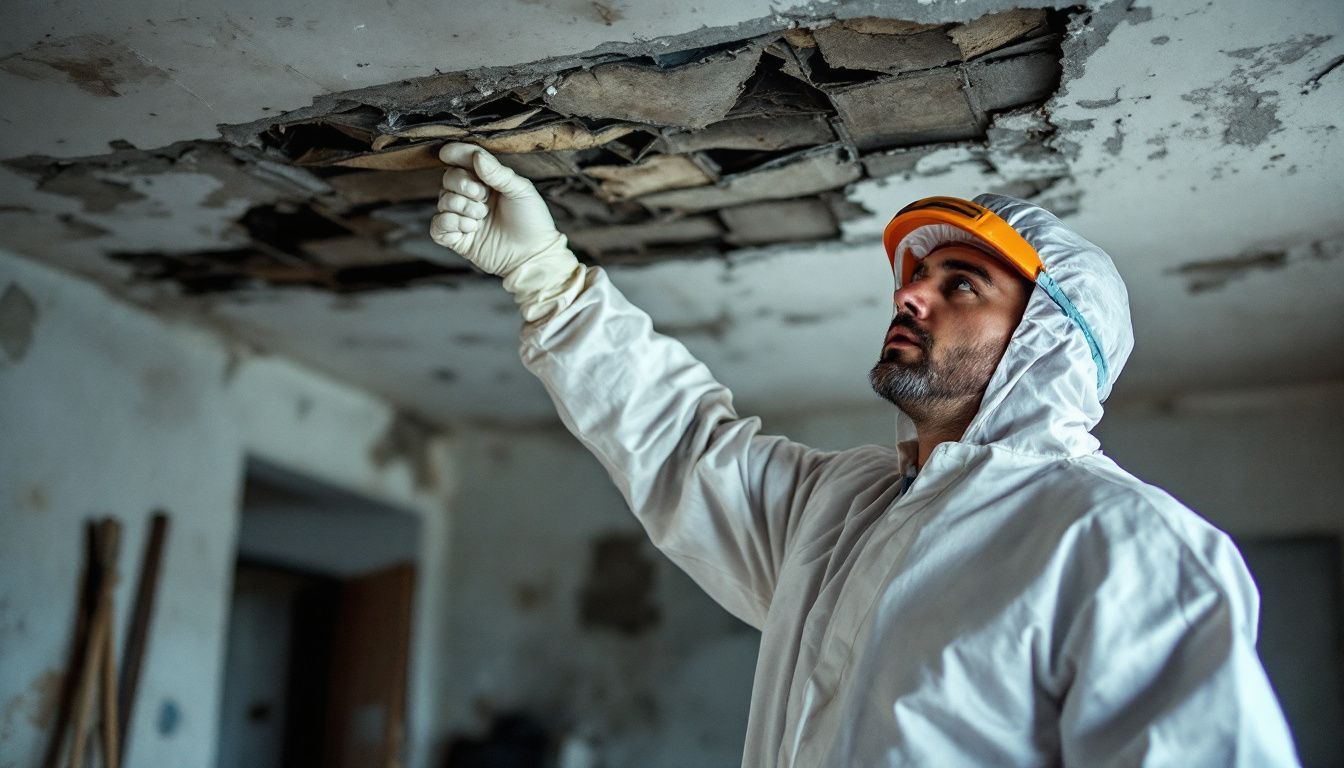
What to Do When Asbestos Contamination Is Confirmed in Your Building
A positive asbestos test result changes everything. Asbestos contamination is not a paperwork problem — it is a genuine, serious health hazard that demands a structured, legally compliant response from the moment it is confirmed.
The fibres released by disturbed asbestos-containing materials (ACMs) are invisible to the naked eye, yet they can cause mesothelioma, asbestosis, and lung cancer decades after a single exposure event. If your building was constructed or refurbished before 2000, the likelihood of finding ACMs is significant.
The UK banned the final form of asbestos — chrysotile — in 1999, but millions of properties still contain materials installed in earlier decades. Knowing how to respond after contamination is confirmed is just as important as the testing itself. Here is exactly what you need to do.
Understanding the Scope of Asbestos Contamination
Not all asbestos contamination carries the same level of risk. The first step after a positive result is understanding precisely what you are dealing with — the type of asbestos, the condition of the material, and the likelihood of fibre release.
There are three main types of asbestos found in UK buildings:
- Chrysotile (white asbestos) — the most common type, frequently found in cement sheets, floor tiles, and roofing products
- Amosite (brown asbestos) — widely used in insulation boards and ceiling tiles
- Crocidolite (blue asbestos) — considered the most hazardous, used in pipe lagging and spray coatings
The condition of the material matters enormously. ACMs in good condition that are unlikely to be disturbed may be safely managed in place. Damaged, friable, or deteriorating materials present a far higher risk of fibre release and typically require more urgent intervention.
A qualified surveyor will assess each ACM using a risk-scoring system that considers material condition, surface treatment, extent of damage, and the likelihood of disturbance. This assessment forms the foundation of every decision that follows.
Immediate Steps After Asbestos Contamination Is Confirmed
Once contamination is confirmed through laboratory analysis, there is a clear sequence of actions to follow. Acting quickly and methodically protects both occupants and workers — and keeps you on the right side of the Control of Asbestos Regulations.
Secure the Affected Area
The immediate priority is preventing further disturbance of the ACM. Restrict access to the affected area and clearly mark it with appropriate hazard signage. If the material is already damaged or actively releasing fibres, the area must be sealed off entirely until a licensed contractor can attend.
Do not attempt to clean up asbestos debris with a standard vacuum cleaner. Domestic hoovers spread fibres rather than contain them — only HEPA-filtered equipment specifically designed for asbestos work should ever be used in a contaminated area.
Notify the Relevant Parties
Depending on the nature of the contamination and the type of work involved, you may have formal notification obligations. Under the Control of Asbestos Regulations, certain licensable asbestos work must be notified to the relevant enforcing authority — either the HSE or the local authority — at least 14 days before work begins.
Building occupants, employees, and any contractors working in or near the affected area must also be informed. This is not optional — it is a legal requirement under the duty to manage asbestos in non-domestic premises.
Commission the Right Type of Survey
If you have not already had a full survey carried out, now is the time. A management survey will identify all ACMs across the property, assess their condition, and produce a risk-rated register that tells you exactly where the hazards are and what priority to assign to each one.
If you are planning any construction, renovation, or refurbishment work, a refurbishment survey is legally required before work begins. This type of survey is more intrusive than a management survey — it accesses areas that will be disturbed during the works to ensure no ACMs are missed.
For properties scheduled for full demolition, a demolition survey is required. This is the most thorough form of survey available and must be completed before any demolition activity takes place.
Implementing Safety Measures on Site
Once the scope of asbestos contamination is understood, appropriate safety controls must be put in place. These are legal obligations under the Control of Asbestos Regulations and the associated HSE guidance document HSG264.
Occupational Risk Assessment
Before any work on or near ACMs begins, a formal occupational risk assessment must be completed. This document identifies who could be exposed, how exposure might occur, and what controls are needed to reduce risk to the lowest reasonably practicable level.
The assessment must be completed by a competent person — someone with the training, knowledge, and experience to make accurate judgements about asbestos risk. For anything beyond minor non-licensable work, that means a qualified professional.
Personal Protective Equipment
All workers entering a contaminated area must be equipped with appropriate PPE. This includes:
- Disposable coveralls — minimum Type 5, Category 3
- Respiratory protective equipment (RPE) — typically a half-face FFP3 mask or full-face respirator depending on the risk level
- Disposable gloves and overshoes
RPE must be correctly fitted and face-fit tested for each individual wearing it. An ill-fitting mask provides little meaningful protection against asbestos fibres — this step cannot be skipped.
Airborne Fibre Monitoring
During any work involving ACMs, airborne fibre concentrations should be monitored. The HSE sets a workplace exposure limit (WEL) for asbestos of 0.1 fibres per cubic centimetre of air, averaged over a four-hour period.
Monitoring ensures this limit is not exceeded and provides documented evidence of safe working conditions — which is essential if you are ever asked to demonstrate compliance with regulators or during a legal challenge.
Licensing Requirements
Not all asbestos work can be carried out by general contractors. Work involving the most hazardous materials — such as sprayed coatings, asbestos insulation, and asbestos insulating board in poor condition — must be carried out by a contractor holding a current HSE licence.
Engaging an unlicensed contractor for licensable work is a criminal offence. Always verify a contractor’s licence status on the HSE register before allowing any work to proceed.
Asbestos Removal: When It Is and Is Not Required
A common misconception is that all asbestos contamination must be removed immediately. In reality, removal is not always the safest or most appropriate option. Disturbing ACMs that are in good condition can create significantly more risk than leaving them in place under a carefully managed plan.
Removal is typically required when:
- The material is badly damaged or deteriorating and cannot be repaired
- Planned refurbishment or demolition work will disturb the ACM
- The material is in a location where it is likely to be repeatedly disturbed
- The risk assessment concludes that management in place is no longer viable
Where removal is the right course of action, only a licensed contractor should carry out the asbestos removal work. They will establish a controlled work area, use appropriate containment and extraction equipment, and ensure that all waste is correctly packaged and disposed of at a licensed facility.
Where ACMs are in acceptable condition and the risk is low, a management plan — supported by regular re-inspection survey visits — is often the most appropriate approach. Re-inspection surveys check the condition of known ACMs at regular intervals, typically annually, to ensure nothing has deteriorated since the last assessment.
Proper Disposal of Asbestos Waste
Asbestos waste is classified as hazardous waste under UK environmental legislation. Its disposal is strictly controlled, and non-compliance can result in significant fines and prosecution.
The correct procedure for asbestos waste disposal involves:
- Double wrapping — all asbestos waste must be double-bagged or wrapped in heavy-duty polythene sheeting, with each layer sealed securely
- Labelling — waste must be clearly labelled with the appropriate asbestos hazard warning
- Consignment notes — hazardous waste consignment notes must accompany all asbestos waste during transport
- Licensed disposal site — waste must be taken to a site licensed to accept hazardous asbestos waste; it cannot be placed in general waste skips or taken to a standard household recycling centre
Your licensed asbestos removal contractor will manage the waste disposal process and provide you with the documentation you need to demonstrate compliance. Keep these records carefully — they may be requested by regulators or required during future property transactions.
Your Legal Obligations Under UK Asbestos Regulations
Asbestos contamination triggers a range of legal obligations that vary depending on whether you are a duty holder, employer, or contractor. Ignorance of the law is not a defence, and the penalties for non-compliance are serious.
The Control of Asbestos Regulations place a duty to manage asbestos on the owners and managers of non-domestic premises. This duty requires you to:
- Identify the location and condition of ACMs in your building
- Assess the risk from those materials
- Produce and maintain a written asbestos management plan
- Share information about ACMs with anyone who might disturb them
- Monitor the condition of ACMs regularly
HSG264 — the HSE’s definitive guide to asbestos surveying — provides detailed technical guidance on how surveys should be planned, conducted, and reported. Any survey you commission should be fully compliant with HSG264 to be legally defensible.
If your property also requires a fire risk assessment, this is a separate legal obligation that runs alongside asbestos management. Both should be kept current and reviewed whenever there are changes to the building or its use.
DIY Testing vs Professional Surveys
If you suspect asbestos contamination but have not yet had a formal survey, you have two initial options: a professional survey or a bulk sample testing kit.
A testing kit allows you to collect a small sample from a suspect material and send it to an accredited laboratory for analysis. This can be a cost-effective first step for homeowners who want to confirm whether a specific material contains asbestos before deciding on next steps.
However, a testing kit has clear limitations. It only tests the specific sample you collect — it does not give you a picture of the whole property, assess risk levels, or produce a management plan. For any commercial property, or for residential properties where works are planned, a full professional survey is the appropriate route.
Choosing the right type of survey matters too. A management survey suits occupied premises where no works are planned. A refurbishment or demolition survey is required wherever structural or intrusive work is about to take place. Getting this wrong can leave you legally exposed and your workforce unprotected.
Asbestos Contamination Across Different Property Types
The way asbestos contamination is handled can vary considerably depending on the type of property involved. Residential properties, commercial buildings, industrial sites, and public-sector premises each carry their own considerations under the Control of Asbestos Regulations.
For residential landlords, the duty to manage applies to the common parts of multi-occupancy buildings — corridors, stairwells, plant rooms, and shared facilities. Private homeowners are not subject to the same statutory duty, but they still have responsibilities when employing contractors to carry out work on their property.
Commercial and industrial properties tend to carry a higher density of ACMs, particularly in older stock built during the post-war decades when asbestos use was at its peak. Schools, hospitals, and other public buildings often present particularly complex asbestos management challenges due to the volume of people on site and the restrictions on when intrusive work can take place.
Wherever your property is located across the UK, local expertise matters. Whether you need an asbestos survey London, an asbestos survey Manchester, or an asbestos survey Birmingham, working with surveyors who understand the local building stock and regulatory environment makes a meaningful difference to the quality of the outcome.
Keeping Your Asbestos Records in Order
Good record-keeping is not just a bureaucratic exercise — it is a practical safeguard that protects you, your occupants, and your contractors. Every survey report, risk assessment, removal certificate, and waste consignment note should be stored securely and made readily accessible to anyone who needs it.
Your asbestos register must be updated every time an ACM is removed, encapsulated, or found to have changed in condition. An out-of-date register is almost as dangerous as having no register at all — contractors relying on inaccurate information may disturb materials they were never told existed.
When a property changes hands, the asbestos management plan and all supporting documentation must be passed to the new owner or occupier. Failing to do so can expose the seller to significant legal liability and leaves the incoming party without the information they need to manage the building safely.
Review your asbestos management plan at least annually, and immediately following any incident, change of use, or significant alteration to the building. A plan that was accurate three years ago may no longer reflect the current condition of the building or the ACMs within it.
Frequently Asked Questions
Does all asbestos contamination need to be removed immediately?
No. Asbestos contamination does not automatically require removal. ACMs that are in good condition and are unlikely to be disturbed can often be safely managed in place under a formal asbestos management plan. Removal is typically only required when materials are badly damaged, deteriorating, or will be disturbed by planned refurbishment or demolition work. A qualified surveyor will advise on the most appropriate course of action based on the specific condition and location of the material.
Who is legally responsible for managing asbestos contamination in a commercial building?
Under the Control of Asbestos Regulations, the duty to manage asbestos falls on the duty holder — typically the owner, employer, or person in control of non-domestic premises. This duty requires them to identify ACMs, assess the risk, produce a written management plan, and share information with anyone who might disturb the materials. Failure to comply is a criminal offence and can result in prosecution by the HSE.
Can I collect my own asbestos sample for testing?
It is possible to collect a sample yourself using an accredited testing kit, which allows you to send the sample to a laboratory for analysis. However, this approach has significant limitations — it only tests one specific material, does not assess overall risk across the property, and does not produce a management plan. For commercial premises or any property where work is planned, a full professional survey carried out by a qualified surveyor is the appropriate and legally defensible option.
How often should asbestos-containing materials be re-inspected?
The HSE recommends that known ACMs are re-inspected at regular intervals — typically at least once a year — to check whether their condition has changed. The frequency may need to increase if the materials are in a high-traffic area, subject to potential disturbance, or showing early signs of deterioration. A formal re-inspection survey carried out by a qualified surveyor provides a documented record that demonstrates ongoing compliance with your duty to manage.
What should I do if asbestos is accidentally disturbed?
Stop all work immediately and evacuate the affected area. Prevent anyone from re-entering until the area has been assessed by a licensed asbestos contractor. Do not attempt to clean up any debris yourself. Notify the relevant parties — including building occupants and, where required, the HSE or local authority. A licensed contractor will carry out a thorough assessment, arrange for air monitoring, and advise on the remediation steps needed before the area can safely be reoccupied.
Speak to Supernova Asbestos Surveys
Supernova Asbestos Surveys has completed over 50,000 surveys across the UK, helping property owners, managers, and employers respond to asbestos contamination with confidence and full legal compliance. From initial testing through to removal and ongoing management, our UKAS-accredited surveyors provide practical, expert guidance at every stage.
Whether you need a management survey, a refurbishment or demolition survey, or specialist advice on a complex contamination situation, we are here to help. Call us on 020 4586 0680 or visit asbestos-surveys.org.uk to find out more or book your survey today.