The Water Absorption Test for Asbestos: What It Is, How It Works, and Why It Matters
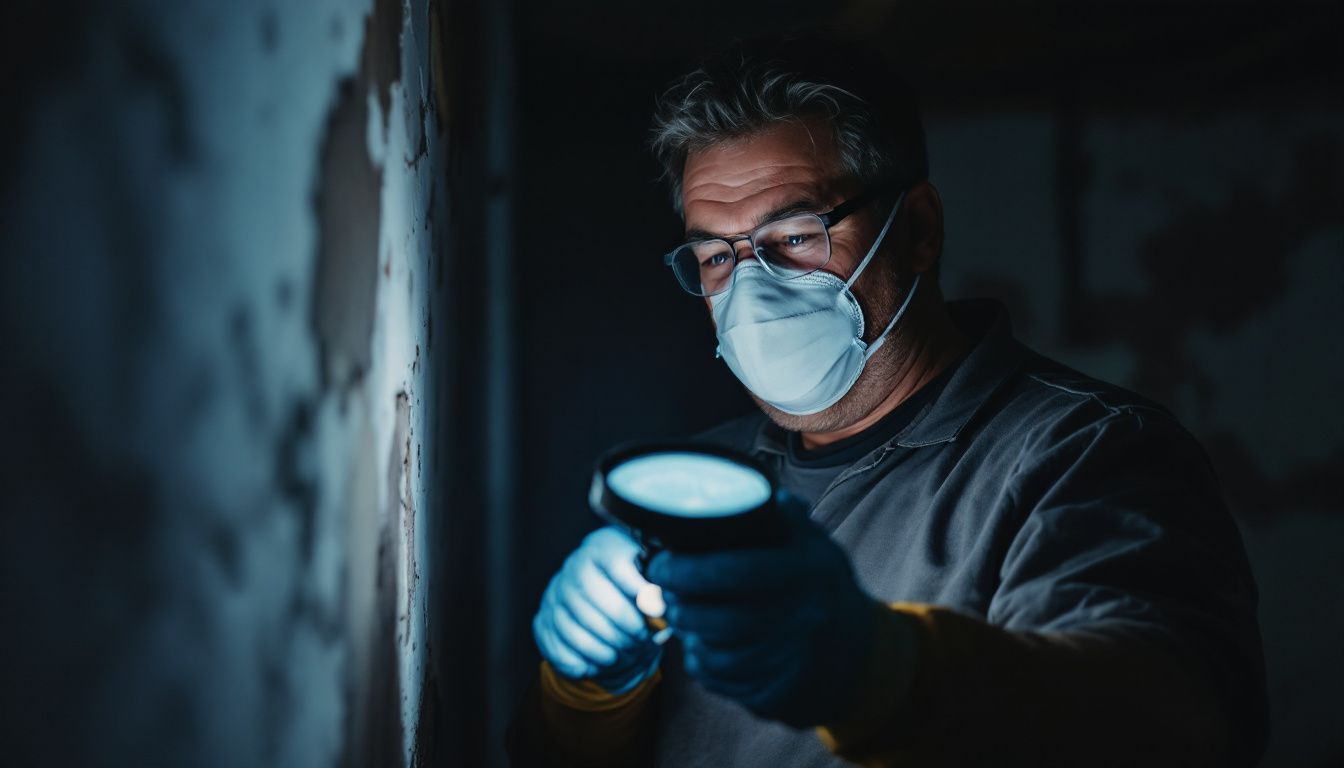
If you’ve ever watched a surveyor crouch down and place a single drop of water onto a ceiling tile or floor panel, you’ve witnessed the water absorption test for asbestos in action. It looks deceptively simple — and in some ways it is — but it’s a genuinely useful technique that helps trained professionals build a clearer picture of what a material might contain before any samples are taken.
This post explains exactly what the test involves, where it sits within a full professional asbestos survey, and — critically — what it can and cannot tell you. Whether you manage a commercial building, own a rental property, or simply want to understand what a surveyor is doing on your site, read on.
What Is the Water Absorption Test for Asbestos?
The water absorption test is a simple field technique used during asbestos inspections to help characterise suspect materials. It works on the principle that different building materials absorb water at different rates — and asbestos-containing materials (ACMs) often behave differently to their non-asbestos equivalents when a small drop of water is applied to the surface.
In practice, the surveyor places a small drop of water onto the suspect material and observes how quickly it is absorbed. Asbestos cement, for example, tends to absorb water more slowly than some non-asbestos cement products. That behaviour gives the surveyor a useful additional data point — not a verdict, but a meaningful observation within the broader context of the inspection.
To be absolutely clear: the water absorption test alone cannot confirm or rule out the presence of asbestos. It is always used as part of a wider assessment. Any suspect material must ultimately be sent for sample analysis at a UKAS-accredited laboratory to obtain a result that is scientifically robust and legally defensible.
Why Surveyors Use This Test During an Asbestos Inspection
A qualified surveyor arrives at a property with a range of tools and techniques at their disposal. Visual inspection is always the starting point — examining the age, condition, location, and appearance of materials. But many ACMs look almost identical to their non-asbestos counterparts, particularly products like fibre cement sheets, floor tiles, and textured coatings.
The water absorption test helps build a more complete picture before the surveyor decides whether and where to take samples. It is non-destructive, fast, and adds another layer of evidence to the assessment without disturbing the material unnecessarily.
Used alongside visual clues — texture, colour, age, location within the building — it helps the surveyor make a more informed judgement. Surveyors conducting an asbestos management survey will typically use a combination of these field techniques throughout the inspection, recording observations before deciding which materials to sample.
How the Water Absorption Test Works in Practice
The mechanics of the test are straightforward, but the interpretation requires experience. Here is what actually happens during the test and why each stage matters.
The Testing Process Step by Step
- Surface identification: The surveyor identifies a suspect material — a ceiling tile, floor panel, soffit board, or similar product — based on its appearance, location, and the age of the building.
- Water application: A small drop of water is placed directly onto the surface of the material using a dropper or similar tool.
- Observation: The surveyor observes how the water behaves — whether it beads on the surface, sits without absorbing, or is quickly drawn into the material.
- Interpretation: The absorption rate is noted alongside other visual observations. A slow or negligible absorption rate may be consistent with certain ACMs, but this observation is always considered in context.
- Recording: The result is recorded as part of the surveyor’s field notes, contributing to the overall assessment of the material.
The entire process takes seconds. Its value lies not in the test itself but in the trained judgement applied to the result.
What the Absorption Rate Indicates
Asbestos cement products — including corrugated roofing sheets, flat sheeting, and guttering — tend to have a relatively dense, compacted structure that resists rapid water absorption. When a drop of water sits on the surface for a noticeable period before being absorbed, or beads slightly, this can be consistent with asbestos cement.
By contrast, some non-asbestos fibre cement products or calcium silicate boards may absorb water more readily. However, this is not a universal rule — surface coatings, sealants, and weathering can all affect how a material responds to the test.
This is precisely why the water absorption test for asbestos is a supporting technique, not a diagnostic one. It adds weight to other observations but never stands alone as evidence.
Materials Where the Test Is Most Commonly Applied
Surveyors tend to use the water absorption test on materials where visual identification alone is insufficient. Common candidates include:
- Fibre cement soffit boards and cladding panels
- Ceiling tiles, particularly those in suspended grid systems
- Floor tiles and associated adhesives
- Corrugated or flat roofing sheets
- Pipe lagging and insulation boards where surface access is possible
Materials that are heavily painted, sealed, or composite in nature may not respond to the test in a meaningful way, and surveyors will adapt their approach accordingly.
Where Does the Water Absorption Test Fit Within a Full Asbestos Survey?
To understand the role of the water absorption test, it helps to understand how a professional asbestos survey actually unfolds. The process is structured and methodical — field testing is one step within a larger sequence, not a standalone activity.
Here’s how a professional asbestos survey typically progresses:
- Preliminary walk-through: The surveyor assesses the property, identifies access requirements, and notes any areas of particular concern.
- Systematic inspection: Each area of the building is examined methodically — walls, ceilings, floors, roof spaces, service ducts, and plant rooms are all checked for suspect materials.
- Field testing: Techniques including visual assessment and the water absorption test are used to characterise suspect materials before sampling decisions are made.
- Sample collection: Representative samples are taken from suspect materials using correct containment procedures to prevent fibre release.
- Laboratory analysis: Samples are analysed under polarised light microscopy (PLM) at a UKAS-accredited laboratory to confirm or rule out the presence of asbestos fibres.
- Report and register: Findings are compiled into a detailed asbestos register and risk-rated management plan, fully compliant with HSG264 guidance.
The water absorption test sits within step three. It informs sampling decisions — it does not replace laboratory analysis, and it does not substitute for the formal reporting process.
The Different Types of Asbestos Survey and When Each Applies
Field techniques like the water absorption test are used across different survey types, each of which serves a distinct purpose. Understanding which survey you need is just as important as understanding how the testing process works.
Management Survey
A management survey is the standard survey required for occupied premises. Its purpose is to locate, as far as reasonably practicable, the presence and extent of any suspect ACMs that could be damaged or disturbed during normal occupation. It is the survey required to fulfil the duty to manage under the Control of Asbestos Regulations.
During a management survey, surveyors use visual inspection and field techniques — including water absorption testing where appropriate — to assess materials without causing unnecessary disruption to the building or its occupants.
Refurbishment Survey
A refurbishment survey is required before any refurbishment or intrusive maintenance work begins. It is more invasive than a management survey because it needs to locate all ACMs in areas where work will take place — including those concealed within the building fabric. The building or affected area must be vacated during the survey.
Water absorption testing may still be used to characterise exposed materials, but the intrusive nature of the survey means that physical sampling is more extensive.
Demolition Survey
A demolition survey is the most thorough type of asbestos survey and is required before any demolition work. It must locate all ACMs in the entire building, including those in areas not accessible during a standard inspection. The survey is fully intrusive and requires the building to be empty.
Given the scale and invasiveness of a demolition survey, field techniques like water absorption testing play a supporting role alongside extensive physical sampling.
Re-inspection Survey
Once an asbestos register is in place, a re-inspection survey is carried out periodically to monitor the condition of known ACMs and update the risk assessment. The frequency of re-inspections depends on the condition and risk rating of the materials identified.
During re-inspections, surveyors may use the water absorption test if previously unidentified materials have come to light since the last visit.
What the Water Absorption Test Cannot Tell You
It’s easy to overstate the value of any single field technique, and the water absorption test for asbestos is no exception. Understanding its limitations is just as important as understanding what it offers.
Here is what the test genuinely cannot do:
- It cannot confirm asbestos is present. A slow water absorption rate is consistent with some ACMs, but other non-asbestos materials behave similarly. The test is indicative, not conclusive.
- It cannot identify the type of asbestos. Whether a material contains chrysotile, amosite, or crocidolite can only be determined through laboratory analysis.
- It cannot substitute for sampling. Under HSG264 guidance and the Control of Asbestos Regulations, suspect materials must be sampled and analysed to be formally classified. Field tests alone are not sufficient for a legally compliant asbestos register.
- It is not suitable for all material types. Some materials — particularly those that are sealed, painted, or composite in nature — may not respond to the test in a meaningful way.
- It provides no information about fibre condition. Even if a material contains asbestos, the test gives no indication of whether fibres are friable or likely to become airborne.
If you’re considering using a DIY testing kit to collect samples yourself, be aware that while this can be a useful starting point, samples must still be sent to a UKAS-accredited laboratory for analysis. DIY collection without proper training also carries risks if containment procedures are not followed correctly.
Laboratory Analysis: The Gold Standard for Asbestos Identification
Once samples have been collected, they are sent for asbestos testing at a UKAS-accredited laboratory. The standard analytical method in the UK is polarised light microscopy (PLM), which allows analysts to identify asbestos fibres by their optical properties.
The laboratory will determine:
- Whether asbestos fibres are present
- The type or types of asbestos present (chrysotile, amosite, crocidolite, or others)
- An approximate percentage of asbestos content within the material
This information is then used to populate the asbestos register, assign a risk rating to each ACM, and determine the appropriate management or remediation strategy.
Laboratories operating to ISO/IEC 17025 accreditation provide results that are both scientifically robust and legally defensible — essential if the register is ever scrutinised by the HSE or reviewed during a property transaction.
Understanding Your Legal Obligations Around Asbestos
The water absorption test sits within a much broader legal framework that governs how asbestos must be managed in non-domestic premises across the UK. Getting to grips with your obligations is not optional — the consequences of non-compliance can be severe.
Under the Control of Asbestos Regulations, those with responsibility for non-domestic premises have a duty to manage asbestos. This means:
- Identifying whether ACMs are present, or presuming their presence where they cannot be ruled out
- Assessing the condition and risk of any ACMs identified
- Producing and maintaining a written asbestos management plan
- Ensuring the plan is implemented, monitored, and kept up to date
- Sharing information about ACM locations with anyone who may disturb them
HSG264 — the HSE’s guidance document on asbestos surveying — sets out how surveys should be planned, conducted, and reported. Compliance with HSG264 is not a legal requirement in itself, but it represents the accepted standard against which survey quality is measured.
If you are unsure whether your current asbestos documentation meets the required standard, a professional survey is the most reliable way to find out. Supernova Asbestos Surveys operates nationwide and has completed over 50,000 surveys across a wide range of property types.
Asbestos in Domestic Properties: What Homeowners Should Know
The duty to manage under the Control of Asbestos Regulations applies to non-domestic premises. However, homeowners are not exempt from all obligations — and understanding the risks in a domestic setting is equally important.
Properties built before 2000 may contain ACMs in a wide range of locations, including:
- Artex and other textured ceiling coatings
- Floor tiles and associated adhesives
- Roof slates and soffit boards
- Pipe lagging and boiler insulation
- Partition walls and ceiling tiles in extensions or outbuildings
If you are planning any renovation or building work, it is strongly advisable to commission a survey before work begins. Disturbing ACMs without proper precautions can release fibres into the air, creating a serious health risk for occupants, workers, and neighbours.
For those based in the capital, an asbestos survey London can be arranged quickly and efficiently through Supernova’s nationwide network of qualified surveyors.
Practical Steps if You Suspect Asbestos in Your Property
If you suspect a material in your property may contain asbestos, the right course of action is straightforward — but it does require professional involvement.
- Do not disturb the material. If a material is in good condition and is not being damaged or disturbed, the fibres it contains are unlikely to become airborne. Leave it alone until it has been assessed.
- Commission a professional survey. A qualified surveyor will inspect the material, apply appropriate field techniques including the water absorption test where relevant, and take samples for laboratory analysis if required.
- Wait for confirmed laboratory results. Do not make decisions about removal or remediation based on field observations alone. Laboratory analysis is the only way to confirm the presence and type of asbestos.
- Follow the management plan. If ACMs are confirmed, a risk-rated management plan will set out what action — if any — is required. Not all ACMs need to be removed; many can be safely managed in situ.
- Keep records up to date. Your asbestos register should be reviewed and updated regularly, particularly following any building work or changes to the condition of known ACMs.
The asbestos testing process is designed to give you certainty — not just about what is present, but about the level of risk and the most appropriate response.
Frequently Asked Questions
Can the water absorption test confirm whether a material contains asbestos?
No. The water absorption test for asbestos is a supporting field technique, not a diagnostic tool. It can indicate that a material’s behaviour is consistent with certain asbestos-containing products, but it cannot confirm or rule out the presence of asbestos fibres. Only laboratory analysis — specifically polarised light microscopy at a UKAS-accredited laboratory — can provide a scientifically robust and legally defensible result.
Is the water absorption test used on all types of suspect material?
Not always. The test is most useful on materials with an accessible, uncoated surface — such as fibre cement sheets, ceiling tiles, and roofing panels. Materials that are heavily painted, sealed, or composite in nature may not respond to the test in a meaningful way, and a qualified surveyor will adapt their approach based on the specific material and its condition.
Do I need a professional survey, or can I collect samples myself?
You can use a DIY testing kit to collect samples yourself, but this carries risks if containment procedures are not followed correctly. Disturbing a suspect material without proper precautions can release asbestos fibres. Samples must still be sent to a UKAS-accredited laboratory for analysis regardless of how they are collected. For a legally compliant asbestos register, a survey conducted by a qualified professional in accordance with HSG264 is the appropriate route.
What types of asbestos survey are available, and which one do I need?
There are three main types of asbestos survey: a management survey for occupied premises, a refurbishment survey before intrusive maintenance or renovation work, and a demolition survey before any demolition. A re-inspection survey is also carried out periodically to monitor known ACMs. The type of survey you need depends on the nature of your property and the work being planned. A qualified surveyor can advise on the most appropriate option for your circumstances.
How often should an asbestos register be updated?
There is no fixed statutory interval, but HSE guidance recommends that asbestos registers and management plans are reviewed regularly — and always following any building work, changes to the condition of known ACMs, or alterations to the building’s use or occupancy. A periodic re-inspection survey is the standard mechanism for keeping the register current and ensuring that risk ratings remain accurate.
Supernova Asbestos Surveys has completed over 50,000 surveys across the UK, working with property managers, landlords, facilities teams, and homeowners to deliver accurate, compliant asbestos assessments. Whether you need a management survey, a pre-refurbishment inspection, or simply want to understand more about a suspect material on your site, our qualified surveyors are ready to help.
Call us on 020 4586 0680 or visit asbestos-surveys.org.uk to book a survey or speak to a member of our team.