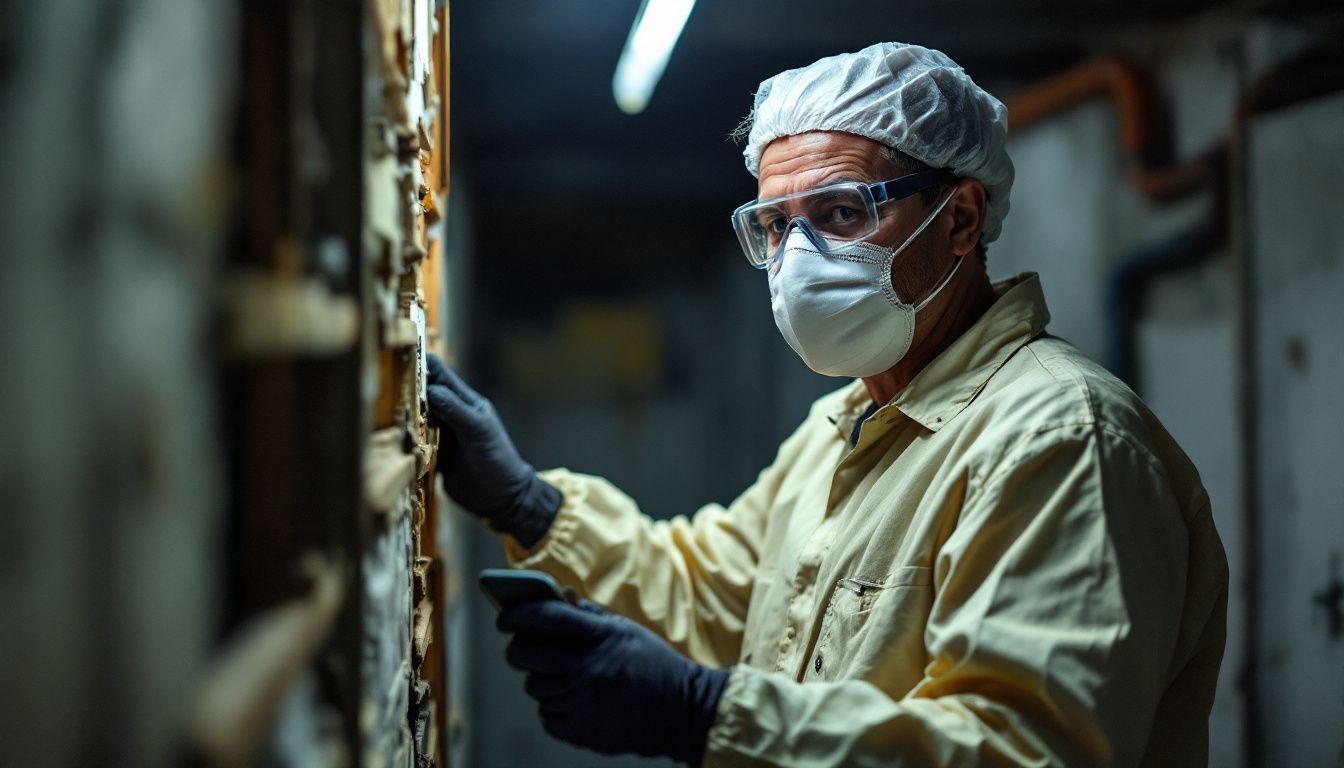
What Is Remediation of Asbestos — and Why Does It Matter for UK Properties?
Asbestos doesn’t announce itself. It sits quietly inside walls, floor tiles, ceiling panels, and pipe lagging of millions of pre-2000 buildings across the UK — completely harmless until someone disturbs it. The moment those fibres become airborne, the risk to human health becomes very real.
That’s why the remediation of asbestos is one of the most tightly regulated activities in British construction and property management. Whether you’re a landlord, facilities manager, or homeowner planning renovation work, understanding what asbestos remediation involves — and what the law requires of you — could protect both your health and your legal standing.
Where Asbestos Hides and Why It’s Still a Problem
Asbestos was used extensively in UK construction from the 1950s through to the late 1990s. Its fire-resistant and insulating properties made it a favourite with builders and manufacturers, and it wasn’t banned from use in construction until 1999. The legacy remains — embedded in the fabric of an enormous number of buildings still in active use today.
Common locations where asbestos-containing materials (ACMs) are found include:
- Artex and textured coatings on ceilings
- Insulating board in partition walls, soffits, and ceiling tiles
- Pipe and boiler lagging
- Roof sheeting and guttering (asbestos cement)
- Floor tiles and adhesive backing
- Gaskets and rope seals in older heating systems
The problem is that many of these materials look perfectly ordinary. Without professional asbestos testing, there’s no reliable way to identify whether a material contains asbestos just by looking at it. That’s exactly why so many people are still exposed unknowingly during routine maintenance and renovation work.
What Does Remediation of Asbestos Actually Involve?
Remediation of asbestos is the process of managing, treating, or removing asbestos-containing materials to eliminate or reduce the risk of fibre release. It’s not always about ripping materials out — in many cases, the safest and most cost-effective approach is to manage ACMs in place.
Encapsulation
Encapsulation involves applying a specialist sealant to an ACM to bind the fibres and prevent them from becoming airborne. This is suitable for materials that are in good condition and are unlikely to be disturbed during normal use.
It’s a common approach for Artex coatings, for example, where removal would create more risk than leaving the material sealed and monitored. The surface must be in a stable enough condition to accept the treatment effectively.
Enclosure
Enclosure means building a physical barrier around the ACM — boxing in asbestos lagging on pipes, for instance. Like encapsulation, this approach keeps the material intact while preventing accidental disturbance.
Both encapsulation and enclosure require ongoing monitoring to ensure the barrier remains effective over time. Any deterioration needs to be identified and addressed promptly.
Removal
Where ACMs are damaged, deteriorating, or located in areas that will be disturbed by refurbishment or demolition works, full asbestos removal is usually the most appropriate course of action. Licensed removal contractors use specialist containment systems, negative pressure units, and HEPA filtration to ensure fibres don’t escape the work area.
Some lower-risk asbestos work — such as removing small quantities of asbestos cement — can be carried out by non-licensed contractors under notifiable non-licensed work (NNLW) conditions. However, the highest-risk materials, including sprayed coatings and asbestos insulating board, must always be removed by a contractor holding a current HSE licence.
The Legal Framework Governing Asbestos Remediation in the UK
The remediation of asbestos in the UK is governed by the Control of Asbestos Regulations. These regulations set out clear duties for building owners, employers, and contractors — and the penalties for non-compliance are serious.
The Duty to Manage
Regulation 4 of the Control of Asbestos Regulations places a legal duty on those responsible for non-domestic premises to manage asbestos. This means identifying whether ACMs are present, assessing their condition, and putting in place a written asbestos management plan.
The duty to manage doesn’t necessarily require immediate removal — it requires a documented, risk-based approach to keeping people safe. Failing to have a plan in place is itself a breach of the regulations.
Licensed Work Requirements
High-risk asbestos work must be carried out by an HSE-licensed contractor. This includes work with asbestos insulating board, sprayed asbestos coatings, and asbestos lagging. Licensed contractors must notify the relevant enforcing authority before work begins, and workers must undergo medical surveillance.
HSG264 and Survey Requirements
The HSE’s guidance document HSG264 sets out the standards for asbestos surveys in the UK. Before any remediation work can begin, you need to know exactly what you’re dealing with — which means commissioning the appropriate type of survey.
A management survey is the standard survey for occupied premises, designed to locate ACMs that could be disturbed during normal occupancy and maintenance. A refurbishment survey is required before any refurbishment or demolition work, as it involves a more intrusive inspection to locate all ACMs in the areas to be disturbed.
The Remediation Process: Step by Step
Understanding the sequence of events helps you plan effectively and avoid costly mistakes. Here’s how a professionally managed asbestos remediation project typically unfolds.
- Initial Survey: Commission an asbestos survey from a qualified surveyor. The type of survey depends on the planned works. The survey produces an asbestos register identifying all ACMs, their location, condition, and risk rating.
- Risk Assessment: Based on the survey findings, a risk assessment determines which materials need immediate action, which can be managed in place, and which require removal before planned works proceed.
- Remediation Plan: A detailed remediation plan is drawn up, specifying the method of treatment for each ACM — encapsulation, enclosure, or removal — along with timescales and contractor requirements.
- Contractor Appointment: Licensed or non-licensed contractors are appointed depending on the materials involved. All contractors should be able to demonstrate competence, appropriate accreditation, and adequate insurance.
- Works Execution: Remediation works are carried out under controlled conditions. For licensed removal, this involves setting up a fully enclosed work area with negative pressure, using appropriate PPE and RPE, and following strict decontamination procedures.
- Air Monitoring and Clearance: After removal, air monitoring is conducted to confirm fibre levels are within safe limits. A four-stage clearance procedure — including a thorough visual inspection and air testing — must be passed before the area can be reoccupied.
- Waste Disposal: Asbestos waste is a hazardous material and must be double-bagged, correctly labelled, and disposed of at a licensed waste facility. The waste carrier must hold the appropriate licence.
- Updated Records: The asbestos register must be updated to reflect the work carried out. If ACMs remain in the building, ongoing monitoring is required through a re-inspection survey at regular intervals.
How to Identify Asbestos Before Remediation Begins
You cannot plan remediation without first knowing what you’re dealing with. If you suspect a material may contain asbestos, the safest approach is to leave it undisturbed and arrange professional testing.
For smaller properties or where only a limited number of suspect materials are present, a testing kit allows you to collect samples safely for laboratory analysis. This can be a practical first step for homeowners who want to check a specific material before deciding whether a full survey is needed.
For commercial properties, pre-demolition projects, or any situation where there’s a legal duty to manage, a full professional survey is the appropriate route. Supernova’s dedicated asbestos testing service covers the full range of options, from single-sample analysis through to large-scale pre-demolition surveys.
Asbestos Remediation for Different Property Types
The approach to remediation varies depending on the type of property and the planned use of the building. The obligations placed on duty holders differ significantly between residential and commercial settings.
Residential Properties
Homeowners planning extensions, loft conversions, or kitchen and bathroom refits should always commission a survey before work begins. Tradespeople inadvertently disturbing asbestos is still one of the most common causes of occupational asbestos exposure in the UK.
A survey protects both the homeowner and the contractors carrying out the work. It also provides a clear record should the property be sold or let in the future.
Commercial and Industrial Properties
Employers and building managers have a legal duty to manage asbestos in non-domestic premises. This means maintaining an up-to-date asbestos register, ensuring contractors are informed before they carry out any work, and reviewing the management plan regularly.
Professional asbestos testing ensures your register is accurate, defensible under scrutiny, and compliant with the Control of Asbestos Regulations. An outdated or incomplete register offers no legal protection.
Schools, Healthcare, and Public Buildings
Public buildings often have complex histories of refurbishment and extension, making thorough survey work essential. Duty holders in these settings must take particular care given the vulnerability of occupants — including children and patients.
Asbestos management plans in schools and healthcare buildings are subject to additional scrutiny from enforcing authorities. Any gaps in documentation are likely to be identified and acted upon.
Emerging Technologies in Asbestos Detection and Remediation
The science and practice of asbestos management continues to evolve. New detection technologies are making it faster and more accurate to identify asbestos-containing materials, even in complex or large-scale environments.
Advanced Imaging and Sensor Technology
Digital imaging systems and portable analytical tools are improving the speed and accuracy of on-site asbestos identification. IoT-connected sensors are increasingly being deployed on large construction sites to provide real-time monitoring of airborne fibre levels, alerting workers to elevated concentrations before exposure becomes a risk.
Robotic Removal Systems
For high-risk or confined-space environments, robotic removal systems reduce the need for workers to be present in the most hazardous areas. These systems can operate within fully contained enclosures, further reducing the risk of fibre release and worker exposure during the remediation of asbestos in challenging locations.
Improved Containment and Filtration
Modern HEPA filtration systems and disposable containment units have significantly improved air quality control during removal works. Wet removal methods — where materials are dampened before disturbance to suppress fibre release — are now standard practice for many types of licensed removal work.
The Cost of Getting Asbestos Remediation Wrong
Non-compliance with the Control of Asbestos Regulations can result in substantial fines, prosecution, and — most critically — serious harm to the people who live or work in your building. Mesothelioma and asbestos-related lung disease remain significant causes of occupational death in the UK, with the legacy of past exposure continuing to affect lives today.
Beyond the human cost, the financial and reputational consequences of failing to manage asbestos properly can be severe. Enforcement action by the HSE or local authority can result in prohibition notices, improvement notices, and criminal prosecution. Civil claims from workers or occupants who have been exposed can follow years — even decades — later.
The duty to manage asbestos is not a box-ticking exercise. It’s a genuine legal obligation with real consequences for those who ignore it.
Choosing the Right Contractor for Asbestos Remediation
Not all asbestos contractors are equal. When selecting a contractor to carry out remediation of asbestos in your property, there are several key checks you should make before appointing anyone.
- HSE licence: For licensable work, confirm the contractor holds a current HSE asbestos removal licence. You can verify this on the HSE’s public register.
- UKAS-accredited surveying: Surveys and air monitoring should be carried out by organisations accredited by UKAS to the relevant standards.
- Insurance: Contractors should hold adequate public liability and employers’ liability insurance specifically covering asbestos work.
- Written method statements: A competent contractor will provide a detailed method statement and risk assessment before works begin, not after.
- Waste documentation: Ensure the contractor can provide consignment notes for all asbestos waste removed from your site. These are a legal requirement.
Cutting corners on contractor selection is a false economy. The consequences of using an incompetent or unlicensed contractor can far outweigh any short-term cost saving.
Supernova Asbestos Surveys: Supporting Remediation Projects Nationwide
With over 50,000 surveys completed across the UK, Supernova Asbestos Surveys has the experience and accreditation to support every stage of the remediation of asbestos — from initial identification through to post-removal clearance and ongoing re-inspection.
We provide surveys and testing services across the country. If you need an asbestos survey in London, our team operates across all London boroughs and the surrounding areas. We also cover major cities including asbestos surveys in Manchester and asbestos surveys in Birmingham, with nationwide coverage for larger projects.
Whether you need a management survey for an occupied office, a refurbishment survey ahead of building works, or a re-inspection to keep your asbestos register current, our qualified surveyors are ready to help.
Call us on 020 4586 0680 or visit asbestos-surveys.org.uk to book a survey or request a quote.
Frequently Asked Questions
What is the difference between asbestos removal and asbestos remediation?
Asbestos removal refers specifically to the physical extraction of asbestos-containing materials from a building. Asbestos remediation is a broader term that covers all methods of managing ACMs to reduce risk — including encapsulation, enclosure, and removal. Removal is one option within the remediation process, not the only one.
Do I need a licensed contractor to carry out asbestos remediation?
It depends on the type of material and the nature of the work. High-risk materials — including asbestos insulating board, sprayed coatings, and pipe lagging — must be removed by an HSE-licensed contractor. Lower-risk work, such as removing small quantities of asbestos cement, may be carried out under notifiable non-licensed work (NNLW) rules. Always check the licensing requirements before appointing a contractor.
How do I know if my building contains asbestos before starting remediation?
The only reliable way to confirm the presence of asbestos is through professional testing or a formal asbestos survey. A management survey is appropriate for occupied buildings during normal use, while a refurbishment survey is required before any building works begin. For individual suspect materials in smaller properties, a sample testing kit can provide a practical starting point.
How long does asbestos remediation take?
The duration depends on the extent of ACMs present, the remediation method chosen, and the size of the property. Encapsulation of a single ceiling coating might be completed in a day. A full licensed removal project in a large commercial building, including decontamination, air monitoring, and four-stage clearance, could take several weeks. Your contractor should provide a realistic programme as part of their method statement.
What happens to asbestos waste after removal?
Asbestos waste is classified as hazardous waste and must be handled accordingly. It must be double-bagged in clearly labelled, UN-approved waste sacks, transported by a licensed waste carrier, and disposed of at a site licensed to accept hazardous asbestos waste. Consignment notes must be completed for all asbestos waste movements — these are a legal requirement under hazardous waste regulations and must be retained for a minimum of three years.