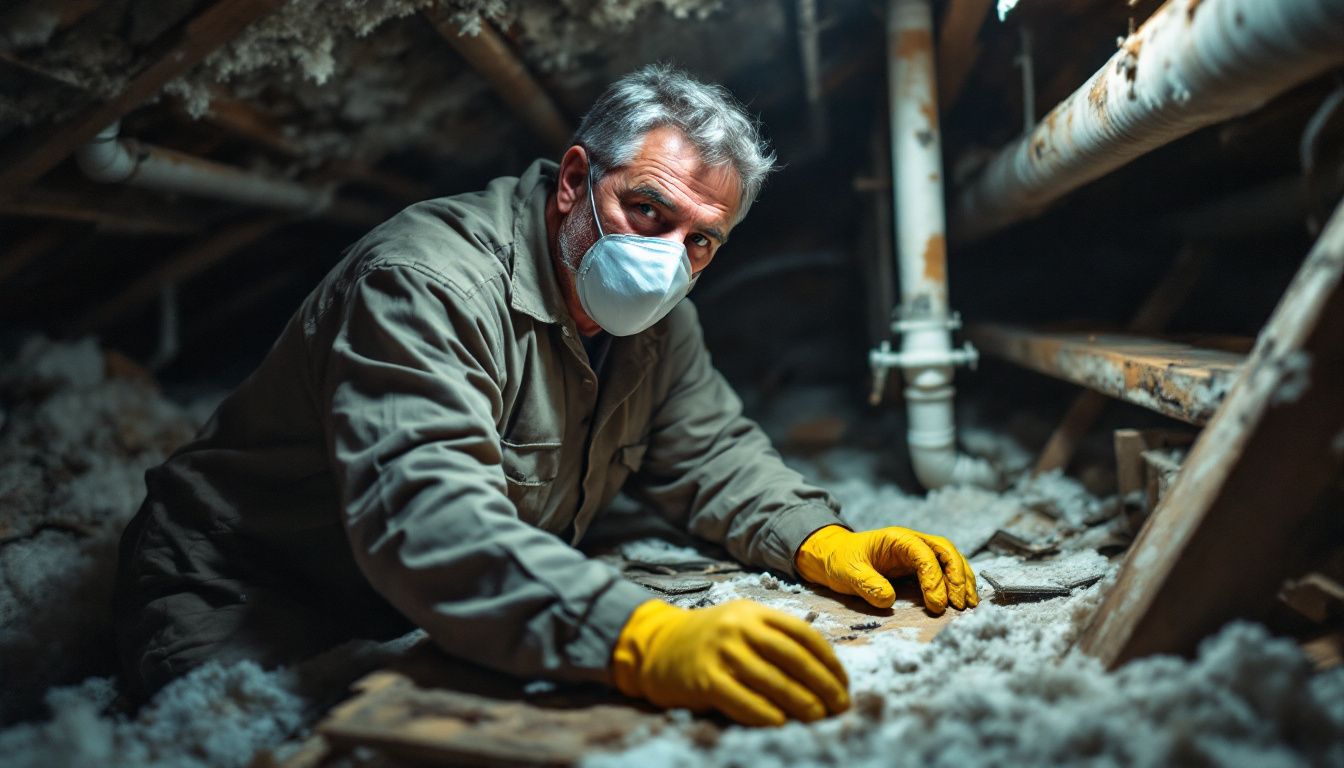
Asbestos Doesn’t Show Itself — Here’s How the Professionals Find It
Asbestos hides in plain sight. It can be lurking in the ceiling tiles above your head, the floor adhesive beneath your feet, or the textured coating on your walls — and you’d have no idea just by looking. Understanding what are the methods of detecting asbestos is essential knowledge for anyone responsible for a building constructed or refurbished before 2000, when asbestos use was finally banned in the UK.
Whether you manage a commercial property, own a pre-2000 home, or are planning renovation work, knowing how asbestos is identified — and by whom — could protect lives and keep you on the right side of the law.
Why Asbestos Detection Cannot Be Left to Guesswork
Asbestos fibres, when disturbed, become airborne. Once inhaled, they lodge deep in lung tissue and can cause mesothelioma, asbestosis, and lung cancer — diseases that can take decades to develop after initial exposure.
Under the Control of Asbestos Regulations, duty holders of non-domestic premises are legally required to identify asbestos-containing materials (ACMs), assess their condition, and manage the risk. Failure to comply can result in significant fines — and, far more seriously, lasting harm to the people who use your building.
Detection is the critical first step in that entire process. Without it, you cannot manage what you don’t know is there.
Visual Inspection: Where Every Survey Begins
A qualified surveyor’s first tool is experience. Visual inspection involves a systematic examination of a building’s materials, identifying those known to commonly contain asbestos based on their age, location, and physical characteristics.
During a visual inspection, a trained professional will examine areas including:
- Ceiling tiles and textured coatings such as Artex
- Asbestos insulation board (AIB) in ceiling voids, lift shafts, fire doors, and soffits
- Asbestos cement products used in roofing sheets, wall cladding, gutters, and water pipes
- Floor tiles and the adhesive beneath them
- Pipe and boiler lagging
- Fuse boxes, plant rooms, and heating appliances
- Gaskets and asbestos textiles around industrial equipment
Visual inspection alone cannot confirm the presence of asbestos. It identifies suspect materials — those that could plausibly contain asbestos based on their characteristics and the building’s age. Confirmation always requires laboratory analysis of a physical sample.
What Surveyors Are Actually Looking For
Experienced surveyors look for visual clues: the texture and colour of a material, how it was applied, its location within the building, and any product markings or labels. They cross-reference these observations with knowledge of which asbestos products were commonly used in different construction periods and building types.
This is a skilled process. A surveyor who has completed thousands of inspections will recognise suspect materials quickly — but the same material could easily be missed or misidentified by an untrained person. That’s why professional surveys are not optional for duty holders; they’re a legal requirement under the Control of Asbestos Regulations.
Bulk Sampling: Collecting Physical Evidence
When a material is identified as suspect during a visual inspection, the next step is to collect a small physical sample for laboratory analysis. This is known as bulk sampling, and it is the standard method used during professional asbestos surveys across the UK.
Sampling must be carried out carefully to avoid releasing fibres into the air. Professionals follow a strict procedure:
- The area is sealed off and ventilation is controlled to prevent fibre spread
- The surveyor wears appropriate personal protective equipment (PPE), including a correctly fitted FFP3 respirator
- A small sample is taken from the material using appropriate tools
- The sample is immediately sealed in a labelled, airtight container
- The disturbed area is made safe and any debris is cleaned up using a HEPA vacuum
- The sealed sample is sent to a UKAS-accredited laboratory for analysis
If you are not a trained professional, do not attempt to collect samples yourself unless you are using a purpose-designed testing kit specifically designed for safe collection from accessible, undisturbed materials. Even then, professional analysis of the sample is still required.
Laboratory Analysis: The Gold Standard for Confirming Asbestos
No detection method is definitive without laboratory analysis. Once a sample reaches the laboratory, trained analysts use microscopic techniques to identify whether asbestos fibres are present and, if so, which type.
Polarised Light Microscopy (PLM)
PLM is the most widely used method for bulk sample analysis in the UK. The sample is prepared on a glass slide and examined under a polarised light microscope. Different types of asbestos — chrysotile, amosite, crocidolite, and others — have distinctive optical properties that allow a trained analyst to identify them with confidence.
PLM is fast, cost-effective, and reliable for the vast majority of samples. It is the standard method used in UKAS-accredited laboratories and is fully compliant with HSE guidance under HSG264. When you send a sample away for sample analysis, PLM is typically the technique being applied.
Transmission Electron Microscopy (TEM)
TEM offers a higher level of magnification and is used when PLM results are inconclusive, or when extremely low concentrations of fibres need to be detected. It is more time-consuming and expensive than PLM, and is typically reserved for specialist situations — such as clearance testing after removal works, or legal and insurance-related investigations.
Scanning Electron Microscopy (SEM)
SEM is another high-resolution technique sometimes used alongside TEM. It can identify fibre dimensions and elemental composition, helping to distinguish asbestos from other mineral fibres. Like TEM, it is used in specialist scenarios rather than routine bulk sample testing.
Air Monitoring: Measuring What You Can’t See
Air monitoring measures the concentration of airborne asbestos fibres in a given environment. It is not typically used to detect whether a material contains asbestos, but rather to assess exposure risk or verify that an area is safe following removal or disturbance works.
There are two main contexts for air monitoring:
- Background monitoring: Carried out before any work begins to establish a baseline fibre count in the environment
- Clearance testing: Carried out after licensed asbestos removal to confirm that fibre levels have returned to safe levels before an enclosure is handed back for use
Air monitoring uses specialist pumps to draw a measured volume of air through a membrane filter. The filter is then analysed under phase contrast microscopy (PCM) or TEM to count and identify fibres. This work must be carried out by a licensed analyst and is governed by strict HSE guidance.
Onsite Detection Technologies: Useful Screening Tools
Advances in technology have produced a range of portable devices capable of providing rapid onsite analysis of materials. While these are not yet a replacement for laboratory confirmation, they are increasingly useful as screening tools in the right hands.
X-Ray Fluorescence (XRF)
XRF analysers can identify the elemental composition of a material without the need for sampling. They are useful for screening large numbers of materials quickly, but they detect elements rather than fibres — so they cannot definitively confirm asbestos in the way that microscopic analysis can.
Infrared Spectroscopy
Portable infrared devices can analyse the molecular structure of a material and compare it against known asbestos signatures. This technology is evolving, but it remains a supplementary screening tool rather than a standalone detection method.
For any legally defensible result — whether for compliance, property transactions, or litigation — laboratory analysis of a physical sample remains the required standard in the UK. Technology can assist, but it cannot replace the laboratory.
What Are the Methods of Detecting Asbestos Through Professional Surveys?
The most reliable and legally compliant way to detect asbestos in a building is through a professional asbestos survey carried out by a BOHS P402-qualified surveyor. A survey combines visual inspection, bulk sampling, and laboratory analysis into a structured process that produces a documented, risk-rated asbestos register.
There are several types of survey, each suited to different circumstances:
Management Survey
A management survey is the standard survey required for the ongoing management of a building in normal occupation. It locates ACMs in accessible areas, assesses their condition and risk, and forms the basis of an asbestos management plan. This is the survey required to fulfil your duty to manage under the Control of Asbestos Regulations.
Refurbishment Survey
Before any structural work or renovation, a refurbishment survey is required. This is a more intrusive survey that accesses areas that would be disturbed during the planned works — including within walls, floors, and ceiling voids. It ensures that workers are not unknowingly exposed to asbestos during construction activity.
Demolition Survey
If a building is to be demolished in whole or in part, a demolition survey is required before work begins. This is the most thorough and intrusive type of survey, designed to locate all ACMs throughout the entire structure so that they can be removed safely before demolition proceeds.
Re-inspection Survey
Once ACMs have been identified and a management plan is in place, those materials must be monitored over time. A re-inspection survey assesses whether the condition of known ACMs has changed, ensuring that your management plan remains accurate and current. The frequency of re-inspections depends on the risk rating of the materials involved.
Asbestos Testing for Individual Materials
Sometimes you don’t need a full survey — you simply need to know whether a specific material contains asbestos. This might apply when you’re purchasing a property, dealing with a single suspect material, or responding to an incident where a material has been disturbed.
In these situations, asbestos testing of individual samples is the appropriate approach. A sample is collected — either by a professional or using a compliant testing kit — and sent to a UKAS-accredited laboratory for PLM analysis. Results are typically returned within a few working days.
This approach is quicker and more cost-effective than a full survey when you have a targeted question about a specific material. However, if you’re unsure of the scope of asbestos risk in a building, a full survey will always give you a more complete picture. You can explore Supernova’s dedicated asbestos testing service for more detail on what this process involves.
Detection, Removal, and What Comes Next
Detection is only the beginning. Once ACMs have been identified and assessed, you have a legal duty to manage them — which may mean encapsulation, regular monitoring, or in some cases full removal.
Where ACMs are in poor condition, friable, or in locations where disturbance is unavoidable, asbestos removal by a licensed contractor is often the safest long-term solution. Removal must be carried out under strict controls and, for licensed work, notified to the HSE in advance.
Not all asbestos needs to be removed immediately. Many ACMs in good condition and low-risk locations can be safely managed in situ — but only if they have been properly identified and recorded in the first place. That’s why detection is the foundation everything else is built on.
Asbestos Detection and Wider Property Compliance
Asbestos detection is not only a health and safety matter — it has significant implications for property transactions, insurance, and wider legal compliance. Buyers and lenders increasingly require evidence of asbestos management before completing on commercial or pre-2000 residential properties.
Asbestos surveys also interact with other compliance requirements. When arranging a fire risk assessment for commercial premises, the assessor needs to know the location of ACMs — particularly in fire doors and ceiling voids — to produce an accurate assessment. Having an up-to-date asbestos register makes this process significantly more straightforward.
An asbestos register is not just a legal document — it’s a practical management tool that protects contractors, maintenance workers, and building occupants every time work is carried out on the premises.
The Legal Framework: What the Regulations Require
The legal framework for asbestos management in the UK is clear and actively enforced. The key legislation and guidance you need to understand includes:
- Control of Asbestos Regulations: The primary legislation governing asbestos management in non-domestic premises. Duty holders must identify ACMs, assess their condition, and put a management plan in place.
- HSG264: The HSE’s definitive guidance document on asbestos surveys. It sets out the standards for survey types, sampling procedures, and laboratory analysis that all compliant surveys must follow.
- HSE guidance on licensed work: Certain categories of asbestos work — including work on sprayed coatings, asbestos insulation, and AIB — can only be carried out by HSE-licensed contractors.
Non-compliance is not a theoretical risk. The HSE actively inspects premises and investigates incidents. Duty holders who cannot demonstrate that they have taken reasonable steps to identify and manage asbestos face enforcement action, improvement notices, and prosecution.
The practical takeaway is straightforward: get a survey done by a qualified professional, keep your asbestos register up to date, and ensure anyone working on your building has access to it before they start.
Frequently Asked Questions
What are the methods of detecting asbestos in a building?
The main methods are visual inspection by a qualified surveyor, bulk sampling of suspect materials, and laboratory analysis using techniques such as polarised light microscopy (PLM). Air monitoring is used to measure airborne fibre levels rather than to detect asbestos within materials. Onsite technologies such as XRF can be used as screening tools, but laboratory analysis of a physical sample remains the legally accepted standard for confirmation.
Can you detect asbestos without taking a sample?
You can identify materials that are likely to contain asbestos based on visual inspection and knowledge of building history, but you cannot definitively confirm asbestos without laboratory analysis of a physical sample. Visual identification alone is not sufficient for legal compliance or for making informed management decisions.
Is it safe to collect an asbestos sample yourself?
Collecting samples from undisturbed, accessible materials using a purpose-designed testing kit can be done safely if instructions are followed carefully. However, sampling from damaged, friable, or hard-to-access materials should always be left to a trained professional. Disturbing asbestos-containing materials without proper controls can release dangerous fibres into the air.
How long does asbestos testing take?
Standard laboratory analysis of a bulk sample typically returns results within three to five working days. Many UKAS-accredited laboratories offer expedited turnaround for urgent cases. A full professional survey, including sampling and laboratory results, can often be completed and reported within one to two weeks depending on the size of the property.
Do I need an asbestos survey before renovation work?
Yes. If your building was constructed or last refurbished before 2000, a refurbishment survey is legally required before any structural or renovation work begins. This ensures that workers are not exposed to asbestos during the works. Proceeding without a survey puts both workers and duty holders at serious legal and health risk.
Talk to Supernova Asbestos Surveys
With over 50,000 surveys completed nationwide, Supernova Asbestos Surveys has the expertise to help you detect, assess, and manage asbestos safely and in full compliance with UK regulations. Whether you need a full building survey, testing of a specific material, or guidance on your legal obligations, our BOHS-qualified team is ready to help.
Call us on 020 4586 0680 or visit asbestos-surveys.org.uk to book a survey or speak to one of our specialists today.