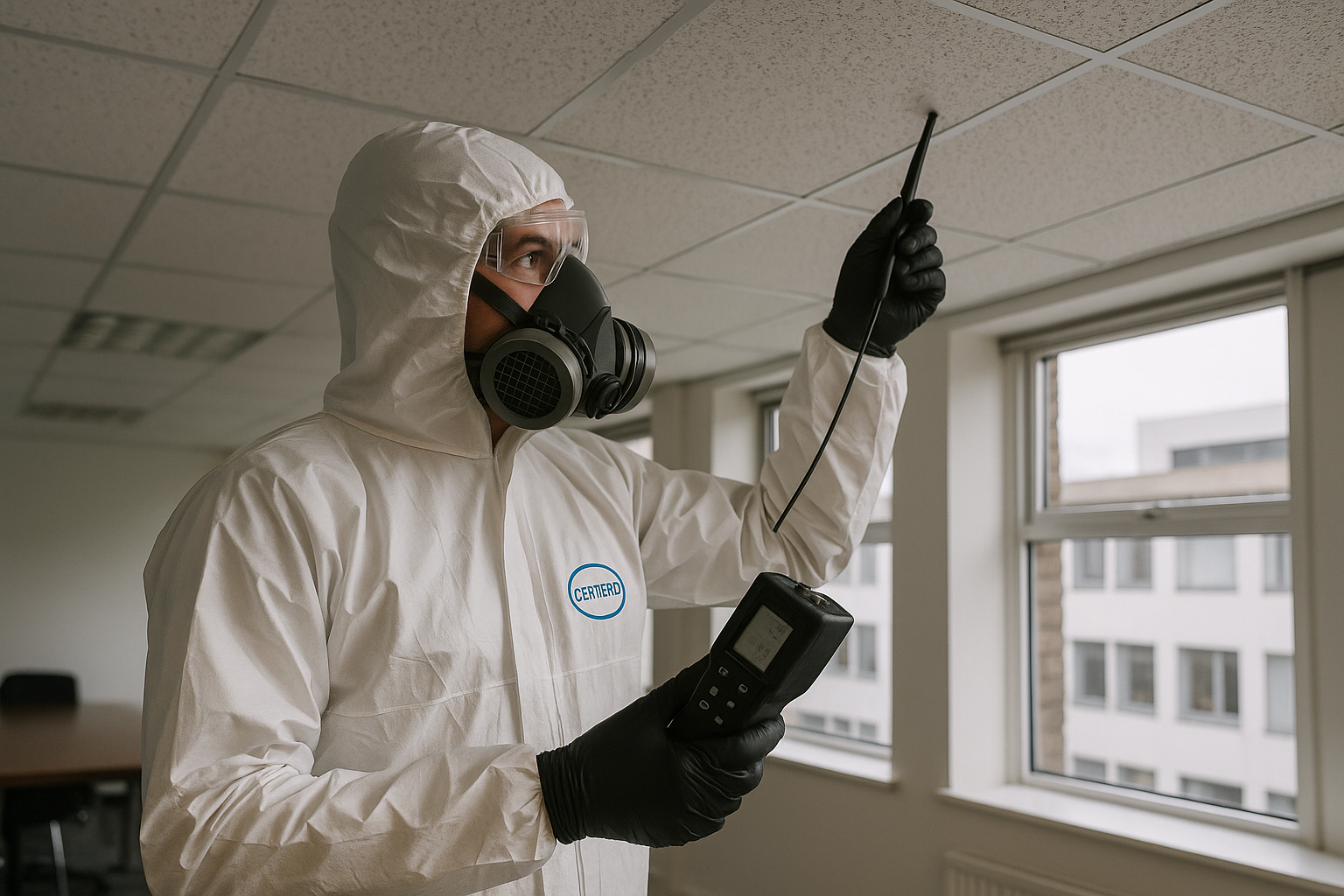
Why Asbestos Surveys London Still Matter
A hidden asbestos panel can turn a routine maintenance job into a full site shutdown. Across the capital, asbestos surveys London remain one of the most practical ways to protect building occupants, brief contractors properly and stay on the right side of your legal duties.
London’s building stock is unusually mixed. Victorian conversions, post-war estates, schools, hospitals, offices, retail units and industrial premises can all contain asbestos-containing materials — particularly where buildings were constructed or altered before 2000. If you manage, own, lease, maintain or refurbish property, guessing is not a strategy.
Asbestos was used widely because it was strong, heat resistant and effective as an insulator. Those same qualities mean it is still present in many buildings today, often in places people do not expect. Common examples include insulation board, pipe lagging, textured coatings, floor tiles, ceiling tiles, cement sheets, soffits, toilet cisterns, panels, ducts and service risers.
Some materials are obvious. Others are hidden behind finishes, inside plant areas or buried within voids. The risk is not simply that asbestos exists — the real danger comes when materials are damaged, drilled, cut, removed or allowed to deteriorate. Once fibres are released and inhaled, they can cause serious long-term health conditions including mesothelioma and asbestosis.
A suitable survey gives you clear information about whether asbestos is present, where it is located, what condition it is in, how likely it is to be disturbed and what action should happen next. Without that information, it is difficult to maintain an accurate asbestos register, write a sensible management plan or brief contractors safely. In practical terms, that can mean delays, extra cost and avoidable exposure.
What the Law Expects from Duty Holders
Under the Control of Asbestos Regulations, those responsible for non-domestic premises have a legal duty to manage asbestos. That duty applies to landlords, employers, facilities managers, managing agents and anyone responsible for maintenance or repair.
HSE guidance and HSG264 set out what a suitable asbestos survey should achieve. The aim is straightforward: identify asbestos-containing materials so the right people have the right information before anyone disturbs them.
If you are the duty holder, you should be able to demonstrate that you have taken reasonable steps to:
- Find out whether asbestos is present in the premises
- Record its location and condition accurately
- Assess the risk of disturbance from routine activities or planned works
- Keep an up-to-date asbestos register
- Prepare and regularly review an asbestos management plan
- Share the information with staff, contractors and anyone likely to disturb the material
That legal duty is especially relevant in London, where buildings are altered frequently and contractors may be on site for small works, fit-outs, M&E upgrades or reactive repairs. If your records are outdated, incomplete or based on assumptions, you are exposed.
A useful rule is simple: if people are likely to work on the fabric of the building, they need reliable asbestos information before they start. That is where choosing the right survey type becomes critical.
Choosing the Right Type of Asbestos Survey
Not every survey serves the same purpose. One of the most common mistakes we see is clients booking a survey that does not match the work they are planning. The correct survey depends on whether the building is occupied, whether intrusive work is planned and whether asbestos has already been identified.
Management Survey
A management survey is the standard survey for buildings in normal occupation. It is designed to locate asbestos-containing materials that could be damaged or disturbed during everyday use, routine maintenance or minor works.
This is often the right starting point for offices, schools, communal areas, shops, warehouses and healthcare settings. It supports the duty to manage by providing the information needed for an asbestos register and management plan.
A management survey is usually suitable when:
- The building is occupied and in normal use
- No major refurbishment is planned
- You need to establish or update your asbestos records
- Contractors may carry out routine maintenance works
Refurbishment Survey
If you are planning works that will disturb the building fabric, you will usually need a refurbishment survey. This type of survey is intrusive and aims to identify asbestos in the specific area affected by the planned works.
That may involve opening up walls, ceilings, floors, boxing, risers and service voids. It is commonly required before office strip-outs, flat upgrades, retail reconfigurations, kitchen and bathroom refurbishments, plant replacements and major M&E works.
Clients searching for an asbestos refurbishment survey are usually trying to avoid one of the biggest project risks in older buildings: hidden asbestos discovered after contractors have already started work. The practical advice is to arrange the survey early, while there is still time to plan around the findings.
Demolition Survey
A demolition survey is required before a building, or part of a building, is demolished. It is fully intrusive and intended to locate all asbestos-containing materials, as far as reasonably practicable, before demolition begins.
This survey is particularly important on redevelopment sites in London, where access can be tight, neighbouring premises may be occupied and project timelines are often compressed. If demolition is planned, a management survey is not a sufficient substitute.
Re-Inspection Survey
Where asbestos has already been identified and left in place, regular checks are needed to confirm the material remains in a safe condition. A re-inspection survey helps keep your asbestos register current and your management plan active.
Some clients refer to this as a reinspection survey — whatever term you use, the purpose is the same. Review known or presumed asbestos-containing materials, check for damage or deterioration and update the records so they still reflect the building as it stands today.
This is especially useful for:
- Multi-site property portfolios
- Schools and further education colleges
- Social housing communal areas
- Commercial estates with long-term retained asbestos materials
What Happens During Asbestos Surveys London
Clients often ask how disruptive a survey will be. The answer depends on the survey type, but the process should always be clear, controlled and proportionate to the building and the planned works.
Before the Site Visit
Good preparation makes surveys more efficient. If you can provide plans, previous reports, access details and a clear description of the intended works, the surveyor can scope the job properly. Before attendance, it helps to:
- Confirm the building address and access arrangements
- Identify which areas are included or excluded from scope
- Share any previous asbestos records or survey reports
- Arrange permits, escorts or keys if needed
- Notify tenants, reception teams or site managers where appropriate
On Site
The surveyor will inspect the relevant areas systematically, identify suspect materials and take samples where necessary. Sample points are controlled, recorded and made good where appropriate — but intrusive surveys will involve more opening up than a management survey.
Any inaccessible areas should be noted clearly in the report. That matters because inaccessible does not mean asbestos-free. If access was not possible, assumptions may still need to be managed until the area can be inspected properly.
Sample Analysis and Reporting
Where materials are sampled, they should be analysed by an appropriate laboratory process. If you only need a specific material checked rather than a full survey, our sample analysis service can be a practical option.
The final report should do more than list sample results — it should help you make decisions. A useful report will include material locations, photographs, sample outcomes, condition details, risk information and recommendations for management or further action.
After receiving the report, you should be able to answer three immediate questions:
- Where is the asbestos or presumed asbestos?
- Can it remain in place safely?
- What must happen before maintenance, refurbishment or demolition proceeds?
Practical Advice for Property Managers and Duty Holders
Most clients do not need a lecture on asbestos theory. They need a process that works in the real world, especially when contractors, tenants and deadlines are all involved at the same time.
Keep Your Asbestos Records Live
An asbestos register should reflect the building as it exists now, not as it looked several years ago. If areas have been refurbished, partitions moved, plant replaced or materials removed, the records need updating. Set a clear internal process for storing survey reports where teams can find them, updating the register after works and triggering reinspection where asbestos remains in place.
Brief Contractors Before Work Starts
Do not assume contractors will ask for asbestos information. Make it part of your permit, pre-start or work order process. If they are going to drill, cut, remove, access voids or disturb finishes, they should see the relevant asbestos information first.
This is one of the simplest ways to prevent accidental disturbance — and it also demonstrates that your management arrangements are active rather than purely administrative.
Match the Survey to the Planned Work
A management survey is not a substitute for a refurbishment or demolition survey. If the works will disturb the building fabric, arrange the intrusive survey before tender, before strip-out and certainly before contractors begin opening up. That advice applies to small jobs as well as major projects — a single riser alteration or washroom refit can still uncover hidden asbestos.
Act Quickly When Suspect Materials Are Found
If a contractor uncovers a suspicious board, lagging or debris, stop work in that area immediately. Prevent further disturbance, restrict access and arrange professional assessment. Do not ask untrained staff to break off a piece for checking — that creates unnecessary risk and can complicate the situation considerably.
When Asbestos Is Found: What to Do Next
Finding asbestos does not automatically mean panic or immediate removal. In many cases, asbestos-containing materials can remain in place if they are in good condition and unlikely to be disturbed. The right response depends on the type of material, its condition, its location and the activities planned nearby.
A damaged insulating board panel in a service riser is a very different issue from an intact asbestos cement sheet on an outbuilding. Typical next steps include:
- Manage in place if the material is sound and unlikely to be disturbed during normal use
- Encapsulate if extra protection is needed without removing the material entirely
- Repair where minor damage can be controlled safely by a licensed or trained operative
- Remove if the material is damaged, higher risk or will be directly affected by planned works
Whatever route is chosen, record the decision clearly and update your asbestos documents. If contractors are due on site, make sure they receive the relevant information before work starts. Where asbestos removal is necessary, it should be planned properly and carried out through the correct licensed route.
Asbestos Surveys London for Different Property Types
One reason asbestos surveys London require genuine experience is that no two properties in the capital are quite the same. Access, occupancy, building age and the history of previous alterations all affect the approach.
Offices and Commercial Buildings
In offices, asbestos is often found in ceiling voids, risers, plant rooms, floor coverings, partition panels and fire protection materials. The challenge is usually balancing survey access with the needs of an occupied building — good communication with facilities teams and tenants makes a significant difference.
Schools, Colleges and Public Buildings
Educational buildings present particular challenges because many were built or extended during the peak period of asbestos use. Surveys in occupied schools require careful scheduling, clear communication with site managers and strict control of sample points to avoid disruption to staff and pupils.
Residential and Social Housing
In residential blocks, asbestos is commonly found in communal areas, plant rooms, stairwells, roof spaces and service risers. Flat interiors may also contain textured coatings, floor tiles or insulation board. Gaining access to individual dwellings requires coordination with residents and managing agents.
Industrial and Warehouse Properties
Older industrial buildings often contain asbestos cement roofing and cladding, pipe lagging in plant areas, insulation board around structural steelwork and sprayed coatings. These materials can be in variable condition depending on how the building has been used and maintained over time.
Mixed-Use and Retail Premises
Retail units and mixed-use buildings in London are frequently altered. That history of change means asbestos may have been disturbed, partially removed or left in place behind new finishes. A thorough survey should account for the building’s alteration history as well as its current condition.
London-Specific Considerations
Carrying out asbestos survey London work across the capital involves practical challenges that do not always apply elsewhere. Access to central London sites can be restricted by parking controls, loading bay limitations and security requirements. High-rise buildings, basements and complex plant rooms all require additional planning.
London’s property market also moves quickly. Lease events, change-of-use applications, permitted development conversions and redevelopment projects all create time pressure. Having up-to-date asbestos records means you are not scrambling to commission surveys at the last minute when a project is already in motion.
If you manage property outside London as well, the same principles apply. Our asbestos survey Manchester service covers the same range of survey types for clients with portfolios that extend beyond the capital.
Frequently Asked Questions
Do I need an asbestos survey if my building was built after 2000?
If your building was constructed entirely after November 1999, the risk of asbestos-containing materials is significantly lower because the import and use of all asbestos types was banned in the UK from that point. However, if the building incorporates older materials, was refurbished using salvaged components or if you are unsure of its full construction history, a survey is still a sensible precaution. For buildings with any pre-2000 elements, a survey is strongly advisable.
What is the difference between a management survey and a refurbishment survey?
A management survey is suitable for occupied buildings in normal use and focuses on materials that could be disturbed during everyday activities or routine maintenance. A refurbishment survey is intrusive and is required when works will disturb the building fabric — for example, during a strip-out, fit-out or structural alteration. Using a management survey when a refurbishment survey is needed puts contractors and occupants at risk and does not satisfy your legal obligations under the Control of Asbestos Regulations.
How long does an asbestos survey take?
Survey duration depends on the size and complexity of the building, the type of survey required and the level of access available. A management survey of a small commercial unit may take a few hours. A fully intrusive demolition survey of a large industrial building could take several days. Your surveyor should be able to give you a realistic estimate once the scope has been agreed.
Can asbestos-containing materials be left in place?
Yes — in many cases, asbestos-containing materials that are in good condition and are unlikely to be disturbed can be safely managed in place rather than removed. The duty to manage under the Control of Asbestos Regulations does not require removal in all circumstances. What it does require is that you know where the materials are, assess the risk, keep records and ensure anyone working near them has the relevant information. Removal becomes necessary when materials are damaged, deteriorating or will be directly affected by planned works.
How often should I have a re-inspection survey carried out?
HSG264 recommends that asbestos-containing materials left in place are regularly monitored to check their condition. The frequency of re-inspection will depend on the type of material, its condition and the level of activity in the area. In practice, annual re-inspections are common for many commercial and public buildings, but higher-risk materials or busier environments may warrant more frequent checks. Your asbestos management plan should specify the re-inspection intervals that apply to your building.
Get Your Asbestos Survey Arranged Today
Supernova Asbestos Surveys has completed over 50,000 surveys across the UK. Our qualified surveyors work across London and the wider country, covering all survey types — from routine management surveys to fully intrusive demolition surveys and everything in between.
Whether you need a survey for a single commercial unit, a residential block, a school or a large mixed-use development, we can scope the right approach and turn reports around efficiently so your projects and compliance obligations stay on track.
Call us on 020 4586 0680 or visit asbestos-surveys.org.uk to request a quote or discuss your requirements with our team.