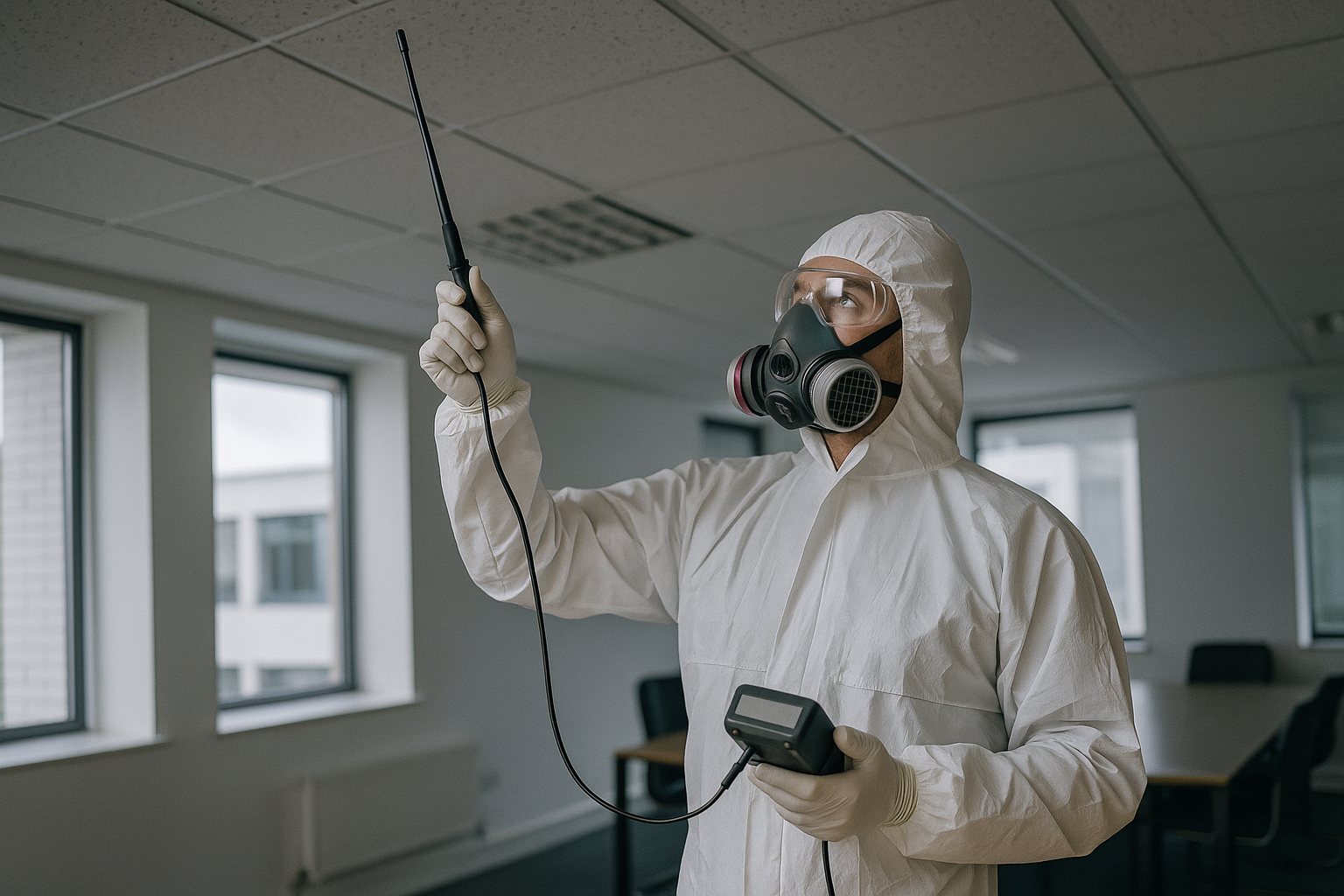
Demolition work has a habit of exposing problems that have sat quietly behind walls and above ceilings for decades. An asbestos demolition survey is the step that stops those hidden materials turning into emergency stoppages, contractor disputes and costly breaches of the Control of Asbestos Regulations.
For property managers, developers and contractors, this is not paperwork for the file. A properly planned asbestos demolition survey is a fully intrusive inspection designed to identify asbestos-containing materials before the structure is broken out, stripped down or demolished.
What is an asbestos demolition survey?
An asbestos demolition survey is carried out before a building, or part of a building, is demolished. Its purpose is to locate, so far as reasonably practicable, all asbestos-containing materials that could be disturbed by the planned works.
Under HSE guidance and HSG264, demolition surveys sit within the refurbishment and demolition survey category. In practice, this is the most intrusive survey type because surveyors need to inspect the building fabric, not just visible surfaces.
That often means opening up:
- walls and partitions
- ceiling voids
- floor build-ups
- service risers and ducts
- plant rooms
- roof spaces
- boxing, panels and hidden linings
If the building is staying in normal use, a management survey is usually the right starting point. If the works involve major alterations rather than full demolition, a refurbishment survey may be more suitable.
Refurbishment or demolition surveys: knowing which one you need
This is one of the most common points of confusion on construction projects. People often use the terms interchangeably, but the correct survey depends on what the works will physically disturb.
When a refurbishment survey is appropriate
A refurbishment survey is used where a building is being upgraded, altered or stripped out, but not fully demolished. It focuses on the specific area affected by the works.
Typical examples include:
- office fit-outs
- toilet refurbishments
- kitchen replacements
- plant upgrades
- structural alterations to one section of a building
- strip-out works before remodelling
If that is your situation, an asbestos refurbishment survey is often the correct route.
When a demolition survey is appropriate
A demolition survey is needed where the structure itself is coming down, whether that is the whole building or a defined section. The inspection must be intrusive enough to identify hidden asbestos before demolition starts.
Typical examples include:
- full building demolition
- demolition of a warehouse, office, school or factory
- removal of a wing or extension
- site clearance ahead of redevelopment
- demolition after fire, flood or serious structural damage
If the structure is being removed, a dedicated demolition survey is the safer and more defensible option.
When is a demolition survey carried out?
A demolition survey should be arranged during project planning, not a few days before machines arrive on site. Leaving it late is one of the fastest ways to create delays.
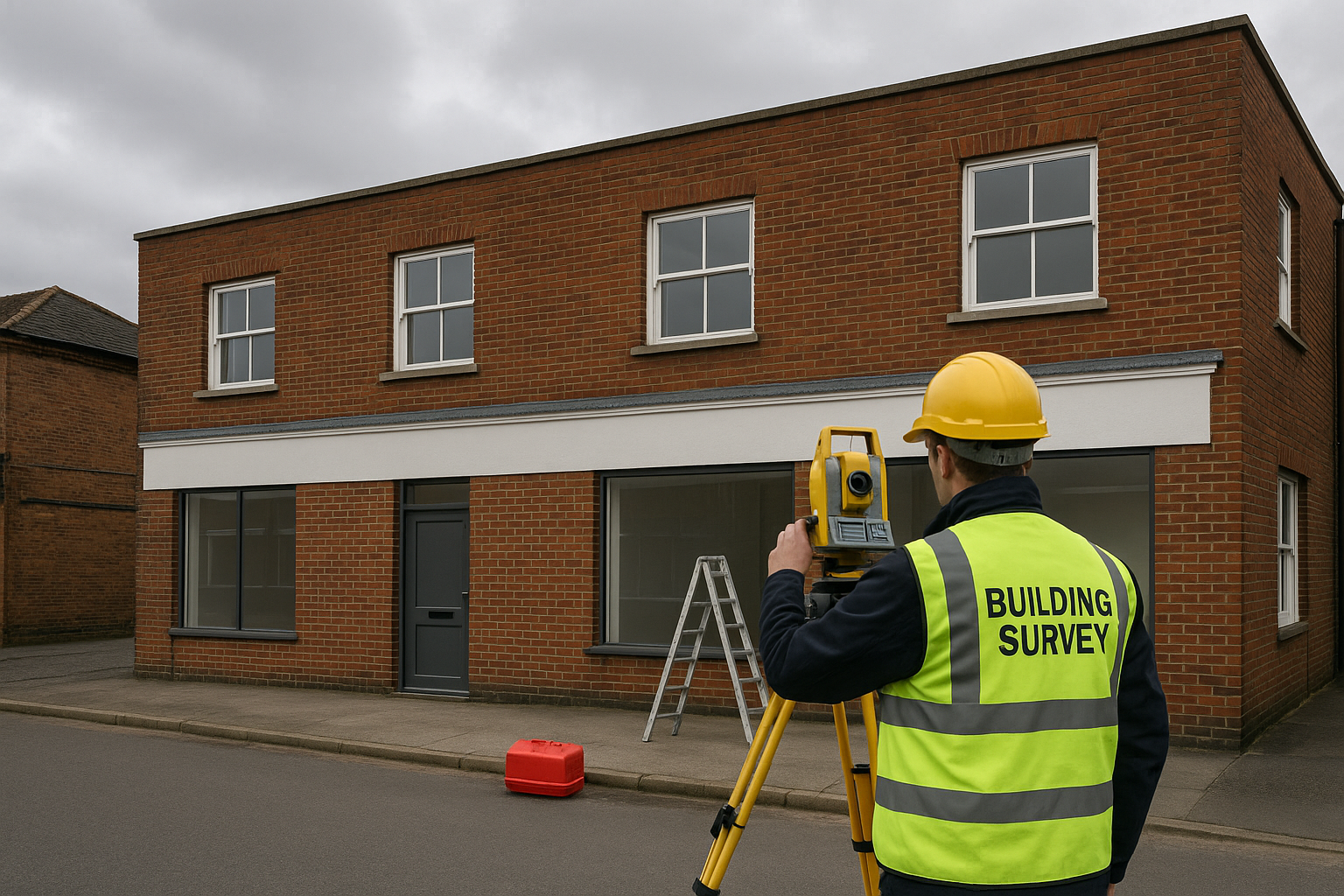
The right time is before tendering demolition work is finalised, before strip-out starts and before contractors commit to a programme built on assumptions. If asbestos is found, the team then has time to plan removal, sequencing and site controls properly.
As a rule, arrange the survey when:
- the demolition scope is defined
- the relevant area can be vacated
- safe access can be provided
- existing records have been gathered
- there is still time to act on the findings
If your project is phased, each phase should be reviewed carefully. A partial demolition can still require a full intrusive survey of the affected section.
4. Arrange an asbestos survey properly
HSE guidance is clear on the principle: if work is likely to disturb asbestos, the right survey needs to be arranged before that work starts. For demolition, that means an intrusive refurbishment and demolition survey, not a light-touch inspection.
To arrange an asbestos survey properly, follow these practical steps:
- Define the works clearly. State whether the whole building or only part of it is being demolished.
- Choose the correct survey type. Do not rely on a management survey for demolition planning.
- Provide drawings and existing records. Old reports, plans and removal records help surveyors target hidden areas.
- Make the area vacant where possible. Demolition surveys are intrusive and can involve destructive inspection.
- Resolve access issues early. Locked rooms, roof voids, risers and plant spaces should not be left as last-minute exclusions.
- Share the findings with contractors. The survey only adds value if the demolition and removal teams actually use it.
If you are unsure which survey you need, ask a simple question: what parts of the building fabric will the works disturb? That usually points to the answer very quickly.
What happens during asbestos refurbishment and demolition surveys?
During asbestos refurbishment and demolition surveys, the surveyor goes beyond visible surfaces and inspects the structure in a way that matches the planned works. The aim is to locate suspect asbestos-containing materials in the areas that will be disturbed, including concealed spaces.
For an asbestos demolition survey, that usually means the inspection is fully intrusive. Surveyors may lift floor finishes, open service ducts, inspect voids, remove access panels and break into selected building elements where needed.
Typical activities on site
- reviewing the agreed survey scope and site hazards
- inspecting all accessible rooms and structural areas
- opening up hidden or enclosed spaces
- taking samples of suspect materials
- photographing locations and findings
- recording any access restrictions or exclusions
- sending samples for laboratory analysis
Some minor damage to finishes is normal during this type of survey. That is the point of the exercise: to find asbestos before contractors disturb it unexpectedly during demolition.
Common asbestos materials identified
Surveyors regularly find asbestos in places the site team did not expect. Common materials include:
- asbestos insulating board in partitions, soffits and ceiling tiles
- pipe lagging and thermal insulation
- sprayed coatings and fire protection
- cement sheets, flues, gutters and roof products
- floor tiles and bitumen adhesives
- textured coatings
- gaskets, seals and rope products
- boards behind heaters, fuse boards and plant
- mastics, packing materials and older service insulation
Why a management survey is not enough for demolition
This is where projects often go wrong. A management survey is designed for normal occupation, routine maintenance and day-to-day asbestos management. It is not intended to uncover every hidden asbestos material inside the building fabric.
Demolition changes everything. Once walls, ceilings, floors and service spaces are disturbed, concealed asbestos can be exposed immediately. Relying on a management survey in that situation can leave contractors working without the information they need.
The difference is straightforward:
- Management survey: for normal occupation and routine maintenance, with limited intrusion
- Refurbishment survey: intrusive inspection of the specific area affected by planned works
- Demolition survey: intrusive inspection of the structure or section due to be demolished
If demolition is planned, a management survey should not be treated as a substitute for an asbestos demolition survey.
How to prepare for an asbestos demolition survey
A good survey starts well before the surveyor arrives on site. Clear scope, proper access and accurate background information make a major difference to the quality of the inspection and the usefulness of the report.
Define the demolition scope
Be precise about what is being demolished. Is it the whole building, a rear extension, a plant room, a single wing or a roof structure?
On phased projects, each stage should have clear boundaries. Vague instructions create gaps, and gaps create risk.
Gather existing records
Previous asbestos reports, registers, plans, refurbishment history and removal records should be reviewed in advance. They do not replace the survey, but they help the surveyor understand likely risk areas and identify what may already have been removed.
Arrange safe access
Access issues are one of the main reasons reports end up with exclusions. Deal with these before the survey date:
- locked rooms
- roof access limitations
- unstable floors
- live electrical services
- confined spaces
- plant hazards
- security restrictions
If an area cannot be inspected, it may need to be presumed to contain asbestos until proven otherwise. That can complicate both removal and demolition planning.
Vacate the area
An asbestos demolition survey is intrusive and often destructive. The building, or at least the relevant area, should generally be vacant so the surveyor can inspect properly and safely.
Checking the accuracy of the survey report
The value of any asbestos demolition survey depends heavily on the report that follows. A vague report can cause just as much trouble as no report at all.
When checking the accuracy of the survey report, review it against the scope of works rather than reading it in isolation. The key question is simple: does this report give the demolition team enough clear information to act safely?
What a strong report should include
- confirmation of the survey type
- a clear description of the surveyed area
- sample results from laboratory analysis
- photographs and location references
- details of identified or presumed asbestos-containing materials
- notes on extent, accessibility and condition
- a list of exclusions or inaccessible areas
- recommendations relevant to demolition planning
Questions to ask before signing it off
- Does the report match the agreed demolition scope?
- Are all floors, voids, plant spaces and ancillary areas covered?
- Are exclusions clearly listed and explained?
- Can contractors identify the materials and locations easily?
- Does it separate confirmed asbestos from presumed materials?
- Are sample references and plans easy to follow?
If anything is unclear, ask for clarification straight away. Sorting out uncertainty at report stage is far cheaper than arguing over it once strip-out or demolition has started.
What happens if the survey finds asbestos?
Finding asbestos does not automatically stop the project. It means the next step is to plan the right response before demolition begins.
The survey findings help your team decide what must be removed, what control measures are required and how the works should be sequenced. Depending on the material and the work involved, asbestos work may fall into licensed, notifiable non-licensed or non-licensed categories under the Control of Asbestos Regulations.
You should never assume all asbestos can be dealt with in the same way. The findings need to be reviewed by competent specialists so the correct removal method is used.
Where removal is required, using a specialist provider for asbestos removal helps keep the process aligned from survey findings through to site preparation.
If suspect asbestos is uncovered after work has already started, stop work in the affected area immediately, secure the area and obtain competent advice. That is exactly the kind of disruption a properly scoped asbestos demolition survey is designed to prevent.
Sourcing analysts and surveyors: what good support looks like
Sourcing analysts and surveyors should never be treated as a last-minute procurement exercise. The quality of the advice, the scope of the inspection and the clarity of the reporting all affect programme, cost and compliance.
When choosing a provider, look for practical capability rather than vague promises. You want a team that understands intrusive surveys, live project pressures and the need for clear communication with contractors.
A suitable surveying organisation should be able to:
- explain whether you need a refurbishment or demolition survey
- review drawings and existing records before attending site
- identify likely access issues in advance
- produce reports that demolition contractors can use easily
- support follow-on sampling, analyst input and removal planning where needed
- cover single sites and multi-site property portfolios
Good coordination matters. If surveyors, analysts, project managers and removal contractors are all working from different assumptions, delays are almost inevitable.
Legal guidance on demolition and asbestos
The legal position is straightforward even if projects are not. Under the Control of Asbestos Regulations, those managing premises and commissioning works must make sure asbestos risks are identified and managed properly.
For demolition, that means arranging the correct survey before work that could disturb asbestos takes place. HSG264 sets out the purpose and approach of asbestos surveys, while HSE guidance makes clear that refurbishment and demolition work requires intrusive inspection.
Practical compliance means:
- commissioning the correct survey early
- using a competent surveying organisation
- making sure the survey scope matches the planned works
- sharing the report with relevant contractors
- resolving exclusions before demolition begins
- allowing time for removal where required
If you are managing a demolition project, the safest approach is to assume hidden materials may be present until a proper survey proves otherwise.
Common mistakes that delay demolition projects
Most asbestos-related delays are avoidable. They usually come from weak planning rather than the presence of asbestos itself.
Watch out for these common mistakes:
- commissioning a management survey when demolition is planned
- booking the survey too late in the programme
- failing to define the demolition area clearly
- not providing access to all relevant spaces
- ignoring exclusions in the report
- assuming old asbestos records are enough
- starting strip-out before the findings have been reviewed
If you want the project to move smoothly, the practical advice is simple: scope early, survey early and resolve access issues before the survey date.
Regional support for demolition and refurbishment projects
If you manage property across more than one location, consistency matters. Using the same surveying approach across sites makes reports easier to compare and helps project teams work from the same standard.
Regional Office:
Regional support is particularly useful for portfolio managers, developers and contractors working across multiple cities. It helps when one provider can coordinate scope, attendance and reporting without you having to brief different companies in different ways.
South Wales:
Projects in South Wales often involve a mix of industrial, commercial and public-sector buildings where historic asbestos use is common. The same rule applies there as anywhere else: if demolition or major intrusive work is planned, get the right survey in place before the programme is fixed.
Supernova supports clients across the UK, including major urban and regional locations. If you need local coverage, we can arrange an asbestos survey London service, an asbestos survey Manchester appointment, or an asbestos survey Birmingham visit for projects in the Midlands.
At Supernova, we’re fully equipped to carry out refurbishment and demolition surveys
You may have seen competitors say, “At Core Surveys, We’re Fully Accredited to Carry Out R&D Surveys”. The wording varies across the industry, but the point behind it matters: demolition and refurbishment surveys should only be handled by competent specialists with the right technical understanding and practical site experience.
At Supernova Asbestos Surveys, we carry out refurbishment and demolition surveys nationwide for property managers, developers, landlords, contractors and public-sector clients. We focus on clear scoping, intrusive inspection where required and reporting that is actually useful on site.
That means practical support with:
- survey type selection
- pre-survey planning
- vacant and restricted-access properties
- portfolio work across multiple locations
- clear reports for removal and demolition teams
- follow-on advice where asbestos is identified
Contact us for advice
If you are planning demolition, strip-out or major refurbishment, getting the survey right early will save time and reduce avoidable risk. A quick conversation at planning stage is often enough to confirm whether you need a refurbishment survey or an asbestos demolition survey.
Supernova Asbestos Surveys provides nationwide support for refurbishment and demolition projects, with practical advice, fast booking options and clear reporting. Call 020 4586 0680 or visit asbestos-surveys.org.uk to arrange a survey or discuss your project.
Frequently Asked Questions
Is an asbestos demolition survey always required before demolition?
If demolition will disturb the structure, an asbestos demolition survey is usually required so asbestos-containing materials can be identified before work begins. A competent surveyor can confirm the correct scope for your project.
Can I use an old management survey for demolition works?
No. A management survey is intended for normal occupation and routine maintenance. Demolition requires a refurbishment and demolition survey with intrusive inspection of the relevant structure.
Does the building need to be empty for a demolition survey?
In most cases, yes. A demolition survey is intrusive and may involve destructive access into walls, floors, ceilings and voids, so the building or affected area should usually be vacant.
What if parts of the building cannot be accessed during the survey?
Any exclusions should be clearly recorded in the report. Inaccessible areas may need further inspection later or may have to be treated as presumed asbestos-containing materials until proven otherwise.
What happens after asbestos is found in a demolition survey?
The findings are used to plan the correct next steps before demolition starts. That may include licensed, notifiable non-licensed or non-licensed asbestos work, depending on the material and the task involved.