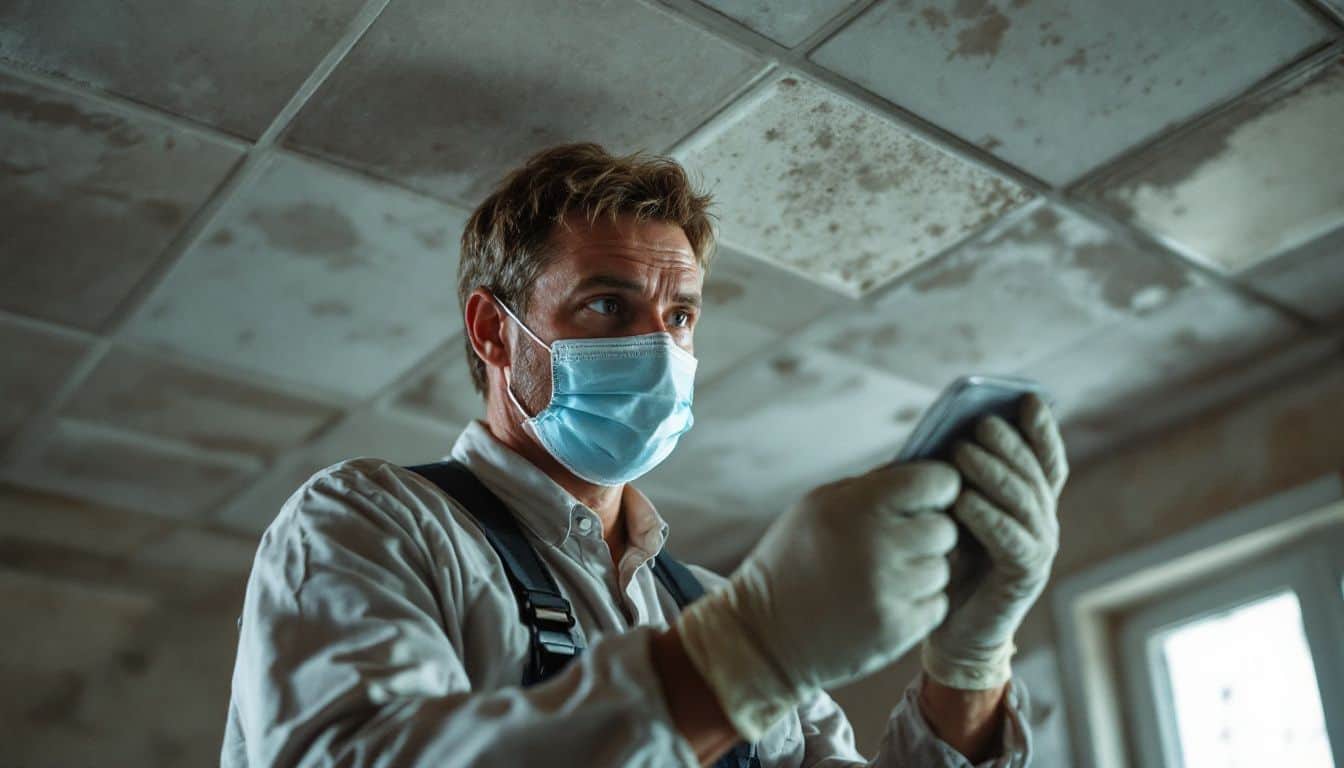
Asbestos Surveys: Protocols, Procedures and What Every Property Owner Needs to Know
If your building was constructed before 2000, asbestos-containing materials (ACMs) could be hiding almost anywhere within its fabric — in ceiling tiles, floor coverings, pipe lagging, roof panels, or textured coatings. Without proper asbestos surveys, you simply cannot know where those materials are, what type of asbestos they contain, or how dangerous they might be. That uncertainty is not just uncomfortable — it is a legal liability.
Getting the survey process right from the outset is a legal obligation under the Control of Asbestos Regulations. This post walks through the protocols that must be followed when commissioning and conducting asbestos surveys, from selecting a competent surveyor to implementing a post-survey management plan.
Whether you manage a single commercial unit or a large property portfolio, understanding these steps protects your occupants, your workers, and yourself.
Why Asbestos Surveys Are a Legal and Moral Necessity
Asbestos fibres, when disturbed, become airborne and can be inhaled deep into the lungs. Over time, this exposure can cause mesothelioma, asbestosis, and lung cancer — diseases that take decades to develop but remain incurable. Asbestos-related disease continues to claim thousands of lives in the UK every year, making it the single largest cause of work-related deaths in the country.
The duty to manage asbestos in non-domestic premises sits squarely with the dutyholder — typically the building owner or occupier. That duty begins with knowing what is in your building, and that is exactly what a properly conducted asbestos survey provides.
Without a current, accurate survey, you cannot produce a valid asbestos register, you cannot develop a management plan, and you cannot safely plan any refurbishment or demolition work. The survey is the foundation everything else is built upon.
The Two Main Types of Asbestos Surveys
HSE guidance document HSG264 — Asbestos: The Survey Guide — defines two distinct types of survey. Each serves a different purpose, and choosing the wrong one for your situation can leave you legally exposed and your building occupants at risk.
Management Surveys
A management survey is the standard survey required during the normal occupation and use of a building. Its purpose is to locate, as far as reasonably practicable, ACMs that could be disturbed during routine maintenance and to assess their condition.
Surveyors will inspect accessible areas throughout the building, including:
- All rooms, corridors, stairwells, and communal spaces
- Basements, cellars, and roof spaces
- Above false ceilings and below raised floors
- Service ducts, lift shafts, and plant rooms
- External elements such as roofing, soffits, gutters, and window surrounds
- Areas behind access hatches that maintenance staff might disturb
The survey produces an asbestos register — a documented record of all identified or presumed ACMs, their location, type, condition, and risk rating. This register must be kept up to date and made available to anyone who might disturb those materials, including contractors.
Management surveys are not intended to be destructive. Minor intrusive work may be carried out where necessary, but the building can remain in use throughout.
Refurbishment and Demolition Surveys
A demolition survey — more formally called a refurbishment and demolition survey — is required before any work that will disturb the fabric of a building. This includes full demolitions, major refurbishments, and even targeted works such as removing partitions, installing new cabling, or opening up ceiling voids.
This type of survey is far more intrusive. The affected area must be vacated, and surveyors will carry out destructive inspection to locate all ACMs, including those hidden within the structure. Materials that a management survey might presume to be asbestos-free are physically sampled and tested.
Key elements of a refurbishment and demolition survey include:
- Full destructive inspection of the area to be disturbed
- Sampling of all suspected ACMs, including hidden insulation and structural materials
- Air testing — background, reassurance, and personal monitoring where required
- Laboratory analysis of all samples
- A detailed report to inform safe working plans and asbestos removal specifications
You must not begin any notifiable refurbishment or demolition work without a valid survey of this type. The consequences of skipping this step — for contractors, workers, and building owners — can be severe, both legally and in terms of health outcomes.
Selecting a Competent Surveyor
The quality of an asbestos survey is only as good as the person carrying it out. Choosing the right surveyor is not simply a matter of finding the cheapest quote — it is about ensuring the person has the technical knowledge, accreditation, and experience to do the job properly.
Qualifications and Accreditation
Surveyors should hold relevant qualifications and work for a company that holds UKAS accreditation for asbestos surveying. UKAS (United Kingdom Accreditation Service) accreditation means the organisation has been independently assessed against internationally recognised standards, giving you confidence in the reliability of their findings.
Under HSG264, surveyors must be competent — meaning they have the necessary training, knowledge, experience, and understanding of the relevant regulations and guidance. This includes familiarity with identifying different ACM types, understanding how buildings are constructed, and knowing where asbestos is most likely to be found.
Analysts who examine samples in the laboratory must work in ISO/IEC 17025 accredited facilities. This standard ensures that laboratory testing methods — including polarised light microscopy (PLM) and transmission electron microscopy (TEM) — are carried out with rigorous quality controls.
Experience and Reputation
Accreditation matters, but so does practical experience. An experienced surveyor will have encountered the full range of building types and construction methods, making them far better placed to identify ACMs that a less experienced operative might miss.
Ask prospective surveyors about their experience with your specific building type — whether that is a Victorian terrace, a 1970s office block, or an industrial unit. Ask for example reports so you can assess the quality and clarity of their documentation. A good survey report should be detailed, clearly laid out, and immediately actionable.
Supernova Asbestos Surveys has completed over 50,000 surveys across the UK, working across all property types and sectors. That depth of experience translates directly into more accurate, more reliable survey results.
The Key Steps in Conducting Asbestos Surveys
Understanding what happens during a survey helps you prepare your building properly and ensures you get the most accurate results possible.
Pre-Survey Preparation
Before the survey begins, the surveyor will gather information about the building — its age, construction type, history of previous surveys or remediation work, and any known or suspected ACMs. Building plans, maintenance records, and previous asbestos registers should all be made available.
Ensure the surveyor has full access to all areas of the building. Locked rooms, sealed voids, and inaccessible areas will be recorded as such in the report — but every limitation on access is a potential gap in the survey findings. The more access you can provide, the more complete the survey will be.
Initial Site Inspection
The survey team will carry out an initial walk-through to assess the building layout, identify potential ACMs visually, and plan the sampling strategy. During this phase, work areas are restricted to the survey team only — other occupants should not be present in areas being actively inspected.
The surveyor will assess the condition of suspected materials at this stage, noting any visible damage, deterioration, or disturbance that might indicate an elevated risk. This informs both the sampling approach and the risk assessment in the final report.
Sampling Procedures
Sampling is the most technically sensitive part of the survey. It must be carried out by trained personnel following strict protocols to prevent fibre release and cross-contamination. The correct process is as follows:
- Prepare the area — Clear unnecessary items, seal off the sampling zone, and lay down protective sheeting where required.
- Don protective equipment — Surveyors wear disposable coveralls, nitrile gloves, and appropriate respiratory protective equipment (RPE) rated for asbestos work.
- Collect samples — A minimum of one to two samples are taken from each distinct material. Specialised tools are used to minimise fibre release during sampling.
- Seal and label samples — Each sample is placed immediately into a sealed, labelled container. Labels must record the location, date, and surveyor reference.
- Decontaminate the area — Any debris is cleaned up using appropriate methods; the area is made safe before access is restored.
- Transport samples securely — Samples are sent to a UKAS-accredited laboratory for analysis, with a clear chain of custody maintained throughout.
- Document everything — Precise records of sample locations, material descriptions, and conditions are maintained throughout the process.
Cutting corners at the sampling stage undermines the entire survey. If samples are contaminated, mislabelled, or taken from unrepresentative locations, the laboratory results — and therefore the risk assessment — will be unreliable.
Laboratory Analysis
All samples must be analysed by a UKAS-accredited laboratory. The two primary analytical methods are polarised light microscopy (PLM), used for bulk samples, and transmission electron microscopy (TEM), which offers greater sensitivity for lower concentrations of fibres.
The laboratory will identify the type of asbestos present — chrysotile (white), amosite (brown), or crocidolite (blue) — and confirm whether the material is an ACM. This information feeds directly into the risk assessment and determines what management or remediation action is required.
Only results from ISO/IEC 17025 accredited laboratories should be accepted. This accreditation is your assurance that the analytical methods are validated, the equipment is calibrated, and the results are reproducible.
Post-Survey Protocols: Reporting and Management
The survey report and subsequent management actions are where the real value of the process is realised. A survey that sits in a filing cabinet and is never acted upon has failed in its purpose.
The Survey Report
A properly structured asbestos survey report should include:
- A full record of all areas inspected and any areas not accessed, with reasons
- Locations of all identified or presumed ACMs, supported by photographs and building plans
- The type, condition, and extent of each ACM
- A risk assessment for each identified material, based on its condition and likelihood of disturbance
- Laboratory analysis results for all samples taken
- Clear recommendations for management, remediation, or removal
- Any caveats or limitations agreed with the client prior to the survey
The report forms the basis of your asbestos register. It must be kept on site (or readily accessible), kept up to date, and shared with anyone who may disturb the materials identified — contractors, maintenance staff, and emergency services.
Developing and Implementing an Asbestos Management Plan
Once you have a completed survey, the Control of Asbestos Regulations requires you to develop and implement an asbestos management plan. This is not a one-off document — it is a living record that must be actively maintained.
A robust management plan will:
- Document the location, type, condition, and risk level of all ACMs in the building
- Set out clear procedures for managing each material — whether that is monitoring in place, encapsulation, or removal
- Define inspection schedules — typically every six to twelve months for materials in good condition, more frequently where deterioration has been noted
- Record all actions taken, including contractor visits, remediation works, and re-inspections
- Assign clear responsibility for ongoing management to a named dutyholder
- Include emergency procedures for accidental disturbance
Where materials are assessed as higher risk, asbestos removal may be the most appropriate course of action. Removal must be carried out by a licensed contractor in accordance with the Control of Asbestos Regulations, and the area must be re-inspected and air-tested before it is returned to use.
Asbestos Surveys Across the UK: Location Matters
The age and construction type of buildings varies significantly across different parts of the UK, and so does the likelihood of encountering specific ACMs. Industrial cities with heavy post-war construction activity, for example, often have a higher prevalence of asbestos insulation board, lagging, and sprayed coatings than areas dominated by newer builds.
Supernova Asbestos Surveys operates nationwide, with specialist teams covering major urban centres and surrounding areas. If you need an asbestos survey in London, our teams are experienced across the capital’s diverse building stock — from Victorian commercial premises to post-war council housing and modern office developments.
For clients in the North West, our asbestos survey Manchester service covers the city and surrounding boroughs, including Salford, Trafford, and beyond. Manchester’s industrial heritage means a high proportion of older commercial and industrial stock where asbestos use was widespread.
In the Midlands, our asbestos survey Birmingham teams work across the city and the wider West Midlands region, covering everything from former manufacturing premises to schools, hospitals, and residential blocks.
Wherever your property is located, using a surveyor with genuine local knowledge and experience of the building types in your area will always produce more thorough, more reliable results.
Common Mistakes Dutyholders Make — and How to Avoid Them
Even well-intentioned property managers and owners make avoidable errors when it comes to asbestos surveys. Here are the most common pitfalls and how to sidestep them.
Commissioning the Wrong Type of Survey
Using a management survey when a refurbishment and demolition survey is required is one of the most serious mistakes a dutyholder can make. If you are planning any work that will disturb the building fabric — even minor works — always check with your surveyor which type of survey applies before work begins.
Restricting Access During the Survey
Every area the surveyor cannot access is a gap in your asbestos register. Before the survey date, ensure all areas are unlocked and accessible, including roof spaces, plant rooms, basement areas, and locked plant cupboards. Brief your facilities team so they can assist on the day.
Treating the Survey as a One-Off Exercise
An asbestos survey is not a permanent record — it is a snapshot in time. Materials degrade, buildings change, and new ACMs may be uncovered during maintenance work. Your asbestos register and management plan must be reviewed and updated regularly, and a new survey commissioned whenever significant changes are made to the building.
Failing to Share the Register with Contractors
The Control of Asbestos Regulations place a clear obligation on dutyholders to share asbestos information with anyone who might disturb ACMs. Before any contractor begins work on your building, they must be provided with a copy of the relevant sections of the asbestos register. Failing to do so puts workers at risk and exposes you to significant legal liability.
Choosing on Price Alone
A cut-price asbestos survey from an unaccredited provider is not a bargain — it is a liability. If the survey misses ACMs, underestimates their condition, or produces a report that does not meet the requirements of HSG264, you are no better protected than if you had not surveyed at all. Always verify UKAS accreditation before appointing a surveyor.
Frequently Asked Questions
How long does an asbestos survey take?
The duration of an asbestos survey depends on the size and complexity of the building. A small commercial unit might be completed in two to three hours, while a large industrial facility or multi-storey building could take a full day or more. Your surveyor will give you a realistic estimate once they have reviewed the building details.
Do I need an asbestos survey for a residential property?
The legal duty to manage asbestos under the Control of Asbestos Regulations applies to non-domestic premises. However, residential properties — particularly those built before 2000 — can contain ACMs, and a survey is strongly advisable before any refurbishment or demolition work. Landlords of houses in multiple occupation (HMOs) may also have additional obligations.
How often should asbestos surveys be updated?
There is no fixed statutory interval for re-surveying a building, but your asbestos management plan should include a regular review schedule. Materials in good condition should be re-inspected at least annually, and a new survey should be commissioned whenever significant refurbishment, change of use, or structural alterations are planned.
What happens if asbestos is found during a survey?
Finding asbestos is not automatically a cause for alarm. Many ACMs in good condition can be safely managed in place under a documented management plan. Your surveyor will assign a risk rating to each material and recommend the appropriate course of action — whether that is monitoring, encapsulation, or removal by a licensed contractor.
Can I carry out an asbestos survey myself?
No. Asbestos surveys must be carried out by a competent person with the appropriate training, qualifications, and — for most commercial buildings — UKAS accreditation. Attempting to sample suspected ACMs yourself is dangerous, potentially illegal, and will not produce a survey report that satisfies your legal obligations under the Control of Asbestos Regulations.
Commission Your Asbestos Survey with Supernova
Supernova Asbestos Surveys is one of the UK’s most experienced asbestos surveying companies, with over 50,000 surveys completed across every property type and sector. Our UKAS-accredited surveyors operate nationwide, delivering thorough, clearly reported results that give dutyholders the information they need to manage their buildings safely and legally.
Whether you need a management survey for an occupied building, a refurbishment and demolition survey ahead of planned works, or specialist advice on asbestos management planning, our team is ready to help.
Call us today on 020 4586 0680 or visit asbestos-surveys.org.uk to request a quote or speak to one of our surveyors directly.