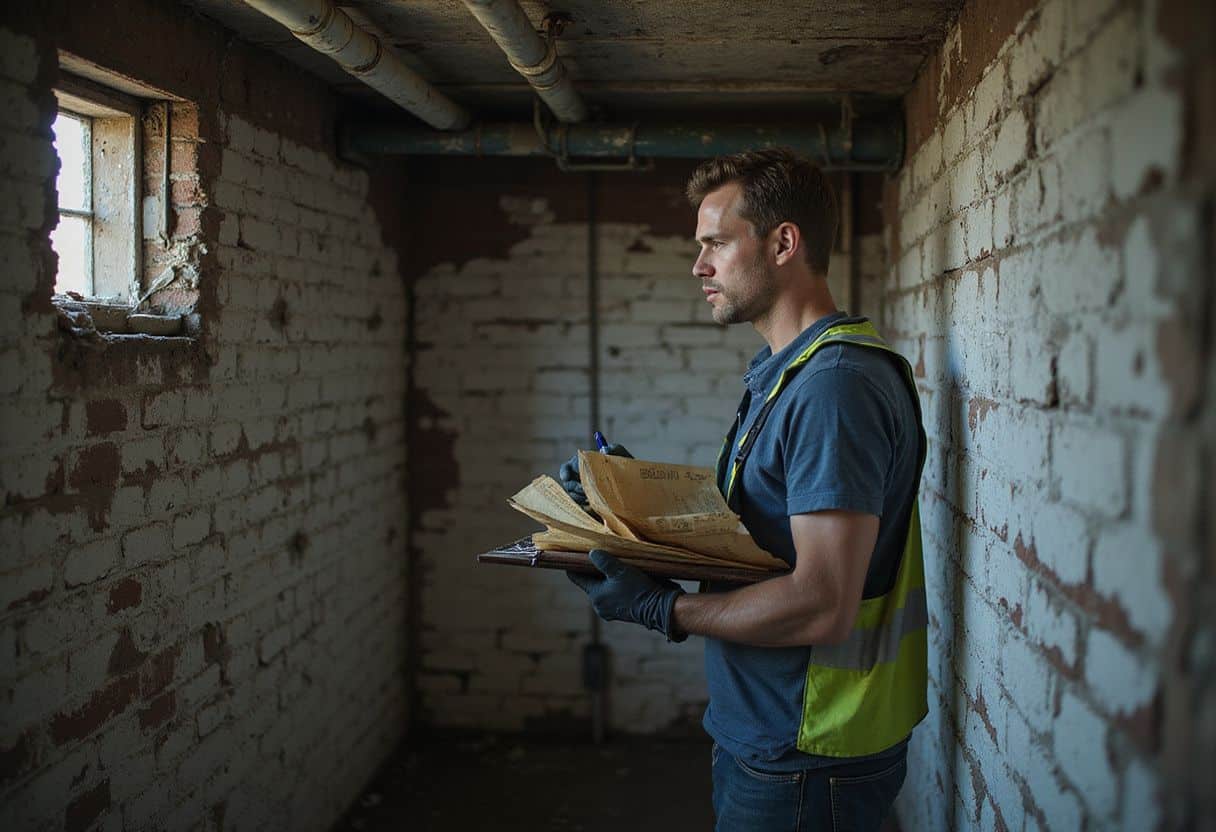
Asbestos Surveyor Qualifications: What to Look for Before You Hire
Hiring the wrong asbestos surveyor is not just a waste of money — it can leave you legally exposed, with a survey that fails to meet HSE requirements. Asbestos surveyor qualifications exist precisely to separate competent professionals from those who are simply going through the motions, and knowing what to look for before you book could save you significant trouble down the line.
This post breaks down the qualifications, accreditations, and practical skills that define a genuinely competent asbestos surveyor in the UK — and what you should be asking before anyone sets foot in your building.
Why Asbestos Surveyor Qualifications Matter Under UK Law
The Control of Asbestos Regulations places a legal duty on those responsible for non-domestic premises to manage asbestos risk. That duty can only be properly discharged if surveys are carried out by competent, suitably qualified individuals.
The HSE is explicit on this point: surveys must be conducted by trained and competent surveyors. HSG264 — the HSE’s definitive guidance document, Asbestos: The Survey Guide — sets out exactly what competence looks like. It covers everything from identifying asbestos-containing materials to correct sampling techniques and report writing.
A surveyor who cannot demonstrate alignment with HSG264 is not a surveyor you should be using. Beyond legal compliance, using a properly qualified surveyor protects workers, occupants, and contractors from exposure to one of the UK’s most dangerous workplace hazards. Asbestos-related diseases remain a leading cause of occupational death in Britain, and the qualifications are not bureaucratic box-ticking — they reflect genuine technical rigour.
The Core Asbestos Surveyor Qualifications You Should Look For
There are two primary qualifications that demonstrate competence in asbestos surveying. Both are widely recognised across the industry and directly referenced in HSE guidance.
BOHS P402: Building Surveys and Bulk Sampling for Asbestos
The BOHS P402 certificate, issued by the British Occupational Hygiene Society, is considered the benchmark qualification for practising asbestos surveyors. It is the credential most frequently cited by UKAS-accredited firms and is directly aligned with the technical requirements in HSG264.
The P402 course covers a demanding syllabus, including:
- Identification of asbestos types and their typical locations in buildings
- Health risks associated with asbestos fibre exposure
- Legal duties under the Control of Asbestos Regulations
- Survey planning, risk assessment, and site procedures
- Safe bulk sampling techniques and correct use of decontamination units
- Operation of Class H vacuum cleaners, certified for asbestos fibre control
- Report writing and documentation to HSE standards
Candidates must pass both a written examination and a practical assessment. The practical element is particularly important — it demonstrates that the surveyor can apply knowledge safely in real building environments, not just in a classroom.
Many providers also require ongoing continuing professional development to ensure skills remain current. When you request a free quote from a surveying company, asking whether their surveyors hold the BOHS P402 is one of the first questions you should put to them.
RSPH Level 3 Award in Asbestos Surveying
The RSPH Level 3 Award in Asbestos Surveying, awarded by the Royal Society for Public Health, is another well-established qualification in the sector. Training typically involves around 40 hours of guided learning, combining coursework with written examinations and a portfolio of practical evidence.
The syllabus closely mirrors the BOHS P402 in scope, covering asbestos types, health risks, relevant legislation, HSG264 guidance, survey planning, bulk sampling, and the correct use of decontamination units and Class H vacuum cleaners. Candidates must build a portfolio demonstrating real competence — not just theoretical knowledge.
Successful candidates receive associate membership with the Asbestos Management Institute, which provides ongoing professional recognition. For clients, this qualification signals that a surveyor has met current occupational hygiene standards and is working in line with HSE expectations.
Both the BOHS P402 and the RSPH Level 3 Award are accepted as evidence of competence under UKAS accreditation requirements. A surveyor holding either credential has demonstrated the knowledge and practical skills needed to carry out reliable, legally compliant surveys.
UKAS Accreditation and What It Means for You
Individual qualifications are important, but they only tell part of the story. The organisation a surveyor works for also needs to operate within a recognised quality framework — and this is where UKAS accreditation becomes critical.
The United Kingdom Accreditation Service (UKAS) is the sole national accreditation body recognised by the UK government. When an asbestos surveying company holds UKAS accreditation, it means their processes, personnel, and quality systems have been independently assessed and found to meet the required standard.
For asbestos surveys, the relevant standard is BS EN ISO/IEC 17020, which applies to inspection bodies. Firms accredited to this standard must demonstrate:
- Documented, consistent survey and sampling procedures
- Surveyor competence verified through qualifications and experience
- Independence and impartiality in their assessments
- Appropriate professional indemnity insurance — typically a minimum of £5 million
- Regular internal and external quality audits
UKAS document RG 8 sets out the specific evidence required for accreditation in asbestos surveying, including confirmation that surveyors hold recognised qualifications such as the BOHS P402 or RSPH Level 3 Award. This creates a robust, auditable chain of competence from the individual surveyor to the organisation as a whole.
The HSE strongly recommends using UKAS-accredited surveyors for asbestos inspections. For duty-holders in commercial or industrial properties, using an accredited firm is increasingly a contractual or insurance requirement.
Laboratory Accreditation for Sample Analysis
Surveying does not end when the surveyor leaves your building. Bulk samples taken during a survey need to be analysed by a competent laboratory, and reputable firms use laboratories accredited to ISO/IEC 17025 — the international standard for testing and calibration laboratories.
If you need standalone sample analysis, ensure the laboratory processing your samples holds UKAS accreditation to ISO/IEC 17025. The results of non-accredited analysis may not be accepted by regulators or insurers, and could expose you to legal challenge.
Understanding the Different Types of Asbestos Survey
A qualified surveyor needs to understand not just how to survey, but which type of survey is appropriate for your situation. Getting this wrong can leave you non-compliant and your building’s occupants at risk.
Management Surveys
A management survey is the standard survey for occupied buildings. Its purpose is to locate and assess asbestos-containing materials that could be disturbed during normal occupation or routine maintenance, and it forms the basis of an asbestos management plan — a legal requirement for most non-domestic premises.
A competent surveyor carrying out a management survey will inspect all accessible areas, take representative bulk samples where asbestos is suspected, and produce a detailed report with risk ratings and management recommendations. The survey must follow the methodology set out in HSG264.
Refurbishment and Demolition Surveys
Before any significant building work, a demolition survey — formally known as a refurbishment and demolition survey — is legally required. This is a more intrusive survey, designed to locate all asbestos-containing materials in areas that will be disturbed by the planned works.
These surveys typically involve destructive inspection techniques, including breaking into walls, floors, and ceilings, and must be carried out before any contractor begins work. A surveyor without the right qualifications and experience can easily miss materials in concealed locations, putting contractors and future occupants at serious risk.
Where asbestos is identified during a refurbishment or demolition survey, licensed asbestos removal will usually be required before work proceeds. Your surveyor should be able to advise on this and refer you to appropriately licensed contractors.
Practical Skills That Qualifications Alone Cannot Measure
Certificates demonstrate that a surveyor has met a baseline standard, but experience and practical competence are equally important. When evaluating a surveyor, look beyond the paper qualifications.
Site Competence and Safe Working Practices
A competent surveyor should be able to demonstrate:
- Correct use of personal protective equipment, including respiratory protection, disposable coveralls, gloves, and eye protection
- Proper set-up and use of decontamination units on site
- Safe operation of Class H vacuum cleaners during sampling activities
- Correct bulk sampling technique to avoid unnecessary fibre release
- Accurate record-keeping, including photographic evidence and sample chain-of-custody documentation
These are not optional extras — they are fundamental requirements set out in HSG264 and the Control of Asbestos Regulations. A surveyor who cuts corners on any of these points is not working to the required standard, regardless of what qualifications they hold.
Report Quality and Communication
A good asbestos survey report is clear, accurate, and actionable. It should identify the location, condition, and risk rating of all asbestos-containing materials found, along with recommended actions and a priority schedule for management or removal.
Experienced surveyors understand that their reports will be read by property managers, contractors, solicitors, and insurers — not just other technical professionals. The ability to communicate findings clearly and without unnecessary jargon is a genuine professional skill, and one worth assessing before you commit to a company.
How to Check an Asbestos Surveyor’s Credentials
Do not take a company’s word for their qualifications and accreditation. Here is a practical checklist for verifying credentials before you book:
- Check UKAS accreditation directly. The UKAS website holds a searchable register of accredited organisations. Verify the company is listed and that their accreditation covers asbestos inspection under BS EN ISO/IEC 17020.
- Ask to see surveyor certificates. A reputable firm will have no hesitation in confirming that their surveyors hold the BOHS P402 or RSPH Level 3 Award in Asbestos Surveying — and should be able to provide the specific names of surveyors attending your site.
- Confirm professional indemnity insurance. Ask for confirmation of the level of cover. A minimum of £5 million is the accepted industry standard for asbestos surveying work.
- Review a sample report. Ask whether the company can share a redacted example of a previous survey report. This gives you a clear sense of the quality and clarity of their documentation.
- Check continuing professional development. Competent surveyors do not simply qualify and stop learning. Ask whether surveyors undertake regular CPD and how the company keeps its staff current with HSE guidance updates.
- Confirm laboratory accreditation. Ask which laboratory analyses their bulk samples and whether it holds UKAS accreditation to ISO/IEC 17025.
Asbestos Surveys Across the UK: Why Local Coverage Matters
Qualifications and accreditation are non-negotiable, but practical logistics also matter. A surveyor who covers your area reliably, can attend at short notice, and delivers reports quickly makes a real difference when you are managing a project or responding to a legal obligation.
If you are based in the capital, our team provides a fully accredited asbestos survey London service, covering commercial, residential, and industrial properties across Greater London. We regularly work across the full range of property types and can mobilise quickly when timescales are tight.
For clients in the North West, our asbestos survey Manchester team operates across the city and surrounding areas, delivering the same standard of UKAS-accredited surveying with local knowledge and reliable turnaround times.
In the Midlands, our asbestos survey Birmingham service covers the city and wider West Midlands region. Whether you are managing a single commercial unit or a large portfolio, our locally based surveyors can respond efficiently and deliver reports to the standard your duty of care requires.
Supernova Asbestos Surveys has completed over 50,000 surveys nationwide, and our coverage extends well beyond these major cities. Wherever your property is located, our surveyors hold the asbestos surveyor qualifications and accreditations you should expect from any firm you commission.
Work With a Surveyor You Can Trust
Asbestos surveyor qualifications are not a formality — they are the foundation of a legally compliant, technically reliable survey. A surveyor without the right credentials, working for a company without UKAS accreditation, is not in a position to give you the assurance you need.
At Supernova Asbestos Surveys, our surveyors hold recognised qualifications, our organisation operates under UKAS accreditation, and our reports are written to a standard that stands up to regulatory scrutiny. We cover the full range of survey types, from management surveys through to refurbishment and demolition surveys, and we work with UKAS-accredited laboratories for all sample analysis.
To find out more or book a survey, call us on 020 4586 0680 or visit asbestos-surveys.org.uk. You can also get a free quote online — we aim to respond promptly, and our team is happy to advise on the right type of survey for your property before you commit.
Frequently Asked Questions
What qualifications should an asbestos surveyor have?
The two principal qualifications for asbestos surveyors in the UK are the BOHS P402 (Building Surveys and Bulk Sampling for Asbestos), issued by the British Occupational Hygiene Society, and the RSPH Level 3 Award in Asbestos Surveying, awarded by the Royal Society for Public Health. Both are recognised under UKAS accreditation requirements and aligned with HSG264 guidance. A surveyor holding either credential has demonstrated the knowledge and practical skills needed to carry out legally compliant surveys.
Does an asbestos surveyor need to be UKAS accredited?
Individual surveyors hold qualifications, but UKAS accreditation applies to the surveying organisation as a whole. The relevant standard is BS EN ISO/IEC 17020 for inspection bodies. The HSE strongly recommends using UKAS-accredited firms, and for many commercial and industrial clients, using an accredited company is a contractual or insurance requirement. Always check the UKAS register directly before booking.
What is the difference between a management survey and a demolition survey?
A management survey is carried out in occupied buildings to identify asbestos-containing materials that could be disturbed during normal use or routine maintenance. A refurbishment and demolition survey is required before significant building work begins — it is more intrusive and designed to locate all asbestos in areas that will be disturbed by the planned works. Using the wrong survey type can leave you legally non-compliant.
How do I verify an asbestos surveyor’s credentials?
Check the UKAS register online to confirm the company holds accreditation under BS EN ISO/IEC 17020. Ask the firm directly for confirmation that their surveyors hold the BOHS P402 or RSPH Level 3 Award, and request the names of the individuals who will attend your site. Also confirm their professional indemnity insurance level and ask which UKAS-accredited laboratory they use for bulk sample analysis.
Is a survey report from a non-accredited surveyor legally valid?
A survey carried out by a non-accredited firm may not meet the competence standards required under the Control of Asbestos Regulations and HSG264. Reports from unqualified or non-accredited surveyors may be challenged by regulators, insurers, or solicitors, and could leave duty-holders exposed to enforcement action. Using a UKAS-accredited firm with properly qualified surveyors is the only way to ensure your survey will stand up to scrutiny.