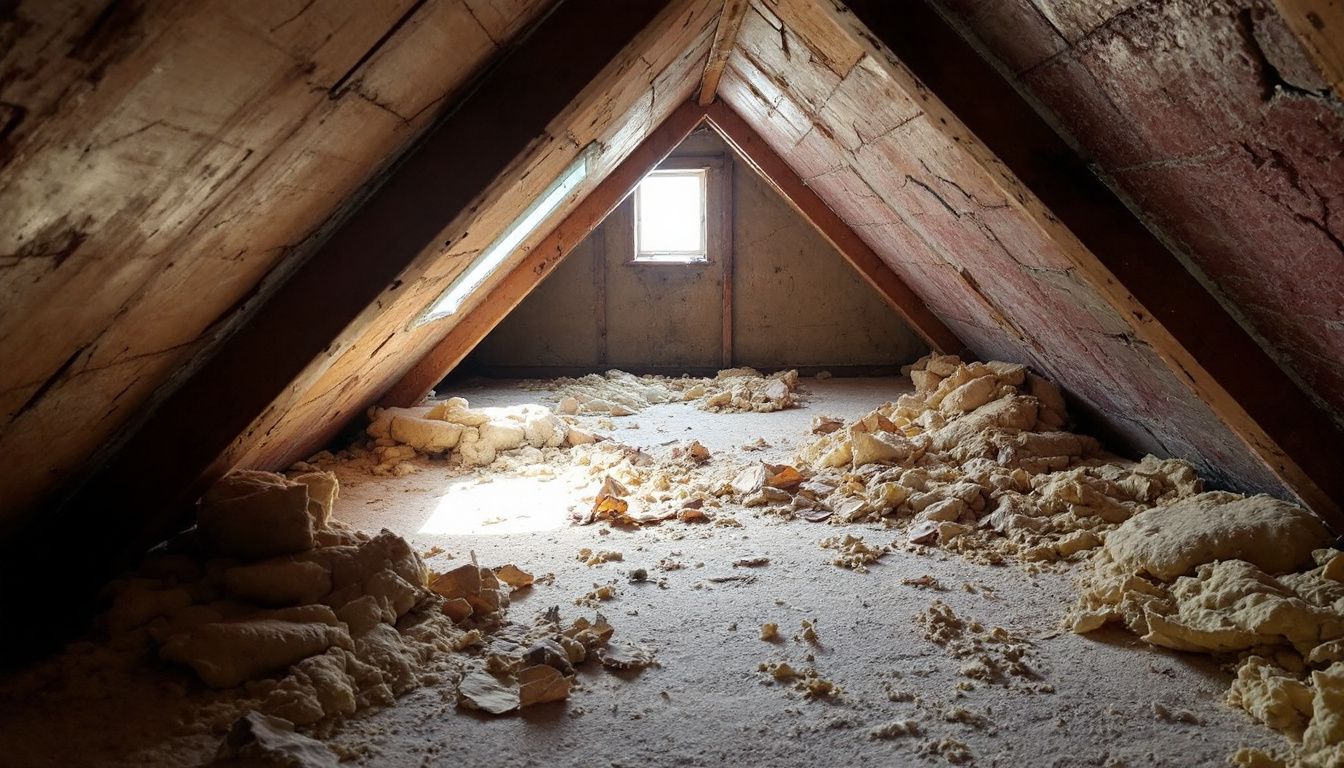
Asbestos Inspection London: What Every Property Owner and Duty Holder Needs to Know
London’s built environment is vast, varied, and — in a great many cases — contains asbestos. If your property was constructed before 2000, the likelihood of asbestos-containing materials (ACMs) being present somewhere in the building fabric is high. A professional asbestos inspection London is not simply good practice; for most non-domestic premises, it is a legal obligation under the Control of Asbestos Regulations. Whether you manage a Victorian terrace in Hackney, a commercial unit in Canary Wharf, or a school in Lewisham, the principles are identical: identify what is there, assess the risk, and manage it properly.
Why Asbestos Remains a Live Issue in London Properties
Asbestos was used extensively in UK construction from the 1950s through to the late 1990s. It appeared in everything from roof sheets and floor tiles to pipe lagging, textured coatings, and sprayed insulation. London, with its enormous stock of pre-2000 buildings, carries a significant legacy burden that is not going away any time soon.
Asbestos fibres are microscopic. When ACMs are disturbed — during drilling, cutting, or renovation work — those fibres become airborne and can be inhaled. Long-term exposure is linked to mesothelioma, asbestosis, and lung cancer, all of which can take decades to develop after initial exposure. This is precisely why the law requires duty holders to manage asbestos proactively rather than waiting for a problem to emerge.
London’s ongoing regeneration — from East London’s development corridors to refurbishment projects across inner and outer boroughs — makes proper asbestos inspection more relevant than ever. Contractors regularly encounter ACMs on sites where no survey has been carried out, creating serious health and legal risks for everyone involved.
Who Is a Duty Holder and What Are Their Legal Obligations?
Under the Control of Asbestos Regulations, a duty holder is anyone who has responsibility for the maintenance or repair of non-domestic premises. That typically means landlords, managing agents, facilities managers, and employers who occupy a building.
Duty holders are legally required to:
- Take reasonable steps to identify whether ACMs are present in their premises
- Assess the condition and risk of any ACMs found
- Produce and maintain an asbestos register and management plan
- Share information about ACMs with anyone who may disturb them
- Arrange re-inspections at appropriate intervals to monitor condition
Failure to comply can result in substantial fines or, in serious cases, prosecution. More importantly, failing to manage asbestos puts the health of building occupants and tradespeople at genuine risk.
For domestic properties, the legal picture is slightly different — private homeowners do not carry the same statutory duty as commercial landlords. However, the practical risk is identical. Anyone planning renovation or building work on a pre-2000 home should still commission an asbestos inspection before work begins.
Types of Asbestos Inspection Available in London
Not every inspection is the same. The type of survey you need depends on what you are planning to do with the building. Choosing the wrong survey type wastes money and can leave you legally exposed.
Management Survey
A management survey is the standard inspection for buildings in normal occupation. It is designed to locate ACMs that could be disturbed during everyday use or routine maintenance — think a plumber replacing a pipe or an electrician chasing a cable through a wall.
Surveyors carry out a visual inspection of accessible areas and take bulk samples of suspect materials. Those samples go to a UKAS-accredited laboratory for analysis, giving you a confirmed result rather than a visual guess.
The report maps ACM locations on floor plans, assigns a risk rating to each item, and sets out the management actions required. An asbestos management survey is required for all non-domestic premises built before 2000 where no previous survey exists. It forms the foundation of your asbestos management plan and your legal compliance position.
Refurbishment and Demolition Survey
If you are planning significant building work — a full refurbishment, an extension, or demolition — a management survey is not sufficient. You need a demolition survey, which is far more intrusive.
Surveyors access concealed areas including wall cavities, ceiling voids, and beneath floors. The building should ideally be unoccupied during this process to reduce the risk of fibre release.
The purpose is to locate every ACM that could be disturbed during the planned works, so that licensed removal can be arranged before contractors move in. This type of survey is a legal requirement under the Control of Asbestos Regulations for any pre-2000 building undergoing major works. Skipping it is not just a regulatory breach — it puts workers’ lives at risk.
Re-Inspection Survey
Once ACMs are identified and recorded, the duty does not end there. Materials must be monitored over time to check that their condition has not deteriorated. A re-inspection survey revisits known ACMs, assesses any changes in condition, and updates the asbestos register accordingly.
HSG264, the HSE’s guidance on asbestos surveys, recommends re-inspection at intervals of six to twelve months depending on the risk rating of the materials involved. After any renovation or maintenance work that could have disturbed ACMs, a re-inspection should be carried out promptly.
Re-inspection is not a tick-box exercise. It is the mechanism that keeps your management plan live and your risk assessments accurate. Without it, your register becomes outdated and your compliance position weakens over time.
What Happens During an Asbestos Inspection in London?
Understanding the process helps you prepare properly and get the most from your survey.
Before the Survey
Share as much information as possible with the surveying company. Building age, original construction drawings, previous survey reports, and any known history of maintenance or refurbishment all help the surveyor plan their approach. The more context they have, the more targeted and efficient the inspection will be.
On the Day
A qualified surveyor — ideally holding a BOHS P402 qualification — will attend the property and carry out a systematic inspection of all accessible areas. They will identify suspect materials visually and take bulk samples where necessary.
Samples are collected using controlled methods to minimise fibre release, and the surveyor will wear appropriate personal protective equipment throughout. For a typical residential property, the on-site inspection takes one to two hours. Larger commercial premises will naturally take longer.
Laboratory Analysis
Bulk samples are sent to a UKAS ISO/IEC 17025 accredited laboratory for analysis. Visual identification of asbestos is not reliable — many ACMs look identical to non-asbestos materials. Laboratory confirmation is the only way to be certain.
If you need standalone sample analysis for materials already collected, this can be arranged separately through an accredited laboratory. Results are typically returned within 24 hours, enabling rapid report turnaround.
The Report
A quality asbestos inspection report should include:
- A register of all identified ACMs with precise locations on floor plans
- Material type — chrysotile (white), amosite (brown), or crocidolite (blue) asbestos
- Condition assessment and risk rating for each item
- Laboratory analysis results with UKAS accreditation details
- Recommended management actions, including whether licensed removal is required
- Guidance on ongoing duty holder obligations
The report should be clear enough that a non-specialist can understand it and act on it. If you receive a report that is difficult to interpret, ask your surveyor to walk you through it.
Common Locations for Asbestos in London Buildings
Knowing where ACMs are commonly found helps you understand why a thorough inspection matters. Asbestos was used in so many building products that a cursory look around is never sufficient.
In residential properties, common locations include:
- Artex and other textured ceiling coatings
- Floor tiles and the adhesive beneath them
- Roof sheets on garages and outbuildings
- Pipe lagging in boiler rooms and airing cupboards
- Insulation boards around fireplaces and in storage heaters
- Soffit boards and fascias on older properties
In commercial premises, additional locations include sprayed coatings on structural steelwork, insulation on plant and pipework, ceiling tiles, and fire-resistant panels in partition walls. Industrial properties may also have asbestos-containing rope seals, gaskets, and thermal insulation on process equipment.
The key point is that ACMs are often hidden, disguised, or visually indistinguishable from non-asbestos materials. Only a trained surveyor using laboratory analysis can give you a definitive answer.
When Does Asbestos Need to Be Removed?
Not every ACM needs to be removed. If a material is in good condition, is not likely to be disturbed, and is properly managed and monitored, it may be safer to leave it in place. Removal itself carries risk — disturbing ACMs during the removal process can release fibres if not handled correctly.
However, removal becomes necessary when:
- ACMs are damaged, deteriorating, or friable (easily crumbled)
- Building works will inevitably disturb the material
- The material poses an unacceptable ongoing risk to occupants
- Demolition of the building is planned
Higher-risk materials — such as sprayed coatings, pipe lagging, and loose-fill insulation — must be removed by a licensed contractor under HSE regulations. Lower-risk materials may be removed under a notification scheme by a competent non-licensed contractor, though the distinction is technical and should be confirmed by your surveyor.
If removal is recommended following your inspection, Supernova’s asbestos removal service ensures the work is carried out safely, legally, and with full documentation — from initial inspection through to clearance certification.
How to Choose the Right Asbestos Surveying Company in London
The London market has no shortage of surveying companies. Not all of them offer the same standard of service. Here is what to look for when selecting a provider.
Qualifications and Accreditation
Surveyors should hold a BOHS P402 qualification as a minimum. This is the industry-recognised competency standard for asbestos surveying. The company should use a UKAS ISO/IEC 17025 accredited laboratory for all sample analysis — this is the benchmark that validates the accuracy of results and is referenced directly in HSG264.
Experience with London’s Building Stock
London’s buildings span centuries of construction history and a wide range of uses — from Georgian townhouses to post-war social housing, 1970s office blocks to converted Victorian warehouses. An experienced surveyor will understand the specific materials and construction methods common to each era and building type.
Ask prospective companies how many surveys they have completed in London and whether they have experience with your specific property type. A surveyor who regularly works in the capital will be familiar with the building stock in ways that a company without that track record may not be.
Turnaround Time and Reporting Quality
In a city where construction programmes are tight and property transactions move quickly, turnaround time matters. Look for a company that can attend site within 24 to 48 hours and deliver reports within 24 hours of the site visit.
Ask to see a sample report before committing. A good report is clear, well-structured, and includes annotated floor plans that make ACM locations immediately obvious. Vague reports with generic risk ratings are a warning sign.
Coverage Across London Boroughs
London covers 33 boroughs, and a reliable surveying company should be able to cover all of them without difficulty. Whether your property is in the City of London, Barnet, Greenwich, or Hillingdon, consistent service quality across the capital matters.
If you need an asbestos survey London-wide, Supernova operates across every borough with a consistent standard of service and rapid response times.
Asbestos Inspections Beyond London
Supernova’s surveying capability extends well beyond the M25. If you manage property portfolios across multiple cities, you need a provider who can deliver the same quality nationally as they do locally.
For clients in the North West, our team provides a full range of inspection services — book an asbestos survey Manchester with the same turnaround and reporting standards you would expect in London. In the Midlands, our asbestos survey Birmingham service covers commercial, residential, and industrial properties across the region.
Consistent quality, wherever your buildings are located, is what a national surveying company should deliver — and it is what Supernova does.
Practical Steps for London Property Owners and Duty Holders
If you are unsure where to start, here is a straightforward sequence to follow:
- Establish whether your building was constructed before 2000. If yes, assume ACMs may be present until a survey confirms otherwise.
- Identify your duty holder status. If you are responsible for the maintenance or repair of non-domestic premises, you have a legal obligation to manage asbestos.
- Commission the right type of survey. A management survey for occupied buildings in normal use; a refurbishment and demolition survey before significant works begin.
- Act on the report. Update your asbestos register, implement the recommended management actions, and share the information with anyone who may carry out work on the building.
- Schedule re-inspections. Do not let your register go stale. Regular re-inspection keeps your compliance position current and your risk assessments accurate.
- Arrange removal where necessary. If ACMs are damaged or works will disturb them, use a licensed contractor to remove them safely before work proceeds.
Following this sequence is not bureaucracy for its own sake. It is the practical framework that keeps people safe and keeps duty holders on the right side of the law.
Frequently Asked Questions
Do I need an asbestos inspection for a domestic property in London?
Private homeowners are not subject to the same statutory duty as commercial landlords under the Control of Asbestos Regulations. However, if you are planning any renovation or building work on a pre-2000 property, commissioning an asbestos inspection before work begins is strongly advisable. Disturbing ACMs without knowing they are there puts you, your family, and any contractors at risk.
How long does an asbestos inspection take in London?
For a typical residential property, the on-site inspection takes one to two hours. Larger commercial premises will take longer depending on the size and complexity of the building. Laboratory analysis of bulk samples usually returns results within 24 hours, and a full report is typically delivered within 24 hours of the site visit completing.
What qualifications should a London asbestos surveyor hold?
As a minimum, your surveyor should hold a BOHS P402 qualification — the industry-recognised competency standard for asbestos surveying and bulk sampling. The company should also use a UKAS ISO/IEC 17025 accredited laboratory for all sample analysis. Both requirements are referenced in HSG264, the HSE’s guidance document on asbestos surveys.
Can asbestos be left in place rather than removed?
Yes, in many cases it can and should be. If an ACM is in good condition, is not at risk of being disturbed, and is properly managed and monitored, leaving it in place is often safer than removal. The act of removing asbestos carries its own risks if not handled correctly. Your surveyor’s report will advise on whether management in situ or removal is the appropriate course of action for each material identified.
How often should an asbestos register be updated in London?
HSG264 recommends that known ACMs are re-inspected at intervals of six to twelve months, depending on their risk rating and condition. The register should also be updated following any maintenance or renovation work that may have affected ACMs. Keeping the register current is a core part of the duty holder’s legal obligations under the Control of Asbestos Regulations.
Book Your Asbestos Inspection in London with Supernova
Supernova Asbestos Surveys has completed over 50,000 surveys nationwide, with extensive experience across every London borough and building type. Our surveyors hold BOHS P402 qualifications, we use UKAS-accredited laboratories for all sample analysis, and we deliver clear, actionable reports — typically within 24 hours of the site visit.
Whether you need a management survey for an occupied office, a demolition survey ahead of major works, or a re-inspection to keep your register current, our team is ready to help. We offer rapid response times, competitive pricing, and the kind of straightforward advice that actually helps you manage your obligations rather than just generating paperwork.
Call us on 020 4586 0680 or visit asbestos-surveys.org.uk to request a quote or find out more about our services across London and the rest of the UK.