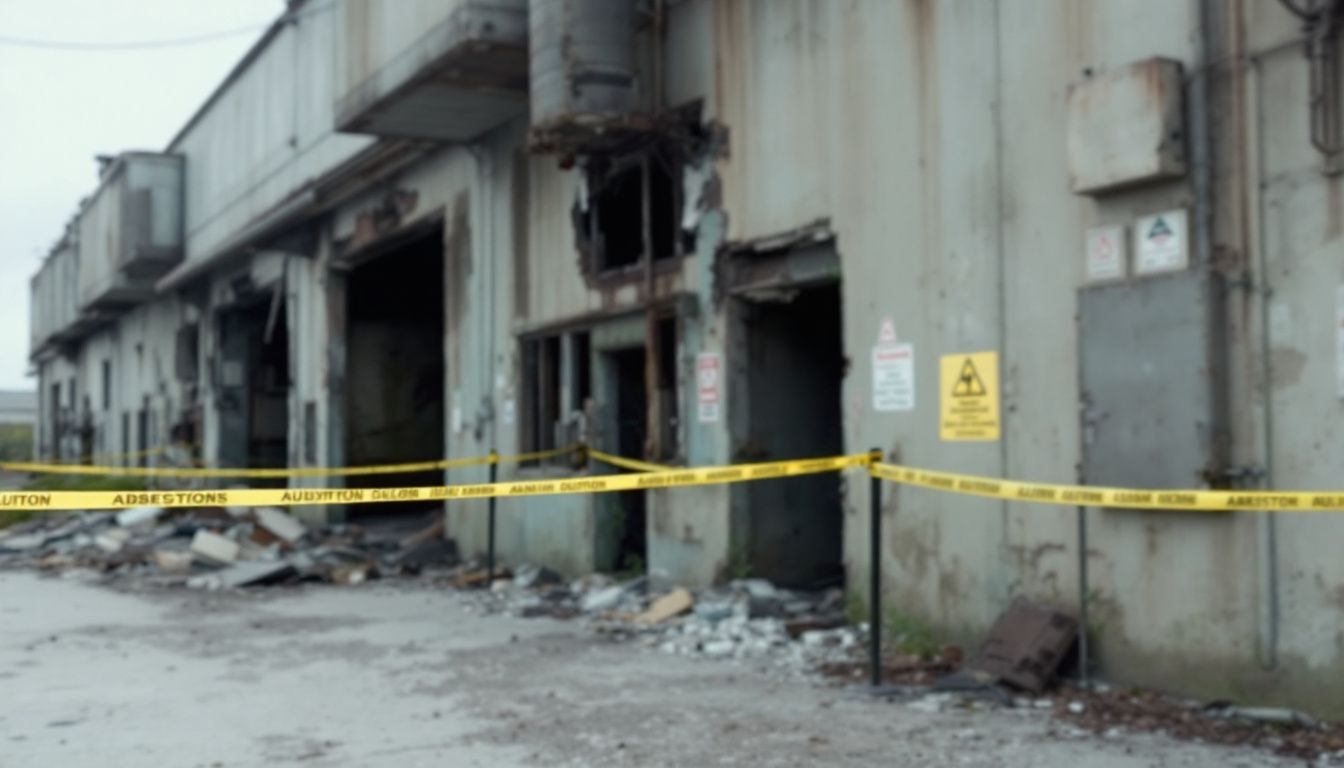
Asbestos Removal in Milton Keynes: What You Need to Know Before You Act
Asbestos doesn’t announce itself. It hides inside walls, beneath floor tiles, behind boiler cupboards, and above suspended ceilings — and in Milton Keynes, where a significant proportion of the building stock dates from before 2000, the chances of encountering it are higher than many property owners realise. Whether you’re planning a renovation, managing a commercial premises, or buying a property, understanding asbestos removal in Milton Keynes is essential before a single tile is lifted or a wall is drilled.
This post covers everything from the legal framework governing asbestos work to the types of surveys you’ll need, how removal is carried out safely, and what it typically costs. No fluff — just the facts you need to protect people and stay on the right side of UK law.
Why Asbestos Is Still a Serious Risk in Milton Keynes
Milton Keynes expanded rapidly from the late 1960s onwards, and much of its commercial, industrial, and residential stock was built during the decades when asbestos-containing materials (ACMs) were used extensively. Asbestos was cheap, fire-resistant, and widely available — which is exactly why it ended up in everything from roof sheeting and floor tiles to pipe lagging and textured coatings like Artex.
The UK banned the use of all forms of asbestos in 1999. Any building constructed or significantly refurbished before that date may contain ACMs. When those materials are disturbed — even during something as routine as drilling a fixing into a ceiling — microscopic fibres can be released into the air.
Inhaling those fibres is what causes the serious, often fatal conditions associated with asbestos exposure, including mesothelioma, asbestosis, and lung cancer. These diseases have long latency periods — often 20 to 40 years between exposure and diagnosis — which is why the danger is so easy to underestimate. Acting cautiously now is far less costly than the consequences of getting it wrong.
The Legal Framework: What UK Law Requires
Asbestos management and removal in the UK is governed by the Control of Asbestos Regulations, supported by the HSE’s guidance document HSG264. These regulations place clear duties on building owners, employers, and those in control of premises.
The key legal obligations include:
- Duty holders must identify whether ACMs are present in non-domestic premises and assess the risk they pose
- An asbestos management plan must be in place and kept up to date
- Before any refurbishment or demolition work begins, a specific survey must be carried out to locate all ACMs in the affected area
- Licensed asbestos removal contractors must be used for the most hazardous materials, including sprayed coatings, lagging, and asbestos insulating board (AIB)
- Certain notifiable non-licensed work (NNLW) must be notified to the HSE before it commences
- Waste containing asbestos must be disposed of as hazardous waste at a licensed facility
Failure to comply can result in prosecution, unlimited fines, and — more importantly — serious harm to workers and building occupants. The regulations apply to commercial premises, but landlords of residential properties also carry responsibilities, particularly in relation to communal areas.
Getting the Survey Right: The Foundation of Safe Asbestos Removal in Milton Keynes
You cannot safely plan asbestos removal in Milton Keynes without first knowing what you’re dealing with. That means commissioning the right type of asbestos survey — and the type you need depends entirely on what you intend to do with the building.
Management Surveys
A management survey is the baseline requirement for any non-domestic premises. It identifies ACMs that could be disturbed during normal occupation and day-to-day maintenance. Surveyors carry out a thorough visual inspection, take samples from suspected materials, and produce a report that forms the basis of your asbestos management plan.
This type of survey is not sufficient before intrusive building work — it’s designed for ongoing management, not pre-construction planning. If you’re a landlord or facilities manager responsible for a commercial property in Milton Keynes, an asbestos management survey is where you start.
Refurbishment Surveys
Before any renovation, fit-out, or intrusive maintenance work, you’ll need a refurbishment survey. This is a more invasive inspection — surveyors need access to areas that will be disturbed during the work, which may involve opening up walls, lifting floors, or accessing ceiling voids.
The refurbishment survey must cover the specific areas where work will take place. All ACMs identified must be removed or made safe before contractors move in. This isn’t optional — it’s a legal requirement under the Control of Asbestos Regulations, and it protects your workers from potentially fatal exposure.
Demolition Surveys
If a building or part of a building is coming down entirely, a demolition survey is required. This is the most intrusive type of inspection — surveyors need to access every part of the structure, including areas that are normally inaccessible, to ensure all ACMs are identified before demolition begins.
All identified asbestos must be removed by appropriately licensed contractors before any demolition work commences, with waste disposed of correctly as hazardous material.
Asbestos Testing: Confirming What’s There
Asbestos cannot be identified by sight alone. A material might look like it contains asbestos — or it might not — and visual inspection alone is never sufficient to confirm its presence or type. That’s where asbestos testing comes in.
During a survey, qualified surveyors collect small samples from suspected ACMs. These are sent to a UKAS-accredited laboratory for analysis. The lab identifies whether asbestos fibres are present and, if so, which type — chrysotile (white), amosite (brown), or crocidolite (blue). Each type carries its own risk profile, and knowing the exact type informs the removal strategy.
If you’ve already had a survey and want to test a specific material, you can arrange sample analysis independently. This is useful when a material has been flagged as presumed asbestos in an older report and you want confirmation before proceeding with work.
For a broader overview of what’s involved, our dedicated page on asbestos testing explains the full process in detail.
How Asbestos Removal Works in Milton Keynes
Once ACMs have been identified and assessed, the removal process itself must be planned and executed carefully. The approach depends on the type and condition of the material, its location, and the risk it presents. If you need professional asbestos removal, it’s critical to use contractors who follow the full HSE-compliant procedure.
Licensed vs Non-Licensed Removal
Not all asbestos removal requires a licensed contractor — but the most dangerous materials do. The HSE distinguishes between three categories of asbestos work:
- Licensed work — required for high-risk materials such as sprayed asbestos coatings, asbestos lagging on pipes and boilers, and asbestos insulating board (AIB). Only contractors holding a current HSE licence can carry out this work. Some jobs also require advance notification to the HSE.
- Notifiable non-licensed work (NNLW) — lower-risk work that doesn’t require a licence but must still be notified to the HSE before it starts, and workers must undergo medical surveillance.
- Non-licensed work — the lowest-risk category, covering materials like asbestos cement products in good condition. No licence is required, but safe working practices must still be followed.
Always verify that any contractor you appoint holds the appropriate HSE licence for the materials they’ll be handling. Unlicensed removal of licensable materials is a criminal offence.
The Removal Process Step by Step
Professional asbestos removal follows a strict sequence to protect workers, occupants, and the surrounding environment. Here’s what a typical licensed removal project involves:
- Survey and risk assessment — the scope and nature of the ACMs is confirmed, along with the removal method
- Notification — where required, the HSE is notified at least 14 days before licensed work begins
- Enclosure and isolation — the work area is sealed off using polythene sheeting and negative pressure units (NPUs) to prevent fibre release into surrounding areas
- PPE and RPE — workers wear full disposable coveralls and appropriate respiratory protective equipment throughout
- Controlled removal — ACMs are carefully removed using wet methods to suppress dust, minimising fibre release
- Decontamination — workers and equipment go through a decontamination unit before leaving the enclosure
- Air clearance testing — once removal is complete, air monitoring is carried out to confirm that fibre levels are within safe limits before the enclosure is removed
- Waste disposal — all asbestos waste is double-bagged, labelled, and transported to a licensed hazardous waste facility
Cutting corners at any stage of this process creates serious risk. Always use contractors who follow the full HSE-compliant procedure from start to finish.
Air Monitoring and Clearance Certificates
At the end of licensed removal work, an independent four-stage clearance procedure is carried out. This includes a thorough visual inspection of the enclosure, followed by air monitoring using phase contrast microscopy (PCM). Only when fibre concentrations are confirmed to be below the clearance indicator level can the enclosure be removed and the area handed back.
You should receive a clearance certificate confirming the area is safe. Keep this document — it forms part of your compliance records and may be required by insurers, local authorities, or future purchasers of the property.
What Does Asbestos Removal Cost in Milton Keynes?
Costs vary considerably depending on the type and quantity of material being removed, the complexity of the job, and whether licensed contractors are required. The following gives a general indication — always get a written quote specific to your property and situation.
- Asbestos cement roof sheets — typically one of the more straightforward removals; costs depend on roof area and access requirements
- Artex ceilings — if confirmed to contain asbestos, removal or encapsulation costs vary by room size and method chosen
- Pipe lagging — licensed work; costs reflect the complexity of the pipework and the extent of the lagging
- Asbestos insulating board (AIB) — licensed work; costs reflect the area involved and the access required
- Floor tiles — may be non-licensed depending on condition; costs depend on floor area
As a general guide, management surveys for residential properties in Milton Keynes typically start from around £250 plus VAT. Commercial survey costs scale with property size and complexity. For removal work, always obtain at least two or three quotes from licensed contractors and ensure the scope of work is clearly defined in writing.
The cheapest quote is rarely the best option when asbestos is involved. Inadequate removal can leave fibres in the fabric of the building and create ongoing liability. Get a free quote from Supernova to understand exactly what your specific project requires.
Asbestos in Residential Properties: What Milton Keynes Homeowners Need to Know
The legal duty to manage asbestos formally applies to non-domestic premises — but homeowners in Milton Keynes are far from immune to the risks. If your home was built before 2000, there’s a real possibility that ACMs are present somewhere in the structure.
Common locations in residential properties include:
- Textured coatings on ceilings and walls (Artex)
- Floor tiles and the adhesive beneath them
- Roof tiles and soffits
- Insulation around boilers, pipes, and hot water cylinders
- Cement products in garages and outbuildings
- Insulation in storage heaters
If you’re planning any building work — a loft conversion, kitchen extension, bathroom refit — commission a refurbishment survey before work starts. Don’t rely on a builder’s visual assessment. Builders are not qualified asbestos surveyors, and the consequences of disturbing ACMs without proper precautions fall on you as the property owner.
Even if you’re not planning work, it’s worth knowing what’s in your property. An asbestos survey gives you a clear picture of what’s present, where it is, and what condition it’s in — so you can make informed decisions rather than inadvertently putting yourself or your family at risk.
Asbestos Surveys Beyond Milton Keynes
Supernova Asbestos Surveys operates across the UK, and our surveyors cover the full Milton Keynes area and surrounding regions. If your property portfolio extends into London, we also provide a full asbestos survey London service, with the same standards and accreditations applied consistently across every site we visit.
Whether you manage a single commercial unit or a large portfolio of mixed-use properties, we can provide a consistent, professional service that meets your legal obligations and keeps your occupants safe.
Choosing the Right Asbestos Surveyor in Milton Keynes
Not all asbestos surveyors are equal. When choosing a surveyor or removal contractor in Milton Keynes, look for the following:
- UKAS accreditation — surveyors should be accredited to carry out asbestos surveys and sampling in line with HSG264
- HSE licence — any contractor carrying out licensed removal work must hold a current HSE asbestos licence
- Independent air monitoring — clearance testing should be carried out by an independent analyst, not the removal contractor
- Clear written reports — survey reports should be detailed, clearly formatted, and include photographs and sample results
- Transparent pricing — costs should be set out clearly in writing before any work begins
- Experience with your property type — commercial, industrial, and residential properties all present different challenges
Supernova Asbestos Surveys has completed over 50,000 surveys nationwide. Our surveyors are fully qualified, and our reports are produced to the standard required by the Control of Asbestos Regulations and HSG264. We work with property managers, landlords, developers, and homeowners across Milton Keynes and the surrounding area.
When Should You Act? Key Triggers for Commissioning an Asbestos Survey or Removal
If you’re unsure whether you need to act now, the following situations should prompt immediate action:
- You’re about to start any building work in a property built before 2000
- You’ve recently purchased a commercial property and have no asbestos records
- Your existing asbestos management plan is out of date or the condition of known ACMs has changed
- A contractor has flagged a suspected asbestos material during works
- You’re preparing a property for sale and need to provide accurate information to buyers
- A tenant has raised concerns about potential asbestos in communal areas
- You’re planning demolition of any structure built before 2000
In each of these situations, the first step is the same: commission the appropriate survey before any further action is taken. Acting without survey data is not only dangerous — it may be unlawful.
Frequently Asked Questions
Do I need a survey before asbestos removal in Milton Keynes?
Yes. A survey is always required before removal work begins. The type of survey depends on the nature of the work — a refurbishment survey is needed before renovation or fit-out work, and a demolition survey is required before any structure is demolished. You cannot legally or safely plan asbestos removal without first identifying and characterising the ACMs present.
How long does asbestos removal take in Milton Keynes?
The duration depends on the type and quantity of material being removed, the method required, and whether licensed removal is involved. A small domestic job involving a single room may take a day or two. Larger commercial or industrial projects can take several weeks, particularly when licensed enclosures, air monitoring, and the mandatory HSE notification period are factored in.
Is asbestos removal always necessary, or can it be left in place?
Not all asbestos needs to be removed. If ACMs are in good condition and are unlikely to be disturbed, managing them in place is often the appropriate approach. This involves monitoring the condition of the material and keeping an up-to-date asbestos management plan. Removal is typically required when materials are damaged, deteriorating, or located in areas where building work is planned.
Who is responsible for asbestos in a commercial property in Milton Keynes?
The duty holder — usually the building owner, employer, or the person with control of the premises — is responsible for managing asbestos in non-domestic properties. This includes identifying ACMs, assessing the risk they pose, and maintaining an asbestos management plan. Landlords also carry responsibility for communal areas in residential buildings such as blocks of flats.
How much does asbestos removal cost in Milton Keynes?
Costs vary significantly depending on the material type, quantity, location, and whether licensed removal is required. There is no meaningful fixed price without a site-specific assessment. The best way to get an accurate figure is to commission a survey first, then obtain written quotes from licensed contractors based on the survey findings. You can request a free quote from Supernova to get the process started.
Talk to Supernova Asbestos Surveys
Supernova Asbestos Surveys is one of the UK’s leading asbestos surveying companies, with over 50,000 surveys completed across the country. We provide management surveys, refurbishment surveys, demolition surveys, asbestos testing, and sample analysis for residential, commercial, and industrial properties throughout Milton Keynes and beyond.
If you need asbestos removal in Milton Keynes, start with a survey. We’ll tell you exactly what’s there, what risk it poses, and what needs to happen next — so you can act with confidence and stay fully compliant with UK law.
Call us on 020 4586 0680, visit asbestos-surveys.org.uk, or request a free quote online today.