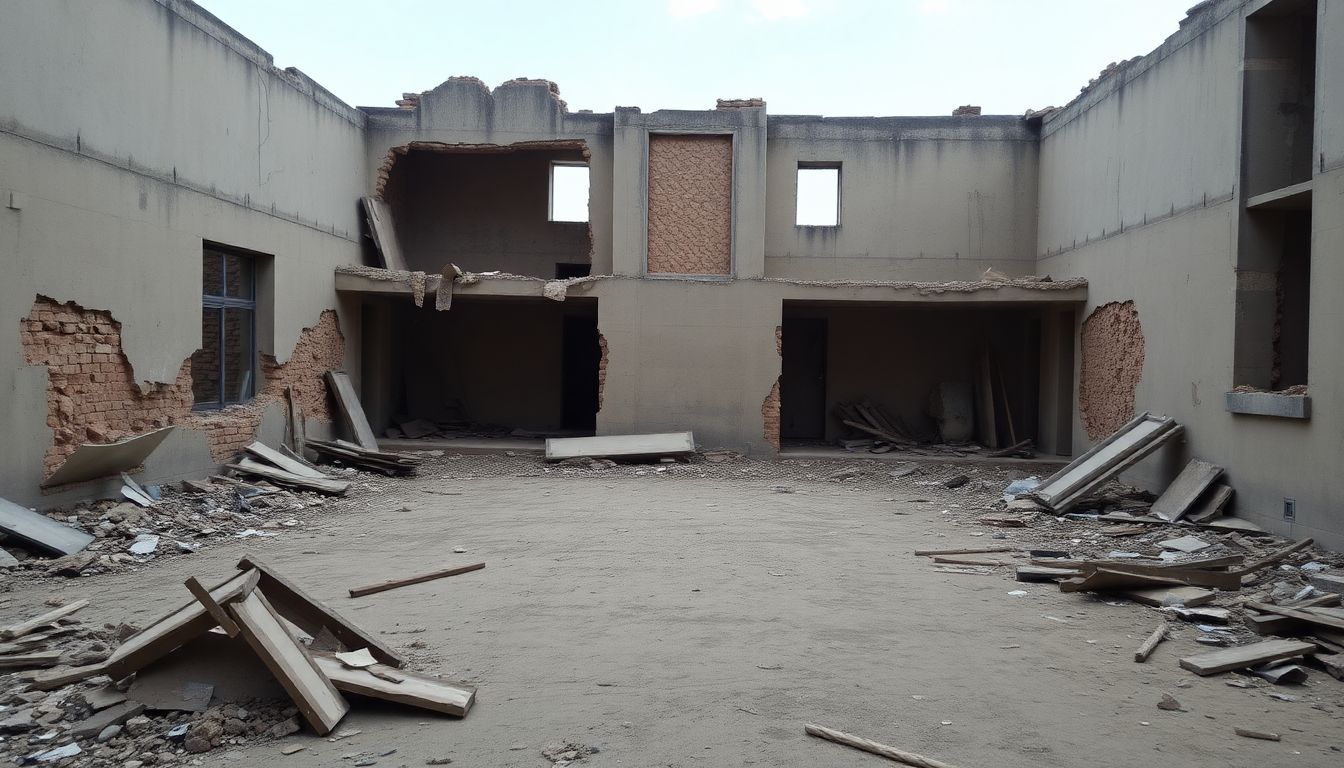
Asbestos Removal in Enfield: What Property Owners and Managers Need to Know
Asbestos doesn’t announce itself. It hides behind plasterboard, beneath floor tiles, inside boiler cupboards — and in Enfield’s substantial stock of pre-2000 buildings, it’s far more common than most people expect. Whether you’re a landlord, a facilities manager, or a homeowner planning a renovation, understanding asbestos removal in Enfield could protect both your health and your legal standing.
This isn’t a theoretical risk. Asbestos-related diseases remain the single largest cause of work-related deaths in the UK. The fibres are invisible, odourless, and lethal when inhaled over time. Getting the right survey and, where necessary, the right removal process in place isn’t optional — it’s the law.
Why Enfield Properties Carry a Higher Asbestos Risk
Enfield has a significant proportion of housing and commercial stock built during the peak asbestos-use era — roughly the 1950s through to the late 1990s. Asbestos was used extensively in construction during this period because it was cheap, fire-resistant, and durable. The problem is that much of it is still in place.
Residential streets across Enfield Town, Edmonton, and Southgate are lined with post-war semis and terraces where asbestos cement roofing, Artex ceilings, and floor tile adhesive are commonplace. Commercial and industrial premises across the borough are no different.
If your property was built or significantly refurbished before 2000, you should assume asbestos may be present until a qualified surveyor tells you otherwise. That assumption isn’t paranoia — it’s the starting point the HSE itself recommends.
The Legal Framework for Asbestos Removal in Enfield
The Control of Asbestos Regulations sets out clear duties for those who own or manage non-domestic premises. Dutyholders — which includes landlords, employers, and managing agents — must identify asbestos-containing materials (ACMs), assess their condition, and manage the risk they pose.
Before any asbestos removal in Enfield can legally take place, a proper survey must be carried out. Skipping this step isn’t just reckless — it’s a criminal offence that can result in prosecution, substantial fines, and invalidated insurance.
The HSE’s guidance document HSG264 sets out exactly how surveys should be conducted and what they must cover. Any contractor or surveyor not working to this standard should be avoided without hesitation.
Who Is Legally Responsible?
In non-domestic properties, the dutyholder is typically the person with the greatest control over the building — often the owner or managing agent. In residential properties, landlords have duties under the same regulations when common areas or shared spaces are involved.
Homeowners carrying out their own renovations are not exempt either. If you disturb asbestos without identifying it first, you are putting yourself, your family, and any tradespeople at serious risk — and you may face legal consequences as a result.
The Survey Always Comes Before Removal
No responsible asbestos removal contractor will begin work without a survey report in hand. The survey identifies where ACMs are located, what type of asbestos is present, and what condition it’s in. That information determines the removal strategy, the level of contractor licence required, and the precautions needed to protect people on site.
There are several survey types, and choosing the right one matters considerably.
Management Survey
A management survey is the standard survey for occupied non-domestic premises. It’s non-intrusive and designed to locate ACMs that could be disturbed during normal occupation, maintenance, or cleaning. The findings feed directly into an asbestos register and management plan — both legal requirements for non-domestic buildings.
This type of survey won’t authorise removal on its own. It’s about managing risk in situ, not planning intrusive work.
Refurbishment and Demolition Survey
If you’re planning any building work — a kitchen refit, a loft conversion, an extension, or full demolition — you need a demolition survey before work begins. This is a fully intrusive survey. Surveyors will access voids, break into walls, lift floors, and inspect every area that could be disturbed during the planned works.
This survey is specifically designed to support safe asbestos removal. Without it, contractors cannot safely price or plan the job, and you cannot legally proceed with the works.
Re-Inspection Survey
Once ACMs have been identified and a management plan is in place, those materials need to be monitored over time. A re-inspection survey checks for changes in condition — deterioration, damage, or disturbance — and updates your asbestos register accordingly. HSE guidance recommends these are carried out at least annually.
Where Asbestos Hides in Enfield Properties
Knowing where to look is half the battle. Asbestos was used in dozens of building products, many of which are still in place in Enfield homes and commercial premises.
Common locations include:
- Textured coatings — Artex and similar ceiling and wall finishes applied from the 1960s onwards frequently contain chrysotile (white asbestos)
- Floor tiles and adhesive — vinyl floor tiles and the bitumen adhesive beneath them are a common source, particularly in kitchens and hallways
- Asbestos cement products — corrugated roofing sheets, guttering, downpipes, and soffits on garages and outbuildings
- Pipe lagging — insulation around heating pipes and boilers, particularly in older plant rooms and airing cupboards
- Insulating board — used in partition walls, ceiling tiles, fire doors, and around heating appliances
- Roof felt — some older roofing felts contain asbestos fibres
- Fuse boards and electrical panels — older consumer units sometimes used asbestos as a fire-resistant backing
- Bath panels and window surrounds — particularly in properties built in the 1960s and 1970s
A qualified surveyor will check all of these areas systematically. Don’t assume that because something looks intact it’s safe — condition alone doesn’t determine risk, and only laboratory analysis of a sample can confirm the presence of asbestos.
The Asbestos Removal Process: Step by Step
Once a survey has confirmed the presence of ACMs that need to be removed, the removal process follows a structured sequence. Understanding what’s involved helps you manage the project effectively and ask the right questions of any contractor you appoint.
Step 1 — Survey and Risk Assessment
The refurbishment or demolition survey provides the baseline. The removal contractor uses this to carry out their own risk assessment, determine the licence category required, and plan the method of work.
Step 2 — Notification to the HSE
For licensable asbestos work — which includes the removal of most sprayed coatings, lagging, and insulating board — the contractor must notify the HSE at least 14 days before work begins. This is a legal requirement, not a formality.
Step 3 — Enclosure and Controlled Work Area
The removal area is enclosed using polythene sheeting and negative pressure units to prevent fibre release to the wider building. Access is strictly controlled. Only trained workers in appropriate personal protective equipment (PPE) and respiratory protective equipment (RPE) are permitted inside.
Step 4 — Removal and Decontamination
ACMs are carefully removed using wet methods to suppress dust. All waste is double-bagged in clearly labelled, sealed asbestos waste sacks. The area is then thoroughly cleaned using HEPA-filtered vacuum equipment and wet wiping.
Step 5 — Air Testing and Clearance Certificate
Before the enclosure is dismantled, a four-stage clearance procedure is carried out by an independent analyst. This includes a thorough visual inspection and air testing. Only when air fibre counts fall below the clearance indicator level is a certificate of reoccupation issued. This certificate is your proof that the area is safe — keep it as part of your property records.
Step 6 — Waste Disposal
Asbestos waste is classified as hazardous waste and must be disposed of at a licensed site. Your contractor must provide you with a waste transfer note. Retain this documentation permanently as part of your property records.
Licensed vs Non-Licensed Removal: What’s the Difference?
Not all asbestos removal in Enfield requires a licensed contractor, but the rules are specific and the consequences of getting this wrong are serious.
Licensed work is required for the removal of asbestos insulation, asbestos insulating board (AIB), and most sprayed asbestos coatings. Only contractors holding a licence issued by the HSE can carry out this work. The licence must be current and available for inspection on request.
Non-licensed work covers materials such as asbestos cement products and some floor tiles where the risk of fibre release is lower. However, this work must still be carried out by competent, trained individuals following the correct procedures. It cannot simply be handed to any general builder.
Notifiable non-licensed work (NNLW) sits between these two categories. It includes work on AIB in good condition and certain other materials. Employers carrying out NNLW must notify the relevant enforcing authority, keep medical records of workers involved, and ensure workers receive appropriate health surveillance.
If you’re unsure which category applies to your project, the safest approach is to ask a BOHS P402-qualified surveyor before appointing any contractor.
Choosing the Right Contractor for Asbestos Removal in Enfield
The asbestos industry is regulated, but not all practitioners operate to the same standard. When selecting a contractor, there are several things you should verify before signing anything.
- HSE licence — check the contractor holds a current HSE asbestos removal licence for licensable work. You can verify this directly on the HSE website
- UKAS-accredited laboratory — samples should be analysed by a UKAS-accredited lab. This ensures the results are legally defensible and scientifically reliable
- BOHS P402 qualifications — surveyors should hold the British Occupational Hygiene Society P402 qualification as a minimum. This is the industry benchmark for asbestos surveying
- Independent clearance analyst — the four-stage clearance should be carried out by an analyst who is independent of the removal contractor. This is an HSE requirement, not a preference
- Waste transfer documentation — a legitimate contractor will always provide a hazardous waste consignment note. If they don’t offer one, walk away
- Insurance — ensure the contractor carries adequate public liability and employers’ liability insurance that specifically covers asbestos work
Price should not be your primary driver. Cheap asbestos removal that cuts corners creates liability for you as the property owner and puts people’s health at serious risk.
What Does Asbestos Removal in Enfield Cost?
Cost is always a practical consideration, and it’s right to understand what you’re paying for. Asbestos removal costs vary based on several factors:
- Type of material — licensable materials such as lagging and insulating board cost significantly more to remove than asbestos cement, due to the additional precautions required
- Quantity — the volume of ACMs directly affects labour time and waste disposal costs
- Access — restricted or awkward access increases the time and complexity of the job
- Location within the building — materials in occupied or sensitive areas require additional planning and may need out-of-hours working
- Clearance testing — independent air testing and certification adds cost but is non-negotiable for licensable work
Always obtain at least two or three quotes from licensed contractors, and ensure each quote is based on the same survey report. Comparing quotes based on different scopes of work is meaningless and can lead to costly surprises on site.
Be wary of any contractor who quotes without having seen the survey report, or who suggests skipping the clearance certificate to reduce costs. Both are serious red flags.
Asbestos Surveys Across London and Beyond
Enfield sits within the wider London area, and the same asbestos risks apply across the capital and beyond. If you manage properties in multiple locations, it’s worth working with a surveying company that operates nationally and understands the local building stock in each area.
Supernova Asbestos Surveys provides an asbestos survey London service covering all boroughs, including Enfield, as well as services further afield. Our teams also cover an asbestos survey Manchester service and an asbestos survey Birmingham service for clients with properties across multiple regions.
Having a single trusted surveying partner across multiple sites means consistent standards, consistent documentation, and a simpler audit trail — particularly important for portfolio landlords and facilities managers.
What Happens If You Don’t Act?
Ignoring asbestos doesn’t make it go away. In fact, deteriorating ACMs become progressively more dangerous as fibres are released into the air. The consequences of inaction range from serious health risks to significant legal and financial penalties.
Dutyholders who fail to manage asbestos in non-domestic premises can face prosecution under the Control of Asbestos Regulations. Penalties include unlimited fines and, in serious cases, custodial sentences. Beyond the legal consequences, the human cost of asbestos-related disease is devastating and irreversible.
If you’re a landlord and asbestos is disturbed during works carried out without a proper survey, your insurance may not cover you. You could also face civil claims from anyone exposed as a result.
The cost of doing this properly is always less than the cost of getting it wrong.
Frequently Asked Questions
Do I need a survey before asbestos removal in Enfield?
Yes, always. No responsible contractor should begin removal work without a survey report. For any planned building work, you’ll need a refurbishment or demolition survey, which is a fully intrusive inspection designed to identify all ACMs in the areas to be disturbed. Proceeding without one is both dangerous and illegal.
How do I know if my Enfield property contains asbestos?
You cannot tell by looking. Asbestos fibres are invisible to the naked eye, and many ACMs look identical to non-asbestos materials. The only reliable way to confirm whether asbestos is present is to have a qualified surveyor take samples for analysis by a UKAS-accredited laboratory. If your property was built or refurbished before 2000, treat it as potentially containing asbestos until proven otherwise.
Can I remove asbestos myself in Enfield?
For most ACMs, no. Licensable materials — including asbestos insulation, insulating board, and sprayed coatings — must be removed by an HSE-licensed contractor. Even for non-licensed materials, the work must be carried out by trained, competent individuals following correct procedures. DIY removal of asbestos is extremely dangerous and, for many material types, a criminal offence.
How long does asbestos removal take?
It depends on the type, quantity, and location of the materials. A small area of asbestos cement roofing on an outbuilding might be completed in a day. Larger licensable removal projects — such as insulating board throughout a commercial building — can take several days or weeks, including the mandatory 14-day HSE notification period before work can begin and the four-stage clearance process at the end.
What documentation should I receive after asbestos removal in Enfield?
You should receive a clearance certificate (certificate of reoccupation) confirming air fibre counts are below the clearance indicator level, a hazardous waste consignment note confirming correct disposal, and updated asbestos register documentation reflecting what has been removed. Keep all of this permanently as part of your property records — you may need it for future surveys, sales, or insurance purposes.
Talk to Supernova Asbestos Surveys
Supernova Asbestos Surveys has completed over 50,000 surveys nationwide. Our BOHS P402-qualified surveyors work to HSG264 standards, and all samples are analysed by UKAS-accredited laboratories. We cover Enfield and the surrounding area, providing management surveys, refurbishment and demolition surveys, re-inspection surveys, and asbestos removal support.
If you need a survey before removal work, or you’re not sure where to start, call us on 020 4586 0680 or visit asbestos-surveys.org.uk to request a quote. We’ll give you a straight answer and a clear plan — no jargon, no upselling, just the right advice for your property.