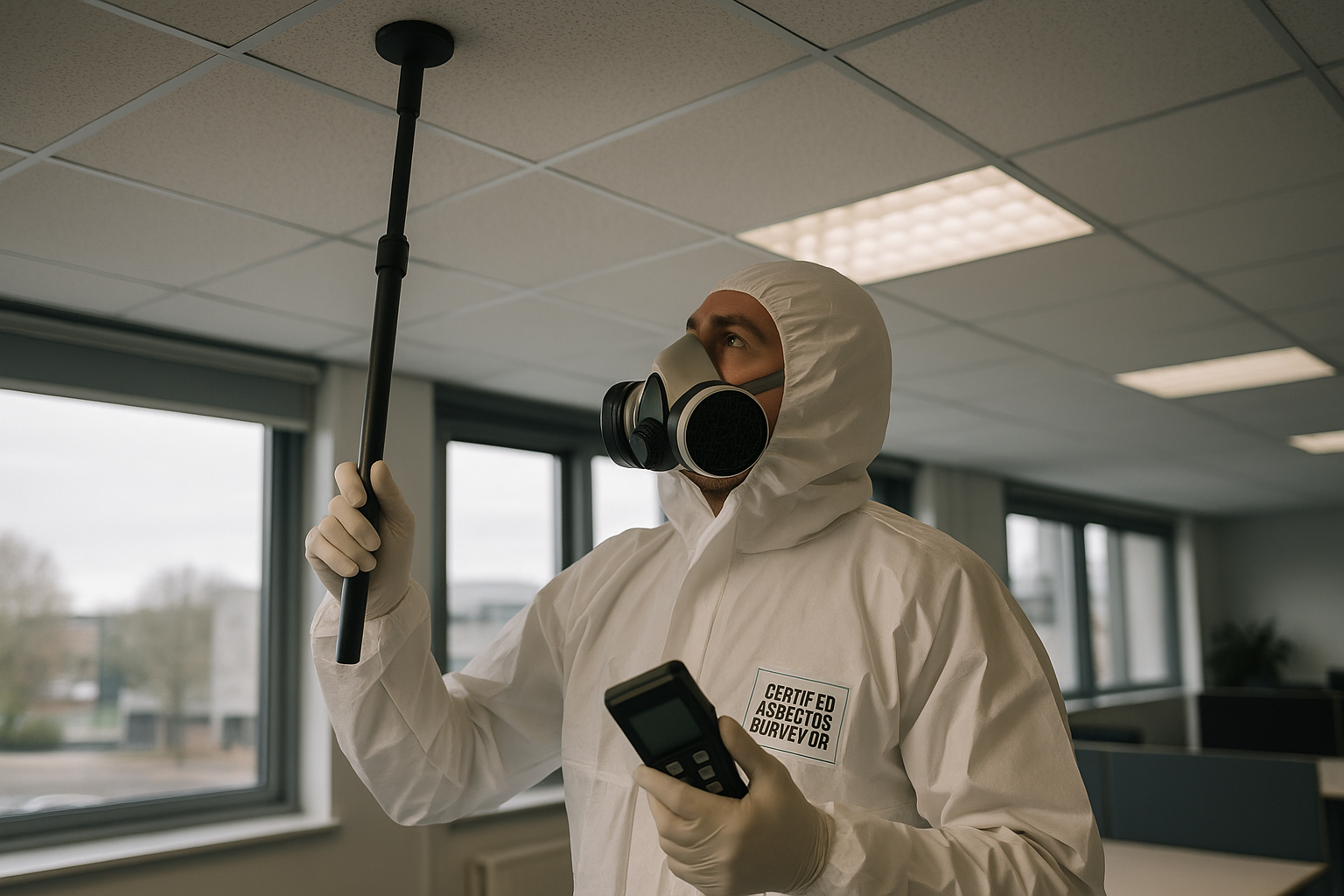
Property deals can unravel quickly when asbestos questions surface late. An asbestos inspection form UK property owners rely on gives a clear record of what was checked, what was found, and what needs attention before maintenance, refurbishment or a sale moves forward.
That record matters whether you are buying a flat, managing a block, selling a house with dated materials, or overseeing commercial premises. Done properly, it supports the wider survey process, helps prevent accidental disturbance, and gives you evidence that asbestos risks have been assessed in line with the Control of Asbestos Regulations, HSE guidance and HSG264.
What is an asbestos inspection form UK property owners may need?
An asbestos inspection form UK clients ask about is not usually a stand-alone legal document. In practice, it forms part of a professional asbestos survey and reporting process used by a competent surveyor to record site findings in a structured way.
It captures the practical details that later feed into the asbestos report, asbestos register and, where required, the management plan. That is why a quick handwritten note from a contractor is not the same thing as a proper asbestos inspection record.
What information is usually included?
- Property address and client details
- Survey date and scope
- Type of survey undertaken
- Rooms, areas and building elements inspected
- Suspected or presumed asbestos-containing materials
- Sample references and locations
- Material condition and surface treatment
- Accessibility and limitations
- Photographs and location notes
- Recommendations for management, repair, monitoring or removal
- Laboratory results where sampling has been carried out
If your building was constructed or refurbished before asbestos stopped being widely used, this paperwork is a sensible starting point. It creates an audit trail and reduces guesswork when decisions need to be made quickly.
Why the asbestos inspection form UK process matters in property transactions
Asbestos rarely becomes a problem because it exists on paper. It becomes a problem when nobody knows it is there and work starts anyway.
A documented asbestos inspection form UK process helps buyers, sellers, landlords and managing agents understand the risk before contracts are exchanged, tenants move in, or contractors begin drilling, stripping out or upgrading services.
For buyers
Buyers want clarity, not surprises after completion. If suspect materials are identified early, you can budget properly, request further investigation, or renegotiate based on real information rather than assumption.
For sellers
Sellers benefit from transparency. A proper survey record can reduce last-minute disputes and help answer questions from cautious purchasers, surveyors and solicitors.
For landlords and property managers
If you control non-domestic premises or the common parts of residential buildings, the duty to manage asbestos may apply. That means identifying asbestos-containing materials, assessing their condition, keeping records current and making information available to anyone liable to disturb them.
A reliable inspection record helps with:
- Faster decision-making during sales and purchases
- Planning maintenance without accidental disturbance
- Supporting legal compliance for duty holders
- Providing contractors with usable site information
- Reducing avoidable exposure risk
- Keeping asbestos registers and management plans up to date
Asbestos is most dangerous when fibres are released and inhaled. Materials in good condition can often be managed safely in place, but damaged or disturbed materials need a different response.
What sits behind an asbestos inspection form UK survey record?
The form itself is only one part of the job. The real value comes from the inspection, the surveyor’s judgement, the sampling strategy, the laboratory analysis and the final report that turns raw site notes into practical action.
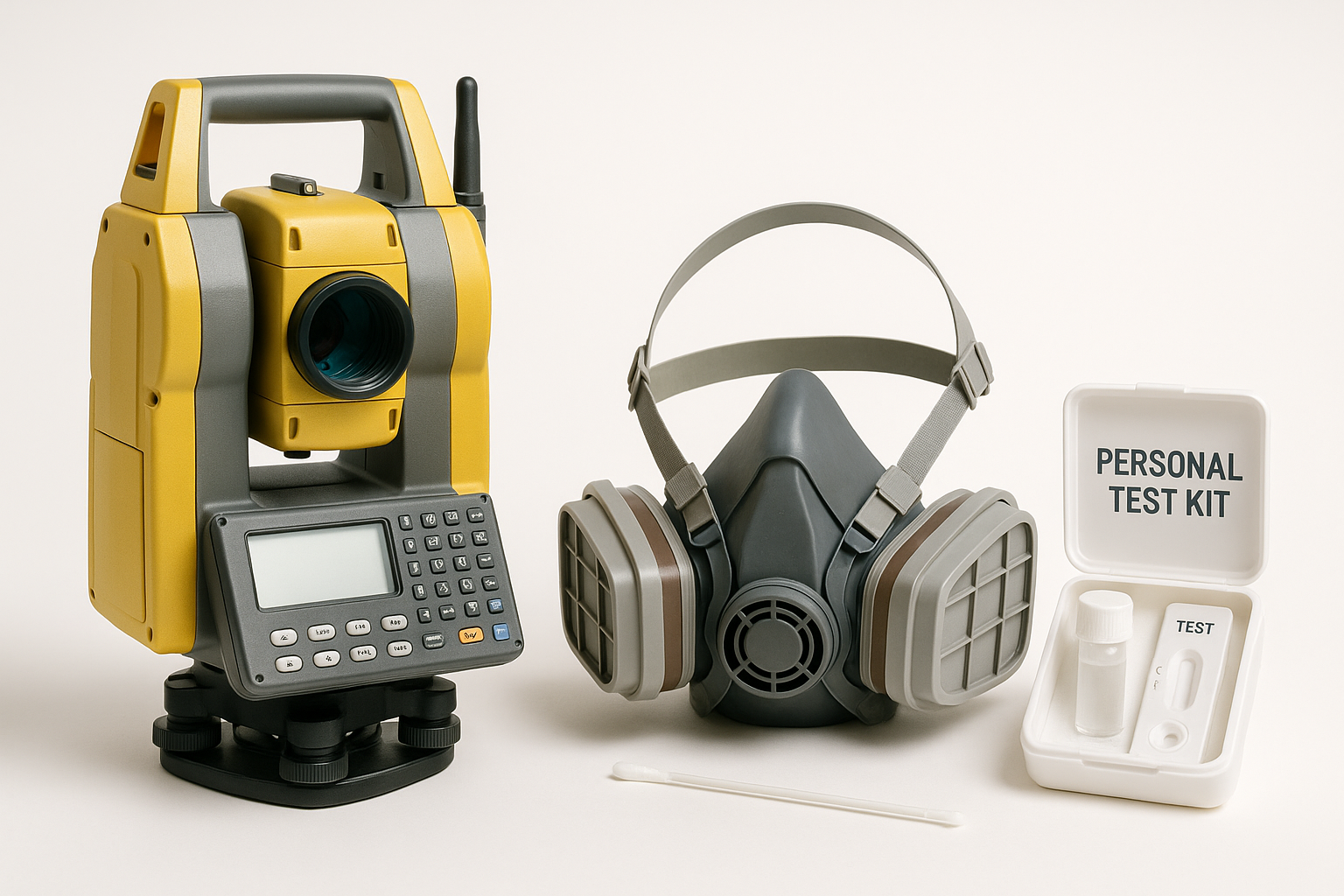
At Supernova, surveyors inspect the agreed areas, identify suspect materials, take representative samples where appropriate and arrange analysis through a UKAS-accredited laboratory. The final report then explains what was found, how the materials were assessed and what should happen next.
Typical stages in the process
- Booking and scoping – The property type, access arrangements and reason for the survey are agreed.
- Site inspection – A competent surveyor attends and inspects accessible areas within the agreed scope.
- Sampling – Suspect materials are sampled where necessary using suitable controls.
- Laboratory analysis – Samples are analysed by a UKAS-accredited laboratory.
- Report issue – You receive a written report with findings, material assessments and recommendations.
The right survey type matters. If a building is occupied and the aim is to manage asbestos during normal use, a management survey is usually the appropriate starting point.
If intrusive works are planned, a refurbishment survey is normally required before work begins. Refurbishment can disturb hidden asbestos inside walls, ceilings, floor voids, risers and service areas, so assumptions are not enough.
When you should arrange an asbestos inspection
Not every building needs the same level of investigation. The right approach depends on age, use, access, planned works and whether duty to manage obligations apply.
You should consider a professional asbestos inspection if:
- The property was built or refurbished before asbestos stopped being used in construction materials
- You are buying or selling an older property and want clarity on asbestos risk
- You manage common parts of flats or non-domestic premises
- Contractors are due to carry out maintenance, drilling, cabling or installation works
- You are planning refurbishment, strip-out or demolition
- You have an asbestos register that may no longer reflect current conditions
- Materials have been damaged by leaks, impact or previous works
If asbestos has already been identified, the records should not be left untouched for years. Materials can deteriorate, become damaged or be affected by later work, which is why a re-inspection survey is often needed to confirm whether existing management arrangements are still suitable.
Residential transactions
There is no blanket rule requiring an asbestos survey for every domestic sale. Even so, older homes often contain materials such as textured coatings, floor tiles, cement products or insulating board, and these can create delays if they are discovered after exchange or once renovation starts.
An asbestos inspection record helps buyers understand likely costs and helps sellers deal with questions early. If major works are planned after purchase, arranging the correct survey before the work starts is the safer route.
Commercial and mixed-use property
For offices, schools, shops, warehouses, healthcare premises and communal areas of residential blocks, asbestos records are part of day-to-day risk control. Contractors need accurate information before they start work, and duty holders need a current record they can actually use.
That is where an asbestos inspection form UK process becomes practical rather than administrative. It feeds into the documentation that supports safe maintenance and legal compliance.
What a compliant asbestos report should contain
A proper report should do more than say asbestos is present or absent. It should give you enough detail to act safely and sensibly.
Under HSE guidance and the principles set out in HSG264, a good asbestos report will usually include:
- Surveyor details and evidence of competency
- Survey scope, methodology and limitations
- Description of the property and areas inspected
- Presumed or identified asbestos-containing materials
- Sample references and laboratory results
- Material assessments and condition notes
- Photographs and clear location information
- Recommendations for management, repair, encapsulation, monitoring or removal
- An asbestos register where relevant
The asbestos inspection form UK record provides the site data, but the report is what turns that data into a management tool. Without a clear written report, the form on its own has limited value.
Where a single suspect material needs checking, professional asbestos testing may be enough. That can work well if you have one defined concern, such as a board, tile or coating, but it is not always a substitute for a wider survey.
Understanding UK asbestos regulations without the jargon
Asbestos law sounds technical, but the practical message is straightforward: if asbestos may be present, exposure must be prevented and the risk must be managed properly.
The main legal framework is the Control of Asbestos Regulations. For survey work, HSG264 sets out HSE guidance on how asbestos surveys should be planned, carried out and reported. These standards shape what competent surveyors do and what clients should expect from the final documentation.
Key legal points to know
- Duty holders for non-domestic premises must manage asbestos risk
- Information about asbestos must be available to anyone liable to disturb it
- Surveying should be suitable for the intended purpose
- Refurbishment work should not begin until asbestos risk has been properly assessed
- Some asbestos work requires a licensed contractor
- Records should be kept up to date and reviewed where conditions change
The biggest mistake is treating asbestos paperwork as a box-ticking exercise. Records only help if they are accurate, current and matched to the work you are actually planning.
If you are reviewing wider compliance across a building, it can also be sensible to arrange a fire risk assessment alongside asbestos-related checks, especially for managed blocks and commercial premises.
Common asbestos-containing materials an inspection may identify
An asbestos inspection form UK surveyor completes may refer to a range of materials found in older buildings. Some are lower risk when intact, while others can release fibres more readily if damaged or disturbed.
Common materials include:
- Textured coatings
- Asbestos insulating board
- Pipe insulation and lagging
- Cement sheets, soffits and flues
- Floor tiles and bitumen adhesive
- Roof sheets and garage panels
- Bath panels, boxing and service riser linings
- Gaskets, rope seals and insulation products
You cannot confirm asbestos by sight alone. Some materials look harmless but contain asbestos, while others appear suspicious and do not. Where certainty is needed, sampling and laboratory analysis are the only reliable route.
If you need a faster check on a specific item, you can also arrange localised asbestos testing where that fits the situation.
What happens if asbestos is found?
Finding asbestos does not automatically mean the property is unsafe or that everything must be removed. The right response depends on the material type, condition, location and likelihood of disturbance.
There are usually three broad outcomes:
- Manage in place – Appropriate where the material is in good condition and unlikely to be disturbed.
- Encapsulate or repair – Suitable where minor damage can be controlled without full removal.
- Remove – Necessary where the material is damaged, higher risk or due to be disturbed by planned works.
If removal is required, it should be handled by competent specialists. Supernova can help arrange professional asbestos removal where that is the correct next step.
While waiting for advice, do not drill, sand, scrape or break suspect materials. Restrict access if needed, inform anyone who may be affected and keep a clear record of the location.
Practical advice for buyers, sellers, landlords and managing agents
The best asbestos decisions are made early. Leave it until exchange is near or contractors are already on site, and your options become more expensive.
For buyers
- Ask whether any asbestos survey, report or register already exists
- Check whether previous refurbishment works were supported by proper surveys
- Budget for further inspection if records are unclear
- Do not assume a general building survey has dealt with asbestos properly
For sellers
- Gather existing asbestos documentation before marketing the property
- Be open about known issues rather than leaving them to be discovered later
- Arrange a survey early if the building is older or has suffered damage
- Make sure any old report still reflects the current condition of the property
For landlords and property managers
- Keep asbestos registers accessible and current
- Review records before maintenance contracts begin
- Brief contractors properly before they start work
- Arrange re-inspection where materials may have deteriorated
- Match the survey type to the planned work, not just the cheapest option
For contractors
- Never rely on assumption in older buildings
- Ask for the asbestos information before starting intrusive work
- Stop work immediately if suspect materials are uncovered unexpectedly
- Report concerns to the client or duty holder straight away
Choosing the right survey for the property and the job
One reason people search for an asbestos inspection form UK requirement is that they are trying to work out what level of inspection they actually need. The answer depends on the purpose.
Use this simple rule of thumb:
- Normal occupation and routine maintenance – usually a management survey
- Refurbishment, structural works or strip-out – usually a refurbishment survey
- Previously identified asbestos needing review – usually a re-inspection survey
- One suspect material only – testing may be enough if the scope is genuinely limited
Getting this wrong can create delays. A management survey is not designed to authorise intrusive refurbishment work, and a test on one sample does not tell you what is hidden elsewhere in the building.
Local support for property owners across the UK
Asbestos issues vary from one building stock to another, but the need for clear records is the same everywhere. Whether you are dealing with a period conversion, post-war commercial unit or mixed-use block, local survey support can make access, scheduling and follow-up much easier.
If you need help in the capital, Supernova provides an asbestos survey London service for residential, commercial and mixed-use properties.
For clients in the North West, our asbestos survey Manchester service supports landlords, businesses and property professionals across the region.
In the Midlands, our asbestos survey Birmingham team helps clients move quickly when sales, maintenance or refurbishment plans depend on accurate asbestos information.
How to use asbestos records properly after the survey
Once the report arrives, do not file it away and forget it. The value of the asbestos inspection form UK process is what you do with the information afterwards.
Take these practical steps:
- Read the recommendations, not just the summary page.
- Check whether any urgent actions are required.
- Update your asbestos register if one applies to the premises.
- Share relevant information with contractors before work starts.
- Mark or record locations clearly so they are not disturbed accidentally.
- Arrange re-inspection or remedial work where recommended.
- Keep all reports and laboratory results together for future reference.
If your property portfolio includes multiple sites, standardise how asbestos records are stored and shared. A report is only useful if the right person can find it when maintenance is being planned.
Frequently Asked Questions
Is an asbestos inspection form UK requirement the same as an asbestos survey?
No. An asbestos inspection form UK record is usually part of the wider survey process. The survey includes inspection, sampling where needed, analysis and a written report with recommendations.
Do I need an asbestos survey when selling a house?
There is no automatic rule requiring one for every domestic sale. However, if the property is older, has suspect materials or is likely to be renovated, a survey can provide clarity and help avoid disputes or delays.
Can asbestos be confirmed just by looking at a material?
No. Visual inspection can identify suspect materials, but asbestos cannot be confirmed by sight alone. Sampling and laboratory analysis are needed where certainty is required.
What is the difference between management and refurbishment surveys?
A management survey is used to help manage asbestos during normal occupation and routine maintenance. A refurbishment survey is more intrusive and is required before planned works that could disturb hidden asbestos.
What should I do if I find suspected asbestos during building work?
Stop work immediately, keep people away from the area and avoid disturbing the material further. Then arrange professional advice, testing or the correct survey before work resumes.
Need expert help with asbestos surveys or testing?
If you need a clear, compliant answer on suspect materials, Supernova Asbestos Surveys can help. We carry out management surveys, refurbishment surveys, re-inspections, sampling and removal coordination for residential, commercial and mixed-use properties across the UK.
Call 020 4586 0680 or visit asbestos-surveys.org.uk to book a survey or speak to our team about the right next step for your property.