The Real Consequences of Improper Asbestos Removal
Asbestos doesn’t kill you the moment you disturb it. That’s what makes improper asbestos removal so deceptive — and so dangerous. The fibres are invisible, odourless, and can remain suspended in the air for hours after disturbance. By the time symptoms appear, decades may have passed and the damage is irreversible.
Whether you’re a homeowner planning a renovation, a landlord managing older properties, or a contractor working on a pre-2000 building, understanding what happens when asbestos is handled incorrectly could be the difference between safety and a life-altering illness — or a six-figure legal bill.
Why Improper Asbestos Removal Is a Serious Health Threat
Asbestos-containing materials (ACMs) are largely safe when left undisturbed and in good condition. The problem begins the moment they’re broken, cut, drilled, or ripped out without the correct controls in place. At that point, microscopic fibres become airborne and can be inhaled deep into the lungs.
Once lodged, those fibres cannot be expelled by the body. They remain embedded in lung tissue indefinitely, causing progressive and potentially fatal damage.
Diseases Linked to Asbestos Fibre Inhalation
- Mesothelioma — A cancer of the lining of the lungs, abdomen, or heart. Almost exclusively caused by asbestos exposure. There is no cure.
- Lung cancer — Asbestos exposure significantly increases the risk, particularly in those who also smoke.
- Asbestosis — Scarring of lung tissue that progressively reduces the ability to breathe, causing chronic coughing, breathlessness, and chest pain.
- Pleural thickening — Stiffening of the membrane surrounding the lungs, reducing lung capacity and causing persistent discomfort.
- Pleural plaques — Calcified patches on the lung lining, often an indicator of past exposure.
These conditions have latency periods of 15 to 60 years. Someone exposed during a poorly managed renovation in the 1990s may only be receiving a diagnosis today. Around 5,000 people die every year in the UK from asbestos-related diseases — more than are killed on the roads annually.
Secondary Exposure: The Hidden Risk
Improper asbestos removal doesn’t only endanger the person doing the work. Fibres cling to clothing, hair, tools, and vehicles. Workers returning home after an uncontrolled removal job can transfer fibres to family members — including children — without ever realising it.
This secondary exposure has been documented in cases of mesothelioma among people who never worked directly with asbestos themselves. The consequences extend far beyond the worksite, and that reality should weigh heavily on anyone tempted to cut corners.
The Legal Consequences You Cannot Afford to Ignore
In the UK, asbestos management is governed by the Control of Asbestos Regulations, supported by the HSE’s HSG264 guidance. These regulations place clear legal duties on dutyholders — including landlords, property managers, and employers — to manage asbestos safely.
Improper asbestos removal is not just dangerous; it’s a criminal offence.
Enforcement by the Health and Safety Executive
The Health and Safety Executive (HSE) has the power to issue improvement notices, prohibition notices, and prosecute individuals and organisations for breaches. Penalties can range from unlimited fines to custodial sentences for the most serious cases.
High-profile prosecutions have resulted in fines running into hundreds of thousands — and in some cases millions — of pounds. These aren’t penalties reserved for large contractors. Homeowners and small traders have faced prosecution for improper removal on domestic properties.
Civil Liability and Compensation Claims
Beyond criminal prosecution, those responsible for improper asbestos removal can face civil claims from anyone who suffers illness as a result. Compensation awards in asbestos-related disease cases are substantial, often running to six or seven figures depending on the severity of the condition and the claimant’s circumstances.
If you’re a landlord or property developer who failed to commission a proper asbestos removal process before works began, you may be held personally liable for the health consequences suffered by workers, tenants, or members of the public.
Insurance Implications
Insurers take asbestos seriously. If it emerges that a claim arises from work carried out without proper asbestos controls — or that a property was sold or let without appropriate asbestos management — insurers may refuse to pay out entirely.
Premiums for properties with a history of asbestos-related incidents can also increase significantly, adding long-term financial burden to the immediate legal exposure. This is a cost that compounds over time and is entirely avoidable with the right approach from the outset.
Environmental Damage Caused by Improper Asbestos Disposal
Asbestos fibres don’t disappear once they leave a building. Improper disposal — whether dumping waste in skips without proper classification, fly-tipping, or using unlicensed waste carriers — causes lasting environmental contamination.
Soil and Water Contamination
Asbestos fibres can persist in soil for decades. Once embedded in the ground, they can be disturbed by construction work, gardening, or natural erosion, releasing fibres back into the air. They can also leach into groundwater, contaminating water sources used by people and wildlife alike.
Asbestos waste must be double-bagged, clearly labelled, and taken to a licensed hazardous waste disposal site. Using an unlicensed contractor who skips this step creates an environmental liability that can attach to the landowner — even if they weren’t the one who dumped the waste.
Impact on Wildlife and Ecosystems
When asbestos contaminates soil and water, the effects ripple through entire ecosystems. Plants absorb contaminated water. Insects, fish, and birds ingest fibres. The disruption to food chains can reduce biodiversity and cause population declines in species that have no mechanism to avoid or expel asbestos fibres.
Recovering a contaminated site is both technically complex and extremely expensive. Prevention — through proper asbestos disposal — is always the more rational and responsible choice.
Worker Safety: The Frontline of Asbestos Risk
Construction workers, tradespeople, and demolition operatives remain among the groups most frequently exposed to asbestos. Many of them encounter it not during dedicated removal projects, but accidentally — disturbing ACMs they didn’t know were there while carrying out routine maintenance or refurbishment.
The Importance of Correct PPE
When asbestos is being removed — even in small quantities — the correct personal protective equipment is non-negotiable. This includes:
- A suitable respirator (minimum FFP3, or a powered air-purifying respirator for higher-risk work)
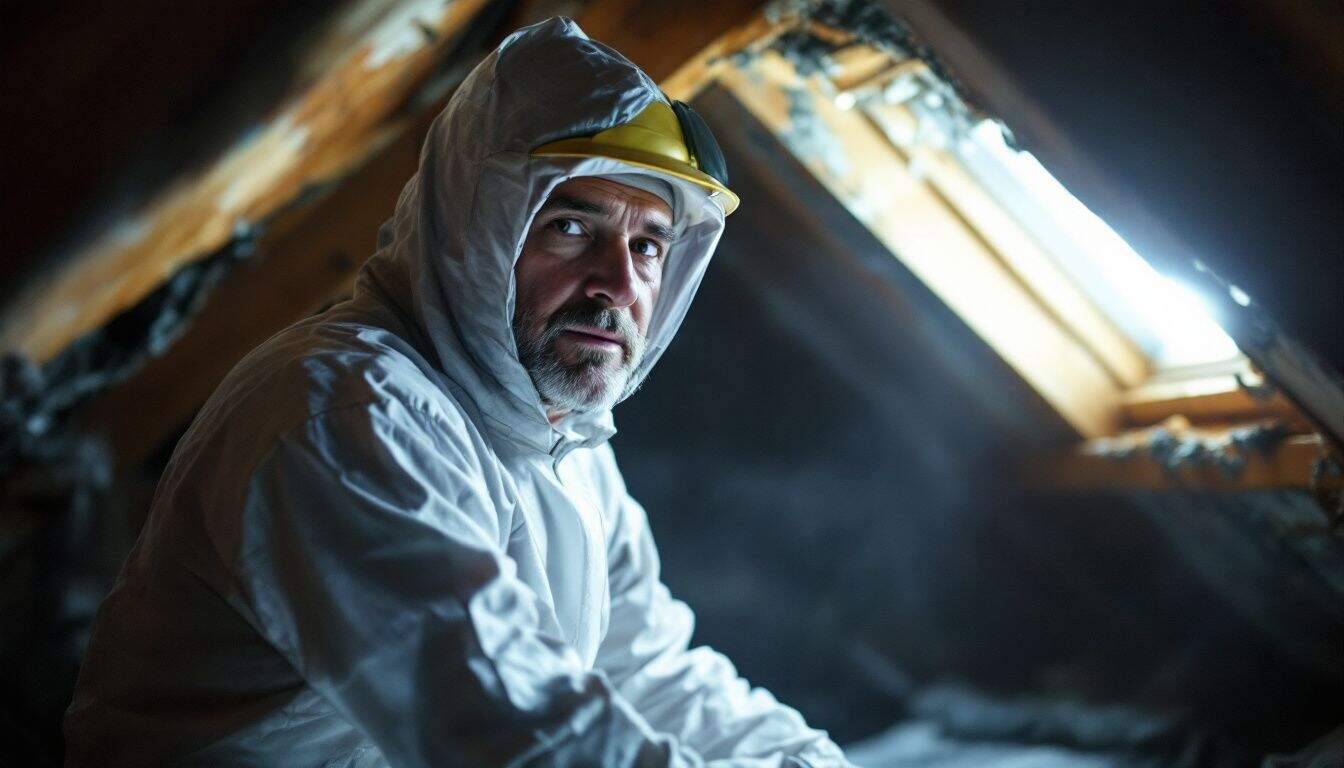
- Disposable Type 5/6 coveralls
- Gloves and boot covers
- Eye protection where appropriate
Without these, even a brief exposure during an uncontrolled removal can result in a significant fibre burden. The HSE’s guidance on asbestos is explicit: the right PPE must be worn, worn correctly, and disposed of safely after use.
Training and Awareness Requirements
Under the Control of Asbestos Regulations, anyone liable to disturb asbestos in their work must have received appropriate asbestos awareness training. This isn’t optional. Workers who haven’t been trained may not recognise ACMs, may not know how to respond when they encounter them, and may inadvertently spread contamination throughout a building.
Licensed removal work — required for the most hazardous materials, including sprayed coatings, lagging, and some insulating board — must be carried out by a contractor holding a current HSE licence. Attempting licensed work without that licence is a criminal offence, regardless of how experienced the contractor believes themselves to be.
Community and Public Health: The Wider Impact
The consequences of improper asbestos removal don’t stop at the property boundary. Communities living near demolition or renovation sites where asbestos is being handled without proper controls can be exposed to fibres carried on the wind. Schools, homes, and public spaces can all become contaminated.
Historical data on mesothelioma deaths among teachers — a group not typically associated with construction work — illustrates how secondary and environmental exposure can affect entire communities over time. The rise in such cases is directly linked to the presence of asbestos in school buildings and the inadequate management of it over decades.
Local healthcare systems also bear the long-term cost of asbestos-related disease. Treatment for mesothelioma and asbestosis is intensive, ongoing, and expensive. Every case of improper asbestos removal that results in disease adds to that burden.
How Enforcement Works — and Why Gaps Don’t Protect You
The Control of Asbestos Regulations apply uniformly across England, Scotland, and Wales, but enforcement can be inconsistent in practice. The HSE carries out inspections and investigates complaints, but proactive monitoring of every renovation project is not feasible.
This means that in some areas, improper asbestos removal goes undetected — at least in the short term. But the health consequences don’t depend on whether the HSE was watching. Fibres released during an uncontrolled removal are just as dangerous regardless of whether an inspector was present.
Relying on enforcement gaps as a reason to cut corners is a gamble with people’s lives. The liability remains, even if the prosecution doesn’t come immediately.
What Proper Asbestos Removal Actually Looks Like
Safe asbestos removal isn’t complicated in principle, but it requires the right expertise, equipment, and procedures. Cutting corners at any stage — whether to save time or money — creates the risks described throughout this article.
Before Any Work Begins
An asbestos survey must be carried out before any demolition, refurbishment, or significant maintenance work on a building constructed before 2000. This survey identifies the location, type, and condition of any ACMs present, and forms the basis of a safe working plan.
If you’re based in the capital, our team provides a thorough asbestos survey London service covering all property types. For those in the north-west, we offer a full asbestos survey Manchester service, and across the Midlands, our asbestos survey Birmingham team is ready to assist. Nationwide coverage means no project is too far from our reach.
During Removal
- The work area must be sealed off and negatively pressurised where required
- All ACMs must be wetted before removal to suppress fibre release
- Waste must be double-bagged in UN-approved asbestos waste sacks and clearly labelled
- Air monitoring must be carried out during and after the work
- A four-stage clearance procedure is required before the area is handed back for reoccupation
After Removal
All asbestos waste must be transported by a registered waste carrier and disposed of at a licensed hazardous waste facility. Documentation — including a waste consignment note — must be retained.
This paper trail is not bureaucratic box-ticking; it’s legal protection for everyone involved. It also demonstrates due diligence should any future questions arise about how the work was carried out.
The Cost of Getting It Wrong vs. the Cost of Getting It Right
Some property owners and contractors are tempted to avoid professional asbestos management because of the perceived cost. This logic collapses entirely when weighed against the real financial exposure of improper asbestos removal.
A professional survey and properly managed removal is a defined, one-off cost. Prosecution, civil liability, remediation of contaminated land, increased insurance premiums, and the long-term cost of asbestos-related illness are open-ended and potentially catastrophic.
The question is never really whether you can afford to do it properly. The question is whether you can afford not to.
Frequently Asked Questions
What happens if asbestos is removed without a licence?
Removing licensable asbestos materials without an HSE licence is a criminal offence under the Control of Asbestos Regulations. The HSE can prosecute the individual or company responsible, and penalties include unlimited fines and imprisonment. The property owner may also face liability if they commissioned unlicensed work.
Can I remove asbestos myself from my own home?
Some non-licensable asbestos work — such as removing a small amount of asbestos cement in good condition — may be carried out by a competent homeowner under certain conditions. However, this is a narrow exception and the rules around it are strict. Any material that falls into the licensable category must be handled by an HSE-licensed contractor. If you’re unsure, always seek professional advice before disturbing any suspected ACM.
How do I know if a contractor is properly licensed?
You can check whether an asbestos removal contractor holds a current HSE licence by searching the HSE’s online register of licensed asbestos contractors. Always verify this before commissioning any removal work. A legitimate contractor will also provide documentation, risk assessments, and a method statement before work begins.
What are the signs that asbestos has been improperly removed?
Warning signs include visible asbestos debris left in the work area, no air monitoring having been carried out, an absence of documentation or waste consignment notes, workers not wearing appropriate PPE, and no clearance certificate issued after the work. If you suspect improper removal has taken place, contact the HSE and seek specialist advice immediately.
Does improper asbestos removal affect a property’s value?
Yes, significantly. A property with a history of improper asbestos handling, unresolved contamination, or outstanding legal issues relating to asbestos management will be harder to sell, harder to insure, and may require costly remediation before it can be marketed. Proper management protects the long-term value of the asset as well as the health of its occupants.
Speak to Supernova Asbestos Surveys
With over 50,000 surveys completed across the UK, Supernova Asbestos Surveys has the expertise to help you manage asbestos safely, legally, and efficiently. Whether you need a management survey, a refurbishment and demolition survey, or guidance on what to do next, our qualified team is ready to help.
Call us on 020 4586 0680 or visit asbestos-surveys.org.uk to book your survey or speak to a specialist today. Don’t leave asbestos management to chance — the consequences are simply too serious.