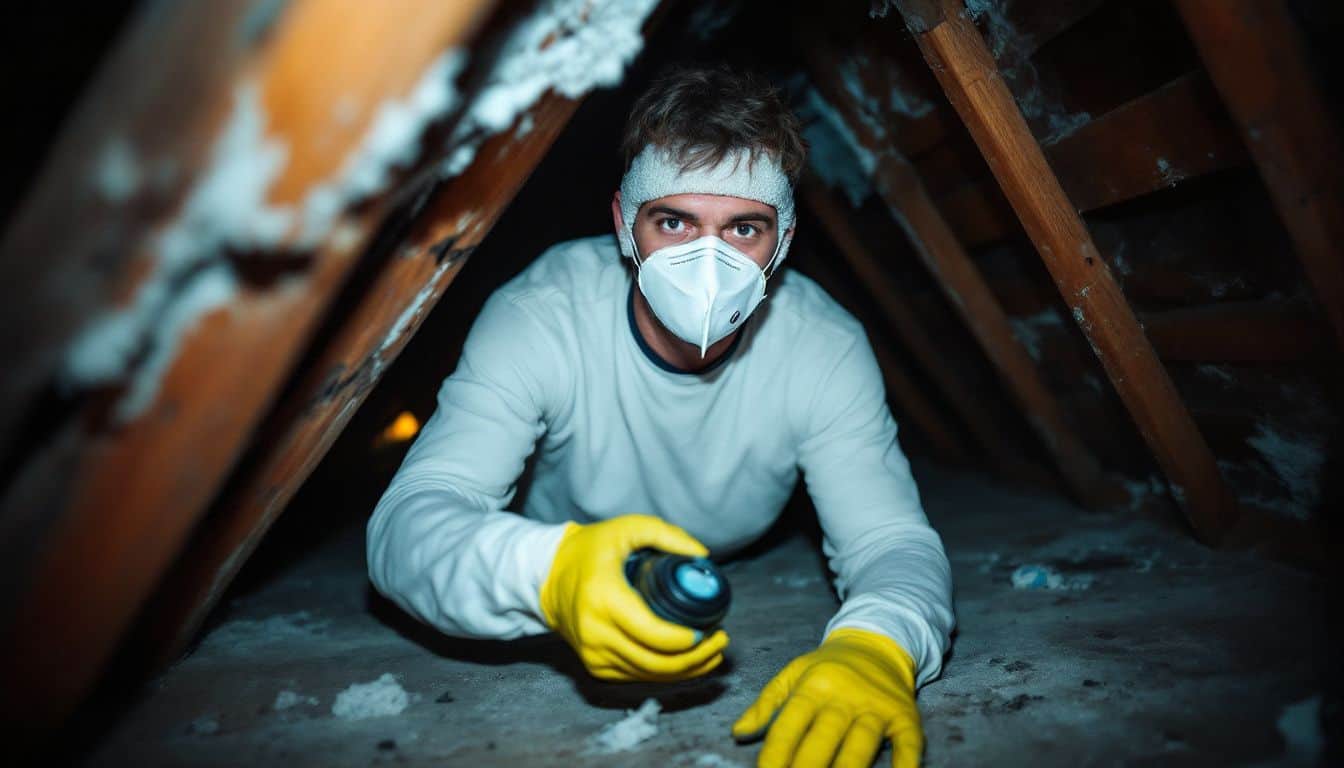
Can I Remove Asbestos Myself in the UK? Here’s What You Need to Know
The temptation is understandable. You’ve spotted some old ceiling tiles or pipe lagging, you’ve watched a few videos online, and you’re wondering whether you can just deal with it yourself over the weekend. But when it comes to the question can I remove asbestos myself in the UK, the honest answer is: almost certainly not legally, and definitely not safely without professional-grade training and equipment.
Asbestos is the single largest cause of work-related deaths in the UK. The fibres it releases when disturbed are invisible to the naked eye, and the diseases they cause — mesothelioma, asbestosis, lung cancer — can take decades to develop. By the time symptoms appear, it’s too late.
This post cuts through the myths and gives you a straight answer on what the law says, what the real risks are, and what your options actually are.
What Is Asbestos and Why Is It Still a Problem?
Asbestos is a naturally occurring fibrous mineral that was widely used in UK construction from the 1950s right through to 1999, when it was finally banned. Any building constructed or refurbished before 2000 may contain asbestos-containing materials (ACMs).
The problem is that ACMs are often hidden in plain sight — or completely out of view. Common locations include:
- Ceiling tiles and textured coatings (such as Artex)
- Floor tiles and the adhesive beneath them
- Pipe lagging and boiler insulation
- Asbestos insulating board (AIB) in walls and partitions
- Roof sheets and soffits
- Gaskets in older heating systems
- Guttering and downpipes in some older properties
When these materials are in good condition and left undisturbed, they are generally considered low risk. The danger comes when they are damaged, drilled, cut, sanded, or ripped out — which is exactly what happens during a renovation or DIY project.
Can I Remove Asbestos Myself in the UK? What the Law Actually Says
UK law on asbestos removal is governed by the Control of Asbestos Regulations, enforced by the Health and Safety Executive (HSE). The rules are clear, but there is a distinction worth understanding.
Licensed, Notifiable Non-Licensed, and Non-Licensed Work
Not all asbestos removal is treated equally under the regulations. Work falls into three categories:
- Licensed work — This covers high-risk materials such as asbestos insulating board (AIB), sprayed coatings, and lagging. Only contractors holding a valid HSE licence can carry out this work. Full stop. No exceptions for homeowners.
- Notifiable non-licensed work (NNLW) — This applies to lower-risk materials where exposure is sporadic and low intensity. It still requires notification to the relevant enforcing authority before work starts, health surveillance for workers, and proper record-keeping.
- Non-licensed work — The lowest-risk category, covering tasks such as minor work with asbestos cement in good condition. This does not require an HSE licence, but it still requires proper risk assessment, correct PPE, and safe disposal.
The critical point is this: even in the non-licensed category, you still need to know what type of asbestos you are dealing with, assess the risk correctly, use appropriate protective equipment, and dispose of waste legally. None of this is something you can improvise.
What Happens If You Get It Wrong?
Carrying out licensable asbestos removal without the correct HSE licence is a criminal offence. The HSE actively prosecutes individuals and businesses who breach the Control of Asbestos Regulations. Penalties can include substantial fines and, in serious cases, imprisonment. Beyond the legal consequences, you also risk contaminating your property — and potentially your neighbours’ — with asbestos fibres that are expensive and complex to remediate properly.
The Real Health Risks of DIY Asbestos Removal
The legal risk is serious, but the health risk is arguably worse — because the consequences are irreversible.
When asbestos-containing materials are disturbed, they release microscopic fibres into the air. These fibres are so small they remain airborne for hours. You breathe them in without knowing it. Once lodged in the lungs, they cannot be removed by the body.
The diseases caused by asbestos exposure include:
- Mesothelioma — a cancer of the lining of the lungs or abdomen, almost exclusively caused by asbestos exposure, with a very poor prognosis
- Asbestosis — scarring of the lung tissue that causes progressive breathing difficulties
- Lung cancer — with the risk significantly increased by asbestos exposure, particularly in smokers
- Pleural thickening — thickening of the membrane surrounding the lungs, causing breathlessness
These conditions typically take 20 to 40 years to develop after exposure. That long latency period is precisely why people underestimate the risk — there is no immediate consequence to make the danger feel real.
A standard dust mask from a DIY shop provides no meaningful protection against asbestos fibres. Proper respiratory protection requires a minimum of an FFP3 disposable mask or, for higher-risk work, a full-face respirator with the correct filter type. Combined with disposable coveralls, gloves, and overshoes — and a proper decontamination procedure — the equipment requirements alone make it clear this is not a weekend job.
Why Professional Asbestos Removal Is the Only Sensible Option
Licensed asbestos removal contractors bring expertise, equipment, and legal accountability that simply cannot be replicated by a homeowner with a YouTube tutorial.
What Licensed Contractors Actually Do
A licensed contractor will typically:
- Carry out a detailed risk assessment before any work begins
- Erect a controlled work area with negative pressure enclosures to prevent fibre spread
- Use HEPA-filtered vacuum equipment and wet suppression methods to minimise airborne fibres
- Wear full PPE including powered air-purifying respirators (PAPRs) or airline breathing apparatus for high-risk work
- Double-bag and label all asbestos waste as hazardous material
- Transport waste to a licensed hazardous waste disposal facility
- Carry out a thorough clearance inspection and air testing before declaring the area safe
The clearance certificate issued at the end of the job is not just a piece of paper — it is your legal documentation that the work was done correctly and the area is safe to reoccupy.
The Cost Argument Doesn’t Hold Up
Many homeowners consider DIY removal because they believe it will save money. In reality, the economics do not stack up. If you contaminate your property through improper removal, the cost of professional remediation will be significantly higher than if you had hired a licensed contractor in the first place. Add potential legal fines, the cost of disposing of contaminated waste through the correct channels, and the long-term health consequences, and the supposed saving evaporates entirely.
Professional asbestos removal is a regulated, accountable service that protects your property value, your legal standing, and — most importantly — your health and the health of everyone in the building.
Before Any Removal: Get an Asbestos Survey First
You cannot safely manage or remove asbestos if you do not know where it is, what type it is, and what condition it is in. This is where an asbestos survey comes in.
The HSE’s guidance document HSG264 sets out the standards for asbestos surveys. There are two main types:
- Management survey — Used to locate and assess ACMs in a building that is in normal occupation. It identifies materials that could be damaged or disturbed during routine maintenance.
- Refurbishment and demolition survey — Required before any refurbishment or demolition work. It is more intrusive and aims to locate all ACMs that may be disturbed during the planned work.
If you are planning renovation work on a pre-2000 property, a refurbishment survey is not optional — it is a legal requirement before work begins. The survey will tell you exactly what you are dealing with and inform the decisions about whether materials need to be removed, encapsulated, or managed in place.
Supernova Asbestos Surveys operates nationwide. If you are based in the capital, our asbestos survey London service covers all London boroughs with rapid turnaround. In the North West, our asbestos survey Manchester team covers Greater Manchester and surrounding areas. And across the Midlands, our asbestos survey Birmingham service provides thorough, accredited surveys for residential and commercial properties alike.
Alternatives to Removal: When Leaving It Alone Is the Right Choice
Removal is not always the best or only option. In many cases, asbestos that is in good condition and not at risk of being disturbed is best left in place and managed rather than removed.
Asbestos Encapsulation
Encapsulation involves applying a specialist sealant or coating to ACMs to prevent fibre release. It is appropriate for materials that are in reasonable condition but could be at risk of minor damage. Encapsulation is considerably less disruptive and less expensive than removal, and when carried out correctly by a qualified contractor, it is a legitimate and effective management strategy.
It is not a permanent solution — encapsulated materials still need to be monitored and recorded in an asbestos register — but it can significantly extend the safe life of ACMs without the risks associated with removal.
Asbestos Management in Place
For non-domestic premises, the duty to manage asbestos under the Control of Asbestos Regulations requires the person responsible for the building to identify ACMs, assess the risk they present, and implement a written asbestos management plan. This does not necessarily mean removing everything — it means knowing what is there, monitoring its condition, and ensuring anyone who might disturb it is informed.
Regular inspections by a qualified surveyor are essential to this process. The condition of ACMs can change over time, and what was low risk five years ago may now require action.
Asbestos Awareness: What Homeowners and Tradespeople Should Know
Even if you are not planning to remove asbestos yourself, basic asbestos awareness is genuinely valuable. Tradespeople — electricians, plumbers, plasterers, carpenters — are among the groups most at risk of accidental asbestos exposure because they regularly work in older buildings without knowing what is in the walls, floors, and ceilings around them.
Asbestos awareness training teaches people to recognise materials that might contain asbestos, understand the risks of disturbing them, and know when to stop work and call in a specialist. It does not qualify anyone to carry out removal, but it can prevent accidental exposure during routine maintenance and renovation work.
For homeowners, the key takeaway is simple: if your property was built before 2000 and you are planning any work that involves drilling, cutting, or disturbing building materials, get a survey done first. Do not assume a material is safe because it looks intact.
Common Myths About DIY Asbestos Removal
“I’ll just wear a mask and be careful”
A standard dust mask does not filter asbestos fibres. The fibres are too small. You need at minimum an FFP3 respirator, and for higher-risk work, a full-face respirator with appropriate filters. Proper respiratory protection is one component of a much larger set of controls — without the rest, it is not enough.
“It’s only a small amount, it can’t cause that much harm”
There is no established safe level of asbestos exposure. Even a single, short-duration exposure carries some degree of risk. The risk increases with the intensity and duration of exposure, but the idea that a small amount is harmless is not supported by the evidence.
“I’ll just bag it up and put it in the skip”
Asbestos waste is classified as hazardous waste under UK law. It must be double-bagged in UN-approved bags, clearly labelled, and taken to a licensed hazardous waste disposal site. Putting asbestos in a general skip is illegal and can result in prosecution — both for you and the skip hire company.
“The regulations don’t apply to my own home”
The Control of Asbestos Regulations apply to all premises, including domestic properties, when work is being carried out. The duty to manage applies specifically to non-domestic premises, but the regulations around licensable work apply universally. Being in your own home does not exempt you from the requirement to use a licensed contractor for licensable work.
Frequently Asked Questions
Can I remove asbestos myself in the UK as a homeowner?
In very limited circumstances, a homeowner may carry out minor non-licensed asbestos work on their own domestic property — for example, carefully removing a small amount of asbestos cement in good condition. However, any licensable asbestos work, such as removing asbestos insulating board or lagging, must be carried out by an HSE-licensed contractor regardless of whether you own the property. Even for non-licensed work, you must carry out a proper risk assessment, use correct PPE, and dispose of waste as hazardous material. If you are in any doubt, the safest course of action is always to get a professional survey and use a licensed contractor.
How do I know if I have asbestos in my property?
You cannot identify asbestos by sight alone — laboratory analysis of a sample is required for confirmation. If your property was built before 2000, there is a reasonable chance it contains ACMs somewhere. The only reliable way to find out is to commission an asbestos survey from a qualified, accredited surveyor. A management survey will identify likely ACMs in an occupied building, while a refurbishment and demolition survey is required before any renovation work begins.
What should I do if I accidentally disturb asbestos?
Stop work immediately. Leave the area and keep others out. Do not try to clean up the material yourself. Open windows if possible to ventilate the space, but do not use a domestic vacuum cleaner as this will spread fibres further. Contact a licensed asbestos contractor to assess the situation and carry out any necessary remediation. If you are concerned about exposure, seek medical advice and inform your GP of the potential exposure so it can be documented.
How much does professional asbestos removal cost?
The cost of professional asbestos removal varies depending on the type and quantity of material, its location, and the access required. While it is not inexpensive, it is considerably cheaper than the cost of remediating a property that has been contaminated through improper DIY removal, and infinitely less costly than the health consequences of asbestos-related disease. Getting a survey done first allows a contractor to give you an accurate quote based on exactly what needs to be done.
Do I need an asbestos survey before renovating an older property?
Yes. Under HSG264 and the Control of Asbestos Regulations, a refurbishment and demolition survey is required before any work that will disturb the fabric of a building built before 2000. This applies to both commercial and domestic properties. The survey identifies ACMs that could be disturbed during the planned work, allowing you to plan the removal or management of those materials before your contractors begin work. Starting refurbishment without a survey puts workers and occupants at risk and may expose you to significant legal liability.
Get Expert Help From Supernova Asbestos Surveys
With over 50,000 surveys completed across the UK, Supernova Asbestos Surveys has the experience, accreditation, and national reach to help you manage asbestos safely and legally — whether you need a survey, sampling, or guidance on next steps.
Do not take chances with asbestos. The consequences are too serious and too permanent. Call us today on 020 4586 0680 or visit asbestos-surveys.org.uk to book a survey or speak to one of our specialists about your property.