Getting asbestos work wrong is never a minor admin issue. If you are asking which category of work is the least dangerous according to the control of asbestos regulations?, the practical answer is usually non-licensed work — but only where the asbestos-containing material, its condition, and the planned method of work genuinely fit that category.
That point matters more than many people realise. The Control of Asbestos Regulations do not describe any asbestos work as harmless. They divide work by likely fibre release, the condition of the material, and the level of control needed to protect workers, occupants, and anyone nearby.
For property managers, landlords, facilities teams, contractors, and maintenance leads, the real challenge is not memorising labels. It is knowing when a job is truly non-licensed, when it becomes notifiable non-licensed work, and when it crosses into licensed work. Get that wrong and you can create exposure risks, enforcement problems, delays, and expensive clean-up costs.
Which category of work is the least dangerous according to the Control of Asbestos Regulations?
The category of work that is generally considered the least dangerous according to the Control of Asbestos Regulations is non-licensed asbestos work. This is the lowest-risk category because it usually involves asbestos-containing materials where fibres are tightly bound into the product and the task can be completed without significant fibre release.
Typical examples may include limited work on asbestos cement, certain textured coatings, or other lower-risk materials in good condition. Even then, the classification depends on the exact material, its condition, how much disturbance is involved, and whether the work is short duration and properly controlled.
So when someone asks which category of work is the least dangerous according to the control of asbestos regulations?, the answer is not simply “the one that does not need a licence”. The correct answer is non-licensed work, where a suitable risk assessment shows the job genuinely falls into that category.
That is an important distinction because lower risk does not mean no risk. Poor planning, damaged materials, or unsuitable tools can turn a supposedly minor task into a serious asbestos incident.
How asbestos work is divided under the regulations
The Control of Asbestos Regulations split asbestos work into three broad categories. These categories help determine who can do the work, whether notification is required, what records must be kept, and what level of control is needed on site.
1. Licensed asbestos work
Licensed work is the highest-risk category. It usually involves more friable materials or tasks that are likely to release a significant amount of asbestos fibres.
Examples often include work involving:
- Pipe lagging
- Loose fill insulation
- Sprayed coatings
- Asbestos insulation board in poorer condition or where disturbance is substantial
- Insulating materials with a high potential for fibre release
This work must be carried out by an HSE-licensed contractor. It also requires stricter planning, site controls, documentation, and formal notification where required.
2. Notifiable non-licensed work
Notifiable non-licensed work, often shortened to NNLW, sits between licensed and non-licensed work. It does not require a licence, but it does trigger extra duties because the risk is higher than standard non-licensed work.
Those duties can include:
- Notifying the relevant enforcing authority before work starts
- Keeping records of the work
- Providing appropriate medical surveillance where required
- Ensuring workers have suitable training and task-specific controls
NNLW often applies where the material is less hazardous than licensed materials, but the condition is poor or the planned work increases the chance of fibre release.
3. Non-licensed asbestos work
Non-licensed work is generally the lowest-risk category, which is why it is the usual answer to the question which category of work is the least dangerous according to the control of asbestos regulations?
It usually involves lower-risk asbestos-containing materials in good condition, where the work is controlled, limited, and unlikely to release significant fibres. Even so, it still requires proper assessment, trained workers, suitable equipment, and safe waste handling.
Why non-licensed work is considered the least dangerous
Non-licensed asbestos work is considered the least dangerous category because the expected level of fibre release is lower. In most cases, the fibres are more firmly bound within the material, and the task can be carried out using methods designed to avoid breakage, dust, and unnecessary disturbance.
In practical terms, non-licensed work is usually lower risk for a few clear reasons:
- The asbestos fibres are often tightly bound into the product
- The material may be cement-based, sealed, or coated
- The work is normally short duration and limited in scope
- The method should minimise breakage and dust generation
- Suitable controls can reduce exposure to a much lower level than higher-risk work
That said, the material alone does not decide the category. The same product can move into a higher-risk classification if it is badly damaged, deteriorated, or handled in a way that releases more fibres.
This is why the question which category of work is the least dangerous according to the control of asbestos regulations? should always be followed by another: what is the actual condition of the material and how exactly will the work be done?
What HSG264 and HSE guidance mean in practice
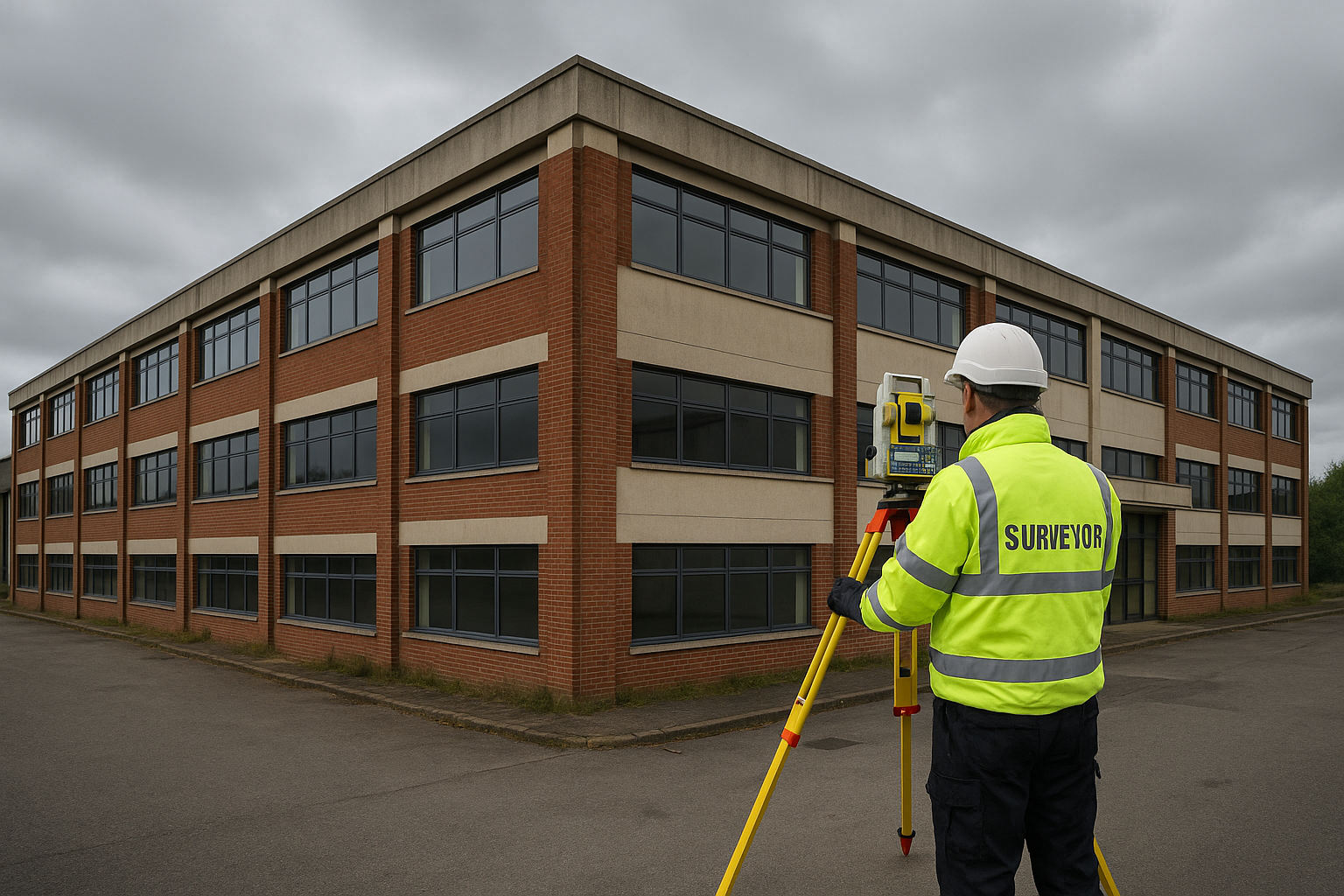
Before anyone can classify asbestos work properly, they need reliable information about what is present in the building. That is where HSG264 matters. It sets the recognised survey standard for identifying asbestos-containing materials and assessing their extent and condition.
If your asbestos information is incomplete, outdated, or based on assumptions, you cannot confidently decide whether work is licensed, notifiable non-licensed, or non-licensed. That is where many avoidable mistakes begin.
HSE guidance makes it clear that asbestos work classification depends on several factors, including:
- The type of asbestos-containing material
- Its friability
- Its condition
- Whether the task will damage it
- The likely level of fibre release
- The duration and frequency of the work
For a property manager, the practical takeaway is simple: do not guess. Use a competent surveyor, keep your asbestos register current, and make sure contractors are working from accurate information.
If you manage property in the capital, arranging an asbestos survey London service gives you the evidence you need to plan work safely. The same principle applies across regional portfolios, whether you need an asbestos survey Manchester for a commercial site in the North West or an asbestos survey Birmingham for premises in the Midlands.
Examples of work that may fall into the lowest-risk category
People often want a simple list of tasks that answer the question which category of work is the least dangerous according to the control of asbestos regulations? The trouble is that no task is automatically low risk in every situation. The category depends on the condition, the method, and the likely exposure.
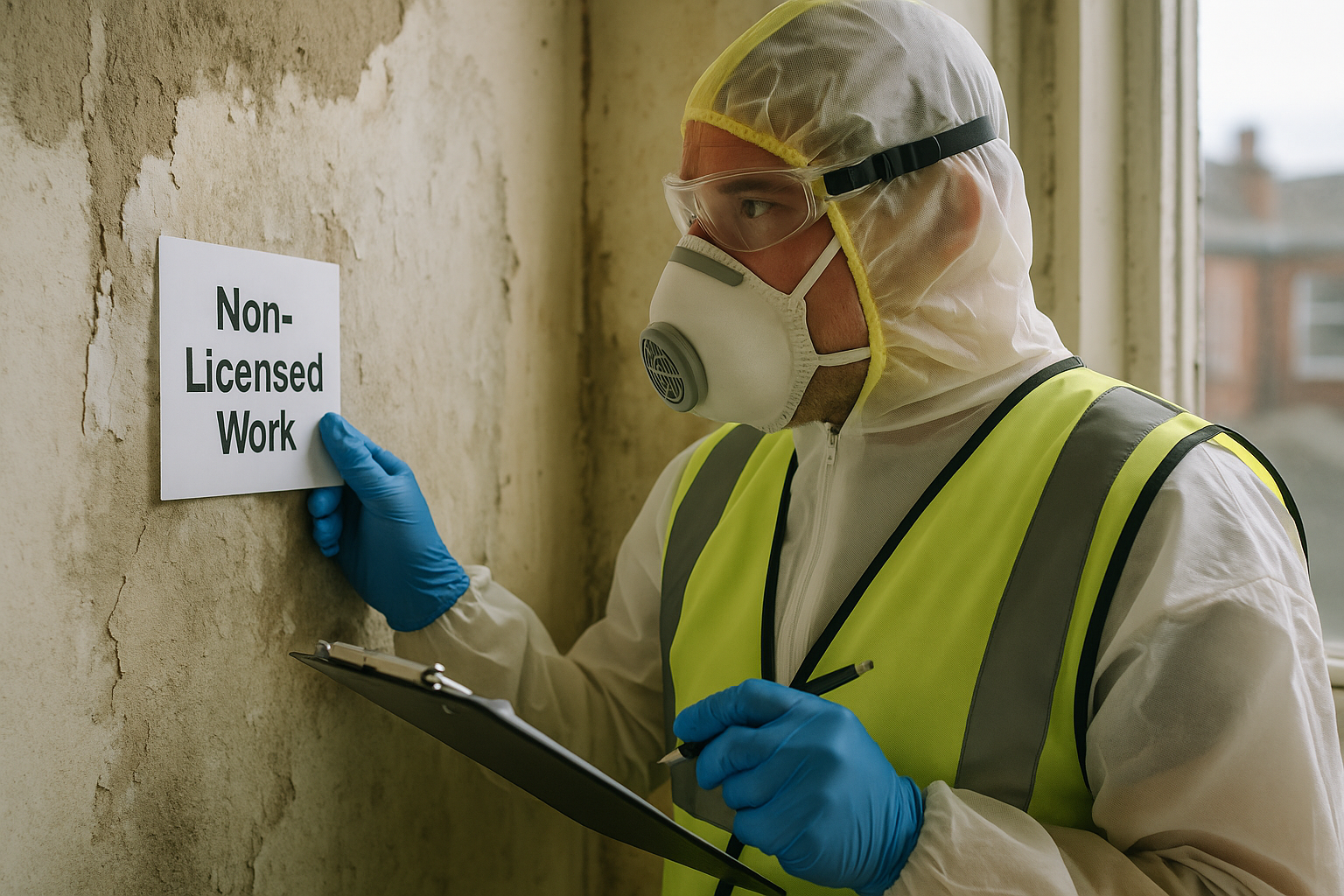
Still, there are common examples of work that may fall within non-licensed asbestos work when properly assessed.
Work on asbestos cement in good condition
Asbestos cement products are often treated as lower risk because the fibres are tightly bound into the cement matrix. You may find them in garage roofs, wall cladding, flues, soffits, rainwater goods, outbuildings, and some industrial units.
Limited work on intact asbestos cement can be non-licensed where the material is in good condition and the job is controlled carefully. The moment sheets are badly damaged, crumbling, or likely to be broken extensively, the risk profile changes.
Some textured coating work
Certain tasks involving textured coatings may also fall into non-licensed work, depending on how the job is carried out. The method is critical.
Controlled removal techniques are very different from aggressive scraping, sanding, or uncontrolled breakage. If the chosen approach is likely to generate dust, the work may no longer fit the lower-risk category.
Short-duration minor maintenance
Some minor maintenance work involving lower-risk materials may be non-licensed when it is infrequent, short in duration, and completed using appropriate controls. This is often where mistakes happen because someone assumes a small job does not need proper planning.
Small jobs still need a written assessment, clear instructions, and competent workers. If the task becomes more extensive once work starts, stop and reassess before continuing.
When lower-risk work becomes notifiable or licensed
One of the biggest asbestos mistakes on site is assuming a material is always low risk. It is not. A lower-risk product can become a higher-risk job if the condition is poor or the planned method of work is intrusive.
Non-licensed work may become notifiable non-licensed work or licensed work when:
- The material is significantly damaged or degraded
- The task is likely to generate more dust or debris than expected
- The work lasts longer or happens more often than planned
- The method involves cutting, drilling, abrasion, or substantial breakage
- The material is more friable than first thought
- The work area cannot be controlled safely using lower-risk methods
This is why the question which category of work is the least dangerous according to the control of asbestos regulations? can never be answered by product name alone. A garage roof made of asbestos cement may be lower risk when intact and handled carefully. The same roof may create a very different risk if it is shattered, weathered, or removed using poor methods.
When there is any doubt, get specialist advice before work starts. That is far cheaper than dealing with contamination, emergency cleaning, or enforcement action after the fact.
What dutyholders and employers must do
The duty to manage asbestos in non-domestic premises remains one of the most important parts of the Control of Asbestos Regulations. If you are responsible for a commercial building, school, office, warehouse, plant room, or the common parts of residential property, you need to know where asbestos is and how it will be managed.
Your responsibilities typically include:
- Identifying asbestos-containing materials so far as is reasonably practicable
- Keeping an up-to-date asbestos register
- Assessing the risk from those materials
- Preparing and implementing an asbestos management plan
- Sharing information with anyone liable to disturb asbestos
- Reviewing the information regularly and when circumstances change
These duties apply whether the planned work is licensed, notifiable non-licensed, or non-licensed. The category affects the control measures, but it does not remove the wider duty to manage asbestos properly.
A practical approach for dutyholders is to check three things before any maintenance or refurbishment starts:
- Do we have current survey information for the relevant area?
- Does the contractor have access to the asbestos register and plan of work?
- Has someone competent checked whether the work category is correct?
If the answer to any of those is no, pause the job and fix that first.
Training, PPE and safe systems of work
Even where the answer to which category of work is the least dangerous according to the control of asbestos regulations? is non-licensed work, workers still need suitable training. No licence does not mean no competence.
Anyone liable to disturb asbestos should have the right level of asbestos training for the work they do. For those carrying out non-licensed tasks, that means understanding the material, the control measures, emergency procedures, decontamination steps, and the limits of what they are allowed to do.
Key controls for lower-risk asbestos work
For non-licensed tasks, the basics matter. Most asbestos incidents happen because routine controls were ignored, not because the job was unusually complex.
- Carry out a written risk assessment
- Prepare a method statement or plan of work
- Avoid methods that create unnecessary dust
- Keep the material damp where appropriate
- Minimise breakage and handling
- Restrict access to the area
- Use suitable PPE and RPE where required
- Use cleaning methods appropriate for asbestos work
- Package, label, and dispose of waste correctly
Dry sweeping, uncontrolled drilling, and casual debris handling are exactly the kind of shortcuts that turn a lower-risk task into a serious problem.
Why method matters more than assumptions
A common site error is to look at a material, decide it is probably low risk, and then use normal construction methods. That is the wrong way round.
The correct approach is to identify the material, assess the condition, choose a suitable method, and confirm the work category before anyone starts. If the method cannot control fibre release properly, the task may not belong in the non-licensed category at all.
Do you always need asbestos removal?
No. Asbestos does not always need to be removed. If an asbestos-containing material is in good condition, sealed, and unlikely to be disturbed, management in place may be the safer and more proportionate option.
Removal is usually considered where the material is damaged, likely to be disturbed during planned works, or difficult to manage safely over time. If removal is required, it must match the correct work category and be carried out using the right controls.
Where removal is necessary, use a competent specialist and make sure the scope reflects the actual risk. If you need professional support, Supernova can help with asbestos removal as well as surveys, sampling, and management advice.
Practical steps before any asbestos work starts
If you are responsible for a building and want to avoid misclassification, delays, and exposure incidents, a simple process goes a long way.
- Check the survey information. Make sure it is suitable for the planned work. A management survey may not be enough for refurbishment or demolition.
- Review the asbestos register. Confirm the location, extent, and condition of any asbestos-containing materials in the work area.
- Assess the task properly. Look at the material, the method, the duration, and the likelihood of fibre release.
- Choose the correct category of work. Decide whether the job is licensed, notifiable non-licensed, or non-licensed based on evidence, not assumptions.
- Brief everyone involved. Contractors, maintenance staff, and site managers should all understand the risks and controls.
- Prepare for waste and emergencies. Make sure packaging, disposal routes, and incident procedures are in place before work begins.
That process is not overkill. It is what keeps a routine job from becoming an avoidable asbestos event.
Common misunderstandings about the least dangerous category
There are a few myths that cause repeated problems in buildings of every type.
“Non-licensed means safe”
It does not. Non-licensed means lower risk under the regulations, not risk free. Exposure can still happen if the material is damaged or the method is poor.
“Asbestos cement is always non-licensed”
Not always. It often falls into the lower-risk category, but condition and method still matter. Damaged sheets or uncontrolled removal can change the risk picture quickly.
“Small jobs do not need planning”
Small jobs are often where standards slip. Short duration does not remove the need for assessment, training, and clear controls.
“If a contractor says it is fine, that is enough”
Dutyholders still need evidence. You should be able to show why the work was classified as non-licensed and what controls were used.
Why accurate surveys make classification easier
Many asbestos problems start long before the work itself. They begin with poor information. If the survey is vague, incomplete, or not suitable for the planned activity, the work category can be misjudged from the outset.
An accurate survey helps you:
- Identify the right asbestos-containing materials
- Understand their condition
- Plan maintenance and refurbishment safely
- Give contractors reliable information
- Reduce the risk of unexpected discoveries during work
That is especially useful on larger estates, mixed-use buildings, schools, industrial units, and older commercial properties where asbestos may appear in several different forms.
If your records have not been reviewed recently, or if upcoming works will disturb the fabric of the building, it is worth getting fresh advice before the programme starts.
Frequently Asked Questions
Is non-licensed asbestos work always the least dangerous?
Generally, yes. Non-licensed work is usually the lowest-risk category under the Control of Asbestos Regulations. However, it is only the least dangerous when the material is lower risk, in suitable condition, and handled using a controlled method that keeps fibre release low.
Can non-licensed work still require notification?
Yes. Some work is classed as notifiable non-licensed work. It does not require a licence, but it does require additional duties such as notification, record keeping, and medical surveillance where applicable.
Does asbestos always need to be removed?
No. If asbestos-containing material is in good condition and unlikely to be disturbed, it can often be managed in place. Removal is usually considered when the material is damaged, likely to be disturbed, or difficult to manage safely.
What is the difference between HSG264 and the Control of Asbestos Regulations?
The Control of Asbestos Regulations set the legal duties around asbestos management and work. HSG264 provides recognised guidance on asbestos surveying, including how materials are identified and assessed in buildings.
Who should I contact if I am unsure about asbestos work classification?
You should speak to a competent asbestos surveyor or specialist before work starts. Supernova Asbestos Surveys can help with surveys, sampling, management advice, and removal support across the UK. Call 020 4586 0680 or visit asbestos-surveys.org.uk to arrange the right service for your property.
If you need clear advice on asbestos risk, work categories, or the right next step for your building, speak to Supernova Asbestos Surveys. We provide asbestos surveys, testing, management support, and removal services nationwide. Call 020 4586 0680 or visit asbestos-surveys.org.uk to book a survey or discuss your project.