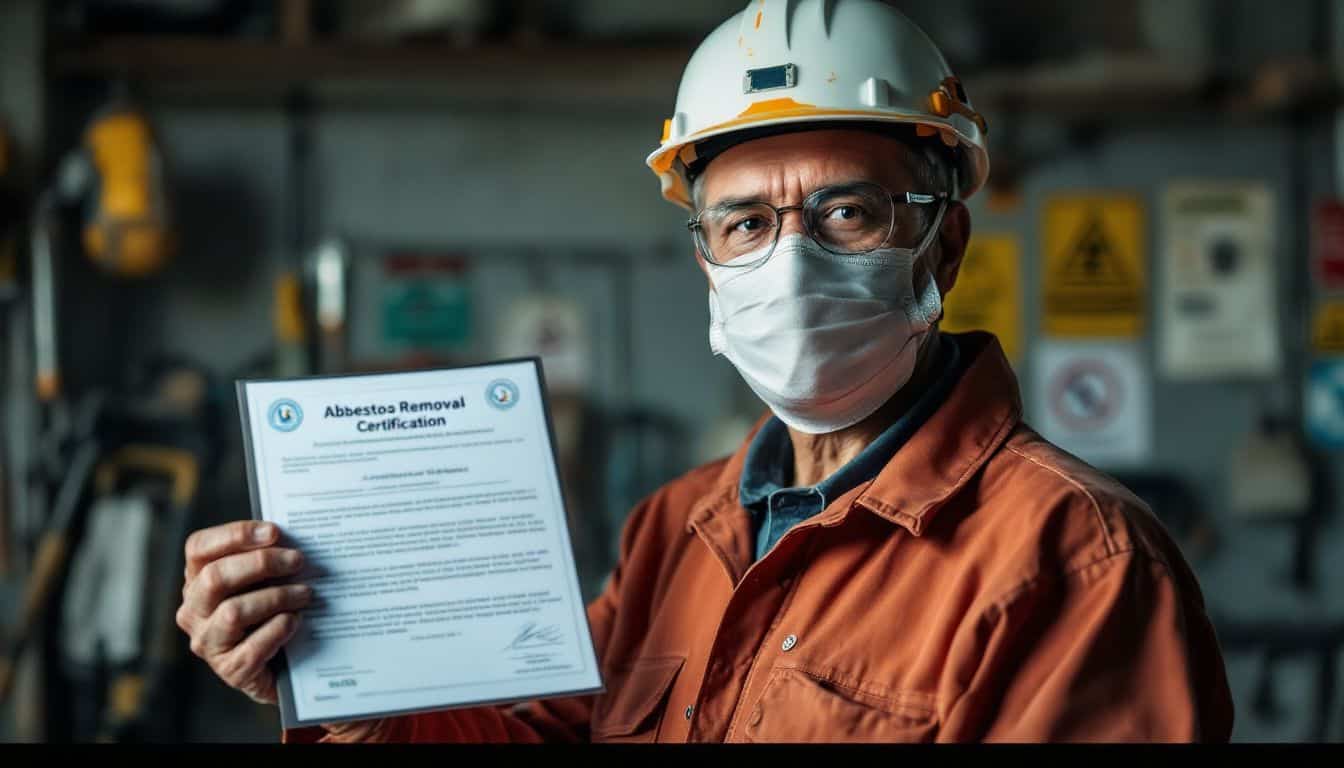
Asbestos Removal Training: What the Law Requires and Who Needs It
Asbestos removal training is not a bureaucratic formality — it is a legal requirement that determines who can lawfully work on asbestos-containing materials and at what level. If you manage a building, employ maintenance staff, or plan refurbishment work, understanding the training landscape is essential before anyone picks up a tool.
The Control of Asbestos Regulations are unambiguous: employers must ensure that any worker liable to be exposed to asbestos receives adequate information, instruction and training suited to their role. Getting this wrong exposes workers to serious health risks, exposes your organisation to enforcement action, and — in the worst cases — causes irreversible harm.
This post sets out exactly what training exists, who needs it, and where the legal lines are drawn.
Why Asbestos Removal Training Is a Legal Requirement, Not a Choice
Asbestos remains present in a significant proportion of UK buildings constructed or refurbished before the year 2000 ban. It appears in insulation board, pipe lagging, sprayed coatings, textured coatings, floor tiles, roofing sheets, cement products and more. When these materials are disturbed, microscopic fibres become airborne — invisible, odourless and capable of causing mesothelioma, asbestosis and lung cancer years after exposure.
Training helps workers recognise asbestos-containing materials, understand how risk varies by material type and condition, apply correct control measures, and know when work must stop and specialists must be called in. It does not replace surveys, risk assessments or licensed contractors — but it drastically reduces the chance of dangerous assumptions being made on site.
For dutyholders, training also supports better day-to-day decisions. A facilities manager who understands the duty to manage is far less likely to commission unnecessary removal or, equally dangerous, ignore a damaged panel entirely.
What the Law Says About Competence and Training
The Control of Asbestos Regulations require employers to provide training that is appropriate to the nature of the work. The HSE is clear that asbestos awareness training does not qualify anyone to remove asbestos — it is designed to help workers avoid disturbing it.
HSG264, the HSE’s guidance document on asbestos surveying, sets the standard for survey work. It requires that surveys are carried out by competent surveyors, and that the right type of survey is commissioned for the right purpose. A management survey is not sufficient before demolition or major refurbishment — for that, you need a demolition survey carried out by a qualified professional before any structural work begins.
For higher-risk removal work, training is only part of the picture. Licensed asbestos removal must be carried out by a contractor holding a current HSE licence. No amount of training makes unlicensed removal of high-risk materials lawful.
The Three Categories of Asbestos Work
Before selecting any training course, you need to understand which category the work falls into. Misclassifying asbestos work is one of the most common causes of enforcement action.
Licensed Work
This covers higher-risk activities involving friable materials such as pipe lagging, sprayed coatings and certain insulation products. This work must only be carried out by a contractor holding an HSE licence. Notification to the HSE is required before work begins, and strict controls around enclosures, decontamination and waste apply throughout.
Notifiable Non-Licensed Work
This is lower-risk than licensed work but still triggers specific obligations — including notification, medical surveillance and record-keeping. Workers must be trained appropriately for the tasks involved.
Non-Licensed Work
This covers lower-risk tasks involving materials in good condition where fibre release is limited and adequate controls can be maintained. Even here, workers still need suitable training, correct equipment and a proper risk assessment.
If there is any doubt about which category applies, stop and seek professional advice before work starts. The consequences of getting this wrong are serious.
Can DIY Asbestos Removal Ever Be Justified?
Rarely. Even where a task technically falls outside licensed work, the person doing it still needs appropriate asbestos removal training, correct PPE and RPE, a documented risk assessment, suitable waste disposal arrangements and a clear understanding of contamination control. That is a significant set of requirements for a private individual or a general tradesperson to meet.
Property owners frequently assume a small job is a simple job. With asbestos, that assumption is dangerous. A cracked insulating board panel can present a far greater risk than an intact asbestos cement sheet — material type, condition, location and likely fibre release all affect the risk level significantly.
If you are a homeowner, landlord or property manager who suspects asbestos is present, the most practical route is to have the material inspected and sampled by a competent professional. If removal is needed, use a specialist contractor. Our asbestos removal service covers a wide range of material types and project sizes, carried out by experienced, licensed professionals.
Asbestos Awareness Training
Asbestos awareness training is the entry-level course for workers who may encounter asbestos during their work but are not expected to disturb it deliberately. Typical delegates include electricians, plumbers, joiners, decorators, general maintenance staff and contractors working in older buildings.
A proper awareness course covers:
- What asbestos is and why it is hazardous
- Where asbestos-containing materials are commonly found in buildings
- The health risks associated with fibre inhalation
- How to recognise materials that may contain asbestos
- What to do if suspected asbestos is discovered during work
- Why work must stop immediately if materials are unidentified
This course does not permit any removal work whatsoever. It is about recognition and avoidance — helping workers protect themselves and others by not disturbing materials they are not qualified to handle.
Awareness training should be refreshed regularly. The HSE recommends annual refresher training as good practice, particularly for workers in sectors where asbestos exposure is a realistic risk.
Non-Licensed Asbestos Removal Training
Often referred to as Category B training, non-licensed asbestos removal training is for workers who carry out lower-risk tasks on certain asbestos-containing materials where the work falls outside the licensed threshold. This is often the minimum level of asbestos removal training for trades undertaking limited removal tasks.
Course content typically includes:
- Task planning and risk assessment
- Safe working methods for lower-risk asbestos-containing materials
- Selection, use and limitations of respiratory protective equipment
- Personal protective equipment requirements
- Decontamination procedures
- Waste handling, packaging, labelling and disposal
- Understanding when work becomes notifiable or moves into licensed territory
It is essential that this training is role-specific. A maintenance operative removing a small section of asbestos cement sheeting needs different practical knowledge to a contractor working on notifiable non-licensed tasks. A good training provider will tailor content to the actual duties involved.
Licensed Asbestos Removal Training
Licensed asbestos removal training is a considerably higher standard, designed for operatives working on high-risk materials under a licensed contractor. The work is more hazardous, the controls are more stringent, and the training reflects that.
Asbestos Licensed Operative Course (New Entrants)
The Licensed Operative Course is the entry point for those moving into licensed asbestos removal work for the first time. It is aimed at new operatives who will be working under supervision on higher-risk removal jobs.
Typical content includes:
- Asbestos types, risk levels and material identification
- Legal responsibilities under the Control of Asbestos Regulations
- Site set-up, enclosures and transit routes
- RPE selection, checks, fit-testing and limitations
- Decontamination procedures and hygiene controls
- Controlled removal methods for licensed materials
- Waste containment, handling and disposal
- Emergency procedures if control measures fail
Practical assessment is essential at this level. Operatives must demonstrate that they can follow procedures correctly under realistic conditions — not simply recall definitions. For employers recruiting into the sector, this course should form part of a broader competence plan that includes site mentoring, supervision and structured refresher training.
Asbestos Licensed Supervisor Course
Supervisors on licensed asbestos removal sites carry significant responsibility. They must ensure that plans of work are followed, enclosure integrity is maintained, operatives are using equipment correctly, and any issue is addressed before it escalates into an incident.
Supervisor-level asbestos removal training covers:
- Interpreting and implementing plans of work
- Checking and maintaining enclosure integrity and site controls
- Monitoring team performance and behaviour
- Managing documentation, records and communication
- Responding to incidents and unexpected material finds
- Co-ordinating with analysts, clients and management
Leadership skills matter here as much as technical knowledge. A supervisor must be able to stop unsafe work, challenge poor practice and maintain discipline under pressure — even when there are commercial pressures to push on.
New Asbestos Manager Training Course
The Asbestos Manager course is for those overseeing asbestos compliance across a portfolio or within a larger organisation. This role sits above day-to-day site supervision and focuses on systems, strategy and assurance.
An asbestos manager may be responsible for contractor selection, survey strategy, asbestos register maintenance, remedial action planning, policy implementation and reporting to senior stakeholders. Training at this level should develop the skills to build and maintain a compliant asbestos management system — not just understand individual regulations in isolation.
Duty to Manage Training: What Building Owners and Managers Need
The duty to manage asbestos applies to those responsible for non-domestic premises — landlords, managing agents, facilities managers, school business managers, estate teams and others with maintenance responsibilities. It is one of the most frequently misunderstood obligations in property management.
The duty does not require you to remove all asbestos from a building. It requires you to know whether asbestos is present, assess the risk it poses, and manage it so that nobody is exposed. A Duty to Manage training course gives dutyholders the knowledge to fulfil that obligation properly.
A well-structured course covers:
- The legal responsibilities of dutyholders under the Control of Asbestos Regulations
- How asbestos registers and management plans work in practice
- When to commission management, refurbishment or demolition surveys
- How to share asbestos information with contractors before work begins
- How to monitor asbestos-containing materials in situ
- What to do when damage is found or planned work may disturb materials
For property managers overseeing multiple sites, this training supports day-to-day decision-making and helps you avoid both extremes: ignoring asbestos entirely, or commissioning unnecessary removal where management in place would be safer and more proportionate.
How to Choose the Right Asbestos Training Provider
Not all training providers offer the same quality. When evaluating a course, ask the following questions before booking:
- Does the course scope match the actual duties? A maintenance operative and a licensed removal supervisor have very different training needs.
- Is the provider recognised by an established asbestos training body? Accreditation provides independent assurance of course quality.
- Does the course include practical elements? For any role involving physical work, hands-on training is essential — classroom theory alone is not sufficient.
- Can the provider support refresher training? Competence must be maintained over time, not just demonstrated once.
- Do the trainers have real operational experience? Trainers who have worked in asbestos operations bring practical insight that purely academic instruction cannot replicate.
Always request the full course syllabus before booking. A credible provider should be able to explain exactly what delegates will learn, what the course qualifies them to do, and who it is suitable for.
Surveys Before Work Starts: The Essential First Step
No amount of asbestos removal training removes the need for a proper survey before work begins. Surveys identify what is present, where it is located and what condition it is in — without that information, even trained workers are operating blind.
If you are managing a refurbishment or maintenance project in London, arranging an asbestos survey London service before mobilisation can prevent accidental disturbance, project delays and costly emergency call-outs.
For projects in the North West, an asbestos survey Manchester inspection before contractor mobilisation is a practical way to support your duty to manage and keep timelines on track.
If your properties are in the West Midlands, commissioning an asbestos survey Birmingham before any planned works ensures your contractors have the information they need to work safely and lawfully.
The survey type matters too. A management survey is not appropriate for major refurbishment or demolition projects. In those cases, a specialist pre-demolition or pre-refurbishment survey must be completed first — identifying all asbestos-containing materials that may be disturbed, so that a safe plan of work can be produced.
Frequently Asked Questions
Does asbestos awareness training allow me to remove asbestos?
No. Asbestos awareness training is designed to help workers recognise and avoid disturbing asbestos-containing materials. It does not qualify anyone to carry out removal work of any kind. For removal tasks, workers need non-licensed, notifiable non-licensed or licensed asbestos removal training depending on the materials and risk level involved.
Who is legally required to have asbestos removal training?
Under the Control of Asbestos Regulations, employers must ensure that any worker liable to be exposed to asbestos — or who supervises such workers — receives adequate training appropriate to their role. This applies across a wide range of trades and sectors, from maintenance operatives and contractors to supervisors and building managers.
Can a homeowner legally remove asbestos themselves?
In some limited circumstances, a homeowner may carry out minor non-licensed work on their own domestic property, but this is rarely advisable. Even non-licensed removal requires appropriate training, correct equipment, a risk assessment and proper waste disposal. For any suspected asbestos, the safest approach is to have the material surveyed and, if removal is needed, use a licensed specialist contractor.
How often does asbestos training need to be refreshed?
The HSE recommends that asbestos awareness training is refreshed at least annually. For other levels of training, refresher requirements depend on the type of work and the training body’s guidance. Employers should maintain records of training dates and ensure that competence is kept current — particularly where workers have been away from asbestos-related tasks for an extended period.
What is the difference between a management survey and a refurbishment or demolition survey?
A management survey identifies and assesses the condition of asbestos-containing materials in a building so that they can be managed safely during normal occupation. A refurbishment or demolition survey is more intrusive and is required before any work that will disturb the fabric of the building. It must locate all asbestos-containing materials in areas affected by the planned work — including those that would not be accessible during a standard management survey.
Work With Supernova Asbestos Surveys
Supernova Asbestos Surveys has completed over 50,000 surveys nationwide. We work with property managers, landlords, contractors and dutyholders across the UK to identify asbestos, manage risk and support safe working practices.
Whether you need a management survey, a pre-refurbishment inspection, specialist removal or guidance on your duty to manage obligations, our team is ready to help. Call us on 020 4586 0680 or visit asbestos-surveys.org.uk to find out more or request a quote.