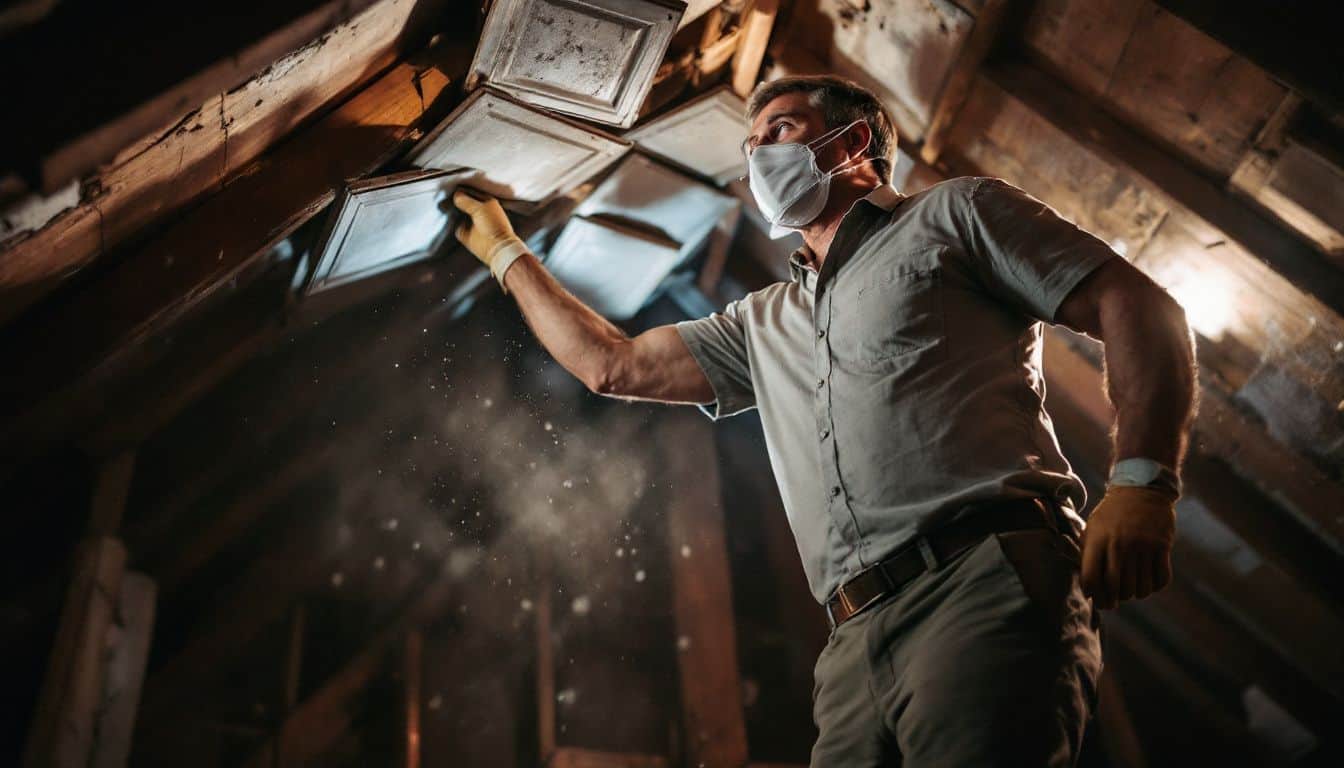
The Risks of Asbestos: Why DIY Removal Could Cost You Everything
Asbestos sits quietly inside millions of UK properties, and most of the time, that is exactly where it should stay. The moment someone decides to disturb it without the right knowledge, equipment, or training, the risks of asbestos exposure become very real — and potentially fatal. DIY removal is one of the most common ways those risks are triggered, and it is a decision that can have consequences lasting decades.
This post covers the diseases asbestos causes, why attempting removal yourself dramatically increases your exposure risk, the legal trouble you could face, and what the safer alternatives actually look like.
Understanding the Risks of Asbestos to Human Health
Asbestos is a naturally occurring fibrous mineral that was widely used in UK construction throughout the twentieth century. When asbestos-containing materials (ACMs) are disturbed, they release microscopic fibres into the air. Those fibres are invisible to the naked eye, odourless, and can remain suspended in the air for hours.
Once inhaled, they do not leave. The fibres embed themselves in lung tissue and the lining of the chest cavity, where they cause progressive, irreversible damage over many years. There is no safe level of asbestos exposure — any exposure carries some degree of risk.
Asbestosis
Asbestosis is a chronic lung disease caused by the scarring of lung tissue from asbestos fibre inhalation. Over time, the lungs stiffen and lose their ability to expand properly, making breathing increasingly difficult. Symptoms include a persistent dry cough, shortness of breath, and chest tightness.
There is no cure. Management focuses on slowing progression and relieving symptoms, but the condition is permanent and can be severely debilitating. It typically develops after prolonged or heavy exposure, though lower-level exposure is not without risk.
Mesothelioma
Mesothelioma is a rare and aggressive cancer that develops in the lining of the lungs (pleura), abdomen, or heart. It is almost exclusively caused by asbestos exposure. The disease has a long latency period — symptoms often do not appear until 20 to 50 years after exposure, by which point the cancer is typically at an advanced stage.
Prognosis is poor. Most people diagnosed with mesothelioma survive fewer than 18 months after diagnosis, and there is currently no cure. This is not a disease you can recover from — which is precisely why preventing exposure in the first place is so critical.
Lung Cancer
Asbestos is a recognised cause of lung cancer, and the risk is significantly higher in people who have also smoked. The combination of asbestos exposure and cigarette smoking multiplies the risk considerably beyond either factor alone.
Lung cancer caused by asbestos is clinically identical to lung cancer from other causes. This makes attribution — and prevention — all the more important.
Pleural Thickening and Other Non-Malignant Conditions
Not all asbestos-related diseases are cancers. Diffuse pleural thickening involves the scarring and hardening of the pleura — the membrane surrounding the lungs — which restricts lung expansion and causes breathlessness and chest discomfort.
Pleural plaques, which are patches of thickened tissue on the pleura, are another common marker of asbestos exposure, though they are generally benign on their own. These conditions may not be immediately life-threatening, but they can seriously impair quality of life and may indicate a higher risk of developing more serious asbestos-related disease later.
Why DIY Asbestos Removal Dramatically Increases Your Risk
The risks of asbestos are manageable when the material is left undisturbed and in good condition. The danger comes from disturbance — and few activities disturb asbestos more thoroughly than an untrained person attempting to remove it with household tools.
Improper Handling Releases Fibres Into the Air
Asbestos-containing materials vary in their condition and their propensity to release fibres. Friable materials — those that can be crumbled by hand — release fibres very easily. Even materials in relatively good condition can release fibres when drilled, cut, sanded, or broken.
Without knowing what type of asbestos you are dealing with, how friable it is, and how to handle it without causing fibre release, the risk of contaminating your home is extremely high. A professional understands these variables and works accordingly. A DIY operative typically does not.
Lack of Proper Protective Equipment
Licenced asbestos removal contractors work with specialist personal protective equipment (PPE) that is simply not available at a hardware shop. This includes:
- Type 5 disposable coveralls providing full-body protection
- FFP3-rated or higher respirators, properly fitted and face-seal tested
- Disposable gloves and boot covers
- HEPA-filtered vacuum equipment designed specifically for asbestos
- Negative pressure enclosures to contain the work area
A standard dust mask offers no meaningful protection against asbestos fibres. The fibres are too fine to be filtered by anything other than specialist respiratory protection. Wearing inadequate PPE during DIY removal gives a false sense of security while providing almost none of the actual protection required.
Contamination Spreads Beyond the Work Area
One of the most serious problems with DIY removal is secondary contamination. Fibres that become airborne do not stay in one room — they travel through ventilation systems, settle on furniture, clothing, and carpets, and can be redistributed every time someone moves through the space.
This means a poorly managed removal job does not just expose the person doing the work. It can expose everyone in the property, including children, for weeks or months afterwards. Decontaminating a property after an uncontrolled asbestos release is a complex, costly process that requires professional intervention.
Short-Term Exposure Is Still Dangerous
Some people assume that a brief, one-off exposure carries minimal risk. This is a dangerous misconception. Even a single, significant exposure event can introduce fibres into the lungs that remain there permanently.
While the risk of disease is broadly proportional to cumulative exposure, there is no threshold below which asbestos is definitively safe. The HSE is clear that any work likely to disturb asbestos must be planned, controlled, and carried out by competent people with the right equipment. Short-duration work does not exempt anyone from this requirement.
The Legal Position on Asbestos Removal in the UK
The Control of Asbestos Regulations set out clear legal requirements for how asbestos must be managed, handled, and removed. These regulations apply to workplaces and commercial properties, and they impose significant obligations on duty holders.
Licensed and Non-Licensed Work
Not all asbestos removal requires a full HSE licence, but the distinction matters. Licensed work — which covers the most hazardous materials such as sprayed asbestos coatings, asbestos insulation, and asbestos insulating board — must only be carried out by contractors holding a current HSE licence. Attempting this work without a licence is a criminal offence.
Notifiable Non-Licensed Work (NNLW) sits in a middle category. It does not require a licence, but the employer must notify the relevant enforcing authority before work begins, keep health records, and ensure workers undergo medical surveillance. This is still not work that should be attempted by an untrained individual.
Penalties for Non-Compliance
The Health and Safety Executive enforces the Control of Asbestos Regulations robustly. Businesses found in breach face substantial fines — in serious cases, these can run to hundreds of thousands of pounds at Crown Court. Individuals can also face prosecution, and in cases involving gross negligence or deliberate disregard for safety, custodial sentences are possible.
Beyond direct penalties, there is the question of civil liability. If a contractor, tenant, or visitor is subsequently diagnosed with an asbestos-related disease and exposure can be traced back to improperly managed removal work, the person responsible for that work may face significant compensation claims.
The Duty to Manage
For non-domestic premises, the Control of Asbestos Regulations impose a specific duty to manage asbestos. This requires duty holders to identify the presence and condition of ACMs, assess the risk they pose, and put a written management plan in place.
This duty cannot be delegated to an unqualified person, and ignoring it entirely is a breach of law. HSG264, the HSE’s guidance document on asbestos surveys, provides detailed guidance on how surveys should be planned and conducted. Any survey work should follow this guidance to ensure it produces reliable, actionable results.
Safe Alternatives to DIY Removal
The good news is that asbestos does not always need to be removed. In many cases, the safest course of action is to leave it in place and manage it — and in others, professional asbestos removal is the right solution, carried out safely by trained, licenced specialists.
Encapsulation
Where asbestos-containing materials are in reasonable condition and are not at risk of disturbance, encapsulation is often the preferred approach. This involves applying a sealant to the surface of the material to bind the fibres and prevent them from becoming airborne. It is less disruptive than removal, less expensive, and — when done correctly — highly effective.
Encapsulation is not a permanent solution in every case. The material still needs to be monitored regularly, and if it deteriorates or is likely to be disturbed by future building work, removal may eventually become necessary.
Professional Removal Services
When removal is the right option, it must be carried out by qualified professionals. Licenced contractors work within controlled environments, using specialist equipment and following strict decontamination procedures. They dispose of asbestos waste at licenced disposal sites, in accordance with hazardous waste regulations, and they provide documentation confirming the work has been completed safely.
The cost of professional removal is not trivial, but it is a fraction of the cost — financial and human — of dealing with an asbestos-related illness or a contaminated property. It is always the right choice.
Why a Professional Asbestos Survey Should Come First
Before any decision is made about removal, encapsulation, or management, you need to know exactly what you are dealing with. That means commissioning a professional asbestos survey from a qualified surveyor. Guessing is not a strategy — and acting on incomplete information is precisely how people expose themselves and others to unnecessary risk.
There are two main types of survey. A management survey is used to identify ACMs that could be disturbed during normal occupancy and maintenance — it is the standard survey for occupied premises and forms the foundation of any asbestos management plan.
A demolition survey is required before any significant building work takes place. It is more intrusive and designed to locate all ACMs that might be disturbed during the planned works. Both types of survey should only be carried out by surveyors who are competent under HSG264 guidance.
What the Survey Report Tells You
A properly conducted survey produces a written report and a plan of the premises showing the location of all identified or presumed ACMs. Each material is assessed for its type, condition, surface treatment, and accessibility — factors that together determine how much of a risk it poses.
This report becomes the foundation of your asbestos management plan. It tells you where asbestos is present, what type it is, what condition it is in, and what risk it poses — giving you the information you need to make safe, legally compliant decisions. Without it, you are operating blind.
When to Commission a Survey
A survey should be commissioned in the following circumstances:
- Before purchasing a commercial or residential property built before 2000
- Before undertaking any refurbishment, renovation, or building work
- Before demolition of any part of a structure
- When you suspect ACMs may be present and need confirmation
- When an existing asbestos management plan needs updating
- When ACMs have been damaged and the risk needs reassessing
Supernova Asbestos Surveys operates nationwide, with specialist teams covering major cities across the UK. Whether you need an asbestos survey in London, an asbestos survey in Manchester, or an asbestos survey in Birmingham, our qualified surveyors are ready to help.
The Hidden Cost of Getting It Wrong
People who attempt DIY asbestos removal often do so to save money. The logic is understandable — professional surveys and removal services represent a real cost. But the calculation changes entirely when you factor in what can go wrong.
A contaminated property may require professional decontamination that runs to tens of thousands of pounds. Asbestos waste disposed of incorrectly — in a skip, at a household tip, or left on site — can result in criminal prosecution and substantial fines. And if someone develops an asbestos-related disease as a result of exposure caused by your actions, the civil liability is potentially unlimited.
Beyond the financial consequences, there is the human cost. Mesothelioma and asbestosis are not abstract statistics — they are diseases that cause real suffering over many years. No renovation project, no matter how urgent, is worth that risk.
Common Mistakes That Put People at Risk
Even well-intentioned property owners can make mistakes that increase the risks of asbestos exposure. Some of the most common include:
- Assuming that older materials are safe because they look intact
- Drilling or cutting into walls, ceilings, or floors without first commissioning a survey
- Using domestic vacuum cleaners to clean up asbestos debris — these spread fibres rather than capturing them
- Disposing of asbestos materials in general waste or skips
- Failing to inform contractors that ACMs may be present before work begins
- Relying on visual inspection alone to identify asbestos — the only reliable method is laboratory analysis of a sample taken by a competent person
Each of these mistakes can trigger a fibre release event with serious consequences. The only reliable safeguard is professional assessment before any work begins.
Frequently Asked Questions
What are the main risks of asbestos exposure?
The main risks of asbestos exposure include asbestosis (a chronic scarring of the lungs), mesothelioma (an aggressive and incurable cancer of the lung lining), lung cancer, and non-malignant pleural conditions such as pleural thickening. All of these conditions can develop decades after the original exposure, and there is no safe level of asbestos exposure.
Is it illegal to remove asbestos yourself in the UK?
It depends on the type of asbestos material involved. Certain categories of asbestos work — including removal of sprayed coatings, asbestos insulation, and asbestos insulating board — are classified as licensed work under the Control of Asbestos Regulations and can only be carried out by HSE-licensed contractors. Attempting licensed work without a licence is a criminal offence. Other types of work may be non-licensed but still require proper training, equipment, and in some cases notification to the enforcing authority.
Does asbestos always need to be removed?
No. If asbestos-containing materials are in good condition and are not at risk of disturbance, the safest approach is often to leave them in place and manage them through a documented asbestos management plan. Removal is generally recommended when materials are damaged, deteriorating, or likely to be disturbed by planned building work. A professional asbestos survey will identify the condition of any ACMs and advise on the most appropriate course of action.
How do I know if my property contains asbestos?
The only reliable way to confirm whether a material contains asbestos is through laboratory analysis of a sample taken by a competent surveyor. Visual inspection alone is not sufficient — many asbestos-containing materials look identical to non-asbestos alternatives. Any property built or refurbished before 2000 should be treated as potentially containing asbestos until a professional survey has confirmed otherwise.
What should I do if I accidentally disturb asbestos?
Stop work immediately and leave the area. Do not attempt to clean up any debris yourself. Keep others out of the affected space and ventilate the area if possible without spreading fibres further. Contact a licenced asbestos contractor to assess the situation and carry out any necessary decontamination. If the disturbance occurred in a workplace, you may also be required to notify the relevant enforcing authority under the Control of Asbestos Regulations.
Get Professional Help Before You Act
The risks of asbestos are serious, well-documented, and entirely preventable when the right steps are taken. A professional survey is always the starting point — it gives you accurate information, legal compliance, and the foundation for safe decision-making.
Supernova Asbestos Surveys has completed over 50,000 surveys across the UK. Our qualified surveyors follow HSG264 guidance, and our licensed removal teams work to the highest safety standards. Whether you need a management survey, a demolition survey, or professional removal advice, we are here to help.
Call us on 020 4586 0680 or visit asbestos-surveys.org.uk to book a survey or speak to a member of our team.