
Asbestos has not disappeared from the UK built environment. It is still found in schools, offices, warehouses, plant rooms, communal areas, garages and service risers, often sitting quietly until maintenance, refurbishment or damage brings it into play.
That is why asbestos remains a day-to-day issue for property managers, duty holders, landlords, contractors and facilities teams. The health risk is serious when fibres are released, and the legal duty to identify and manage asbestos in non-domestic premises is clear under the Control of Asbestos Regulations, supported by HSE guidance and HSG264.
What asbestos is and why it became so common
Asbestos is the commercial name for a group of naturally occurring fibrous silicate minerals. These fibres are strong, heat resistant, chemically durable and useful in products that need insulation or fire protection.
Those properties made asbestos extremely attractive to construction, manufacturing and heavy industry. Once it was blended into boards, cement, insulation, coatings and friction products, it became part of thousands of everyday materials used across UK buildings.
Main asbestos types found in UK buildings
In practical terms, the asbestos types most often encountered in UK premises are chrysotile, amosite and crocidolite. All asbestos types are hazardous, and all should be treated with care.
- Chrysotile – often called white asbestos
- Amosite – often called brown asbestos
- Crocidolite – often called blue asbestos
From a management point of view, the exact fibre type matters less than the condition of the material, its likelihood of disturbance and the potential for fibre release.
Why asbestos was used so widely
Asbestos solved several practical problems at once. It improved fire resistance, added strength, provided thermal insulation and worked well in industrial settings where heat and wear were constant concerns.
Manufacturers favoured asbestos because it was versatile and cost-effective. That legacy is still visible today in buildings constructed or refurbished before 2000, where asbestos may be present in obvious places or hidden behind finishes and plant.
- Fire protection
- Thermal insulation
- Acoustic performance in some products
- Strengthening cement and boards
- Resistance to chemical attack
- Durability in harsh environments
The history of asbestos and how the risk became clear
The story of asbestos started long before modern construction. People recognised that certain fibrous minerals could withstand heat far better than ordinary materials, which led to early use in heat-resistant cloth, lamp wicks and other specialist applications.
Industrial growth changed everything. As steam power, shipbuilding, engineering, transport and mass construction expanded, asbestos moved from a niche material to a mainstream industrial product.
Early use and industrial expansion
Asbestos was valued because it did not burn easily and could be mixed into a wide range of products. During the industrial era, it was woven, sprayed, packed around pipework, blended into cement and used in insulation systems across factories, ships, public buildings and housing stock.
By the time large-scale rebuilding and infrastructure development took hold in the UK, asbestos had become embedded in thousands of products. That is why asbestos surveys are still needed today across so many property types.
When asbestos changed from useful material to controlled hazard
Over time, evidence built up that asbestos dust could cause severe disease. Workers in mining, insulation, shipbuilding, manufacturing and construction were among those most heavily exposed.
The key lesson for modern property management is simple: asbestos is not just an old building material. It is a controlled hazard that must be identified, assessed and managed properly.
Where asbestos is commonly found in buildings
One of the biggest challenges with asbestos is its range. Some asbestos-containing materials are easy to spot, while others are hidden above ceilings, inside risers, behind panels or within plant.
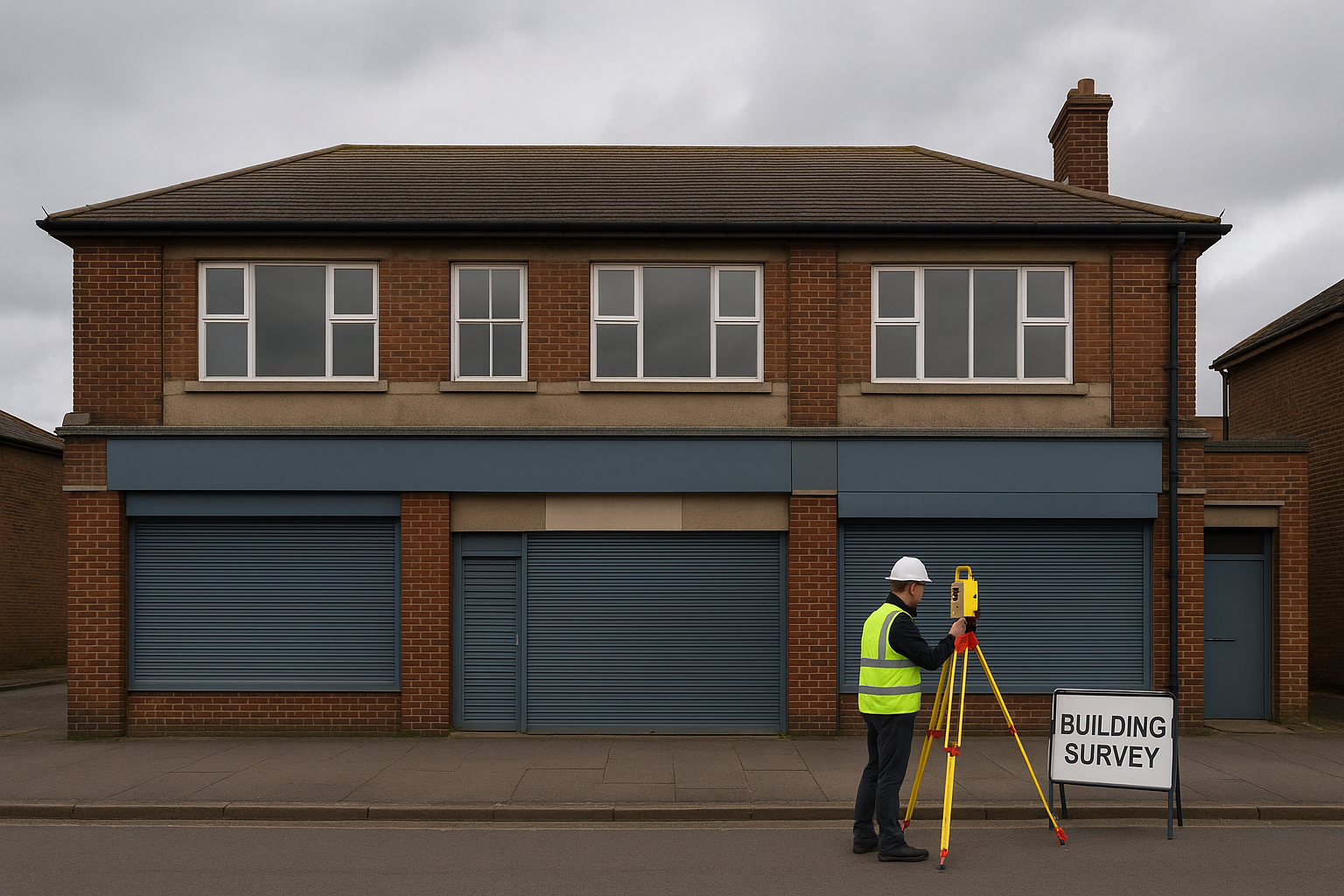
You should never assume that a material is safe because it looks ordinary. Many asbestos products blend into the background of a building.
Common asbestos-containing materials
- Asbestos cement roofing sheets, wall panels, gutters and flues
- Asbestos insulating board in partitions, soffits, ceiling tiles and fire breaks
- Pipe lagging and thermal insulation on heating systems
- Sprayed coatings for fire protection or insulation
- Textured coatings on walls and ceilings
- Vinyl floor tiles and bitumen adhesives
- Ceiling tiles and backing materials
- Rope seals, gaskets and packing around plant
- Fire doors containing asbestos components
- Electrical insulation products in older installations
- Toilet cisterns, tanks and moulded asbestos cement items
Typical locations of asbestos in premises
- Plant rooms and boiler houses
- Ceiling voids and roof spaces
- Service risers and ducts
- Partition walls and column casings
- Soffits, fascias and rainwater goods
- Floor finishes and adhesives
- Walls and ceilings with textured coatings
- Fire doors and fire stopping details
- Garages, outbuildings and industrial roofs
- Pipework insulation and tank insulation
- Behind old electrical boards and heater panels
If your building was constructed or refurbished before 2000, asbestos should remain part of your risk assessment. That does not mean panic. It means using records, surveys and competent advice rather than guesswork.
Higher-risk and lower-risk asbestos materials
Not all asbestos-containing materials present the same level of risk. The main issue is how easily fibres can be released if the material is disturbed, damaged or deteriorated.
Friable materials are generally more likely to release fibres. Bonded materials can be lower risk when in good condition, but they are not risk-free.
Higher-risk asbestos materials
- Pipe lagging
- Sprayed coatings
- Loose fill insulation
- Some thermal insulation products
- Damaged asbestos insulating board
These materials can release fibres more readily and usually require stricter control. If they are damaged or likely to be disturbed, stop work and get specialist advice immediately.
Lower-risk asbestos materials
- Asbestos cement sheets
- Gutters and downpipes
- Some floor tiles
- Bitumen products
- Textured coatings in stable condition
Lower risk does not mean safe to drill, cut or remove without checking. Even bonded asbestos can release fibres if broken, weathered or worked on incorrectly.
Industries and property types where asbestos is still relevant
Asbestos was used across far more than factories and heavy industry. It appears in commercial, public sector and residential settings where older materials remain in place.

For duty holders and estates teams, that means asbestos management often sits alongside broader health and safety responsibilities rather than existing as a separate issue.
Construction and building maintenance
Construction used asbestos in roofing, partitions, insulation, floor finishes and fire protection. Today, maintenance workers are among the people most likely to encounter it unexpectedly during routine tasks.
Shipbuilding, engineering and power generation
Ships, boiler houses, foundries and power stations used asbestos heavily around hot plant, turbines, bulkheads and pipework. Older industrial sites often contain a mix of visible and concealed asbestos materials.
Commercial and public buildings
Schools, hospitals, offices, retail units, warehouses and local authority buildings frequently contain asbestos because of historic construction methods. Estates teams should make sure registers are current and contractors receive the right information before work starts.
Domestic and mixed-use settings
While the legal duty to manage asbestos applies to non-domestic premises, asbestos can also be present in communal areas of residential blocks, garages, outbuildings and shared service areas. Mixed-use properties need particularly careful coordination.
Health effects of asbestos exposure
Asbestos becomes dangerous when fibres are released into the air and inhaled. The fibres are microscopic, which means people cannot rely on sight or smell to judge whether exposure has happened.
The health effects linked to asbestos exposure are serious, often irreversible and usually associated with a long latency period. Symptoms may not appear for many years after exposure.
Asbestos-related diseases
- Asbestosis – scarring of the lungs caused by significant asbestos exposure
- Mesothelioma – a cancer affecting the lining of the lungs or abdomen, strongly associated with asbestos exposure
- Lung cancer – asbestos exposure can increase the risk
- Pleural thickening – thickening of the lining around the lungs, which can affect breathing
- Pleural plaques – localised thickening that may indicate past exposure
Common symptoms that may lead to medical investigation
Symptoms vary depending on the condition, but common warning signs can include:
- Shortness of breath
- Persistent cough
- Chest pain
- Wheezing
- Unexplained fatigue
- Reduced exercise tolerance
These symptoms are not unique to asbestos-related disease, so diagnosis requires medical assessment. Anyone worried about possible exposure or symptoms should seek advice from a qualified healthcare professional rather than self-diagnosing.
Diagnosis and treatment
Diagnosis of asbestos-related disease may involve a clinical history, imaging, lung function tests and specialist referral. Doctors will usually want to understand occupational history, likely exposure routes and how long symptoms have been present.
Treatment depends on the condition. It may include symptom management, respiratory support, specialist cancer treatment, monitoring and palliative care where appropriate. From a property management perspective, the key point is prevention: the safest exposure is the one that never happens.
Legal duties for managing asbestos in the UK
For non-domestic premises, the Control of Asbestos Regulations place duties on those responsible for maintenance and repair. The practical expectation is that asbestos is identified so that it can be properly assessed and managed.
HSE guidance and HSG264 set out the framework for surveying and recording asbestos-containing materials. A survey is not a box-ticking exercise. It is part of a wider management system designed to prevent accidental disturbance.
What duty holders should do
- Find out whether asbestos is present, and if so where it is
- Assess the risk from those materials
- Keep an up-to-date record, often as part of an asbestos register
- Prepare a management plan
- Share asbestos information with anyone liable to disturb the material
- Review the condition of asbestos materials regularly
If records are old, incomplete or based on assumptions, they may not be enough to protect contractors or occupants. Survey information should be current, accessible and relevant to the work being planned.
What to do if you suspect asbestos
The wrong first move is often the most expensive one. Drilling a panel, lifting a tile or asking a maintenance operative to break off a sample can turn suspicion into exposure.
If asbestos may be present, use a clear process and keep people away from unnecessary risk.
- Stop work if the material is suspicious, damaged or likely to release fibres
- Restrict access to the area if others could disturb it
- Check records including the asbestos register and previous survey reports
- Arrange the correct survey for the building and planned works
- Inform contractors before any maintenance or intrusive activity starts
- Use competent specialists for sampling, assessment and remedial action
Practical tip: if your site team cannot immediately locate the asbestos register, treat that as a warning sign. Records should be easy to find and easy to use under pressure.
Choosing the right asbestos survey
The correct asbestos survey depends on what is happening at the property. A survey for normal occupation is not the same as a survey for intrusive works.
If the scope is wrong, the information will be wrong for the task in hand.
Management survey
For routine occupation, maintenance and normal building use, a management survey helps identify asbestos-containing materials that could be disturbed during everyday activities. It supports the asbestos register and management plan.
This type of survey is usually suitable where the building remains in use and no major intrusive works are planned.
Refurbishment and demolition work
Where major intrusive work, strip-out or demolition is planned, a more intrusive survey is required. Before a building or part of it is taken apart, a demolition survey is used to locate asbestos in the affected areas, including hidden materials.
Do not rely on a management survey for destructive works. That is a common mistake and one that can lead to delays, contamination and enforcement issues.
Asbestos awareness for workers and contractors
Most workers are not expected to identify every asbestos product by sight. They are expected to understand when asbestos could be present, when to stop work and how to avoid disturbing suspect materials.
Anyone liable to work on the fabric of a building may need asbestos awareness. That includes electricians, plumbers, joiners, decorators, roofers, telecoms engineers, heating engineers, maintenance staff and general contractors.
Basic warning signs workers should recognise
- The building is older and records are missing or unclear
- Insulation, boards or coatings appear damaged
- Planned work affects ceilings, risers, ducts, panels or service voids
- Materials resemble known asbestos products
- No survey information has been shared before work starts
Practical site rules
- Never drill, cut, sand or break suspect materials to see what they are
- Always check the asbestos register before starting intrusive work
- Report damaged materials immediately
- Do not assume a previous contractor has already checked
- Pause the job if the survey scope does not match the work area
For property managers, the most effective control is simple: make asbestos information part of permit-to-work and contractor induction procedures, not an afterthought buried in a file.
Asbestos surveys across London, Manchester and Birmingham
Large property portfolios often need support across multiple sites, with consistent reporting and practical advice for facilities teams. Local knowledge helps, especially where access arrangements, mixed-use premises and phased works are involved.
If you need an asbestos survey London service, a surveyor familiar with the capital’s varied building stock can help you move faster while keeping records and compliance in order.
For sites in the North West, an asbestos survey Manchester can support offices, industrial premises, schools and public buildings where older materials remain in use.
And for the Midlands, an asbestos survey Birmingham service can help duty holders plan maintenance, refurbishment and property transactions with the right level of asbestos information.
Practical asbestos management advice for property managers
Good asbestos management is rarely about dramatic emergency action. More often, it comes down to having accurate information, sharing it properly and reviewing it before work begins.
If you manage a building or estate, these habits make a real difference:
- Keep the asbestos register current and easy to access
- Review survey coverage when spaces change use
- Inspect known asbestos-containing materials regularly
- Make sure contractors receive asbestos information before quoting and before starting work
- Match the survey type to the planned works
- Investigate damage promptly rather than waiting for the next project
- Record actions taken, including repairs, removals and re-inspections
One practical rule stands out above the rest: if the work becomes more intrusive than first planned, stop and reassess. Scope creep is one of the most common ways asbestos gets missed.
Frequently Asked Questions
Is asbestos always dangerous if it is present in a building?
No. Asbestos is most dangerous when fibres are released and inhaled. Materials in good condition that are properly identified, recorded and managed may not need immediate removal, but they do need monitoring and control.
Can I identify asbestos just by looking at it?
No. Some materials may look similar to known asbestos products, but visual inspection alone cannot confirm whether asbestos is present. Sampling and analysis by competent specialists are needed where confirmation is required.
When do I need an asbestos survey?
You may need an asbestos survey when managing a non-domestic property, planning maintenance, arranging refurbishment, preparing for demolition or updating incomplete records. The correct survey type depends on the building and the work proposed.
What should I do if a contractor damages a suspect material?
Stop work immediately, keep people out of the area, prevent further disturbance and seek specialist advice. Check existing asbestos records and arrange assessment before work resumes.
Does asbestos have to be removed whenever it is found?
Not always. Some asbestos-containing materials can remain in place if they are in good condition and are managed properly. Removal may be necessary where materials are damaged, deteriorating or likely to be disturbed by planned works.
Need clear, reliable advice on asbestos in your building? Supernova Asbestos Surveys provides nationwide surveying support for duty holders, landlords, managing agents and contractors. To arrange a survey or discuss the right next step, call 020 4586 0680 or visit asbestos-surveys.org.uk.