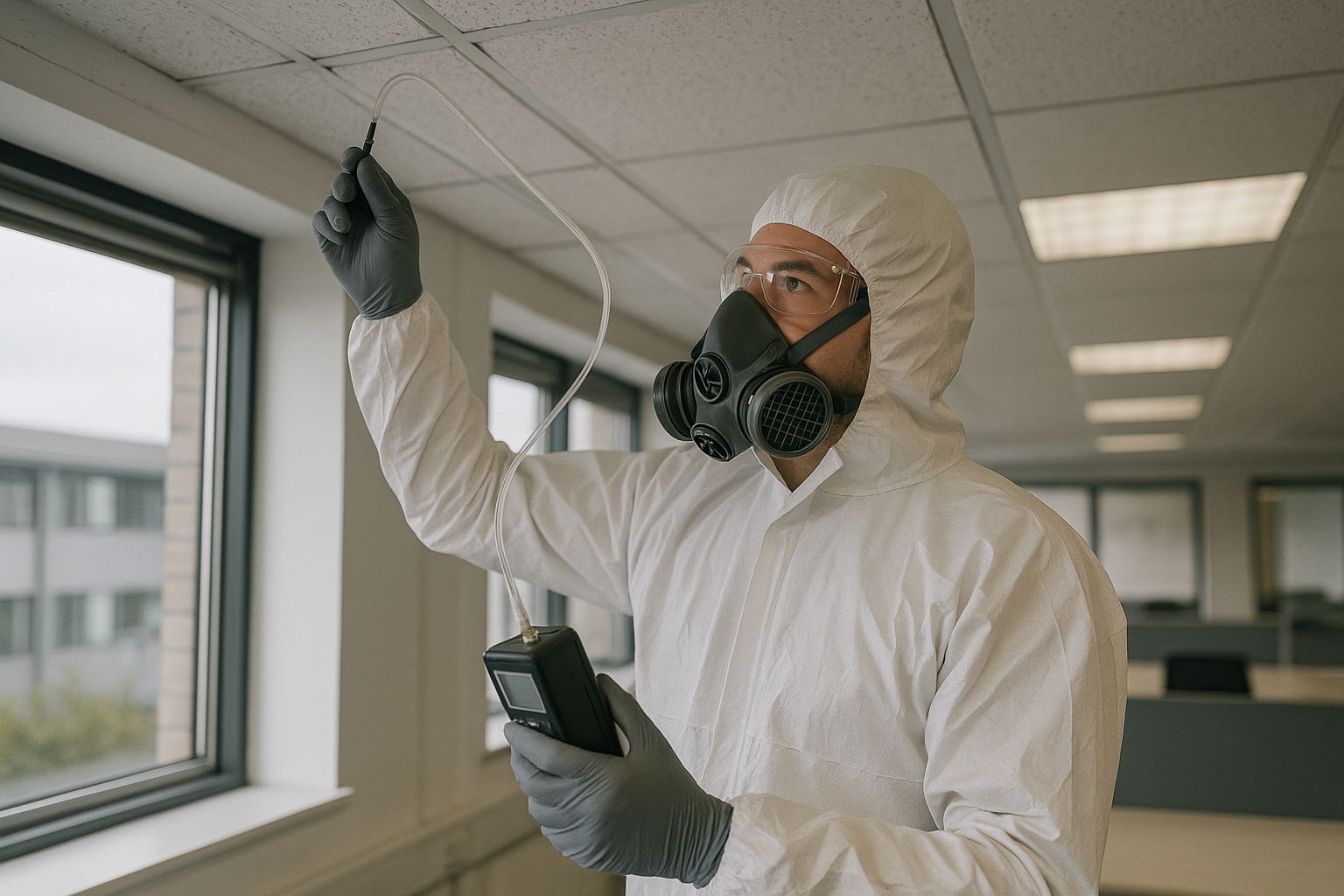
Refurbishment work has a habit of uncovering what nobody planned for. Open a ceiling, lift a floor, cut into a riser or strip out a plant room, and hidden asbestos can turn a straightforward job into a shutdown, a compliance problem and a serious health risk. That is exactly why an asbestos refurbishment survey matters before work starts.
If a building was constructed or altered before 2000, asbestos may be present in the materials your contractors are about to disturb. For property managers, landlords, dutyholders and project teams, the question is not whether paperwork exists somewhere in a file. The real question is whether the asbestos information is suitable for the exact works being planned.
An asbestos refurbishment survey is designed for intrusive work. It helps you identify asbestos-containing materials in the specific areas that will be opened up, altered or removed, so the job can be planned safely and in line with the Control of Asbestos Regulations, HSG264 and relevant HSE guidance.
When is an asbestos refurbishment survey required?
An asbestos refurbishment survey is required before any work that will disturb the fabric of a building. If the project goes beyond normal occupation and routine maintenance, a standard asbestos register or non-intrusive inspection is unlikely to be enough.
Typical examples include strip-outs, fit-outs, service upgrades, rewiring, plumbing alterations, structural changes and intrusive maintenance. If the works involve opening up hidden areas, the survey scope needs to match those areas precisely.
You should arrange an asbestos refurbishment survey before works such as:
- Removing walls, ceilings, floors or fixed joinery
- Installing new electrical, heating, ventilation or plumbing services
- Accessing ceiling voids, risers, ducts or plant rooms
- Replacing kitchens, bathrooms, windows or roofs
- Carrying out structural alterations or reconfiguration
- Partial strip-out before refit
- Intrusive repairs that involve breaking into the building fabric
If the work is full or partial demolition rather than refurbishment, a demolition survey may be the correct option instead. The survey type should always reflect the actual scope of works, not the label used on project paperwork.
Why a management survey is not enough
A lot of delays start with the same mistake: someone assumes an existing asbestos report covers the job, only to discover it was never intended for intrusive works. A management survey has a different purpose.
A management survey is designed to help dutyholders manage asbestos during normal occupation and routine maintenance. It is usually non-intrusive or only lightly intrusive, focusing on reasonably accessible areas and materials that could be damaged during everyday use.
An asbestos refurbishment survey is different. It is targeted, intrusive and often destructive because it must locate asbestos in the areas affected by the planned works, including hidden materials.
Key differences between survey types
- Management survey: for day-to-day occupation, routine maintenance and ongoing asbestos management
- Asbestos refurbishment survey: for planned intrusive works in a defined area
- Demolition survey: for dismantling or demolishing all or part of a structure
If you already hold an asbestos management survey, review its scope carefully before any project starts. Ask whether it identifies the hidden materials likely to be disturbed by the works. If the answer is no, you need a pre-works survey that does.
For projects involving fit-outs, strip-outs or alterations, a dedicated refurbishment survey is the safer and more compliant route.
What an asbestos refurbishment survey involves
A proper asbestos refurbishment survey is not a quick walk-through. Under HSG264, refurbishment and demolition surveys are intrusive inspections designed to find asbestos-containing materials in the areas where work will take place.
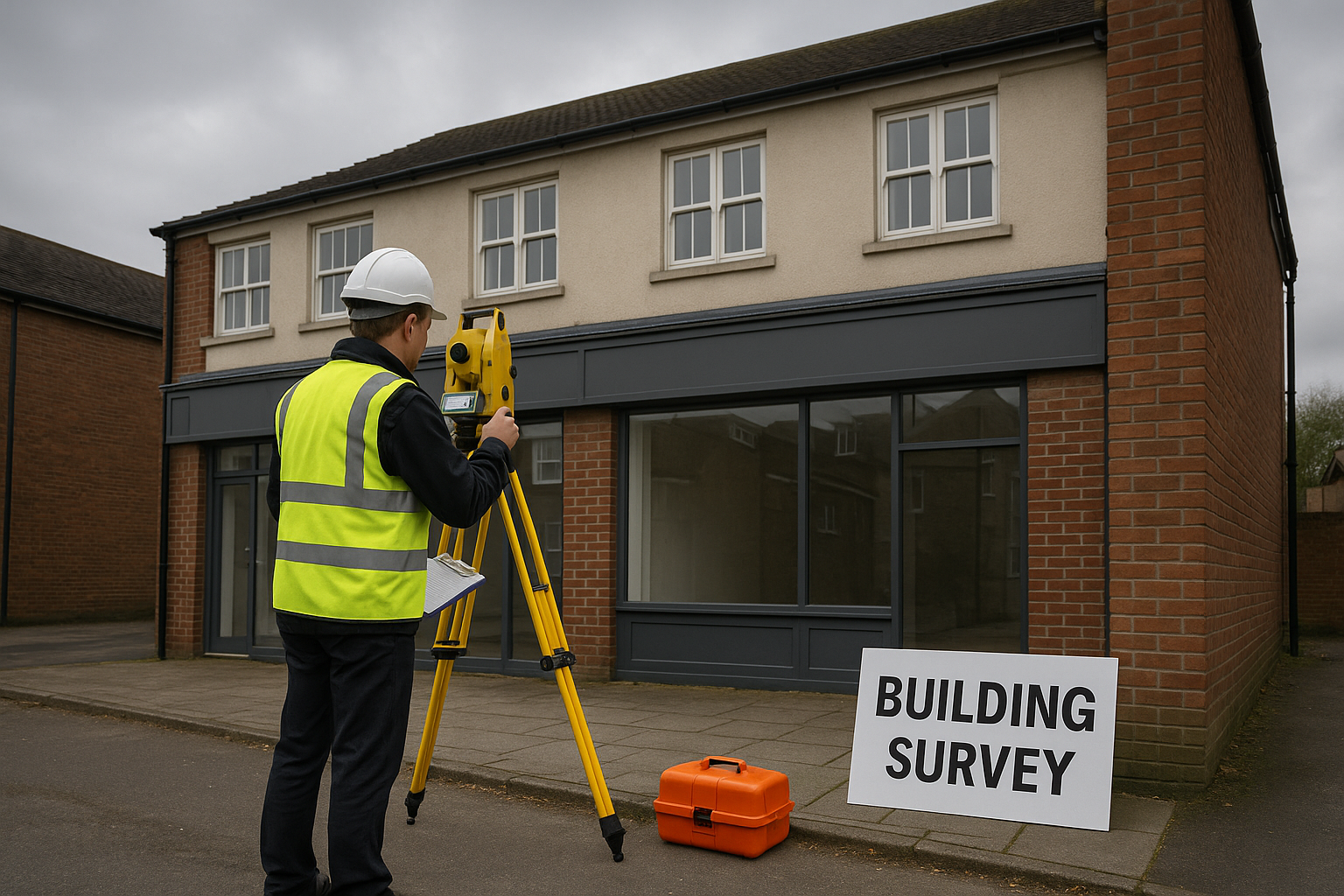
The quality of the final report depends on the quality of the scoping, access, inspection and sampling. If any of those stages are weak, asbestos can be missed in voids, risers, behind finishes or within plant.
1. Scoping the survey properly
The first step is defining the works clearly. Surveyors need enough information to understand exactly what will be disturbed, removed or accessed during the project.
Useful information includes:
- Drawings and marked-up plans
- Descriptions of the planned works
- Service routes and plant affected
- Access restrictions and occupation details
- Existing asbestos records or historic reports
Vague instructions produce vague reports. If the scope says “refurbishment works to first floor” but the job later expands into risers, toilets, roof plant or adjacent service zones, the survey may no longer be suitable.
2. Intrusive inspection
This is the part that makes an asbestos refurbishment survey very different from routine asbestos inspections. Surveyors physically open up the building to inspect concealed areas where asbestos may be present.
That can include:
- Lifting floor finishes and access panels
- Opening service risers and boxing
- Inspecting ceiling voids and roof spaces
- Breaking into partition walls where necessary
- Checking behind bath panels, soffits and fixed boards
- Inspecting ducts, plant rooms and undercroft areas
Because the work is disruptive, these surveys are usually carried out in vacant areas. If part of the building remains occupied, the work needs careful planning, isolation and access control.
3. Sampling and laboratory analysis
Suspected materials are sampled and tested to confirm whether asbestos is present. Visual inspection alone cannot reliably identify asbestos, especially where products look similar to non-asbestos materials.
Common materials sampled during an asbestos refurbishment survey include:
- Textured coatings
- Asbestos insulating board
- Floor tiles and bitumen adhesive
- Cement sheets, panels and flues
- Pipe lagging and thermal insulation
- Gaskets, rope seals and plant insulation
- Ceiling tiles, partition boards and soffits
Where you need testing outside a full survey, standalone sample analysis can help confirm whether a suspect material contains asbestos. Results should always be clearly linked to the sampled material and its location.
4. Reporting and recommendations
The report should give the project team practical information they can act on. It should not be generic, vague or overloaded with meaningless wording.
A strong report will normally include:
- A clear survey scope
- Areas accessed and any limitations
- Material descriptions and locations
- Sample references and laboratory results
- Photographs and plans where relevant
- Recommendations for removal, management or further access
If you are commissioning an asbestos refurbishment survey, make sure the report is reviewed before contractors mobilise. That simple step prevents a lot of site disruption later.
How to arrange the right survey without delaying the project
One of the most common compliance failures is leaving asbestos planning too late. Contractors arrive, the first fix starts, a ceiling is opened up, and only then does someone ask whether the existing asbestos information is suitable.
The best time to book an asbestos refurbishment survey is as soon as the scope of works is clear enough to define the affected areas. Early instruction gives the surveyor time to plan intrusive access properly and gives your team time to deal with any asbestos identified before the programme tightens.
Practical steps to arrange the right survey
- Define the works clearly. Mark up drawings, specifications and service routes so the survey covers the exact areas to be disturbed.
- Choose the correct survey type. Normal occupation needs a survey for management purposes. Intrusive works need a refurbishment survey. Demolition needs a demolition-focused scope.
- Plan access early. Vacant areas are usually best. You may need isolations, permits, temporary decanting or out-of-hours access.
- Share existing information. Old reports, registers and plans can help the surveyor understand the building history.
- Allow time for sampling and reporting. Survey findings must be analysed and turned into a report the project team can use.
If you manage multiple properties, build asbestos checks into your pre-start process. That makes pricing more accurate, reduces programme risk and helps contractors sequence work safely.
How to check whether the survey report is actually fit for purpose
Do not file the report away and assume the job is covered. A report can look professional and still be wrong for the project if the scope was incomplete or access was restricted.
Checking the report before works begin is one of the most useful things a property manager can do. It helps you spot gaps while there is still time to fix them.
What to review in the report
- Scope: Does it cover every room, void, riser and service route affected by the works?
- Plans: Are room references, floor levels and marked-up areas correct?
- Access: Were any rooms locked or any voids inaccessible?
- Samples: Are results clearly tied to materials and locations?
- Recommendations: Do they explain what must happen before work starts?
Compare the report against the latest construction drawings. If the design has changed since the survey was booked, the survey may need updating or extending.
Also check whether there were any limitations. If a riser, floor void or plant enclosure could not be accessed, that gap must be resolved before intrusive work begins in that area.
What happens if asbestos is found?
Finding asbestos does not automatically stop the project. It means the work must be planned properly so asbestos-containing materials are managed or removed before they are disturbed.
The right response depends on the type of material, its condition, where it is located and whether the planned works will affect it. Some materials can only be worked on by a licensed contractor, while others may be dealt with under different controls depending on the task and risk.
Possible outcomes after an asbestos refurbishment survey
- Removal before works: often required where asbestos will be disturbed or stripped out
- Encapsulation or protection: only where the design avoids disturbing the material
- Further investigation: needed if some areas could not be accessed
- Design changes: sometimes possible if the work can avoid the material entirely
Where removal is needed, use a suitable contractor for the material and task involved. If your project moves from identification to remedial action, Supernova can also help arrange compliant asbestos removal support after the survey stage.
R&D surveys explained
You may hear the term R&D survey, short for refurbishment and demolition survey. Under HSG264, refurbishment and demolition surveys sit within the same broad category because both are intrusive and intended for works that disturb the building fabric.
In practice, an asbestos refurbishment survey is used where only part of a building is being altered, stripped out or upgraded. A demolition survey is used where all or part of a structure is to be demolished.
A refurbishment survey is usually needed when:
- Only part of a building is being altered
- The structure remains in use outside the work area
- Specific rooms, floors or service zones are being stripped out
- The project involves fit-out, reconfiguration or intrusive upgrades
A demolition survey is usually needed when:
- All or part of a structure is to be demolished
- The survey must identify asbestos across the full demolition area
- Hidden materials need to be found before dismantling begins
If you are unsure which applies, explain the works in detail before booking. A competent surveyor should scope the inspection around the project, not force the project into the wrong survey template.
Buildings and sectors that commonly need an asbestos refurbishment survey
Any non-domestic building constructed or altered before 2000 may contain asbestos. In practice, an asbestos refurbishment survey is required across a wide range of sectors whenever intrusive work is planned.
Common industries
- Commercial offices
- Retail and leisure
- Education
- Healthcare
- Industrial and manufacturing
- Hospitality
- Local authority estates
- Transport and logistics
Common property types
- Office blocks and business parks
- Shops, restaurants and retail units
- Schools, colleges and universities
- Hospitals, clinics and care settings
- Warehouses, factories and workshops
- Plant rooms, depots and service buildings
- Common parts of residential blocks
The principle is always the same. If the planned work will disturb the fabric of the building, the asbestos information has to be suitable for that risk.
Choosing a competent asbestos surveyor
The quality of an asbestos refurbishment survey depends heavily on the competence of the surveyor and the clarity of the scope. A cheap survey that misses hidden asbestos is rarely cheap once delays, reattendance and contractor downtime are factored in.
Under the Control of Asbestos Regulations, dutyholders and those commissioning work need suitable asbestos information. HSG264 sets out expectations for asbestos surveys, including planning, inspection, sampling, reporting and stating limitations clearly.
When choosing a provider, look for:
- Experience with refurbishment and demolition surveys
- Clear understanding of HSG264 and HSE guidance
- Ability to scope the inspection around the actual works
- Practical reporting that contractors can use on site
- Nationwide coverage if you manage multiple locations
If your project is location-specific, Supernova can help with regional support including asbestos survey London, asbestos survey Manchester and asbestos survey Birmingham.
Practical advice for property managers and project teams
If you are responsible for refurbishments across one site or an entire portfolio, the safest approach is to treat asbestos planning as an early project task, not a last-minute compliance check.
These habits make a real difference:
- Ask for asbestos review at project inception
- Match the survey scope to the latest design information
- Make sure intrusive areas are vacant or properly controlled
- Review limitations before issuing reports to contractors
- Do not let works expand beyond the surveyed area without reassessment
- Share findings with the principal contractor and relevant trades in good time
Where there is any uncertainty, stop and clarify before the building fabric is disturbed. That is faster, safer and usually far cheaper than dealing with an unexpected asbestos discovery mid-project.
Need a reliable asbestos refurbishment survey before works begin? Supernova Asbestos Surveys has completed more than 50,000 surveys nationwide and can help you scope the right inspection, review access requirements and deliver practical reporting your team can use. Call 020 4586 0680 or visit asbestos-surveys.org.uk to book your survey.
Frequently Asked Questions
Is an asbestos refurbishment survey legally required before refurbishment works?
If the planned works will disturb the fabric of a building, you need suitable asbestos information before work starts. In practice, that often means an asbestos refurbishment survey for intrusive projects, in line with the Control of Asbestos Regulations and HSE guidance.
Can I rely on an existing management survey for refurbishment work?
Usually not. A management survey is intended for normal occupation and routine maintenance, not for locating hidden asbestos in areas that will be opened up during refurbishment. If the works are intrusive, a refurbishment survey is normally required.
Does the building need to be empty for an asbestos refurbishment survey?
The surveyed area is often best vacant because the inspection can be disruptive and destructive. If part of the building remains occupied, the survey should be carefully planned with suitable controls, isolation and restricted access.
What is the difference between a refurbishment survey and a demolition survey?
A refurbishment survey is for intrusive works to part of a building where the structure will remain. A demolition survey is for all or part of a structure that is going to be demolished and must identify asbestos throughout the demolition area.
What should I do if asbestos is found during the survey?
Review the report and plan the next step before works begin. Depending on the material and the project, that may involve removal, protection, further investigation or changing the design so the asbestos is not disturbed.