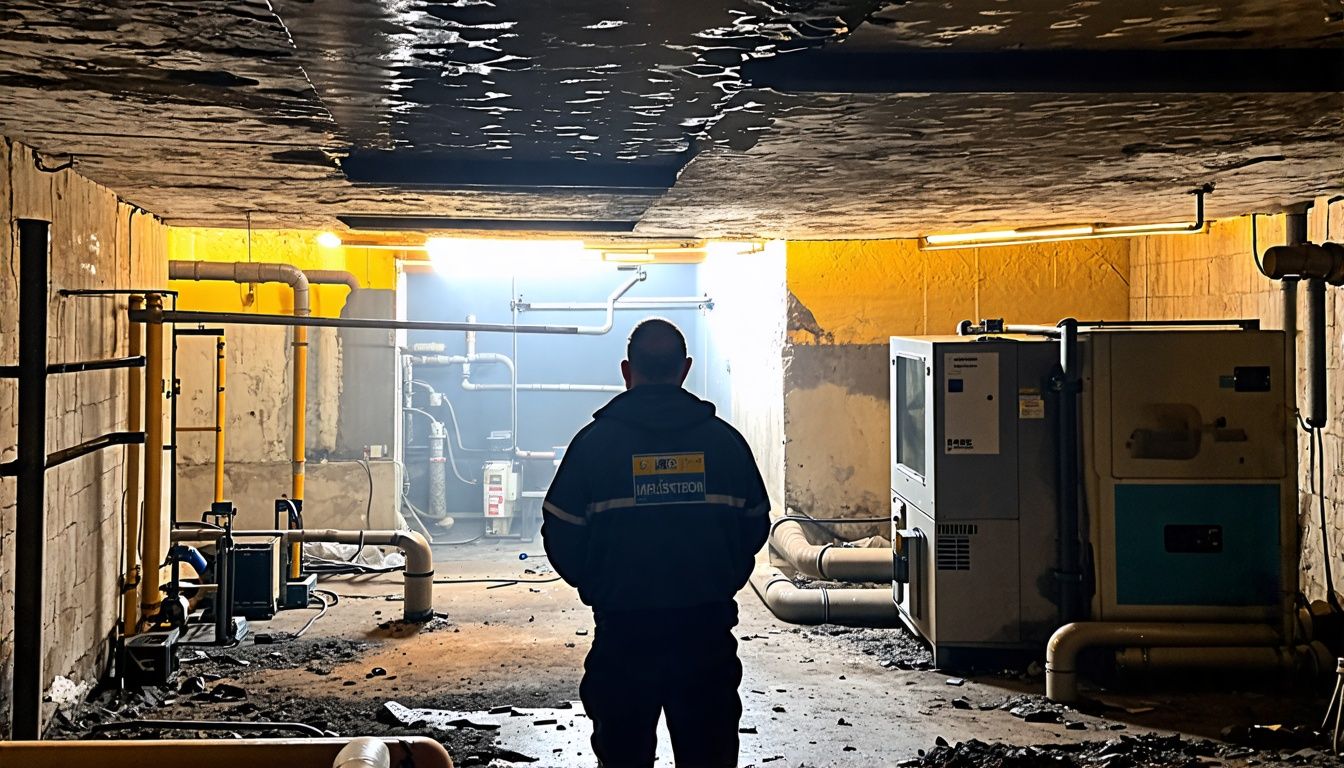
What the Asbestos Report Application Process Actually Involves — and Why Getting It Right Matters
If your building was constructed or refurbished before 2000, there is a reasonable chance it contains asbestos-containing materials (ACMs). As the duty holder, you have a legal obligation under the Control of Asbestos Regulations to manage that risk — and the asbestos report application process is where that obligation becomes a practical, documented reality.
A survey without proper reporting is essentially useless. The report is the legal record, the risk management tool, and the communication document all in one. Get it wrong and you are exposed — legally, financially, and in terms of the safety of everyone who uses your building.
This post breaks down exactly what the asbestos report application process involves, what a proper report must contain, how it feeds into your ongoing management obligations, and when you need to act.
Understanding the Asbestos Report Application: What It Is and What It Covers
The term asbestos report application refers to the full process of commissioning, producing, and applying an asbestos survey report within your building management framework. It is not simply a form you fill in — it is a structured workflow that begins with the right type of survey and ends with a live, maintained register that informs every decision made about your building.
There are different types of surveys, and the report produced will depend on which one applies to your situation.
The most common is the management survey, which is a non-intrusive inspection of an occupied building designed to locate ACMs that could be disturbed during normal day-to-day use. If you are planning structural works, a refurbishment survey is required before work begins — this is a more intrusive inspection that may involve sampling within the fabric of the building.
Where a building is being taken down entirely, a demolition survey is needed — the most thorough type, requiring full access to all areas including those that would normally be sealed or inaccessible.
Each type of survey produces a different report, and applying that report correctly to your management obligations is what the asbestos report application process is all about.
The Legal Framework Behind the Asbestos Report Application
The Control of Asbestos Regulations place a clear duty on anyone who manages or controls non-domestic premises. If you are a facilities manager, building owner, or managing agent, this applies to you.
Your core duties as a duty holder are to:
- Assess whether asbestos is present or likely to be present in your premises
- Make and maintain a written record of the location and condition of ACMs
- Assess the risk from those materials
- Prepare a written plan to manage that risk
- Take steps to implement and monitor that plan
- Provide information about ACMs to anyone who may work on or disturb them
The asbestos report application sits at the centre of all of these duties. Without a properly produced and correctly applied report, you cannot demonstrate compliance with any of them.
The HSE’s guidance document HSG264 sets out the technical standards for how surveys should be conducted and documented. Any report produced by a competent surveying organisation should align with HSG264 — if it does not, it is not fit for purpose.
What a Properly Structured Asbestos Report Must Contain
A compliant asbestos report is not a loose collection of notes and photographs. It is a structured document with specific sections that must be present and properly completed. Here is what every report should include as part of a thorough asbestos report application process.
Building and Site Information
The report must clearly identify the property being surveyed. This includes the full address, a unique site reference, the building age and construction type, total floor area, number of floors, and the current use of the building.
It must also record the name and contact details of the duty holder or responsible person, the date the survey was carried out, and the name and qualifications of the surveying organisation. Surveyors should hold the BOHS P402 qualification as a minimum.
Scope and Limitations of the Survey
Every report must clearly define what was and was not inspected. Areas that were inaccessible on the day of the survey — locked rooms, sealed voids, roof spaces — must be explicitly flagged and treated as presumed to contain asbestos until a proper inspection can take place.
Documenting limitations is not a weakness in the report — it is a legal and professional requirement. A report that presents itself as complete when areas were skipped is far more dangerous than one that honestly records its scope.
Location and Description of ACMs
This is the core of any asbestos report. Every identified or presumed ACM must be recorded with enough detail that a contractor, a new facilities manager, or an environmental health officer can locate it and understand its risk without needing to contact the surveyor.
Each entry in the register should include:
- Precise location — building, floor, room, and position within the room
- Type of material (pipe lagging, ceiling tiles, textured coating, floor tiles, roof sheets, and so on)
- Estimated extent or quantity in square metres, linear metres, or number of items
- Whether the material was sampled or presumed
- Sample reference number and laboratory result where applicable
- Type of asbestos confirmed or suspected (chrysotile, amosite, crocidolite, or mixed)
Photographs should accompany every ACM entry. A cross-referenced photo log removes ambiguity and is invaluable when revisiting records months or years later. Where sample analysis has been carried out, the laboratory certificates should be appended to the report.
Material Assessment and Priority Scoring
Not all ACMs carry the same level of risk. The report must include a consistent scoring framework for each material so that management actions can be properly prioritised.
The standard approach recommended by the HSE involves two dimensions of assessment:
- Material Assessment Score: Based on asbestos type, product type, extent of damage or deterioration, and surface treatment. A higher score means a greater potential for fibre release.
- Priority Assessment Score: Based on the number of occupants, frequency of use, likelihood of disturbance, and the nature of maintenance activities in that area.
Combining these two scores produces an overall risk rating — typically presented as a traffic light system of high, medium, or low — that directly drives the action plan.
Prioritised Management Actions
The report must translate risk scores into clear, actionable recommendations. This is where many reports fall short — they identify the problem but do not drive the response.
For each ACM, the report should specify one of the following recommended actions:
- Leave in place and monitor — suitable for ACMs in good condition with minimal disturbance potential
- Label and inform — signage, register entries, and contractor briefings to prevent accidental disturbance
- Repair or encapsulate — where material is beginning to deteriorate but removal is not yet necessary
- Remove — where material is severely damaged, in a high-risk location, or where planned works make removal the most practical option
Each action must have a target timescale and a named responsible person. Vague recommendations like “monitor regularly” are not sufficient — the report should define what monitoring involves and how often it takes place.
Re-inspection Schedule
ACMs left in situ do not stay the same — they age, get damaged, and their risk profile changes over time. The report must include a re-inspection schedule for every material that is being managed rather than removed.
High-risk materials may need checking every three to six months. Lower-risk, well-protected materials might be reviewed annually. Whatever the frequency, it must be documented and followed — and any change in condition must trigger a reassessment.
Contractor and Maintenance Briefing Records
Under the Control of Asbestos Regulations, duty holders must ensure that anyone liable to disturb ACMs — contractors, maintenance staff, tradespeople — is made aware of the asbestos register before they start work.
The report framework should include a section for recording these briefings: who was informed, what they were told, when it happened, and their acknowledgement. This is your evidence that you have met your duty to inform. Without it, you have no defence if something goes wrong.
Emergency Procedures
The report should include or reference a clear procedure for what to do if asbestos is accidentally disturbed. This means stopping work immediately, isolating the area, notifying the appropriate contacts, and arranging emergency air monitoring or a follow-up survey.
Everyone working in or around the building should know where this procedure is and understand the basic steps before starting any work near ACMs.
Applying the Report: Turning Documentation into Active Management
The asbestos report application process does not end when the surveyor hands over the document. The report is the starting point — what matters is how it is applied within your building management framework.
Here is how to put the report to practical use:
- Load the ACM register into your facilities management system so it is accessible to anyone who needs it
- Brief all relevant staff and contractors before any work begins — and record those briefings
- Schedule re-inspections in your maintenance calendar and treat them as non-negotiable
- Update the register immediately after any remediation, repair, or removal work
- Review the register before any planned maintenance or refurbishment — never let contractors start without checking it first
- Revisit inaccessible areas as and when access becomes available
- Review your management plan annually even if no physical changes have occurred
An asbestos register that was last updated several years ago offers very limited protection. Keeping it current is a legal requirement, not an optional extra.
Common Mistakes in the Asbestos Report Application Process
Even well-intentioned asbestos management processes can unravel because of avoidable errors. Here are the most common failures we see in practice.
Vague Location Descriptions
Recording an ACM as “ceiling, ground floor” is not sufficient. A contractor arriving months later to carry out repairs needs to know exactly which ceiling, in which room, and in what position. Room references, floor plans, and photographs should be used as standard.
No Distinction Between Sampled and Presumed Materials
A presumed ACM is one that has not been tested but has been assumed to contain asbestos based on its appearance and location. This is a legitimate approach — but it must be clearly flagged in the register, with the basis for the assumption recorded. Treating presumed materials as confirmed, or vice versa, creates serious gaps in your risk management.
Treating the Survey as a One-Off Exercise
The survey report is a starting point, not a destination. Buildings change, materials degrade, and new works can reveal previously inaccessible areas. The asbestos report application must support ongoing management, not just a snapshot in time.
Missing Inaccessible Areas
Roof spaces, service voids, and locked plant rooms are often skipped — and then forgotten. These areas must be presumed to contain asbestos until a proper survey can be completed, and they must be flagged clearly as outstanding items requiring follow-up.
No Named Responsible Person
Every action item needs an owner. If the report does not assign a named individual to each management action, those actions are unlikely to be completed consistently — especially when staff change or responsibilities shift.
When to Commission a New Survey or Update Your Existing Report
If you do not already have an asbestos register, the answer is straightforward — you need one now. But even if you have an existing report, there are specific circumstances that require you to commission a new survey or formally update your records.
You should commission a new or updated survey if:
- Your existing survey is more than a few years old and the building has changed
- You are planning any refurbishment, fit-out, or structural works
- You are taking on a new building or premises as a duty holder
- Areas that were previously inaccessible have now become accessible
- Asbestos has been accidentally disturbed or damaged
- Your existing report does not meet the standards set out in HSG264
- You are preparing for demolition or major redevelopment
For properties in specific locations, it is worth working with a surveying firm that has direct knowledge of local building stock and construction types. If you need an asbestos survey London properties require, or you are managing premises further afield and need an asbestos survey Manchester teams can deliver, or you require an asbestos survey Birmingham based surveyors can provide — local expertise genuinely matters when it comes to understanding how buildings in your area were constructed and what ACMs are most likely to be present.
Choosing the Right Surveying Organisation for Your Asbestos Report Application
The quality of your asbestos report application is only as good as the organisation that produces it. Not all surveyors are equal, and the consequences of a poorly produced report can be severe.
When selecting a surveying organisation, look for the following:
- UKAS accreditation — the surveying body should hold UKAS accreditation for asbestos surveying, which demonstrates independent verification of their competence
- BOHS P402 qualified surveyors — individual surveyors should hold the relevant professional qualification as a minimum
- HSG264-compliant reports — ask to see a sample report before commissioning a survey to confirm it meets the required standard
- Clear scope definition — a reputable surveyor will discuss the scope of the survey with you in advance and flag any known access limitations
- Prompt, structured reporting — the report should be delivered in a usable format that can be integrated into your facilities management system
An asbestos management survey carried out by a properly accredited organisation, documented to HSG264 standards, and actively maintained as a live register — that is what a robust asbestos report application looks like in practice.
Frequently Asked Questions
What is an asbestos report application and who needs one?
An asbestos report application is the full process of commissioning, producing, and applying an asbestos survey report within your building management framework. It is required by anyone who manages or controls non-domestic premises built or refurbished before 2000. Under the Control of Asbestos Regulations, duty holders — including building owners, facilities managers, and managing agents — must have a written record of any ACMs and a plan to manage them.
How long does an asbestos survey report remain valid?
There is no fixed expiry date on an asbestos survey report, but it must remain accurate and up to date. If the building has changed, materials have been disturbed or removed, or previously inaccessible areas have become accessible, the register must be updated. Most duty holders review their asbestos management plan at least annually. Any planned refurbishment or demolition requires a new survey regardless of when the last one was carried out.
What is the difference between a sampled and a presumed ACM in the report?
A sampled ACM is one where a physical sample has been taken and sent for laboratory analysis to confirm whether asbestos is present and what type. A presumed ACM is one that has not been tested but has been assumed to contain asbestos based on its appearance, age, and location. Both are legitimate entries in an asbestos register, but they must be clearly distinguished — and presumed materials should be tested when the opportunity arises.
Do I need a new survey before starting refurbishment work?
Yes. A management survey is not sufficient before refurbishment or structural works. You need a refurbishment survey, which is a more intrusive inspection specifically designed to identify ACMs that could be disturbed during the planned work. Starting refurbishment without a refurbishment survey is a breach of the Control of Asbestos Regulations and puts workers at serious risk.
What should I do if asbestos is found that was not on the existing register?
Stop any work in the affected area immediately. The new find must be assessed by a competent person, added to the asbestos register, and a risk assessment carried out before work resumes. Depending on the condition and location of the material, remediation or removal may be required before the area is safe to work in. Your asbestos management plan should include a procedure for exactly this situation.
Get Your Asbestos Report Application Right — Speak to Supernova
Supernova Asbestos Surveys has completed over 50,000 surveys across the UK. Our UKAS-accredited surveyors produce HSG264-compliant reports that are built to be used — not filed and forgotten. Whether you need a management survey, a refurbishment survey ahead of planned works, or a demolition survey for a site being taken down, we deliver structured, actionable reports that meet your legal obligations and support your ongoing management duties.
Call us on 020 4586 0680 or visit asbestos-surveys.org.uk to book your survey or speak to one of our team about what your building requires.