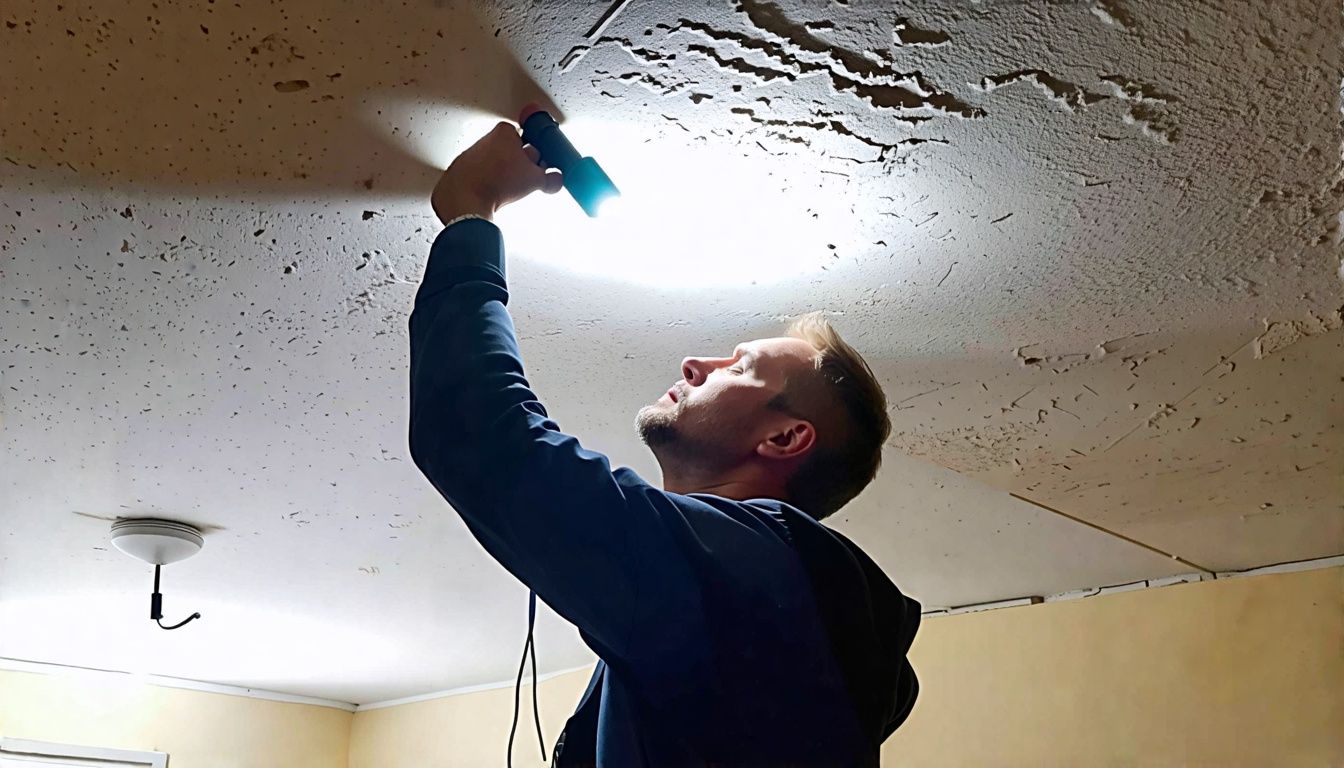
Building Survey Northwich: What Every Property Owner Needs to Know About Asbestos
If you own or manage a commercial, industrial, or public building in Northwich, arranging a proper building survey isn’t just good practice — it’s a legal obligation. Northwich has a rich industrial past, and many of its older buildings contain asbestos-containing materials (ACMs) that remain perfectly safe when managed correctly, but potentially deadly when disturbed without the right controls in place.
Getting the right survey commissioned is where safe, legally compliant management begins. Here’s everything you need to know.
Why Northwich Buildings Carry a Particular Asbestos Risk
Northwich and the wider Cheshire area have a strong industrial heritage — chemicals, salt mining, and manufacturing were central to the town’s growth. Many buildings constructed or refurbished from the 1950s through to the late 1990s used asbestos-containing products as a matter of course.
Common materials include ceiling tiles, pipe lagging, floor tiles, roofing sheets, and sprayed coatings on structural steelwork. Asbestos wasn’t banned from UK construction until 1999, so any building constructed or significantly refurbished before that date should be treated as potentially containing ACMs until a survey confirms otherwise.
Assuming a building is asbestos-free because it looks modern, or because a previous owner said so, is not a defensible legal position — and it puts people at genuine risk.
What Is an Asbestos Management Survey?
An asbestos management survey is a non-intrusive inspection of a building designed to locate, as far as reasonably practicable, any ACMs that could be disturbed during normal occupation — including routine maintenance and everyday use. It’s distinct from a refurbishment or demolition survey, which is required before any major structural work begins.
The management survey is your baseline — the document that forms the foundation of your asbestos management plan and keeps you legally compliant throughout the building’s normal working life.
Under the Control of Asbestos Regulations, the duty to manage asbestos applies to anyone with responsibility for the maintenance or repair of non-domestic premises. That includes commercial landlords, facilities managers, local authorities, housing associations, school business managers, and employers with their own premises.
What Does a Management Survey Inspect?
A qualified surveyor carries out a thorough walk-through of all accessible areas, inspecting materials known to commonly contain asbestos. Where suspect materials are identified, samples are taken and sent to a UKAS-accredited laboratory for analysis.
Areas and materials typically covered include:
- Ceiling tiles and suspended ceiling systems
- Floor tiles and associated adhesives
- Pipe and boiler lagging
- Textured coatings such as Artex
- Roof sheets and soffits
- Partition walls and wall boards
- Older electrical equipment and fuse boxes
- Structural steelwork with sprayed coatings
The three main types of asbestos found in UK buildings are chrysotile (white), amosite (brown), and crocidolite (blue). All three are hazardous — the colour coding is a crude historical reference, not a reliable indicator of risk level.
Condition Assessment
Finding asbestos doesn’t automatically mean danger. The key question is: what condition is it in, and how likely is it to release fibres?
Surveyors assess each identified ACM using a standardised scoring system that considers the material’s type, condition, surface treatment, extent, and the likelihood of disturbance based on its location. This generates a priority score that directly informs your management plan.
A well-encapsulated ceiling tile in a locked plant room carries a very different risk profile to damaged pipe lagging in a busy corridor. The survey report makes these distinctions clearly.
Risk Assessment and Management Planning
The survey report doesn’t just tell you what’s there — it tells you what to do about it. Each ACM will have a recommended action: monitor in place, repair, encapsulate, or remove.
This feeds directly into your asbestos management plan, which must include:
- The location and condition of all identified ACMs
- A risk assessment for each material
- A schedule for re-inspection, typically annual
- Procedures for anyone working on or near ACMs
- Emergency arrangements in the event of accidental disturbance
- Records of training for relevant staff
This plan is a living document — it must be kept up to date as conditions change, work is carried out, or materials are removed.
The Legal Position: What Duty Holders Must Do
The Control of Asbestos Regulations set out clear requirements for duty holders. If you manage non-domestic premises — or have any responsibility for their maintenance — you must:
- Take reasonable steps to find out whether ACMs are present
- Presume materials contain asbestos unless there is strong evidence they don’t
- Assess the condition of any ACMs found
- Produce and maintain an asbestos register and management plan
- Make the register available to anyone who may disturb the fabric of the building
- Arrange periodic re-inspections to check the condition of known ACMs
Failure to comply can result in improvement notices, prosecution, and unlimited fines. More importantly, it puts lives at risk. Asbestos-related diseases — mesothelioma, asbestosis, and lung cancer — remain a significant cause of occupational death in the UK.
The HSE takes a dim view of duty holders who haven’t commissioned a survey. Ignorance is not a defence.
Who Needs a Building Survey in Northwich?
A building survey for asbestos is a legal requirement if you are responsible for any of the following property types built or refurbished before 2000:
- Commercial offices
- Retail premises
- Warehouses and industrial units
- Schools, colleges, and universities
- Healthcare premises
- Leisure facilities
- Hotels and hospitality venues
- Residential blocks of flats (common areas)
- Local authority-owned buildings
- Places of worship
Private domestic homeowners are not bound by the duty to manage, but they carry a clear moral responsibility — particularly when employing tradespeople who could be exposed during maintenance or renovation work.
The Different Types of Survey: Choosing the Right One
One of the most common sources of confusion among property managers is understanding which survey type applies to their situation. Getting this wrong can have serious consequences.
Management Survey
A management survey is for buildings in normal use. It’s non-intrusive, covers accessible areas, and identifies ACMs that could be disturbed during day-to-day occupation. This is the standard survey for ongoing legal compliance.
Refurbishment Survey
A refurbishment survey is required before any work that will disturb the fabric of the building — from a bathroom refit to a significant structural alteration. It is fully intrusive, may require destructive access, and must cover all areas where work will take place.
If you commission a management survey and then proceed with refurbishment without upgrading to the appropriate survey type, you’re in breach of the regulations — and any contractor working on site faces serious exposure risks.
Demolition Survey
A demolition survey is required before any building is demolished, in whole or in part. It is the most thorough and intrusive survey type, designed to locate all ACMs throughout the entire structure so they can be removed safely before demolition begins.
Re-Inspection Survey
Once your asbestos register is in place, ACMs that are being managed in place need to be checked periodically. A re-inspection survey is a focused assessment of known ACMs rather than a fresh search for new materials. It updates condition scores, flags anything that has worsened, and adjusts recommended actions accordingly.
Annual re-inspection is the standard minimum. You should also commission a re-inspection after any incident that might have disturbed ACMs — a flood, fire, accidental damage, or unauthorised building work.
Asbestos Testing Options for Northwich Properties
Sometimes you need to confirm whether a specific material contains asbestos before commissioning a full survey — particularly if you’re a homeowner, a small landlord, or you’ve encountered a suspect material during routine maintenance.
Professional asbestos testing involves taking a sample of the suspect material and having it analysed by a UKAS-accredited laboratory. This gives you a definitive answer about whether asbestos is present and, if so, which type.
If you want to collect a sample yourself, our asbestos testing kit provides everything you need to do so safely, with clear instructions and prepaid laboratory submission included. Alternatively, our sample analysis service allows you to submit samples directly for UKAS-accredited analysis.
Bear in mind that a testing kit is suitable for confirming the presence or absence of asbestos in a known material — it doesn’t replace a full management survey, which is a systematic inspection of the whole building.
What to Look for When Choosing a Surveyor in Northwich
Not all asbestos surveyors are equal, and cutting corners on price is a false economy. A poor-quality survey that misses materials, under-scores risks, or produces an unusable report offers no real legal or practical protection.
BOHS Qualifications
Surveyors should hold the British Occupational Hygiene Society (BOHS) P402 qualification as a minimum — this is the recognised professional standard for asbestos surveying in the UK. Ask to see proof before work begins.
UKAS-Accredited Laboratory Analysis
All samples taken during the survey must be analysed by a laboratory accredited by the United Kingdom Accreditation Service (UKAS) under ISO 17025. Analysis carried out by a non-accredited lab has no legal standing.
Adequate Insurance
Your surveyor should carry both professional indemnity insurance and public liability insurance. Ask for certificates before any work begins.
Clear, Compliant Reporting
The survey report should be produced in line with HSG264 — Asbestos: The Survey Guide. It should include a full asbestos register, photographs, sample results, condition scores, and recommended actions. Ask to see a sample report before commissioning.
Transparency on Scope
A reputable surveyor will be clear about what the survey does and doesn’t cover. A management survey will not access areas requiring destructive investigation — that requires a refurbishment or demolition survey. Any provider who implies their management survey covers everything without limitation should be treated with caution.
Practical Steps for Northwich Property Managers
If you manage a pre-2000 building in Northwich and you’re not certain your asbestos documentation is in order, here’s where to start:
- Commission a survey now. If your building predates 2000 and you have no asbestos register, you are already non-compliant. Don’t wait for an HSE inspection or a refurbishment project to force the issue.
- Keep your register accessible. Contractors, maintenance staff, and emergency services must be able to access it quickly. A locked filing cabinet that nobody knows about defeats the purpose entirely.
- Brief your maintenance team. Anyone who may disturb building materials — plumbers, electricians, decorators — needs to be made aware of the asbestos register before starting work.
- Never assume. If a material hasn’t been sampled and confirmed as asbestos-free, treat it as suspect.
- Schedule annual re-inspections. Conditions change. An ACM that was low-risk two years ago may have deteriorated since.
- Document everything. Keep a full audit trail of surveys, re-inspections, remediation work, and training records.
When Asbestos Removal Becomes Necessary
Not every ACM needs to be removed — in many cases, managing it in place is the safest and most cost-effective approach. Removal introduces its own risks, since disturbing an ACM during the removal process is precisely the moment when fibres can be released.
However, removal becomes the right option when:
- An ACM is in poor condition and deteriorating further
- Planned refurbishment or demolition work will disturb the material
- The location of the ACM makes ongoing management impractical
- The risk score from a re-inspection has increased significantly
Licensed asbestos removal must be carried out by a contractor holding a licence from the HSE. This applies to all work with higher-risk materials, including most sprayed coatings, pipe lagging, and loose-fill insulation. Some lower-risk work can be carried out by an unlicensed but trained contractor — your surveyor can advise on which category applies.
Never attempt to remove asbestos yourself. The risks to health are severe, and improper removal can spread contamination throughout a building, creating a far larger and more expensive problem than the one you started with.
Frequently Asked Questions
Do I legally need a building survey in Northwich if my property was built after 1999?
If your building was constructed entirely after 1999, the likelihood of asbestos-containing materials is very low. However, if any significant refurbishment was carried out using older materials, or if the build date is uncertain, a survey is still advisable. For buildings where the construction date is clearly post-1999 and no older materials were incorporated, the strict legal duty to manage does not apply — but if you’re in any doubt, a survey is the only way to be certain.
How long does an asbestos management survey take in Northwich?
The duration depends on the size and complexity of the building. A small commercial unit might take two to three hours, while a large industrial facility or school could take a full day or more. Your surveyor should provide an estimated timeframe when they quote for the work. The building can typically remain in use during a management survey, as the inspection is non-intrusive.
What happens if asbestos is found during my building survey?
Finding asbestos during a building survey in Northwich doesn’t mean you have to close the building or arrange immediate removal. The surveyor will assess the condition of each material and assign a risk score. Low-risk materials in good condition are typically managed in place with periodic re-inspection. Only materials in poor condition, or those that will be disturbed by planned work, are likely to require remediation or removal in the short term.
Can I use a testing kit instead of commissioning a full building survey?
A testing kit is useful for confirming whether a specific suspect material contains asbestos — for example, if a tradesperson has flagged a particular tile or coating before starting work. It is not a substitute for a full management survey, which systematically inspects the whole building and produces a legally compliant asbestos register. If you manage non-domestic premises, a management survey is what the regulations require.
How often should I arrange a re-inspection survey in Northwich?
Annual re-inspection is the standard minimum recommended under HSE guidance. You should also arrange a re-inspection following any event that may have disturbed known ACMs — including accidental damage, flooding, fire, or unauthorised building work. If conditions in the building change significantly, such as a change of use or increased foot traffic near ACMs, it’s worth bringing the re-inspection forward rather than waiting for the annual date.
Get Your Building Survey in Northwich Sorted Today
Supernova Asbestos Surveys has completed over 50,000 surveys across the UK, working with commercial landlords, facilities managers, local authorities, schools, and businesses of every size. Our surveyors hold the relevant BOHS qualifications, all sample analysis is carried out by UKAS-accredited laboratories, and every report is produced in line with HSG264.
Whether you need a management survey for a Northwich office, a refurbishment survey ahead of building works, or a re-inspection to update an existing register, we can help. We also offer nationwide asbestos removal referrals for when remediation is required.
Call us on 020 4586 0680 or visit asbestos-surveys.org.uk to get a quote or find out more about our services.