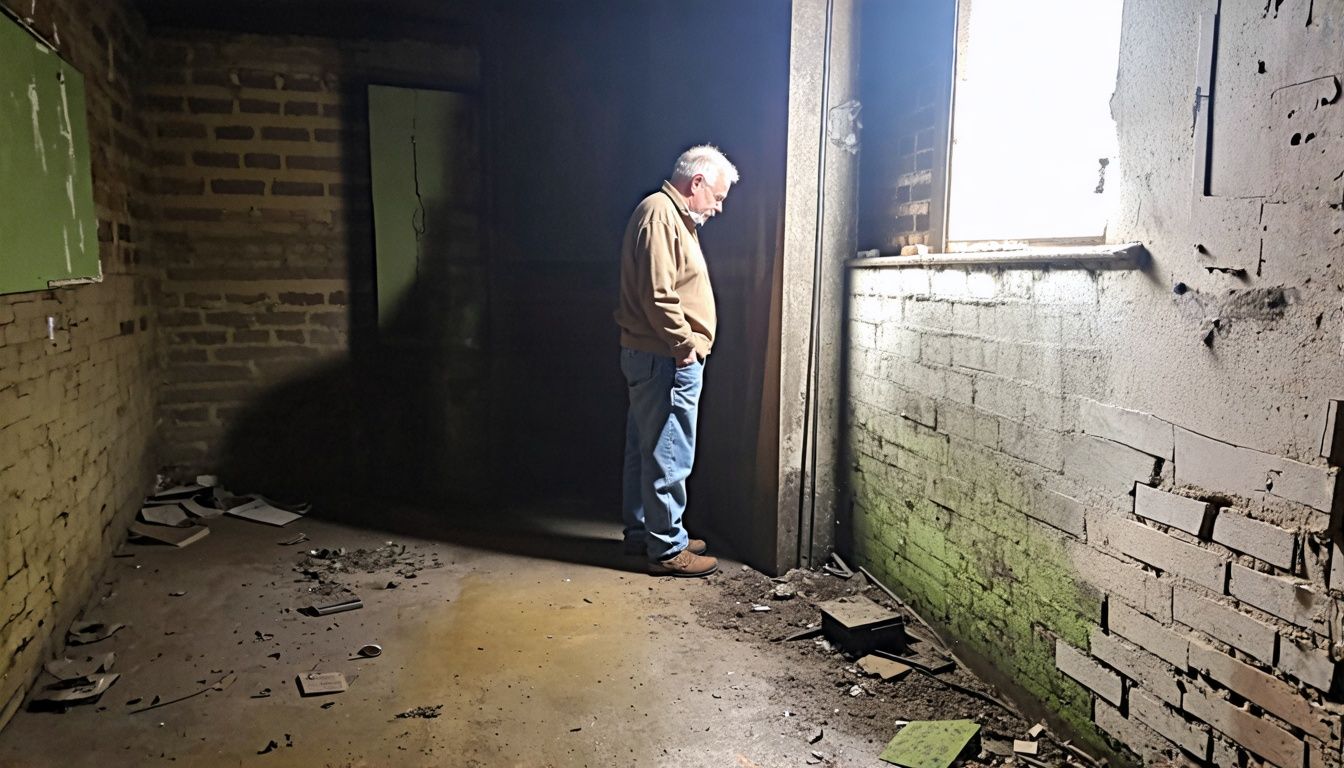
Asbestos Management Surveys in Hampshire: What Every Duty Holder Needs to Know
If you own or manage a non-domestic property in Hampshire — an office block in Southampton, a school in Winchester, a warehouse near Basingstoke — your asbestos obligations are not discretionary. They are a legal duty, and ignoring them puts people at risk and exposes you to serious regulatory consequences.
Asbestos was used extensively in UK construction until it was fully banned in 1999. Any non-domestic building constructed or refurbished before that date could contain asbestos-containing materials (ACMs). Hampshire has an enormous stock of post-war industrial, commercial, and public sector buildings — and the risk demands proper management.
Here is everything you need to know about asbestos management surveys in Hampshire: what they involve, when you need one, what the law requires, and how to choose the right surveyor.
What Is an Asbestos Management Survey?
A management survey is the standard survey required for any non-domestic premises that may contain asbestos. Its purpose is to locate ACMs within a building, assess their condition, and determine the risk they pose to occupants, maintenance staff, and contractors.
The survey is non-intrusive — surveyors inspect accessible areas without causing significant disruption to normal building use. That said, it is far more thorough than a visual check.
Suspected materials are sampled and submitted to a UKAS-accredited laboratory for analysis. The results are compiled into a detailed survey report, which becomes the foundation of your asbestos management plan — the document you are legally required to maintain under the Control of Asbestos Regulations. Without a current, accurate survey, that plan is worthless.
What Does a Management Survey Cover?
- All accessible areas of the building, including plant rooms, roof spaces, and communal areas
- Identification of suspected ACMs — ceiling tiles, floor tiles, pipe lagging, partition boards, textured coatings, and more
- Condition assessment of each ACM — whether it is intact, damaged, or deteriorating
- Risk scoring to prioritise action
- Sampling of suspect materials for laboratory analysis
- A written report with floor plans, photographs, and a full ACM register
Types of Asbestos Surveys Available in Hampshire
Not every situation calls for the same type of survey. The type of work being undertaken — or the current status of the building — determines which survey is appropriate. Getting this wrong is a common and costly mistake.
Management Surveys
This is the baseline survey for occupied or in-use buildings. If you are a duty holder responsible for a non-domestic property in Hampshire, an asbestos management survey is what you need to have in place — and to keep updated.
Management surveys are conducted without taking the building out of use, making them suitable for offices, retail premises, schools, care homes, industrial units, and any other occupied non-domestic property.
Refurbishment Surveys
Planning any significant alteration or refurbishment work? Even something as seemingly minor as removing a partition wall or replacing suspended ceiling tiles triggers the requirement for a refurbishment survey before work begins.
This type of survey is more intrusive than a management survey. Surveyors access and inspect areas that would be disturbed during the planned works — lifting floor coverings, opening ceiling voids, breaking into wall cavities. The goal is to ensure no ACMs are disturbed without proper controls in place. Commissioning this survey after work has started is not an option.
Demolition Surveys
Before any building or structure in Hampshire is demolished, a full demolition survey must be carried out. This is the most comprehensive type of asbestos survey — it must cover the entire structure, including areas that would be inaccessible during normal occupation.
The survey informs the asbestos removal specification, ensuring all ACMs are safely removed and disposed of before demolition proceeds. Skipping or cutting corners on this step is not just dangerous — it is a criminal offence.
Asbestos Re-Inspection Surveys
If asbestos is present in your building and is being managed in situ rather than removed, you have a legal obligation to monitor its condition regularly. A re-inspection survey revisits known ACM locations to check whether conditions have changed — whether materials have deteriorated, been damaged, or are now at greater risk of disturbance.
The frequency of re-inspections depends on the type, condition, and location of the ACMs, but annual re-inspection is a common requirement. Your asbestos management plan should specify the re-inspection schedule.
Your Legal Obligations as a Duty Holder in Hampshire
The Control of Asbestos Regulations places a clear duty on anyone responsible for the maintenance and repair of non-domestic premises to manage asbestos risk. This includes landlords, employers, managing agents, and facilities managers.
The HSE’s guidance document HSG264 sets out in detail how surveys should be planned and conducted. In practical terms, your duties include:
- Finding out whether ACMs are present in your premises
- Assessing the condition and risk of any ACMs identified
- Preparing and maintaining a written asbestos management plan
- Sharing information about ACMs with anyone who might disturb them — contractors, maintenance staff, and emergency services
- Monitoring the condition of ACMs and reviewing your management plan regularly
Failure to comply can result in prosecution by the Health and Safety Executive (HSE), significant fines, and — most critically — serious harm to the people in your building.
The duty applies whether or not asbestos has actually been found. If you cannot confirm the absence of ACMs, you must treat suspect materials as if they contain asbestos until proven otherwise.
Where Is Asbestos Commonly Found in Hampshire Buildings?
Hampshire has a wide variety of building types — Victorian civic buildings, post-war housing estates, 1960s commercial developments, and industrial units from the 1970s and 1980s. Asbestos was used across all of these eras and in a far wider range of products than most people realise.
Common locations where ACMs are found in Hampshire buildings include:
- Ceiling tiles — particularly in offices and commercial spaces built between the 1950s and 1980s
- Pipe lagging and boiler insulation — amosite (brown asbestos) was widely used in thermal insulation products
- Textured coatings — Artex and similar products on ceilings and walls frequently contained chrysotile (white asbestos)
- Floor tiles and adhesives — vinyl floor tiles and the black bitumen adhesive beneath them regularly test positive for asbestos
- Roof sheeting and guttering — asbestos cement was ubiquitous in industrial and agricultural roofing across the county
- Partition walls and boards — asbestos insulation board (AIB) was commonly used in internal partitions, fire doors, and soffits
- Service ducts and risers — often insulated with asbestos-containing materials, particularly in older commercial and public sector buildings
The presence of asbestos does not automatically mean danger. ACMs in good condition and unlikely to be disturbed can often be safely managed in place. The key is knowing what you have, where it is, and what condition it is in.
How the Asbestos Management Survey Process Works
If you have never commissioned an asbestos survey before, understanding the process helps you prepare properly and get the most from your investment.
Step 1: Pre-Survey Preparation
Before attending site, your surveyor will gather background information about the property — its age, construction type, previous survey records, and any known areas of concern. You should make all areas of the building accessible where possible and inform staff or occupants that a survey is taking place.
Step 2: On-Site Inspection
Your surveyor will conduct a systematic inspection of the building, working through each area methodically. They will examine materials visually, using their knowledge of building construction to identify suspect materials — even where labelling or records are absent.
Hard-to-reach areas such as roof voids and service ducts are inspected using appropriate access equipment where needed.
Step 3: Sampling
Where ACMs are suspected, small samples are taken using strict safety protocols. The surveyor wears appropriate personal protective equipment (PPE), and the sampling area is cleaned and sealed after the sample is taken.
Each sample is labelled, documented, and sent to a UKAS-accredited laboratory for analysis using techniques such as polarised light microscopy.
Step 4: Risk Assessment
Once laboratory results are returned, the surveyor assesses each identified ACM using a risk scoring system. This considers the type of asbestos present, the material’s condition, its location and accessibility, the likelihood of disturbance, and the number of people who could be exposed.
This scoring helps you prioritise action — whether that is removal, encapsulation, or simply monitoring the material in situ.
Step 5: Reporting and Documentation
The final survey report includes a full register of all ACMs identified, photographs and annotated floor plans, laboratory analysis results, risk scores and priority recommendations, and guidance on developing or updating your asbestos management plan.
This report is a live document — it must be updated whenever changes occur in the building or following re-inspection surveys.
Why Regular Re-Inspection Is Not Optional
Many property managers treat an asbestos survey as a one-off exercise. It is not. ACMs do not remain static — they age, deteriorate, and can be accidentally damaged during routine maintenance. Their risk profile changes over time.
Regular re-inspection surveys ensure your ACM register remains accurate and your management plan reflects current conditions. They also demonstrate to the HSE, insurers, and other stakeholders that you are taking your duty of care seriously.
If works have been carried out since your last survey, or if the building’s use has changed, those changes must be reflected in your asbestos records. A re-inspection survey is the proper mechanism for doing that — not a note in a file.
Asbestos Testing for Hampshire Property Owners
If you suspect a specific material contains asbestos but are not ready to commission a full survey, asbestos testing is an option. Supernova Asbestos Surveys offers a postal testing kit that allows you to take a sample yourself and submit it to an accredited laboratory for analysis.
This is a useful first step for homeowners or small landlords who want a quick answer about a specific material. However, a testing kit is not a substitute for a full management survey — it does not assess the whole building, provide a risk assessment, or deliver the documentation required for legal compliance under the Control of Asbestos Regulations.
Asbestos Removal in Hampshire
Where ACMs are in poor condition, have been damaged, or are likely to be disturbed by planned works, removal is often the safest long-term option. Asbestos removal must be carried out by a licensed contractor for higher-risk materials, and the scope of removal work should be informed by a current survey report.
Never attempt to remove suspected asbestos yourself. Even materials that appear to be in reasonable condition can release fibres during disturbance — and it is the inhalation of those fibres that causes diseases such as mesothelioma, asbestosis, and lung cancer.
Fire Risk Assessments Alongside Asbestos Surveys
If you are managing compliance for a non-domestic property in Hampshire, asbestos is not the only obligation on your radar. The Regulatory Reform (Fire Safety) Order requires duty holders to carry out and maintain a suitable fire risk assessment for their premises.
Supernova Asbestos Surveys provides fire risk assessments alongside asbestos surveys, allowing you to address multiple compliance requirements through a single provider. Combining both services reduces disruption to your building and streamlines your compliance documentation.
Choosing the Right Asbestos Surveyor in Hampshire
Not all surveyors are equal. When selecting a provider for asbestos management surveys in Hampshire, there are several things you should verify before signing anything.
Qualifications and Accreditation
Your surveyor should hold the P402 qualification as a minimum — this is the recognised industry qualification for asbestos surveying. The survey organisation should be UKAS-accredited for asbestos surveying, and the laboratory used for sample analysis should also hold UKAS accreditation.
Accreditation is not a marketing badge. It means the surveyor’s work has been independently assessed against national standards — which matters enormously when your legal compliance depends on the accuracy of their findings.
Experience With Hampshire’s Building Stock
Hampshire’s building stock is varied — from Victorian school buildings and post-war social housing to 1970s commercial units and modern industrial estates. A surveyor with experience across this range of property types will be better placed to identify ACMs accurately, particularly in older or non-standard construction.
Clear Reporting and Ongoing Support
A good survey report should be clear enough for a facilities manager to act on — not a document that requires a specialist to interpret. Look for a provider who explains their findings in plain English, provides annotated floor plans, and is available to answer questions after the report is delivered.
Ongoing support matters too. If you need a re-inspection, a refurbishment survey before renovation works, or advice on your management plan, your surveyor should be a resource you can return to — not a one-transaction provider.
Transparent Pricing
Survey costs vary depending on the size and complexity of the property. Avoid providers who quote without understanding the building — accurate pricing requires accurate scoping. A reputable surveyor will ask the right questions before providing a quote, and will be transparent about what is and is not included.
What Happens If You Do Not Have a Current Survey?
Operating a non-domestic property in Hampshire without a current asbestos management survey is a compliance failure — and the consequences are not hypothetical.
The HSE has powers to issue improvement notices, prohibition notices, and to prosecute duty holders who fail to meet their obligations under the Control of Asbestos Regulations. Fines can be substantial, and in serious cases, individuals — not just organisations — can face criminal liability.
Beyond regulatory consequences, there is the human cost. Contractors, maintenance workers, and building occupants who are exposed to asbestos fibres because a duty holder failed to identify or communicate the risk face potentially fatal consequences. Mesothelioma, asbestosis, and asbestos-related lung cancer are irreversible conditions with no cure.
The cost of a management survey is modest compared to the cost of getting this wrong — financially, legally, and in human terms.
Frequently Asked Questions
How long does an asbestos management survey take in Hampshire?
The duration depends on the size and complexity of the building. A small commercial unit might be surveyed in a few hours, while a large multi-storey office or school could take a full day or more. Your surveyor should give you a realistic time estimate during the scoping stage. Laboratory analysis typically adds five to ten working days before the final report is issued, though faster turnaround options are often available.
Do I need an asbestos management survey if my building was built after 1999?
If your building was constructed entirely after 1999 and has not been refurbished using older materials, the risk of ACMs is very low. However, if there is any uncertainty about the construction date or the materials used — particularly following refurbishment — a survey is the only way to confirm the position. Assuming a building is asbestos-free without evidence is not a compliant approach under the Control of Asbestos Regulations.
How often should asbestos management surveys be reviewed in Hampshire?
Your asbestos management plan should be reviewed at least annually, and your ACM register must be kept up to date. Re-inspection surveys are required at intervals determined by the type and condition of the ACMs present — annual re-inspection is common for materials in moderate condition. Following any building works, change of use, or damage to a known ACM, your records should be updated promptly.
Can I use a domestic asbestos test kit instead of a management survey?
A postal testing kit can confirm whether a specific sample contains asbestos, but it is not a substitute for a management survey. It does not cover the whole building, does not provide a risk assessment, and does not produce the documentation required for legal compliance. For any non-domestic property, a full management survey conducted by a qualified, accredited surveyor is required under the Control of Asbestos Regulations.
What is the difference between a management survey and a refurbishment survey?
A management survey is designed for occupied buildings in normal use — it identifies and assesses ACMs in accessible areas without significant disruption. A refurbishment survey is required before any works that will disturb the building fabric, and is more intrusive — surveyors access areas that would be opened up during the planned works. The two surveys serve different purposes and are not interchangeable. If you are planning any alteration or renovation work, a refurbishment survey is required before work begins, regardless of whether a management survey is already in place.
Commission Your Hampshire Asbestos Management Survey Today
Supernova Asbestos Surveys has completed over 50,000 surveys nationwide, working with property managers, landlords, facilities teams, and public sector organisations across Hampshire and the wider UK. Our surveyors are fully qualified, our laboratory partners are UKAS-accredited, and our reports are clear, actionable, and legally compliant.
Whether you need an asbestos management survey for a single commercial unit or a rolling programme across a large property portfolio, we can help. We also provide refurbishment surveys, demolition surveys, re-inspection surveys, asbestos testing, removal support, and fire risk assessments — everything you need to manage compliance in one place.
Call us on 020 4586 0680 to discuss your requirements, or visit asbestos-surveys.org.uk to request a quote online. Do not leave your compliance to chance.