
Leave an asbestos file untouched for too long and it can become a risk in itself. If you are asking how often should the asbestos management plan be reviewed? the short answer is: at least every 12 months, and sooner whenever the building, the asbestos information or the risk of disturbance changes.
That annual review is only the legal and practical baseline. In day-to-day property management, asbestos plans often need updating between formal reviews because materials deteriorate, contractors need clearer information, maintenance work uncovers hidden issues or the way a space is used changes.
A management plan is only useful when it reflects what is actually happening on site. If the asbestos register is outdated, the risk assessment no longer matches the building, or staff and contractors cannot act on the information, the plan is not doing its job.
How often should the asbestos management plan be reviewed?
The expected minimum is a formal review every 12 months. That sits alongside the duty to manage asbestos in non-domestic premises under the Control of Asbestos Regulations and the wider expectation in HSE guidance and HSG264 that asbestos information must be kept current and usable.
But the better answer to how often should the asbestos management plan be reviewed? is this: review it annually, monitor it continuously and update it whenever the facts change.
In practice, the plan should be reviewed:
- At least once every year as a formal check
- After inspections that identify damage or deterioration
- After maintenance, refurbishment or accidental disturbance
- When occupancy or building use changes
- When new survey or sample information is received
- When contractor feedback shows the information is unclear or incomplete
If you manage a school, office, warehouse, retail unit, healthcare building or mixed-use premises, that is the standard to work to. A diary reminder once a year is not enough on its own.
What the law expects from duty holders
The legal duty is not just about having a document called an asbestos management plan. It is about taking reasonable steps to find out whether asbestos is present, assessing the risk and putting arrangements in place to stop people being exposed to fibres.
For non-domestic premises, the duty holder must make sure asbestos information is accurate, accessible and acted on. If the information changes, the plan must change with it.
A sound asbestos management plan should include:
- The location, extent and condition of known or presumed asbestos-containing materials
- An up-to-date asbestos register
- A risk assessment, including any priority assessment used by the duty holder
- Control measures to prevent accidental disturbance
- Inspection and reinspection arrangements
- How information is shared with staff, contractors and visitors who may disturb asbestos
- Emergency procedures for damage or accidental disturbance
- Clear responsibilities for those managing the premises
If any part of that information is out of date, incomplete or not working in practice, the plan needs review. That is why the question how often should the asbestos management plan be reviewed? has two parts to the answer: every year as a minimum, and immediately when circumstances demand it.
Why annual review is the minimum, not always enough
An annual review gives you a formal point to check that the register is still accurate, reinspections have happened and control measures still suit the building. It is a useful checkpoint, but it does not stop asbestos risk changing halfway through the year.
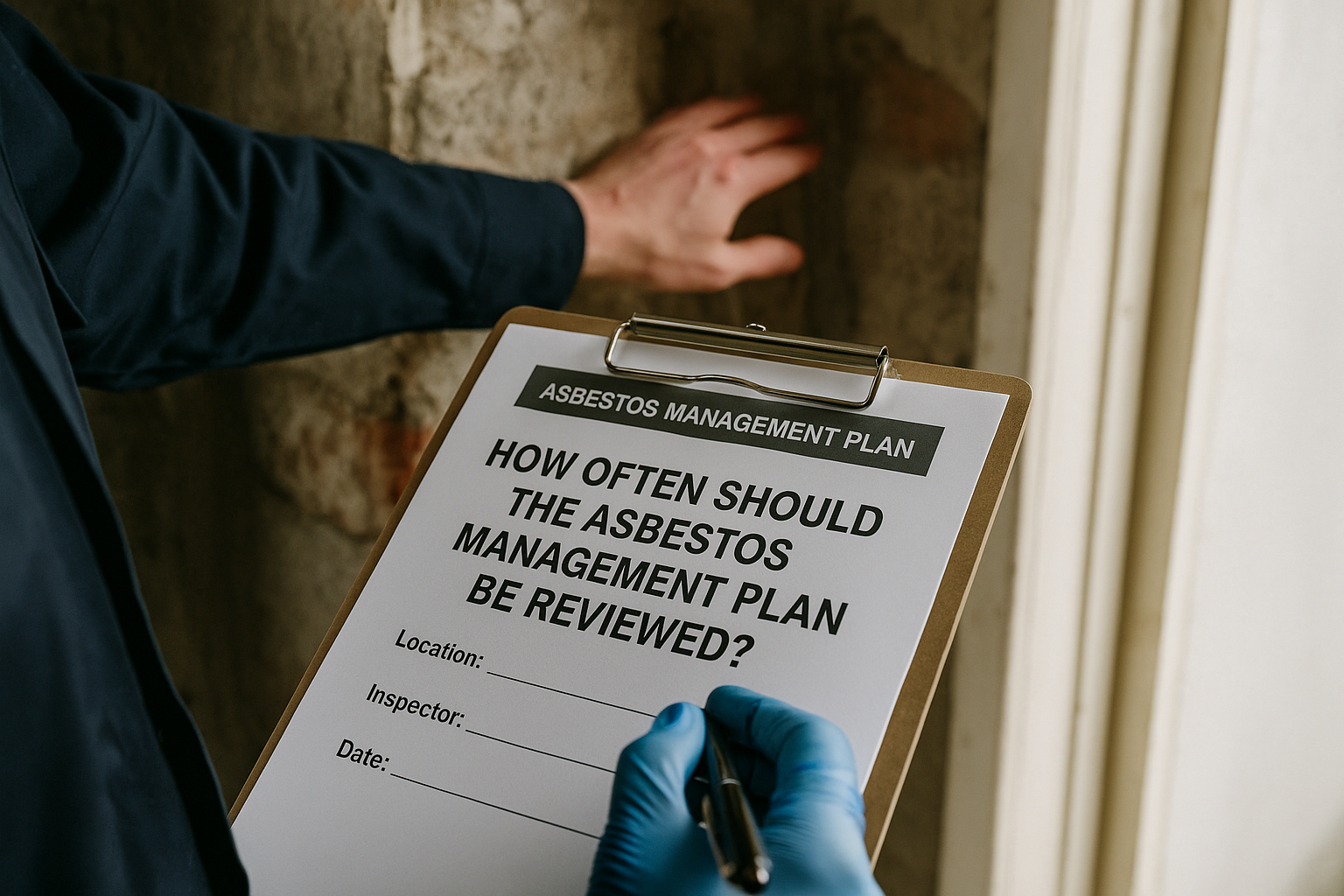
Water ingress, vibration, repeated access, poor repairs, tenant churn and unplanned maintenance can all change the condition of asbestos-containing materials long before the next review date. Waiting for the anniversary of the plan can leave you relying on information that no longer reflects reality.
One site may only need straightforward annual review because the known asbestos is stable, sealed and rarely accessed. Another may need closer attention because asbestos insulating board sits in risers opened every week by maintenance contractors.
The legal baseline is the same, but the management approach should reflect actual risk on site. That is the practical answer to how often should the asbestos management plan be reviewed? for most property managers.
Factors that affect review frequency
There is no single review interval that suits every building. The right frequency depends on the materials present, their condition and how likely they are to be disturbed.
Material type
Some asbestos-containing materials are more friable than others. Materials that can release fibres more easily if damaged usually need tighter controls and closer monitoring.
Condition
Cracked, worn, exposed or deteriorating materials need more frequent attention than sealed materials in good condition. If the condition changes, the plan should be reviewed straight away.
Location
Materials in plant rooms, risers, corridors, service cupboards and other access areas are generally at greater risk than materials hidden in sealed voids. The more people interact with the area, the more often information should be checked.
Accessibility
If staff, tenants or contractors can easily reach the material, the chance of disturbance increases. Accessible asbestos needs stronger day-to-day management than asbestos tucked away behind fixed structures.
Maintenance activity
Buildings with frequent maintenance, testing, cabling, plumbing or mechanical work usually need more active review arrangements. Planned work is one of the main reasons asbestos information becomes outdated.
Occupancy and use
A change in how a room is used can alter risk even if the asbestos itself has not changed. A storeroom turned into office space, or a vacant unit turned into a nursery, may require different controls.
History of incidents
Previous damage, confusion over contractor information or failures in permit-to-work systems are signs that the plan may need tighter review and better communication.
Events that should trigger an immediate review
You should not wait for the annual review if the plan is no longer reliable. Certain events mean the management plan needs attention without delay.

1. Damage or deterioration to asbestos-containing materials
If an inspection, occupant report or maintenance visit identifies damaged or deteriorating asbestos-containing materials, review the plan immediately. You may need to restrict access, update the risk assessment, arrange encapsulation or plan remedial work.
If the material has been disturbed and fibre release is possible, treat it as an incident. Secure the area, prevent further access and obtain specialist advice quickly.
2. Maintenance, refurbishment or intrusive works
Routine maintenance is one of the fastest ways for a plan to fall out of date. Ceiling access, drilling, electrical works, plumbing, flooring replacement and riser access can all affect asbestos information.
Before any intrusive work starts, the survey type must match the work. A management survey is designed to help manage asbestos during normal occupation. It does not replace the more intrusive survey needed before refurbishment or structural work.
Where a building or part of it is due to be stripped out, heavily altered or taken down, a demolition survey may be required to identify asbestos not visible during normal occupation.
After works, the management plan should be updated to show:
- Any asbestos removed
- Any newly identified asbestos
- Any damage, repair or encapsulation
- Changes to access arrangements
- Revised responsibilities and controls
If licensed work or remedial action is needed, use competent specialists for asbestos removal and make sure the register and management plan are amended as soon as the work is complete.
3. Changes in building use or occupancy
A room can become higher risk without any physical change to the asbestos. Increased footfall, new tenants, altered access routes or different operational use can all increase the chance of disturbance.
Whenever occupancy patterns or building use change, revisit the plan and reassess whether your current controls still make sense.
4. New survey findings or sampling results
If a survey identifies additional asbestos-containing materials, corrects previous assumptions or confirms the material type through analysis, the plan must be updated. Filing the report away without changing the management plan is a common failure point.
The asbestos register should always align with the latest verified information. If it does not, contractors and staff may rely on inaccurate details when planning work.
5. Contractor feedback or permit-to-work problems
If contractors report missing plans, unclear room references, inaccessible registers or conflicting asbestos information, treat that as a warning sign. A plan can look fine on paper and still fail in practice.
That should trigger a review of both the document itself and the way asbestos information is communicated through inductions, permits and job planning.
What should be checked during a review?
A proper review is more than changing the date on the front page. It should test whether the plan still reflects the building, the materials and the way the premises are being managed day to day.
Use a structured review process so key points are not missed.
Review checklist for duty holders and property managers
- Check the asbestos register
Confirm all known or presumed asbestos-containing materials are recorded accurately, with correct locations, product descriptions and condition notes. - Review reinspection records
Look at the latest condition checks and confirm whether any material has deteriorated, been damaged or changed since the previous review. - Reassess the risk
Consider whether the likelihood of disturbance has changed because of occupancy, access patterns, maintenance activity or minor alterations. - Confirm control measures
Check signage, labels, permit systems, restricted access arrangements and contractor controls. - Look ahead at planned works
Review maintenance schedules, fit-outs, service upgrades and refurbishment plans that could affect asbestos-containing materials. - Check communication arrangements
Make sure staff and contractors can access asbestos information before they start work, not halfway through the job. - Update responsibilities
Confirm named persons, managing agents, facilities teams and contractors still have clear roles and current contact details. - Record actions and deadlines
If the review identifies gaps, assign actions, owners and timescales. A review without follow-up is only paperwork.
If you manage multiple sites, standardising this process makes life easier. A consistent review template helps you spot missing reinspections, outdated plans and weak contractor communication before they turn into a compliance problem.
How inspections and the asbestos register fit into the review cycle
The management plan depends on accurate inspection data. If known or presumed asbestos-containing materials are not being reinspected at suitable intervals, the plan will drift out of date even if the annual review happens on time.
Reinspection frequency should be based on risk. Materials in poor condition or exposed locations usually need checking more often than stable materials in low-access areas.
A useful asbestos register should show:
- What the material is, or is presumed to be
- Where it is located
- Its extent
- Its condition
- The date of the last inspection
- Any recommended actions or restrictions
When the register is current, the annual review becomes much easier and much more meaningful. When the register is old, inconsistent or difficult to use, the first step is often to get updated input from a competent surveyor.
For local support, Supernova can help with an asbestos survey London service across the capital, as well as regional support through our asbestos survey Manchester team and our asbestos survey Birmingham service.
Common mistakes that make asbestos management plans fail
Most weak asbestos management plans do not fail because there is no document. They fail because the document no longer matches the building, the maintenance activity or the way information is shared on site.
These are the mistakes seen most often:
- Treating the annual review as a paper exercise
- Failing to update the register after works or new survey findings
- Using a management survey for intrusive refurbishment work
- Not linking reinspection findings back into the plan
- Keeping asbestos information in a file that contractors never see
- Leaving responsibilities unclear between landlord, tenant, managing agent and contractors
- Ignoring changes in occupancy or use
- Assuming stable asbestos never needs checking again
The fix is usually straightforward: keep information live, make responsibilities clear and check that the system works in practice, not just on paper.
Practical advice for keeping your plan up to date
If you are responsible for a building, the easiest way to stay on top of asbestos management is to build review points into normal property operations rather than treating them as a separate admin task.
Good practice includes:
- Set the annual review date in advance and assign an owner
- Link asbestos checks to planned maintenance meetings
- Review the register before issuing permits for intrusive work
- Ask contractors whether the asbestos information was clear and usable
- Record incidents, damage reports and changes in use as review triggers
- Keep plans, room references and access information consistent across documents
- Make sure site teams know where the register is and how to use it
If you manage a portfolio, create a simple reporting line. Site managers should know exactly when to escalate damage, survey updates or occupancy changes so the management plan can be revised promptly.
Who should carry out the review?
The duty holder remains responsible for making sure the review happens, but in practice the work may involve several people. That can include facilities managers, managing agents, health and safety leads, surveyors and contractors.
What matters is competence and clarity. Whoever reviews the plan needs enough understanding of the premises, the asbestos information and the site controls to judge whether the plan still works.
For more complex premises, external support is often useful where:
- Records are inconsistent or incomplete
- There have been recent works or incidents
- The building layout or use has changed significantly
- The existing survey information is old or unclear
- There is uncertainty over survey type or next steps
Independent surveying input can help you test whether your plan still reflects the actual building and whether further inspection or sampling is needed.
What happens if you do not review the plan properly?
The immediate problem is practical rather than theoretical. Staff and contractors may rely on information that is wrong, incomplete or impossible to use. That increases the chance of accidental disturbance.
It also leaves the duty holder exposed if they cannot show that asbestos risks are being actively managed. If there is an incident, poor review records, outdated registers and unclear responsibilities are hard to defend.
A current management plan helps you make better decisions before work starts. An outdated one tends to be discovered only after something has gone wrong.
Frequently Asked Questions
Is an asbestos management plan review legally required every year?
A formal annual review is the accepted minimum standard for keeping the plan current under the duty to manage asbestos. But if conditions change before then, the plan should be reviewed sooner.
Do I need to update the plan after minor maintenance work?
Yes, if the work affects asbestos-containing materials, changes access arrangements, uncovers new information or alters the risk of disturbance. Even minor works can make a register inaccurate if nothing is updated afterwards.
Can I rely on an old asbestos survey if the building has not changed much?
Only if the information is still accurate and the materials have been suitably reinspected. Older survey data should be checked carefully, especially where there has been maintenance activity, tenant change or uncertainty over locations and condition.
Who is responsible for reviewing the asbestos management plan?
The duty holder is responsible for ensuring the review happens. In practice, this may involve facilities managers, managing agents and competent asbestos professionals, but the duty itself cannot simply be ignored or assumed to sit elsewhere.
What is the best answer to how often should the asbestos management plan be reviewed?
The best practical answer is: at least every 12 months, and immediately after any change that affects asbestos condition, location, accessibility, building use or planned work.
Need help reviewing or updating your asbestos management plan?
If you are unsure whether your current records, survey information or site controls are still fit for purpose, Supernova Asbestos Surveys can help. We carry out asbestos surveys nationwide, support duty holders with clear practical advice and help ensure asbestos information stands up to day-to-day use on real sites.
Call 020 4586 0680 or visit asbestos-surveys.org.uk to arrange expert support from Supernova.