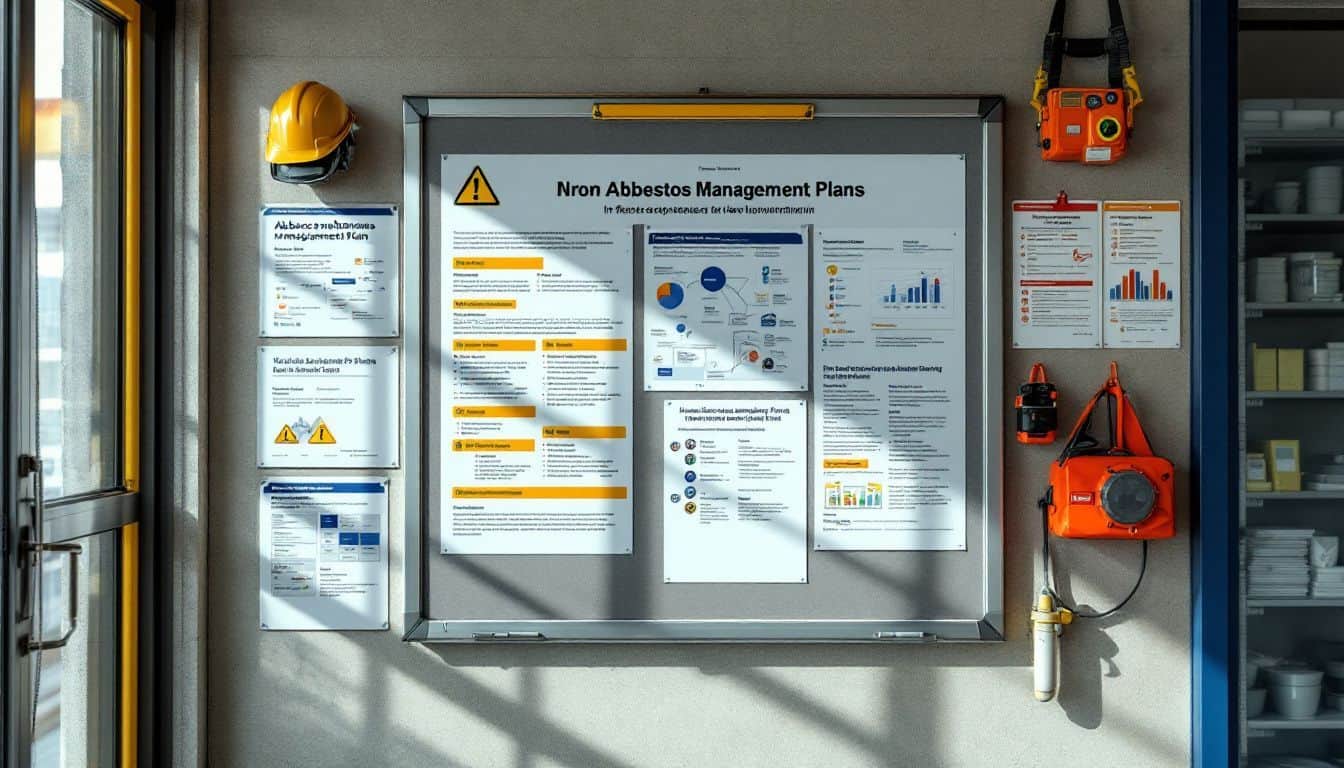
Your Asbestos Register and Management Plan: What Every Duty Holder Needs to Know
If you manage a non-domestic building in the UK, you have a legal duty to create and maintain an asbestos register and management plan. Not as a box-ticking exercise — as a genuine, working document that protects the people who use your building every day. Get it wrong, and you’re not just falling foul of the law; you’re putting lives at risk.
This post breaks down what a robust asbestos register and management plan actually looks like, how to communicate it effectively to everyone who needs it, and how to keep it current as your building changes over time.
What Is an Asbestos Register and Management Plan?
These are two distinct but closely connected documents — and both are required under the Control of Asbestos Regulations for any duty holder responsible for non-domestic premises.
The Asbestos Register
The asbestos register is a record of every asbestos-containing material (ACM) found — or presumed to be present — in your building. It documents the location, type, condition, and risk rating of each ACM, and should be based on findings from a formal management survey carried out by a qualified surveyor.
The register isn’t a static document. It needs to be updated whenever work is carried out that disturbs, removes, or encapsulates any ACMs, and whenever new surveys are completed.
The Asbestos Management Plan
The management plan takes the information in the register and turns it into action. It sets out how identified ACMs will be managed — whether that means leaving them in place and monitoring them, encapsulating them, or arranging removal.
It also defines who is responsible for what, and how that information will be communicated to staff, contractors, and other building users. Together, the asbestos register and management plan form the backbone of your legal compliance under the Control of Asbestos Regulations and the HSE guidance document HSG264.
Who Is Legally Responsible?
The duty to manage asbestos falls on the “duty holder” — typically the owner of a non-domestic property, the employer if they have control of the premises, or the person responsible under a tenancy agreement. In practice, this is often a facilities manager, property manager, or building owner.
The duty holder must:
- Take reasonable steps to find ACMs in the premises
- Assess the risk from any ACMs found or presumed present
- Prepare and implement a written management plan
- Review and monitor the plan regularly
- Provide information about the location and condition of ACMs to anyone who may disturb them
That last point is where many organisations fall short. Having a register locked in a filing cabinet serves no one. The whole point is that the right people can access it when they need it.
Developing a Management Plan That Actually Works
A well-structured asbestos management plan isn’t complicated, but it does need to be thorough. Here’s what it should cover.
Defined Roles and Responsibilities
Nominate a specific individual — not a job title, an actual named person — to take ownership of the asbestos management plan. This person is responsible for maintaining the register, arranging inspections, and ensuring the plan is communicated to staff and contractors.
Every employee who could potentially disturb ACMs should have their responsibilities clearly defined. That includes maintenance staff, cleaners, and anyone else who works in areas where asbestos is present.
Risk Ratings and Prioritised Actions
Not all ACMs carry the same level of risk. A sealed, intact asbestos ceiling tile in good condition poses a very different risk to damaged pipe lagging in a boiler room. Your management plan should reflect this, with a clear priority order for monitoring, encapsulation, or removal.
Use the condition and risk assessments from your management survey to inform these decisions. If you haven’t had a survey carried out recently, that’s your starting point — everything else follows from it.
Control Measures and Safe Systems of Work
For any ACMs that are being left in situ, the plan must specify how they’ll be managed. This includes:
- How often they’ll be visually inspected
- What condition changes would trigger further action
- What restrictions apply to work in those areas
- What personal protective equipment (PPE) is required if work near ACMs is unavoidable
Contractor Controls
Contractors are one of the highest-risk groups when it comes to asbestos disturbance. Before any contractor starts work on your premises, they must be informed of the location of any ACMs in the areas they’ll be working — this isn’t optional, it’s a legal requirement.
Your management plan should include a formal process for briefing contractors, including a requirement for them to sign off that they’ve received and understood the relevant information from the asbestos register.
Emergency Procedures
Accidental disturbances happen. A contractor drills into a wall without checking, or a ceiling tile is damaged during routine maintenance. Your plan needs to set out exactly what to do when this happens:
- Stop work immediately and evacuate the area
- Prevent others from entering the affected zone
- Do not attempt to clean up — asbestos debris requires specialist handling
- Contact a licensed asbestos contractor
- Notify the duty holder and log the incident
- Arrange air testing before the area is reoccupied
Every member of staff should know these steps — not just the facilities manager.
Communicating the Asbestos Register and Management Plan to Your Team
This is where many duty holders fall down. The plan exists, but nobody knows about it. Here’s how to change that.
Make It Accessible
The asbestos register and management plan should be stored somewhere that relevant staff can access it quickly — not buried in a folder on someone’s desktop. Many organisations now use company intranets or shared document platforms to host the register, making it searchable and accessible from any device on site.
For sites with multiple buildings or locations, consider whether a digital system would help you manage and update records more efficiently. Some property management platforms include dedicated asbestos management modules.
Induction and Onboarding
New employees — particularly those in maintenance, facilities, or building management roles — should receive a briefing on the asbestos register and management plan as part of their induction. This doesn’t need to be lengthy, but it should cover:
- Where the register is held and how to access it
- Which areas of the building contain ACMs
- What to do if they think they’ve disturbed asbestos
- Who the nominated responsible person is
Asbestos Awareness Training
Under HSE guidance, anyone who could disturb ACMs in the course of their work — maintenance workers, electricians, plumbers, decorators — should receive asbestos awareness training. This is a legal requirement, not a recommendation.
The training should cover what asbestos is, where it’s likely to be found, the health risks (including asbestosis, mesothelioma, and lung cancer), and what to do if they suspect they’ve encountered it. Training should be refreshed regularly — annually is considered good practice.
Toolbox Talks and Regular Briefings
Formal training is important, but so is keeping asbestos awareness front of mind on a day-to-day basis. Short, focused toolbox talks — covering topics like how to use the asbestos register before starting maintenance work, or what the emergency procedure looks like in practice — are an effective way to reinforce the message.
These don’t need to be long. A ten-minute briefing before a planned maintenance task can be more effective than a half-day training course that happened two years ago.
Electronic Updates and Notifications
When the asbestos register is updated — following a new survey, a removal project, or a periodic inspection — relevant staff should be notified. A simple email or intranet notification explaining what’s changed and why is sufficient.
The key is that updates don’t sit unread in a document management system; people know the register has changed and can act accordingly.
Keeping the Asbestos Register and Management Plan Up to Date
An outdated asbestos register is almost as dangerous as not having one. If ACMs have been removed but the register still shows them as present, contractors may take unnecessary precautions. Worse, if new ACMs have been identified but the register hasn’t been updated, workers could disturb them without knowing the risk.
Triggers for Review
Your management plan should specify the circumstances that trigger a review of the register. These typically include:
- Completion of any work that disturbs or removes ACMs
- Discovery of previously unidentified ACMs during maintenance or refurbishment
- A change in the condition of a known ACM identified during a periodic inspection
- A change in the use of part of the building that affects the risk assessment
- Significant changes to the building structure or layout
Periodic Inspections
The condition of ACMs left in situ should be checked at regular intervals — typically every six to twelve months, depending on the risk level. These inspections should be carried out by a competent person and the results recorded in the register.
If the condition of any ACM has deteriorated since the last inspection, the management plan should be updated to reflect the increased risk and the action that will be taken.
Annual Plan Reviews
Even if nothing significant has changed, the management plan itself should be reviewed at least annually. This is an opportunity to check that the nominated responsible person is still in post, that training records are current, and that the plan still reflects the current state of the building.
What Happens When Refurbishment or Demolition Is Planned?
If you’re planning significant refurbishment or demolition work, your existing management survey will not be sufficient. Refurbishment and demolition work requires a more intrusive survey — a demolition survey — which is carried out before any work begins and involves destructive inspection techniques to locate all ACMs that could be disturbed during the project.
This type of survey is a legal requirement before any licensed removal work, structural alterations, or demolition takes place. The findings must be incorporated into your updated asbestos register and shared with all contractors involved in the project.
Failing to commission the correct survey before refurbishment work is one of the most common compliance failures — and one of the most dangerous, because workers may be exposed to asbestos fibres without knowing it.
Asbestos Surveys: The Foundation of Everything
None of this works without an accurate, up-to-date survey. The asbestos register and management plan are only as good as the information they’re built on. If your survey is more than a few years old, or if significant work has been carried out since it was completed, it may no longer reflect the actual state of your building.
A management survey — the type required for occupied buildings — should be carried out by a UKAS-accredited surveying company following the methodology set out in HSG264. The survey must be thorough enough to locate all reasonably accessible ACMs in areas likely to be disturbed during normal occupation and maintenance.
Supernova Asbestos Surveys operates nationwide and has completed over 50,000 surveys across the UK. If you need an asbestos survey in London, our team covers the full metropolitan area. We also carry out surveys across the North West — our asbestos survey Manchester service covers the city and surrounding areas. And if you’re in the Midlands, our asbestos survey Birmingham team is on hand to help.
Frequently Asked Questions
What is the difference between an asbestos register and an asbestos management plan?
The asbestos register is a record of all known or presumed asbestos-containing materials in a building — their location, type, condition, and risk rating. The asbestos management plan is the action document: it sets out how those ACMs will be managed, who is responsible, how the information will be communicated, and what the emergency procedures are. Both are required under the Control of Asbestos Regulations for non-domestic premises.
Who needs to see the asbestos register?
Anyone who could potentially disturb asbestos-containing materials in the course of their work must be given access to the relevant parts of the register. This includes in-house maintenance staff, contractors, and anyone else carrying out building work. The duty holder is legally required to share this information before work begins.
How often should the asbestos management plan be reviewed?
The management plan should be reviewed at least annually, and immediately whenever a significant change occurs — such as completion of work that disturbs ACMs, discovery of previously unidentified materials, or a change in building use. Periodic inspections of ACMs left in situ should typically take place every six to twelve months depending on their condition and risk rating.
Does an asbestos register need to be updated after removal work?
Yes. Whenever ACMs are removed, encapsulated, or disturbed, the register must be updated to reflect the current state of the building. Leaving removed materials on the register creates confusion for contractors and could lead to unnecessary precautions — or worse, a false sense of security if new materials have been identified but not recorded.
What survey do I need before refurbishment or demolition?
Before any significant refurbishment or demolition work, a refurbishment and demolition survey is required — this is a more intrusive inspection than a standard management survey and is designed to locate all ACMs that could be disturbed during the planned work. It is a legal requirement before licensed asbestos removal or structural demolition work begins.
Get Your Asbestos Register and Management Plan Right — With Expert Support
If you’re unsure whether your current asbestos register and management plan meets your legal obligations, or if your survey is overdue, Supernova Asbestos Surveys can help. We carry out UKAS-accredited management surveys and refurbishment and demolition surveys across the UK, providing clear, actionable reports that give you everything you need to build a compliant management plan.
Call us on 020 4586 0680 or visit asbestos-surveys.org.uk to book a survey or discuss your requirements with our team.