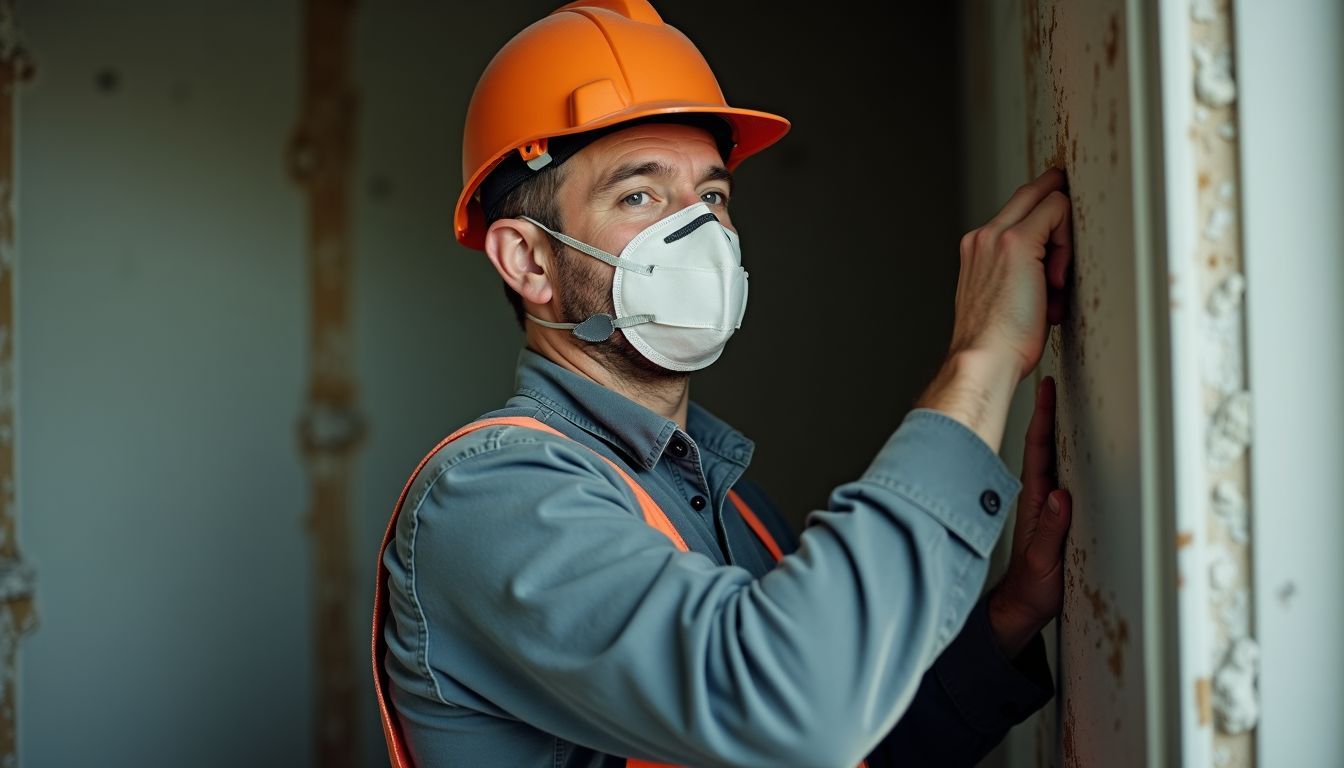
Management and Removal of Asbestos: Choosing the Right Approach for Your Building
Discovering asbestos-containing materials (ACMs) in your building doesn’t have to trigger panic — but it does demand a clear head and the right professional advice. The management and removal of asbestos are both legally recognised, legitimate responses to finding ACMs, and choosing between them is one of the most consequential decisions a duty holder or property manager can make.
Get it right and you protect occupants, stay compliant, and spend your budget wisely. Get it wrong and you risk enforcement action, unlimited fines, and — far more seriously — real harm to the people who use your building every day.
Why Asbestos Is Still a Live Issue in UK Buildings
Asbestos was banned from use in UK construction in 1999, but the legacy of decades of widespread use is still very much with us. Millions of commercial, industrial, and residential properties built before 2000 contain ACMs — and many of those materials are sitting quietly in walls, ceilings, floors, and service ducts right now.
The health risk arises when asbestos fibres become airborne and are inhaled. Conditions including mesothelioma, asbestosis, and asbestos-related lung cancer can take 20 to 50 years to develop after exposure, which is precisely why the hazard is so easy to underestimate.
The Health and Safety Executive (HSE) identifies asbestos as the single largest cause of work-related deaths in the UK. Any building constructed before 2000 should be treated as potentially containing asbestos until a formal survey demonstrates otherwise — and that survey is the non-negotiable starting point for every decision that follows.
Where ACMs Are Commonly Found
Asbestos was incorporated into hundreds of building products, and many of them look completely unremarkable. You cannot identify ACMs by sight — only laboratory analysis of a physical sample confirms the presence of asbestos fibres.
Common locations in pre-2000 buildings include:
- Pipe lagging and boiler insulation
- Ceiling tiles and textured coatings, including Artex
- Asbestos insulating board (AIB) used in fire doors, partitions, and ceiling panels
- Sprayed coatings on structural steelwork
- Roofing sheets and rainwater goods
- Floor tiles and the adhesive beneath them
- Millboard around boilers and electrical equipment
- Loose-fill insulation in ceiling voids
Friable materials — those that crumble or break apart easily, such as sprayed coatings or loose-fill insulation — carry the highest risk because they release fibres readily when disturbed. Non-friable materials like cement sheets or intact floor tiles hold fibres more securely, but still require careful handling if cut, drilled, or broken.
Getting the Right Survey Before Making Any Decision
Before you can make any informed choice about the management and removal of asbestos, you need a formal survey carried out by a competent, qualified surveyor working to HSE guidance document HSG264. There are two main survey types, and the right one depends entirely on what you intend to do with the building.
Asbestos Management Survey
An asbestos management survey is designed for buildings in normal occupation. It identifies ACMs that could be disturbed during routine maintenance and everyday use, and it forms the basis of your ongoing asbestos management plan.
This is the baseline survey that every non-domestic premises built before 2000 should have in place. Without it, you have no reliable picture of what is in your building, where it is, or what condition it is in.
Refurbishment and Demolition Surveys
A refurbishment survey is required before any significant structural work or refurbishment takes place. It is far more intrusive than a management survey and aims to locate all ACMs — including those hidden within the building fabric — so they can be removed before work begins.
A demolition survey is mandatory before a building is demolished. Both survey types are designed to ensure that workers and contractors are not unknowingly exposed to asbestos during high-disturbance activities.
In every case, the surveyor will take samples, assess the condition and risk of each ACM, and produce an asbestos register. That register is a legal requirement under the Control of Asbestos Regulations and must be kept up to date.
When Asbestos Management Is the Right Approach
Not every ACM needs to come out immediately. In many situations, managing the risk in place — rather than removing the material — is the proportionate and legally compliant response.
Under the Control of Asbestos Regulations, the duty holder in non-domestic premises has a legal obligation to manage asbestos risks. Critically, this duty does not automatically mean removal. It means assessing the risk, putting appropriate controls in place, and keeping those controls under regular review.
Situations Where Management Is Appropriate
Asbestos management is a suitable approach when:
- ACMs are in good condition with no signs of damage, crumbling, or fibre release
- The materials are in low-traffic areas unlikely to be disturbed during normal use
- No refurbishment or building work is planned that would affect the ACMs
- The risk assessment confirms that fibres are not being released into the air
- Regular monitoring can be realistically maintained
For example, sealed pipe lagging in a rarely accessed void, or intact AIB panels in a low-use plant room, may be safely managed in place for years — provided they are monitored regularly and the management plan is kept current.
What a Robust Asbestos Management Plan Looks Like
A management plan is not a filing exercise. It is a live document that drives action. A well-constructed plan should include:
- A current asbestos register with the location, type, condition, and risk rating of every ACM
- Clear roles and responsibilities — who is the duty holder, who carries out inspections, who updates the register
- Inspection schedules — most ACMs should be checked at least annually, and more frequently where disturbance is possible
- Procedures for contractors — anyone working on the building must be made aware of ACMs before they start work
- Emergency procedures — what to do if an ACM is accidentally damaged or disturbed
- Training records for staff and contractors who may encounter ACMs
Encapsulation and enclosure are the two main management techniques. Encapsulation applies a specialist coating to the ACM surface, sealing fibres in place. Enclosure builds a physical barrier around the material. Both methods reduce risk but do not eliminate the hazard — the ACM remains in the building and must continue to be monitored.
A management survey is the essential first step before any management plan can be written. Without accurate survey data, the plan has no reliable foundation.
When Asbestos Removal Becomes Necessary
There are situations where management is simply not sufficient, and the balance in the management and removal of asbestos tips firmly towards removal. Leaving damaged or deteriorating ACMs in place is neither compliant nor safe.
Clear Indicators That Removal Is Required
You should be seriously considering removal when:
- ACMs are visibly damaged — cracked, crumbling, soft, or showing exposed fibres
- Air monitoring reveals fibre levels above safe thresholds
- The building is undergoing major refurbishment or demolition — ACMs must be cleared before structural work begins
- The ACM is in a high-traffic area where regular disturbance is unavoidable
- The condition is deteriorating between inspections and encapsulation is no longer effective
- The risk assessment concludes that management cannot adequately control the risk
In these situations, asbestos removal carried out by licensed professionals is the only appropriate course of action.
How Professional Asbestos Removal Works
Licensed asbestos removal is a tightly controlled process. Each stage has a specific purpose, and cutting corners at any point creates legal liability and puts people at serious risk.
- Notification: For licensable work, the contractor must notify the HSE at least 14 days before work begins. This is a legal requirement under the Control of Asbestos Regulations.
- Controlled enclosure: The work area is sealed with heavy-duty sheeting and negative pressure units to prevent fibres from escaping into adjacent spaces. Heating, ventilation, and air conditioning systems are isolated.
- PPE and respiratory protection: Workers wear disposable coveralls, double gloves, and tight-fitting respirators with HEPA filters. No shortcuts on personal protective equipment are acceptable.
- Wet removal methods: Low-pressure water with surfactant suppresses dust during the removal of pipe lagging, insulation boards, and similar materials.
- Waste management: All asbestos waste is double-bagged, clearly labelled, and transported by licensed carriers to approved disposal sites. Waste consignment notes must be retained.
- Clearance air testing: An independent UKAS-accredited analyst carries out air testing once removal is complete. The area cannot be reoccupied until a formal clearance certificate is issued.
- Register update: The asbestos register is updated to reflect what has been removed, and the management plan is revised if any ACMs remain in the building.
Encapsulation vs Full Removal: Making the Right Call
Many property managers ask whether encapsulation is a genuine alternative to removal, or simply a way of deferring the problem. The honest answer is that it depends entirely on the condition of the ACM, the building’s future use, and what the risk assessment says.
Encapsulation costs less upfront and causes minimal disruption to building occupants. It is appropriate for stable, accessible ACMs that can be monitored regularly. The trade-off is that the hazard remains in the building and requires ongoing management — including periodic re-inspection, potential re-encapsulation, and restrictions on future works in the affected area.
Full removal is more expensive and disruptive in the short term, but it eliminates the hazard entirely. Future works, changes of use, or building sales are all considerably simpler when there are no ACMs to manage or disclose.
For buildings undergoing significant change, or where ACMs are in poor condition, removal is almost always the better long-term investment. A phased approach often makes financial sense on larger sites — prioritise the highest-risk materials first, then work through lower-risk ACMs over time as budget allows.
Legal Requirements: What UK Law Requires of You
The legal framework governing the management and removal of asbestos in the UK is clear and unambiguous. Ignorance of the regulations is not a defence, and the penalties for non-compliance — including prosecution and unlimited fines — are serious.
Key Obligations Under the Control of Asbestos Regulations
- Duty holders must assess whether ACMs are present and manage the risk if they are
- An asbestos register and management plan must be maintained and made available to anyone who could disturb ACMs
- Any building built before 2000 should have a management survey as a baseline
- Licensable work — which includes most removal of high-risk or friable ACMs — must be carried out by an HSE-licensed contractor
- Notifiable non-licensed work (NNLW) requires HSE notification, health surveillance, and job records even where a full licence is not required
- Clearance air testing must be carried out by a UKAS-accredited analyst after removal works
- Dangerous incidents — such as accidental drilling into ACMs — must be reported under RIDDOR
HSE guidance document HSG264 provides detailed technical guidance on asbestos surveying and is the benchmark against which survey quality is judged. If your surveyor is not working to HSG264, find one who is.
Documentation You Must Keep
Good records are not just good practice — they are a legal requirement. You should retain:
- All asbestos survey reports and updates
- The current asbestos register and management plan
- Inspection records and air monitoring results
- Contractor notification records and method statements
- Waste consignment notes from removal works
- Clearance certificates following any removal
- Training records for relevant staff
These documents may be requested by the HSE during an inspection, or by solicitors and surveyors during a property transaction. Gaps in your records are difficult to explain and can have serious consequences.
Practical Guidance for Different Building Types
The right approach to the management and removal of asbestos varies depending on the type of building and how it is used. There is no single answer that applies to every situation.
Commercial Office Buildings
In occupied commercial premises, management in place is often the most practical approach for stable, low-risk ACMs. The priority is ensuring that contractors — particularly those carrying out maintenance, IT installations, or fit-out works — are briefed on the asbestos register before they touch anything.
Many office buildings contain AIB in ceiling voids, fire doors, and service risers. These materials can be managed effectively provided the register is accurate and up to date, and that a clear contractor protocol is in place.
Industrial and Warehouse Properties
Industrial buildings frequently contain asbestos cement roofing sheets, which are generally non-friable and manageable in good condition. However, weathering, impact damage, and drilling for fixings can all compromise the material and trigger a reassessment.
Where roofing sheets are deteriorating — particularly if they are becoming brittle or showing signs of delamination — removal should be seriously considered, especially if the building is to be sold or re-let.
Schools and Healthcare Premises
Higher-risk occupancy types require a more precautionary approach. In schools and healthcare settings, even low-risk ACMs should be subject to more frequent inspection, and the threshold for removal is generally lower given the vulnerability of occupants and the reputational consequences of any incident.
Properties Undergoing Sale or Change of Use
A building transaction almost always sharpens the focus on asbestos. Buyers, lenders, and their solicitors will scrutinise the asbestos register, and any ACMs in poor condition — or any gaps in the survey record — are likely to affect price or delay completion.
If you are planning to sell or re-let a building, getting an up-to-date survey and addressing any high-risk ACMs before going to market is almost always the right commercial decision.
Nationwide Asbestos Survey and Removal Services from Supernova
Supernova Asbestos Surveys has completed over 50,000 surveys across the UK, working with property managers, facilities teams, local authorities, housing associations, and private landlords. Our surveyors are fully qualified, working to HSG264, and our reports are clear, actionable, and built to support your compliance obligations.
Whether you need an initial survey to establish your asbestos position, or specialist advice on whether management or removal is the right call for a specific material, our team is ready to help. We cover the full range of survey and removal services nationwide.
If you’re based in the capital, our team provides a full asbestos survey London service across all property types. We also operate extensively across the North West — our asbestos survey Manchester team handles everything from single commercial units to large multi-site portfolios. In the Midlands, our asbestos survey Birmingham service covers the full range of commercial and industrial properties across the region.
To discuss your building’s requirements or book a survey, call us on 020 4586 0680 or visit asbestos-surveys.org.uk. Our team will give you a straight answer on what you need — and what you don’t.
Frequently Asked Questions
Do I have to remove asbestos if it is found in my building?
No — removal is not automatically required when ACMs are identified. Under the Control of Asbestos Regulations, the duty holder’s legal obligation is to manage the risk, not necessarily to remove the material. If ACMs are in good condition and are not being disturbed, a structured management plan is often the appropriate and compliant response. Removal becomes necessary when materials are damaged, deteriorating, or when building works would disturb them.
What is the difference between a management survey and a refurbishment survey?
A management survey is carried out in occupied buildings during normal use. It identifies ACMs that could be disturbed during routine maintenance and forms the basis of your asbestos management plan. A refurbishment survey is far more intrusive and is required before any significant building work takes place. It aims to locate all ACMs — including those hidden within the fabric — so they can be removed before contractors begin work. The two survey types serve different purposes and are not interchangeable.
Who is legally allowed to remove asbestos in the UK?
Most removal of high-risk or friable asbestos materials — including pipe lagging, asbestos insulating board, and sprayed coatings — must be carried out by a contractor holding an HSE licence. Some lower-risk, non-licensed work can be carried out by trained and competent operatives without a licence, but this is still subject to strict controls under the Control of Asbestos Regulations. Always verify a contractor’s licence status with the HSE before work begins.
How long does asbestos management last before removal becomes necessary?
There is no fixed timescale. ACMs can remain safely managed in place for many years provided they stay in good condition and are monitored regularly. The decision to move from management to removal is driven by the condition of the material, changes in building use, planned works, and the findings of periodic inspections — not by a predetermined deadline. Regular re-inspection and an up-to-date risk assessment are the tools that drive this decision.
What happens if asbestos is accidentally disturbed during building work?
Work must stop immediately and the area should be vacated and sealed off. The incident must be reported under RIDDOR if workers may have been exposed. A specialist contractor should be called to assess the situation, carry out any necessary remediation, and conduct clearance air testing before the area is reoccupied. The asbestos register and management plan must be updated to reflect what happened and what action was taken.