
Can you sue for asbestos exposure? In the UK, often yes. A diagnosis may arrive decades after the dust was breathed in, but that delay does not automatically remove your right to bring a claim if an employer, landlord, contractor or other dutyholder failed to control the risk properly.
That question matters to more than claimants. If you manage property, oversee maintenance or commission refurbishment works, understanding how asbestos liability is assessed can help you avoid creating the next claim. Under the Control of Asbestos Regulations, those responsible for non-domestic premises must identify and manage asbestos risk, and survey work carried out in line with HSG264 and wider HSE guidance can become crucial evidence later.
Can you sue for asbestos exposure and get compensation?
Yes, many people can. Whether you will succeed depends on the evidence, the medical diagnosis and whether asbestos exposure can be linked to a party that owed you a duty of care.
Most claims are brought against former employers, but they are not the only possible defendants. Depending on the facts, liability may rest with:
- an employer that failed to provide a safe system of work
- a landlord or property owner that failed to manage asbestos properly
- a contractor that disturbed asbestos-containing materials
- a manufacturer or supplier of asbestos-containing products
- a successor business that took over the original company’s liabilities
Compensation can include:
- pain and suffering
- loss of earnings
- care costs
- medical expenses
- travel costs linked to treatment
- claims by dependants after a death
Mesothelioma claims are often handled urgently because the disease is aggressive. If you are already unwell, get specialist legal advice quickly rather than waiting for paperwork to build up.
What asbestos-related illnesses may support a claim?
Not every exposure leads to disease, and not every diagnosis leads to a successful case. A formal medical diagnosis is usually central to any claim, because the court or insurer will want evidence that asbestos caused or materially contributed to a recognised condition.
Mesothelioma
Mesothelioma is a cancer affecting the lining of the lungs and, less commonly, the abdomen or heart. It is strongly associated with asbestos exposure and is one of the most serious conditions seen in asbestos litigation.
Asbestosis
Asbestosis is scarring of the lungs caused by significant exposure over time. It can lead to breathlessness, reduced lung function and long-term disability.
Pleural thickening
This is thickening of the lining around the lungs. In some cases it causes chest pain, breathlessness and restricted breathing.
Pleural plaques
Pleural plaques can show past asbestos exposure. Whether they lead to compensation depends on the legal basis of the claim and the medical impact, so this is an area where specialist advice matters.
Asbestos-related lung cancer
Lung cancer may also support a claim where asbestos exposure was a causative factor. A smoking history may be relevant, but it does not automatically prevent a claim.
If you suspect a material in a building connected to historic exposure, laboratory evidence can help. Professional sample analysis can confirm whether a material contains asbestos and identify the fibre type.
How is liability for asbestos exposure decided?
When people ask can you sue for asbestos exposure, the practical issue is usually liability. A successful claim generally depends on showing who owed a duty, how that duty was breached and whether that breach caused or materially contributed to the illness.
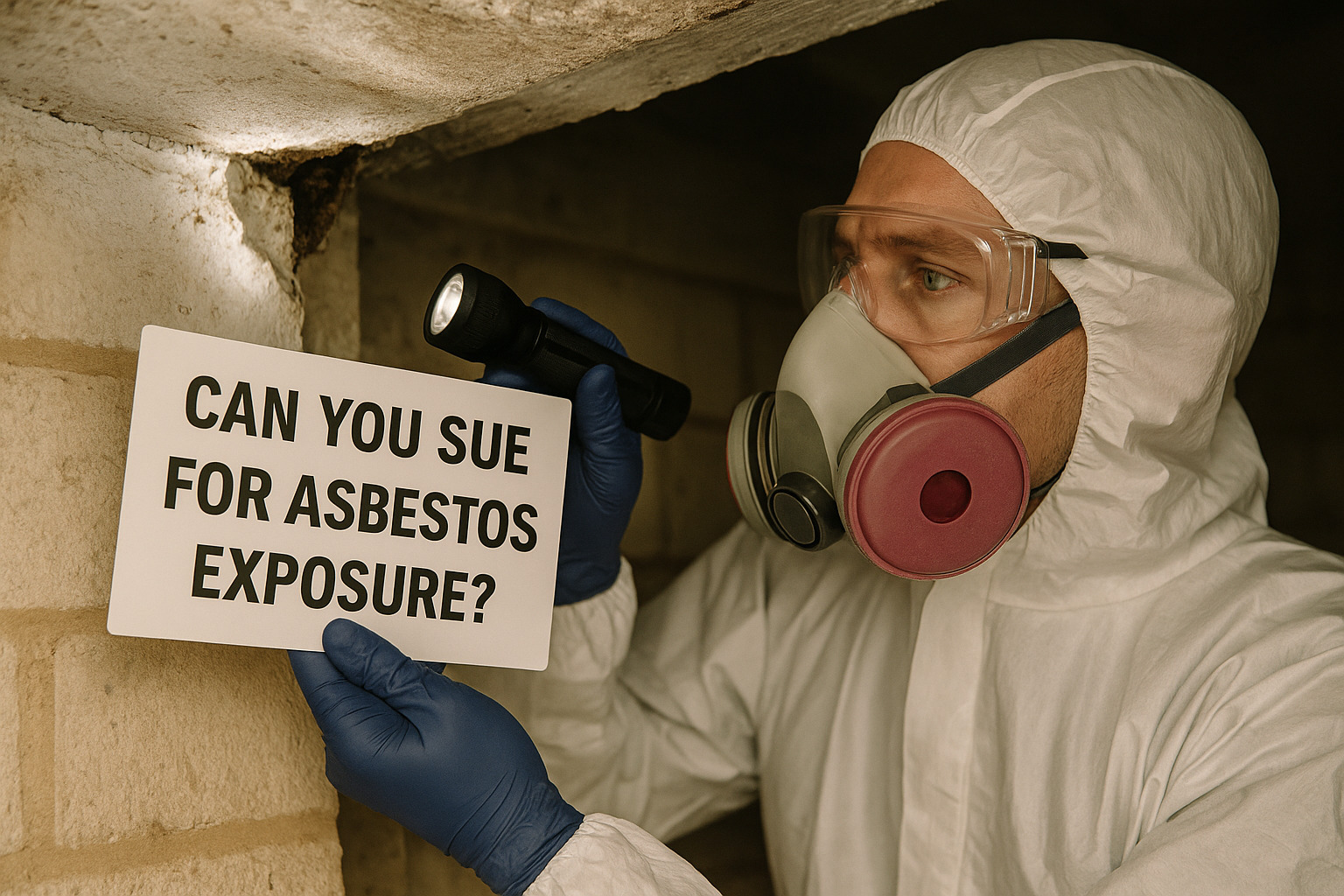
Solicitors, insurers and courts often look at evidence such as:
- employment history and job roles
- medical records and expert reports
- witness statements from colleagues or family
- site records, maintenance logs and risk assessments
- historic asbestos surveys and sampling reports
- insurance records
- company documents showing what was known about the risk
In practice, the key questions are usually:
- Was asbestos present?
- Who controlled the premises, work activity or product?
- What should that party have done to reduce exposure?
- Did they fail to warn, prevent or manage the risk?
- Did that failure lead to the illness now being claimed for?
For property managers, records can make or break a dispute. A properly completed management survey can help show what was known, where asbestos-containing materials were located and what action was taken to manage them.
Negligence
Many asbestos claims are based on negligence. That usually means proving that the defendant failed to take reasonable steps to protect people from a foreseeable risk.
Examples include:
- failing to provide respiratory protection where needed
- allowing dusty work to continue without controls
- failing to warn workers about asbestos-containing materials
- leaving damaged asbestos unmanaged
- sending contractors into areas without accurate asbestos information
Breach of statutory duty and compliance failures
Where premises are subject to the duty to manage, failures under the Control of Asbestos Regulations can be highly relevant. HSE guidance and HSG264 are also important when assessing whether asbestos was identified, recorded and managed appropriately.
If intrusive works were planned or carried out, the right survey type matters. A refurbishment survey can help establish what materials were present and what may have been disturbed during renovation, strip-out or major maintenance.
Breach of warranty in product claims
This is less common in day-to-day discussion, but it can arise in asbestos product cases. The argument is that a product was supplied with an express or implied assurance that it was fit or safe for its intended use when it was not.
This route is technical and fact-specific. A solicitor will need to review product history, supply records and any surviving documentation carefully.
Who can bring an asbestos exposure claim?
The diagnosed person is usually the claimant, but not always the only one with rights. Depending on the facts, claims may be brought by:
- workers directly exposed during employment
- contractors exposed during maintenance, demolition or refurbishment
- people exposed in buildings where asbestos was poorly managed
- family members in some secondary exposure cases, such as contaminated work clothing
- dependants or estates after a death linked to asbestos disease
If you manage buildings, remember that liability is not limited to direct employees. Engineers, caretakers, visiting trades, cleaners and specialist contractors may all be affected if asbestos information is missing, out of date or simply wrong.
Where asbestos-containing materials are already known, regular review matters. A re-inspection survey helps show whether the condition of those materials has changed and whether the management plan still reflects the real risk on site.
Can you sue for asbestos exposure if the company was bought by someone else?
Sometimes, yes. Corporate history can complicate asbestos cases, but an acquisition does not automatically wipe out liability.
Solicitors will usually want to know:
- whether the deal was a share purchase or an asset purchase
- what liabilities were expressly assumed
- whether insurance policies continued
- whether the acquiring business effectively continued the same operations
- whether records show a transfer of asbestos-related obligations
This is why details matter. A business may trade under a different name today, but historic liabilities may still survive through mergers, restructures or takeovers.
If you are trying to pursue a claim, gather every detail you can remember about the employer, contractor, product brand or site. If you are a dutyholder, keep clear records of ownership changes, asbestos surveys and management decisions. Those documents may become critical years later.
What if the original asbestos company no longer exists?
A dissolved company does not always mean the end of the road. In many cases, claims can still proceed through historic insurers or successor organisations.
Tracing historic insurers
Employers were required to hold employers’ liability insurance. Even if the business has disappeared, it may still be possible to trace the insurer that covered the relevant period of exposure.
Useful documents include:
- old payslips
- P60s and contracts
- letters from the employer
- site passes or ID cards
- photographs
- witness statements from former colleagues
Small details can make a big difference. A site address, department name or old trading style may help identify the right insured entity.
Successor organisations
Sometimes another business inherited the liabilities, records or operations of the original employer. If so, that successor may be the correct defendant.
Defunct manufacturers and suppliers
Where a product manufacturer no longer exists, claims may still involve insurers, parent companies or successor businesses, depending on the corporate trail and policy wording.
If you need to check a suspect material in an older property before taking the next step, a testing kit can be a practical starting point before samples are submitted to the laboratory.
Mesothelioma settlements: what usually happens?
A mesothelioma case often settles without a full trial, although every claim depends on its own facts. Because the disease progresses quickly, courts often deal with these claims urgently.
Settlement discussions usually focus on:
- the strength of the diagnosis evidence
- the exposure history
- whether liability is admitted or disputed
- the claimant’s age and financial losses
- care needs and treatment costs
- claims by family members or dependants
A settlement may include general damages for pain and suffering as well as special damages for measurable financial loss. In fatal cases, additional heads of loss may arise.
No responsible adviser should promise a figure without reviewing the evidence. Mesothelioma settlements vary widely, and proper valuation depends on the medical evidence, work history and the strength of the liability case.
Practical steps if you think you have a claim
If you are asking can you sue for asbestos exposure, act quickly. Time limits can apply, and evidence is usually easier to secure while records still exist and witnesses can still be traced.
- Get medical advice. Speak to your GP or specialist about tests, diagnosis and treatment.
- Write down your exposure history. List employers, sites, dates, job roles and any dusty tasks or materials you remember.
- Collect documents. Keep payslips, P60s, contracts, training records, photographs and correspondence.
- Identify witnesses. Former colleagues may be able to confirm working conditions and lack of warnings or protective equipment.
- Preserve property records. Keep survey reports, asbestos registers, maintenance logs and contractor information.
- Speak to a specialist solicitor. Asbestos claims are technical and need focused expertise.
For organisations managing multiple buildings, survey quality is not just a compliance issue. It is also a risk-control issue. If you need local support, Supernova can help with an asbestos survey London, an asbestos survey Manchester or an asbestos survey Birmingham.
What property managers should do now to reduce legal risk
One of the costliest mistakes is assuming asbestos is under control because a survey exists somewhere in a file. A survey only helps if it is the right type, still relevant and actually used by the people planning work.
If you manage non-domestic premises, take these steps:
- check that an asbestos register exists and is accessible
- make sure the register matches the current layout and use of the building
- review whether known asbestos-containing materials remain in good condition
- share asbestos information with contractors before work begins
- stop intrusive works if the asbestos risk has not been properly assessed
- update the management plan when conditions, occupancy or planned works change
Practical control beats paperwork for its own sake. If ceiling voids are being opened, walls chased, plant replaced or old finishes stripped out, do not rely on a basic management survey where a more intrusive assessment is required.
Where a material is damaged, restrict access straight away. Do not sweep debris, drill into suspect surfaces or ask maintenance staff to “just make it safe” without proper asbestos advice.
Evidence that often strengthens or weakens a case
Whether you are bringing a claim or defending one, evidence quality matters. The strongest cases usually have a clear chain connecting exposure, duty, breach and illness.
Evidence that can strengthen a claim
- a confirmed medical diagnosis
- clear employment or site history
- witnesses who remember the work conditions
- historic surveys, registers or sampling results
- documents showing poor asbestos management or no warnings
- records proving the defendant controlled the premises or work
Issues that can make a case harder
- uncertain dates or employers
- missing records due to age of the exposure
- multiple possible sources of exposure
- unclear corporate history after mergers or closures
- lack of evidence that asbestos was actually present
Harder does not mean impossible. It means the case may need more work, especially around insurer tracing, witness evidence and expert medical opinion.
Can you sue for asbestos exposure without a diagnosis?
Usually, a viable compensation claim needs a recognised injury or disease. Exposure on its own does not automatically lead to compensation, even if it was worrying and should never have happened.
That said, if you believe exposure has occurred recently, do not ignore it. Report the incident, record what happened, identify the material involved and seek medical advice if symptoms develop. From a property management perspective, investigate the event properly and preserve the evidence rather than rushing to clean up without documentation.
Useful immediate actions after a suspected exposure incident include:
- stop work and isolate the area
- prevent further disturbance
- record who was present
- photograph the material if safe to do so
- arrange professional assessment and sampling
- keep incident and communication records
Frequently Asked Questions
How long after exposure can you sue for asbestos exposure?
Asbestos diseases often appear many years after exposure, and claims are commonly brought long after the original event. Time limits are complex, so get legal advice as soon as you receive a diagnosis or suspect a link.
Can family members claim for secondary asbestos exposure?
Sometimes, yes. Claims may arise where someone was exposed through contaminated work clothing brought home by a worker. These cases are fact-specific and need specialist legal review.
Can you sue for asbestos exposure if your former employer has closed down?
Potentially, yes. A claim may still be possible through historic employers’ liability insurers or a successor company that inherited liabilities.
Does one asbestos exposure mean you will definitely have a claim?
Not necessarily. A legal claim usually depends on having a recognised asbestos-related illness and evidence linking that illness to negligent exposure.
What should a property manager do if asbestos is discovered before works start?
Stop intrusive work immediately, restrict access, review the asbestos information already held and arrange the correct professional assessment before anyone disturbs the material further.
If you have been exposed, need evidence for a legal matter or want to reduce risk across your property portfolio, speak to Supernova Asbestos Surveys. We provide surveys, sampling and practical asbestos support nationwide. Call 020 4586 0680 or visit asbestos-surveys.org.uk to book the right service.