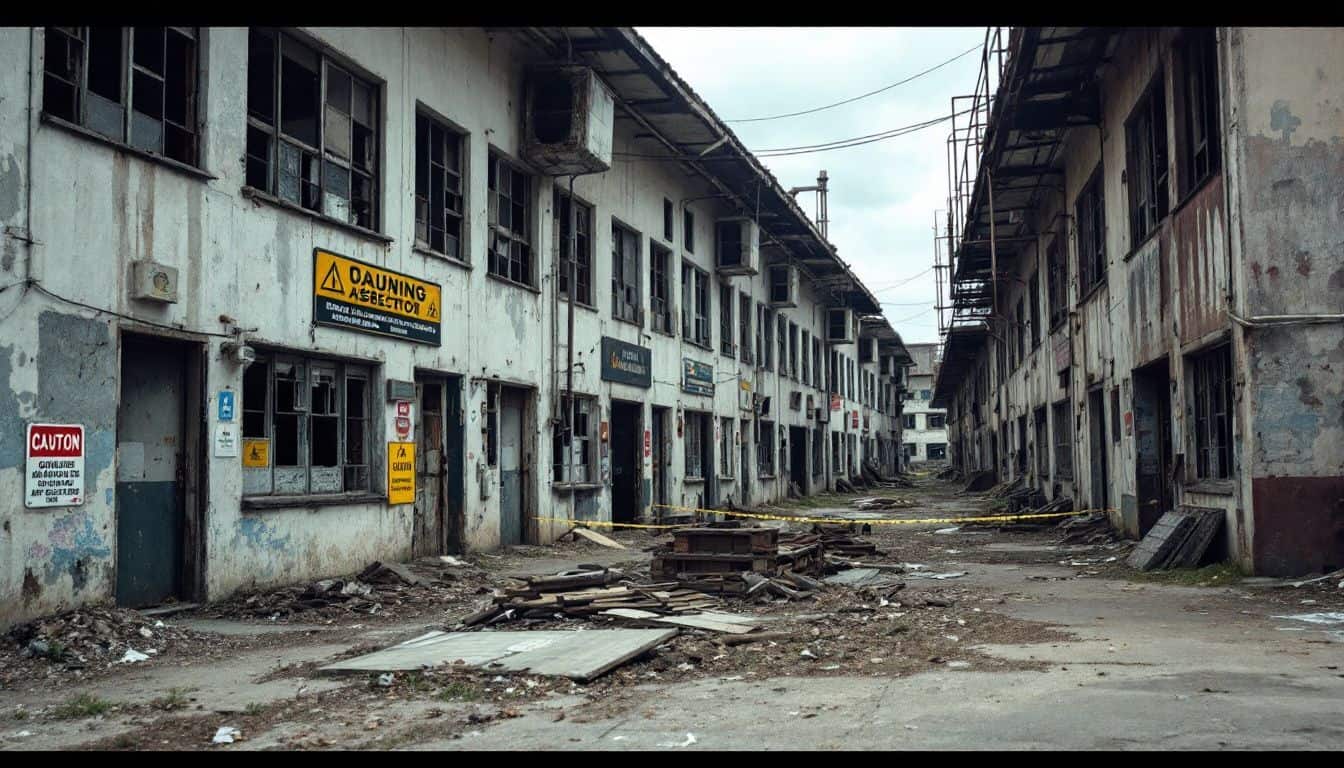
How the UK Works to Manage Exposure to Asbestos and Protect Those Affected
Asbestos remains the single largest cause of work-related deaths in Great Britain. Thousands of people are diagnosed with asbestos-related diseases every year — and many of those diagnoses trace back to exposures that happened decades ago. Understanding how the UK works to manage exposure, enforce regulations, and support victims is essential for anyone who owns, manages, or works in a building constructed before the year 2000.
This post covers the legal framework, enforcement mechanisms, practical management strategies, and the rights available to workers and victims — all in one place.
The Legal Framework: Control of Asbestos Regulations
The Control of Asbestos Regulations form the backbone of the UK’s approach to asbestos safety. These regulations apply to all non-domestic premises and place clear legal duties on those who own or manage buildings. They are not optional guidance — they are enforceable law.
Under these regulations, dutyholders must identify whether asbestos is present in their buildings, assess its condition and risk, and put a written management plan in place. That plan must be kept up to date and made available to anyone who might disturb the material — contractors, maintenance workers, and emergency services included.
Regulation 4: The Duty to Manage
Regulation 4 is the cornerstone provision. It places a legal duty on building owners and managers to manage asbestos in situ — meaning you do not always have to remove it, but you must know where it is and ensure it is not causing a risk.
The duty to manage requires you to:
- Commission an asbestos survey before any refurbishment or maintenance work begins
- Maintain an up-to-date asbestos register for the building
- Assess the condition and risk of any asbestos-containing materials (ACMs) identified
- Implement a written asbestos management plan
- Share information about ACM locations with anyone who could disturb them
- Review and update the plan regularly
Failure to comply with Regulation 4 can result in enforcement action by the Health and Safety Executive (HSE), including improvement notices, prohibition notices, and prosecution.
HSG264: The Surveying Standard
HSE guidance document HSG264 sets out the technical standards for asbestos surveys in non-domestic premises. It defines two main survey types: management surveys, which are used for routine occupancy and maintenance, and refurbishment and demolition surveys, which are required before any intrusive work takes place.
Surveyors must be competent — ideally holding BOHS P402 qualification — and surveys must be carried out in accordance with HSG264 to be legally valid. A survey that does not meet this standard could leave a dutyholder exposed to both legal liability and genuine health risk.
How the HSE Enforces Asbestos Regulations
The Health and Safety Executive is the primary enforcement body for asbestos regulations in the UK. Its inspectors carry out both planned and reactive inspections across all sectors — construction, education, healthcare, manufacturing, and commercial property.
HSE enforcement is not merely administrative. Inspectors have the power to enter premises without notice, review documentation, interview staff, and take samples for analysis. Where breaches are identified, the consequences can be severe.
Penalties for Non-Compliance
The penalties for failing to manage exposure to asbestos properly are significant. Minor breaches can attract fines of up to £20,000 in the magistrates’ court. More serious violations — particularly those that put workers or members of the public at risk — can result in unlimited fines and custodial sentences for individuals found responsible.
HSE also publishes details of prosecutions and enforcement notices publicly, meaning a conviction can cause lasting reputational damage to a business. The message is clear: compliance is not optional.
Measuring Asbestos Fibre Levels
One of the most important enforcement tools available to the HSE is air monitoring — measuring the concentration of asbestos fibres in the air during and after disturbance work. Licensed asbestos removal contractors are required to carry out air clearance testing before a licensed enclosure can be reopened, using phase contrast microscopy (PCM) and, where required, transmission electron microscopy (TEM).
HSE has also conducted its own measurement programmes to assess fibre exposures during licensed removal work, helping to ensure that the controls required under the regulations are actually achieving safe conditions in practice.
Practical Strategies to Manage Exposure on Site
Understanding the law is one thing — putting it into practice is another. Whether you are a facilities manager, a building owner, or a contractor, there are concrete steps you can take to manage exposure effectively.
Asbestos Surveys: The Starting Point
No management strategy can work without accurate information. An asbestos management survey identifies the location, type, and condition of ACMs throughout a building so that a proper risk assessment can be carried out. If you are planning any refurbishment or demolition work, a more intrusive refurbishment and demolition survey is required first.
Supernova Asbestos Surveys provides professional surveys across the country, including asbestos survey London services for commercial and residential properties throughout the capital, as well as coverage in major cities across England.
Managing Asbestos In Situ
Where asbestos-containing materials are in good condition and are not likely to be disturbed, managing them in place is often the safest and most practical approach. Encapsulation — sealing the surface of the material — can prevent fibre release without the risks associated with removal.
Key elements of an in situ management strategy include:
- Regular visual inspections of ACMs to check for deterioration
- Clear labelling of asbestos locations in the building
- Ensuring all contractors check the asbestos register before starting work
- Periodic reassessment of condition, particularly after any damage or building work nearby
- Maintaining detailed records of all inspections and actions taken
When Removal Is the Right Answer
In situ management is not always appropriate. Where ACMs are in poor condition, are being repeatedly disturbed, or where planned refurbishment makes their continued presence impractical, removal is the correct course of action.
Licensed asbestos removal is required for the most hazardous materials — including sprayed coatings, lagging on pipes and boilers, and any work that could release significant quantities of fibres. Only contractors licensed by the HSE can carry out this work legally, and it must be notified to the HSE in advance.
Non-licensed work — such as removing textured coatings or asbestos cement sheets — can be carried out by competent, trained operatives, but still requires appropriate controls, including respiratory protective equipment (RPE) and safe disposal procedures.
Exposure Limits and Air Monitoring
The Control of Asbestos Regulations set legal workplace exposure limits (WELs) for asbestos fibres. Employers must ensure that fibre concentrations in the air do not exceed these limits, and must aim to reduce exposure as far below these limits as reasonably practicable.
Air monitoring should be carried out during any work that could disturb ACMs, and clearance air testing must be completed before a licensed removal enclosure is signed off. Continuous background monitoring may also be appropriate in buildings where asbestos is known to be present and where disturbance could occur during day-to-day activity.
Protecting Workers: Training, Equipment, and Health Surveillance
Managing exposure is not just about the building — it is about the people who work in it. Workers have both legal rights and practical entitlements when it comes to asbestos safety.
Asbestos Awareness Training
Any worker who could encounter asbestos during their normal duties must receive asbestos awareness training. This applies to a wide range of trades — electricians, plumbers, joiners, plasterers, and general maintenance operatives are all at risk if they work in buildings that may contain ACMs.
Awareness training covers:
- What asbestos is and where it is likely to be found
- The health risks associated with asbestos exposure
- How to recognise and avoid disturbing ACMs
- What to do if asbestos is discovered unexpectedly during work
- The importance of checking the asbestos register before starting any job
Workers carrying out non-licensed asbestos work require additional training beyond awareness level. Those involved in licensed work must be trained to a higher standard still, with refresher training required regularly.
Respiratory Protective Equipment
Where asbestos fibres could be released during work, appropriate RPE must be provided and worn. The type of RPE required depends on the nature of the work and the type of asbestos involved. FFP3 disposable masks are the minimum standard for most asbestos work, while full-face powered air-purifying respirators (PAPRs) are required for higher-risk activities.
RPE must be properly fitted, maintained, and stored. Face-fit testing is required for tight-fitting respirators to ensure an adequate seal. Providing RPE is not enough — employers must ensure workers know how to use it correctly.
Occupational Health Surveillance
Workers who are regularly exposed to asbestos — particularly those involved in licensed removal work — are entitled to regular medical surveillance under the Control of Asbestos Regulations. This typically includes chest X-rays and lung function tests, carried out by an employment medical adviser or appointed doctor.
The latency period for asbestos-related diseases can be 30 to 40 years or more. Regular health surveillance cannot reverse past exposure, but it can detect changes early and ensure that workers receive appropriate medical care and support as quickly as possible.
Support for Victims of Asbestos Exposure
Despite decades of regulation, thousands of people in the UK are still diagnosed with asbestos-related diseases every year. Many of these cases relate to exposures that occurred before the current regulatory framework was in place. Support is available — both through the legal system and through government schemes.
Compensation and Legal Rights
Individuals diagnosed with mesothelioma, asbestosis, pleural thickening, or other asbestos-related conditions may be entitled to compensation. Claims can be brought against former employers who failed to protect workers from exposure, and specialist solicitors can assist with tracing former employers and their insurers even where companies have since closed.
The Diffuse Mesothelioma Payment Scheme provides a route to compensation for those who cannot trace a former employer or insurer. The Department for Work and Pensions also administers Industrial Injuries Disablement Benefit for workers whose conditions are linked to their employment.
A Long-Term Strategy for Asbestos Removal
There is growing consensus among occupational health experts and industry bodies that the UK needs a long-term, integrated strategy for the managed removal of asbestos from the built environment. The British Occupational Hygiene Society and other professional bodies have called for a national programme that goes beyond reactive management and sets a clear trajectory for reducing the overall burden of asbestos in UK buildings.
Such a strategy would involve prioritising the removal of the most hazardous materials in the highest-risk settings — schools, hospitals, and social housing — while ensuring that all removal work is carried out to the highest quality standards and verified through independent inspection.
For businesses and property managers in major urban centres, professional support is already available. Supernova provides asbestos survey Manchester services and asbestos survey Birmingham coverage, giving property owners across the country access to expert asbestos management advice and surveying.
What Building Owners and Managers Should Do Right Now
If you own or manage a non-domestic building constructed before the year 2000, your responsibilities are clear. Here is a practical checklist to ensure you are meeting your legal duties and working to manage exposure effectively:
- Commission an asbestos management survey if one has not been carried out, or if your existing survey is out of date
- Maintain and update your asbestos register — it must reflect the current condition of all ACMs in the building
- Produce a written asbestos management plan and review it at least annually
- Brief all contractors on the asbestos register before any work begins — this is a legal requirement
- Ensure any disturbance work is carried out by competent, trained operatives using appropriate controls
- Use a licensed contractor for any work involving high-risk asbestos materials
- Keep records of all surveys, inspections, training, and removal work
Getting this right is not just about avoiding fines. It is about ensuring that the people who work in and visit your buildings are not put at risk from a material that we have known to be deadly for generations.
Frequently Asked Questions
Who is responsible for managing asbestos in a commercial building?
The legal duty falls on the dutyholder — typically the building owner, landlord, or the person or organisation with responsibility for maintaining the building. Under Regulation 4 of the Control of Asbestos Regulations, dutyholders must identify asbestos, assess its risk, produce a management plan, and ensure that anyone who might disturb it is made aware of its location and condition.
Do I need to remove asbestos from my building?
Not necessarily. Where asbestos-containing materials are in good condition and are unlikely to be disturbed, managing them in place is often the safest approach. Removal is required when materials are in poor condition, are being repeatedly disturbed, or when refurbishment or demolition work is planned. A professional asbestos survey will help determine the most appropriate course of action for your specific building.
What is the difference between licensed and non-licensed asbestos work?
Licensed work involves the most hazardous asbestos materials — such as sprayed coatings, lagging, and insulating board — and must be carried out by an HSE-licensed contractor. Non-licensed work covers lower-risk tasks, such as removing asbestos cement or textured coatings, and can be carried out by competent trained workers without a licence, though appropriate controls and PPE are still required. Some non-licensed work must be notified to the HSE in advance.
How can workers claim compensation for asbestos-related diseases?
Workers diagnosed with conditions such as mesothelioma, asbestosis, or pleural thickening may be able to bring a civil compensation claim against a former employer. Specialist solicitors can assist with tracing former employers and insurers. Where this is not possible, the Diffuse Mesothelioma Payment Scheme and Industrial Injuries Disablement Benefit provide alternative routes to financial support through government schemes.
How do I find a qualified asbestos surveyor?
Asbestos surveyors should hold the BOHS P402 qualification and work for a UKAS-accredited organisation. Supernova Asbestos Surveys has completed over 50,000 surveys across the UK and provides management and refurbishment surveys in line with HSG264. You can contact the team on 020 4586 0680 or visit asbestos-surveys.org.uk to arrange a survey at your property.
Get Professional Help to Manage Exposure at Your Property
Asbestos management is a legal obligation — but it is also a straightforward one when you work with the right professionals. Supernova Asbestos Surveys has carried out over 50,000 surveys across the UK, helping building owners, facilities managers, and contractors meet their legal duties and keep people safe.
Whether you need a management survey, a refurbishment survey, or advice on how to handle a specific asbestos-related issue, our team is ready to help. Call us on 020 4586 0680 or visit asbestos-surveys.org.uk to find out more and book your survey today.