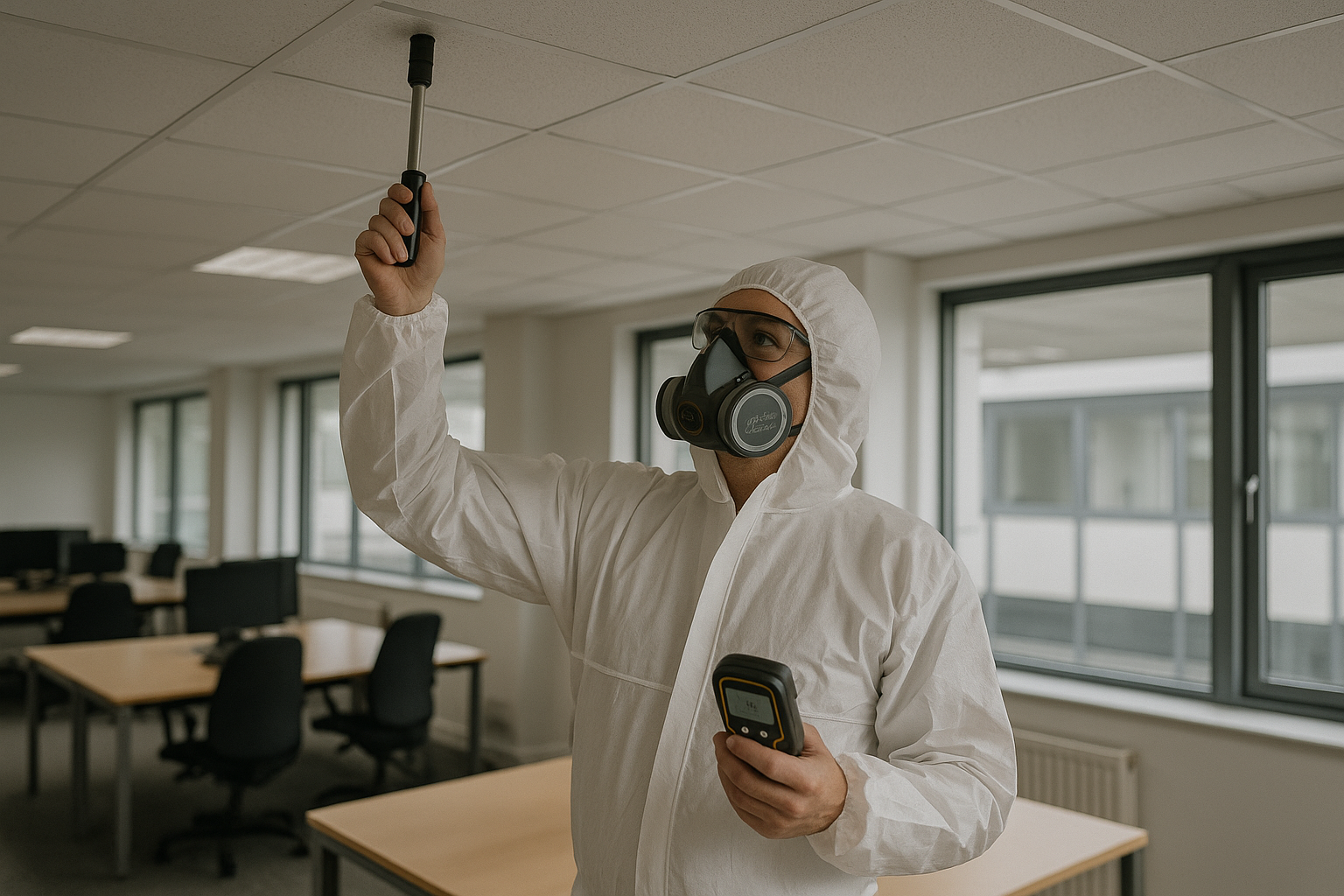
Asbestos insulation is one of the highest-risk asbestos materials still found in UK properties. It often sits out of sight in lofts, plant rooms, risers and ceiling voids, then becomes a serious problem the moment someone starts drilling, lifting panels or opening up old services.
For landlords, dutyholders, facilities teams and property managers, the issue is straightforward: if a building was constructed or refurbished before 2000, you should assume asbestos-containing materials may be present until a suitable survey or sample says otherwise. That approach aligns with the Control of Asbestos Regulations, HSG264 and wider HSE guidance.
What is asbestos insulation?
Asbestos insulation is any insulating material that contains asbestos fibres. It was widely used because it offered heat resistance, fire protection, sound reduction and durability, while also being easy to apply in different forms.
The term covers more than one product. In real buildings, asbestos insulation may include loose-fill insulation, pipe lagging, sprayed coatings, thermal blankets, rope, cloth, block insulation and formed products around plant and services.
That range matters because risk varies by product type and condition. A damaged friable material can release fibres far more easily than a firmly bonded product, so identification and assessment must be handled properly.
Why asbestos insulation was used so widely
Asbestos solved several building problems at once. It resisted heat, slowed the spread of fire and improved thermal performance in both domestic and commercial settings.
Because of that, asbestos insulation was used across a wide range of building types and service areas, including:
- Boiler rooms and plant rooms
- Heating and hot water systems
- Service ducts and risers
- Factories and warehouses
- Schools, hospitals and offices
- Lofts and roof voids
- Partition walls and ceiling voids
- Industrial equipment and older process lines
Many of these materials remain in place today. The key question is not just whether a building is old, but where the material is, what condition it is in and whether planned work could disturb it.
Where asbestos insulation is commonly found
Asbestos insulation often turns up in places people rarely inspect until maintenance or refurbishment begins. It may be hidden behind later repairs, decorative finishes or replacement plant.

Common locations include:
- Loft spaces and roof voids
- Pipework, valves and boiler housings
- Calorifiers and hot water cylinders
- Service risers and ducts
- Structural steel fire protection
- Ceiling voids and suspended ceilings
- Inside partition walls
- Plant rooms and basement service areas
- Industrial ovens, heaters and older equipment
If you manage an occupied building, arrange the right inspection before routine work starts. A management survey helps identify asbestos-containing materials that could be disturbed during normal occupation, maintenance or minor works.
What asbestos insulation looks like
There is no single appearance for asbestos insulation. Depending on the product, it can look fluffy, chalky, layered, woven, wrapped, sprayed or plaster-like.
You might see:
- Rough lagging around pipes and valves
- Fluffy loose material in lofts
- Textured sprayed coatings on beams or ceilings
- Old blankets around cylinders or ducts
- Pre-formed sections around bends and fittings
- Solid-looking slabs or block insulation in plant areas
Visual clues are only a starting point. You cannot confirm asbestos insulation safely by sight alone, especially where age, paint, dust and previous repairs have changed the surface.
What colour is asbestos insulation?
There is no single colour for asbestos insulation, which is one reason visual identification is unreliable. It may appear white, off-white, grey, brown, blue-grey, cream, buff or dirty beige.
Colour does not tell you whether a material contains asbestos, or which fibre type may be present. Water staining, age, dirt, paint and weathering can all alter how it looks.
If someone asks whether white insulation is safe or brown insulation is definitely asbestos, the practical answer is the same: do not guess. Arrange professional sampling instead.
Types of asbestos insulation found in buildings
Asbestos insulation was used in several forms across domestic, commercial and industrial properties. Some are particularly friable and high risk, while others may appear solid until they are cut, drilled or broken.

Spray-on insulation
Sprayed coatings were used for fire protection and thermal insulation on structural steel, ceilings, soffits and walls. They can contain a high proportion of asbestos and are often very easy to damage.
These coatings are commonly found in older public buildings, industrial premises and service spaces. If sprayed insulation is cracked, flaking or exposed during works, stop immediately and keep the area clear.
Loose-fill insulation
Loose-fill asbestos insulation is one of the most hazardous materials because it consists of loose fibres with little or no binder. It may be found in lofts, cavity walls and under floorboards.
At a glance, it can resemble mineral wool or other fibrous insulation, but it behaves very differently when disturbed. Even light movement can release fibres into the air.
If you find unidentified fluffy insulation in an older property:
- Do not touch, move or disturb it.
- Keep other people out of the area.
- Close access points if it is safe to do so.
- Arrange professional asbestos testing.
Block insulation
Block insulation was manufactured as rigid thermal products for use around boilers, plant, ducts and industrial equipment. It may look more solid than loose-fill or lagging, but it can still release fibres if broken, cut or drilled.
In older plant rooms, block insulation may be hidden behind casings or later repairs. Treat any unidentified thermal block or slab with caution, especially where dust or debris is present nearby.
Batt and blanket insulation
Some older thermal blankets, quilts and wraps contained asbestos insulation to improve heat resistance and fire performance. These were used around boilers, ducts, cylinders and other hot equipment.
They may be hidden beneath foil facings, paint or outer coverings. If the material is torn, frayed or powdery, the chance of fibre release rises sharply.
Pipe lagging and thermal insulation
Pipe lagging is one of the best-known forms of asbestos insulation. It was applied around heating pipes, calorifiers, boilers, valves and fittings to retain heat and provide fire protection.
This material is often highly friable. Damaged lagging, exposed elbows, missing sections and debris beneath pipe runs should always be treated as urgent issues.
Materials that may be mistaken for asbestos insulation
Not every older insulation product contains asbestos. Some materials are more likely to be non-asbestos, although visual checks still have clear limits.
Cellulose insulation
Cellulose insulation is usually made from recycled paper treated with fire retardants. It is typically loose, greyish and shredded in appearance.
Modern cellulose insulation does not contain asbestos. Even so, confusion can arise in older buildings where different insulation types have been mixed, topped up or contaminated during previous works.
Fibreglass and mineral wool
Fibreglass and mineral wool are common non-asbestos insulation materials. They often appear as batts, rolls or loose fibres and are widely used in lofts and cavity walls.
Resemblance is not proof. If the property is older and the insulation is unusual, hidden in service areas or linked to old thermal systems, have it checked before disturbance.
Foam board and modern rigid insulation
Modern foam boards and rigid insulation products are not asbestos insulation. They are usually cleaner-cut, more uniform and associated with later construction methods.
The risk comes when newer materials have been installed over older asbestos insulation. During refurbishment, contractors regularly discover historic layers behind apparently modern finishes.
Warning signs you should not ignore
Asbestos insulation rarely announces itself clearly, but there are warning signs that should stop work straight away. The biggest mistake is assuming a suspicious material is harmless because it has been there for years.
Warning signs include:
- Fluffy or dusty insulation in a pre-2000 property
- Damaged pipe lagging or exposed thermal wraps
- Textured sprayed coating on steel or ceilings
- Debris beneath insulated pipework or plant
- Unknown insulation uncovered during maintenance
- Historic repairs covering older thermal materials
If any of these are present, isolate the area if you can do so safely and get advice before work continues. For confirmation, book independent asbestos testing so the material can be identified properly.
Why asbestos insulation is dangerous
Asbestos insulation is dangerous because it can release microscopic fibres that are invisible to the naked eye. Once airborne, those fibres can be inhaled and may remain in the lungs for many years.
The main issue is friability. Many insulation products crumble or shed fibres far more easily than asbestos cement or other more firmly bonded materials.
High-risk situations include:
- Drilling through hidden insulation
- Cutting into service ducts or risers
- Entering contaminated loft spaces
- Repairing old heating systems
- Removing ceilings beneath insulation debris
- Breaking block insulation during strip-out works
Exposure to asbestos fibres is associated with serious diseases, including mesothelioma, asbestos-related lung cancer, asbestosis and pleural thickening. That is why suspected asbestos insulation should always be managed carefully and never disturbed casually.
Who is most at risk of exposure?
Exposure risk is not limited to licensed asbestos workers. Many trades and building staff come into contact with asbestos insulation because they work near hidden services, voids and plant.
Occupations with higher exposure risks include:
- Heating and ventilation engineers
- Plumbers and pipefitters
- Electricians working in ceiling voids and risers
- Maintenance operatives
- Demolition and refurbishment contractors
- Boiler engineers
- Shipyard and industrial plant workers
- Caretakers and facilities teams in older premises
Property managers should not assume contractors will identify every hazard themselves. Share survey information before works start, check whether the scope could disturb asbestos insulation and make sure access is controlled where needed.
How contamination can spread
Loose asbestos insulation can spread well beyond the point where it was first installed. Fibres may be carried by air movement, loft access, stored items, damaged light fittings or attempts to clean the area.
Common routes of spread include:
- Air movement through ceiling voids
- Contractors entering lofts
- Stored items moved through contaminated spaces
- Damage to downlighters, hatches or ceilings
- Cleaning with ordinary vacuums or brushes
That is why sweeping, bagging or vacuuming suspicious insulation is the wrong response. Early containment can prevent a much wider problem.
What to do if you suspect asbestos insulation
If you come across suspect asbestos insulation, the safest response is to stop and control the area. Acting quickly matters, but so does avoiding panic and unnecessary disturbance.
Use this practical checklist:
- Stop work immediately. Do not drill, cut, lift or move the material.
- Keep people away. Restrict access to the room, void or plant area.
- Do not clean it up. Avoid brushing, sweeping or vacuuming debris.
- Report it internally. Inform the dutyholder, site manager or responsible person.
- Arrange professional assessment. A competent surveyor or analyst should inspect and sample if appropriate.
- Record the location. Make sure contractors and staff know the area is off limits until advice is received.
If the material has already been disturbed, treat the incident more seriously. Keep the affected area isolated and seek specialist advice without delay.
Surveying and testing asbestos insulation
The right inspection depends on what is happening in the building. If the premises are occupied and you need to manage asbestos during normal use, a management survey is usually the starting point.
If refurbishment, intrusive maintenance or strip-out work is planned, a more intrusive survey may be needed before work begins. The purpose is to locate asbestos-containing materials that could be disturbed by the planned activity.
Sampling should only be carried out by competent professionals using suitable procedures. If you need clarity on a suspicious product, arrange an asbestos survey or testing before anyone starts work.
Supernova supports clients across the country, including those needing an asbestos survey London, an asbestos survey Manchester or an asbestos survey Birmingham.
Can asbestos insulation be left in place?
Sometimes, yes. The Control of Asbestos Regulations do not require every asbestos-containing material to be removed immediately.
If asbestos insulation is confirmed, in good condition, properly sealed where appropriate, clearly identified and unlikely to be disturbed, it may be managed in place. That decision must be based on a suitable assessment, not guesswork.
Management in place usually involves:
- Recording the material in the asbestos register
- Assessing its condition and risk
- Labelling or otherwise communicating the hazard where appropriate
- Monitoring its condition over time
- Making sure contractors have the information before starting work
Where asbestos insulation is damaged, deteriorating or likely to be disturbed, removal or remedial action may be necessary. Because insulation materials are often friable, decisions should be made cautiously and with competent advice.
Legal duties for property managers and dutyholders
If you are responsible for non-domestic premises, or the common parts of certain residential buildings, you may have duties under the Control of Asbestos Regulations. Those duties include taking reasonable steps to find out whether asbestos-containing materials are present, assessing the risk and managing that risk.
That means you should:
- Know whether asbestos insulation may be present
- Keep an up-to-date asbestos register where required
- Make sure information is available to anyone who may disturb asbestos
- Review the condition of known materials
- Plan surveys before maintenance or refurbishment
HSG264 sets out expectations for asbestos surveying, while HSE guidance supports dutyholders in identifying and managing asbestos safely. If you are unsure whether your records are current, review them before the next contractor visit rather than after an accidental disturbance.
Practical mistakes to avoid
Most asbestos insulation incidents happen because someone makes a quick assumption. A short delay for proper checks is far cheaper than dealing with contamination after the event.
Avoid these common mistakes:
- Assuming insulation is safe because it looks modern
- Relying on colour or appearance alone
- Letting contractors start work without survey information
- Opening ceiling voids or risers without checking the asbestos register
- Trying to tidy suspicious debris yourself
- Ignoring old lagging because it has not caused a visible problem yet
Good asbestos management is mostly about timing. Check before work starts, not after dust appears on the floor.
Frequently Asked Questions
Is asbestos insulation more dangerous than asbestos cement?
It often is, because asbestos insulation is usually much more friable. That means it can release fibres more easily when damaged or disturbed, whereas asbestos cement is more firmly bound.
Can I identify asbestos insulation by looking at it?
No. Appearance alone is not enough to confirm asbestos insulation. Many non-asbestos products look similar, and age, paint, dirt and repairs can change how materials appear.
What should I do if a contractor finds suspicious insulation during work?
Stop work immediately, keep people away from the area and do not try to clean it up. Arrange professional assessment and testing before work resumes.
Does every building with asbestos insulation need removal?
No. Some materials can be managed in place if they are in good condition and unlikely to be disturbed. The right decision depends on condition, location, accessibility and planned works.
When should I arrange a survey for asbestos insulation?
Arrange a survey before maintenance, refurbishment or any work that could disturb hidden materials. In occupied buildings, a suitable management survey also helps you control ongoing risk.
If you need clear advice on asbestos insulation, Supernova Asbestos Surveys can help with surveys, sampling and practical support nationwide. Call 020 4586 0680 or visit asbestos-surveys.org.uk to book the right service for your property.