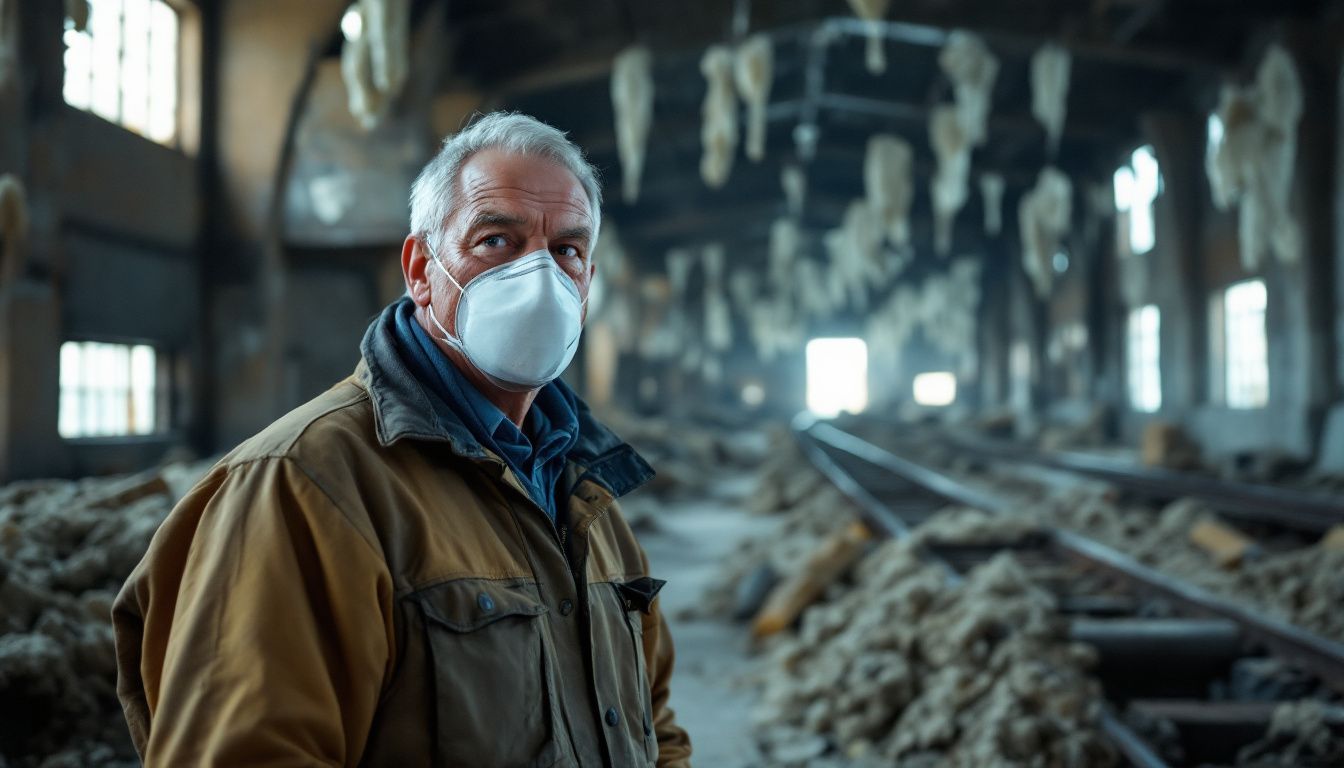
What the Scarborough to Selby Train Route Reveals About Britain’s Asbestos Legacy
The Scarborough to Selby train corridor cuts through some of Yorkshire’s most historically significant railway territory — lines built and maintained during the decades when asbestos was not just tolerated but actively celebrated as an engineering solution. Long before today’s passengers checked departure boards, thousands of railway workers along this very route were being exposed to a material that would silently claim their lives decades later.
This is the story of how asbestos became inseparable from British railway infrastructure, the devastating human cost it left across Yorkshire, and what legal obligations now apply to anyone responsible for railway buildings, depots, and commercial premises built during that era.
Why Railways and Asbestos Became Inseparable
From the mid-19th century onwards, railway operators faced a genuine engineering problem: how do you build a network of vehicles and structures that must withstand intense heat, constant vibration, and the ever-present risk of fire — at scale and on a budget?
Asbestos answered every one of those questions. It was abundant, affordable, and genuinely effective as both an insulator and fireproofing agent. Rail companies adopted it enthusiastically, and its use accelerated through the 20th century without serious question.
Asbestos in Rolling Stock
From the 1950s through to the 1980s, blue asbestos (crocidolite) was used in sheet form to insulate rolling stock — keeping carriages warm and offering protection against fire. Asbestos cement spraying in train cars began in earnest from 1955, applied to walls, ceilings, and structural elements throughout the fleet.
The material was considered a safety feature. The tragedy is that it created a far greater hazard than the one it was designed to prevent. Mechanics, coach builders, and maintenance workers disturbed this material daily, often without any respiratory protection whatsoever.
Asbestos in Railway Buildings and Facilities
It was not just the trains themselves. Railway buildings — depots, workshops, engine sheds, station buildings, and administrative offices — were constructed and refurbished using asbestos-containing materials (ACMs) throughout the 20th century.
- Asbestos insulating board was used in partition walls and ceiling tiles
- Sprayed asbestos coatings were applied to structural steelwork
- Asbestos rope and gaskets were used in boiler rooms and engine facilities
- Corrugated asbestos cement sheeting covered roofs and outbuildings
The material was everywhere, and in many older railway buildings, it remains there still.
The Human Cost Along the Scarborough to Selby Train Corridor
The consequences of this widespread asbestos use became devastatingly clear in communities across Yorkshire and beyond. The Scarborough to Selby train route sits at the heart of a region where the legacy of railway asbestos exposure has been particularly acute and well documented.
The Holgate Road Coach Works, York
The Holgate Road coach works in York stands as one of the most documented examples of industrial asbestos harm in British railway history. The site used asbestos extensively throughout its operational life, and the toll on its workforce was severe.
A total of 141 workers died from mesothelioma — the aggressive cancer caused almost exclusively by asbestos fibre inhalation. Of those, 59 were coach builders who worked directly with asbestos materials as part of their daily role. These were not peripheral or occasional exposures; these workers handled asbestos constantly, in poorly ventilated workshops, without adequate protection.
The Wider Yorkshire Picture
York recorded nine mesothelioma cases in a single year. In more recent years, that figure has grown significantly, with deaths recorded across York, Harrogate, Scarborough, Selby, and Hambleton — the precise communities connected by the Scarborough to Selby train corridor and its surrounding rail network.
The pattern was not unique to Yorkshire. Similar clusters of railway-related asbestos deaths were recorded in Manchester, Derby, Doncaster, Wolverhampton, Bristol, and Wolverton. Every major railway hub in Britain has its own version of this story.
Secondary Exposure: The Families Left Behind
One of the most distressing aspects of railway asbestos exposure is what happened away from the workplace. Workers who handled asbestos without proper protective equipment carried fibres home on their clothing, hair, and skin.
Wives who laundered work clothes, children who greeted fathers at the door — many were exposed to asbestos fibres without ever setting foot in a railway workshop. This secondary exposure has been linked to mesothelioma cases in people with no direct occupational history whatsoever.
The Legal Framework Governing Asbestos in Railway-Era Properties
The regulatory response to asbestos in British industry evolved slowly, but the current framework is robust and unambiguous. Anyone responsible for a commercial or industrial property — including railway buildings, depots, and offices — must understand their obligations fully.
Control of Asbestos Regulations
The Control of Asbestos Regulations represent the primary legislation governing asbestos management in Great Britain. They establish licensing requirements for notifiable non-licensed work, set out duties for employers, and — critically — impose a duty to manage asbestos in non-domestic premises.
Under Regulation 4, the duty holder must identify whether ACMs are present, assess their condition and risk, and produce a written management plan. This plan must be kept up to date and made available to anyone who might disturb those materials — contractors, maintenance teams, and emergency services included.
HSG264: The Survey Standard
The HSE’s HSG264 guidance sets out how asbestos surveys must be conducted. It defines the two principal survey types — management surveys for occupied premises and refurbishment or demolition surveys for areas subject to intrusive works — and specifies the competency standards required of surveyors.
All Supernova Asbestos Surveys work is carried out in full compliance with HSG264. Our surveyors hold BOHS P402 qualifications, which represent the industry gold standard for asbestos surveying.
Rolling Stock Compliance Deadlines
Old trains containing asbestos have not simply been left in service indefinitely. Regulatory requirements have set a firm deadline: rolling stock containing asbestos must be withdrawn from service or fully remediated by 31 December 2028. This is a compliance date, not a guideline, and operators must act accordingly.
REACH Regulations and New Materials
REACH regulations prohibit the use of asbestos in new building materials and manufactured goods. Any material containing more than 0.1% asbestos by weight is subject to strict handling, labelling, and disposal requirements. Disposal must be to a licensed facility using designated waste containers — there are no exceptions.
Asbestos Surveys for Railway-Era Properties
If you manage, own, or are responsible for a property built or substantially refurbished before 2000 — particularly one with any connection to railway or heavy industrial use — you are very likely to have ACMs present. The question is not whether asbestos exists; it is where it is, what condition it is in, and what your legal duty requires you to do about it.
Management Surveys
A management survey is the standard survey for occupied premises. It identifies ACMs that could be disturbed during normal occupation and maintenance activities, assesses their condition, and produces a risk-rated asbestos register. This is the foundation of your legal duty to manage under the Control of Asbestos Regulations.
Refurbishment Surveys
Before any renovation, conversion, or intrusive maintenance work, you need a refurbishment survey covering the areas to be disturbed. This is a more intrusive investigation that accesses voids, structural elements, and concealed spaces where ACMs may be hidden. It is a legal requirement before work begins — not an optional precaution.
Demolition Surveys
Where a building or structure is to be demolished entirely, a demolition survey is required. This is the most thorough survey type, designed to locate all ACMs throughout the entire structure before any demolition work commences. Railway-era buildings frequently contain asbestos in locations that are only accessible once the structure is partially dismantled.
Re-Inspection Surveys
Where ACMs are identified and left in place under a management plan, their condition must be monitored over time. A re-inspection survey updates your asbestos register, identifies any deterioration or damage, and ensures your risk assessment remains current and legally defensible. Annual re-inspection is standard practice for most commercial premises.
Fire Risk Assessments
Properties with asbestos often carry other legacy risks too. A fire risk assessment is a separate legal requirement for most non-domestic premises and should be conducted alongside asbestos management planning — not treated as an afterthought. Many railway-era buildings have both asbestos concerns and fire safety deficiencies that need addressing together.
DIY Sample Testing
If you have identified a suspect material and want a preliminary answer before commissioning a full survey, our testing kit allows you to collect a sample safely and have it analysed at our UKAS-accredited laboratory. This is a practical first step — though it does not replace a full survey for compliance purposes.
What to Expect From a Supernova Asbestos Survey
When you book with Supernova Asbestos Surveys, the process is straightforward and designed to cause minimal disruption to your operations.
- Booking: Contact us by phone or online. We confirm availability — often within the same week — and send a booking confirmation with all relevant details.
- Site Visit: A BOHS P402-qualified surveyor attends at the agreed time and conducts a thorough visual inspection of the property, noting all suspect materials.
- Sampling: Representative samples are collected from suspect materials using correct containment procedures to prevent fibre release during the process.
- Lab Analysis: Samples are analysed under polarised light microscopy (PLM) at our UKAS-accredited laboratory, providing accurate identification of asbestos type and content.
- Report Delivery: You receive a detailed asbestos register and risk-rated management plan in digital format within 3–5 working days, fully compliant with HSG264.
The report satisfies all requirements under the Control of Asbestos Regulations and gives you everything you need to discharge your duty to manage.
Survey Pricing
Supernova Asbestos Surveys offers transparent, fixed-price surveys across the UK. There are no hidden fees, and you receive a confirmed quote before any work begins.
- Management Survey: From £195 for a standard residential or small commercial property
- Refurbishment & Demolition Survey: From £295, covering all areas to be disturbed prior to works
- Bulk Sample Testing Kit: From £30 per sample, posted directly to you
- Re-Inspection Survey: From £150, plus £20 per ACM re-inspected
- Fire Risk Assessment: From £195 for a standard commercial premises
Pricing varies by property size and location. Get a free quote tailored to your specific requirements and property type.
Supernova Asbestos Surveys: UK-Wide Coverage
We operate across England, Scotland, and Wales, with qualified surveyors available at short notice in most locations. Whether you need an asbestos survey London for a commercial office, an asbestos survey Manchester for an industrial unit, or a survey for a heritage or railway-era property anywhere in the country, our team is ready to assist.
With over 50,000 surveys completed and more than 900 five-star reviews, our reputation is built on accurate reporting, clear communication, and genuine expertise in properties of all types — including those with the most complex asbestos histories.
Call us on 020 4586 0680 or visit asbestos-surveys.org.uk to book your survey or request a quote today.
Frequently Asked Questions
Is asbestos still present in railway buildings along the Scarborough to Selby train route?
Yes, it is highly likely. Many station buildings, depots, and maintenance facilities along the Scarborough to Selby train corridor were built or substantially refurbished during the peak decades of asbestos use. Unless a thorough survey and remediation programme has been carried out, ACMs may still be present in walls, ceilings, roofing, and structural elements.
Who is legally responsible for managing asbestos in a railway-era building?
The duty holder — typically the owner, employer, or person in control of the premises — carries the legal responsibility under the Control of Asbestos Regulations. This duty applies to all non-domestic premises, regardless of whether the building has a railway connection. Failure to comply can result in prosecution, unlimited fines, and imprisonment.
What type of asbestos survey do I need for an old railway depot or workshop?
If the building is occupied and not subject to planned works, a management survey is the starting point. If you are planning renovation or conversion work, a refurbishment survey is required before work begins. For full demolition, a demolition survey covering the entire structure is a legal requirement. A qualified surveyor can advise on the most appropriate approach for your specific premises.
Can I test a suspect material myself before booking a full survey?
You can use a testing kit to collect a sample from a suspect material and have it analysed at a UKAS-accredited laboratory. This can provide a useful preliminary indication, but it does not fulfil your legal duty to manage asbestos under the Control of Asbestos Regulations. A full management survey is required for compliance purposes.
How long does an asbestos survey take for a large railway-era property?
Survey duration depends on the size and complexity of the property. A standard small commercial premises can typically be surveyed within a few hours. Larger or more complex sites — such as former depots, workshops, or multi-storey industrial buildings — may require a full day or more. Supernova Asbestos Surveys will confirm the expected timeframe when you request your quote.