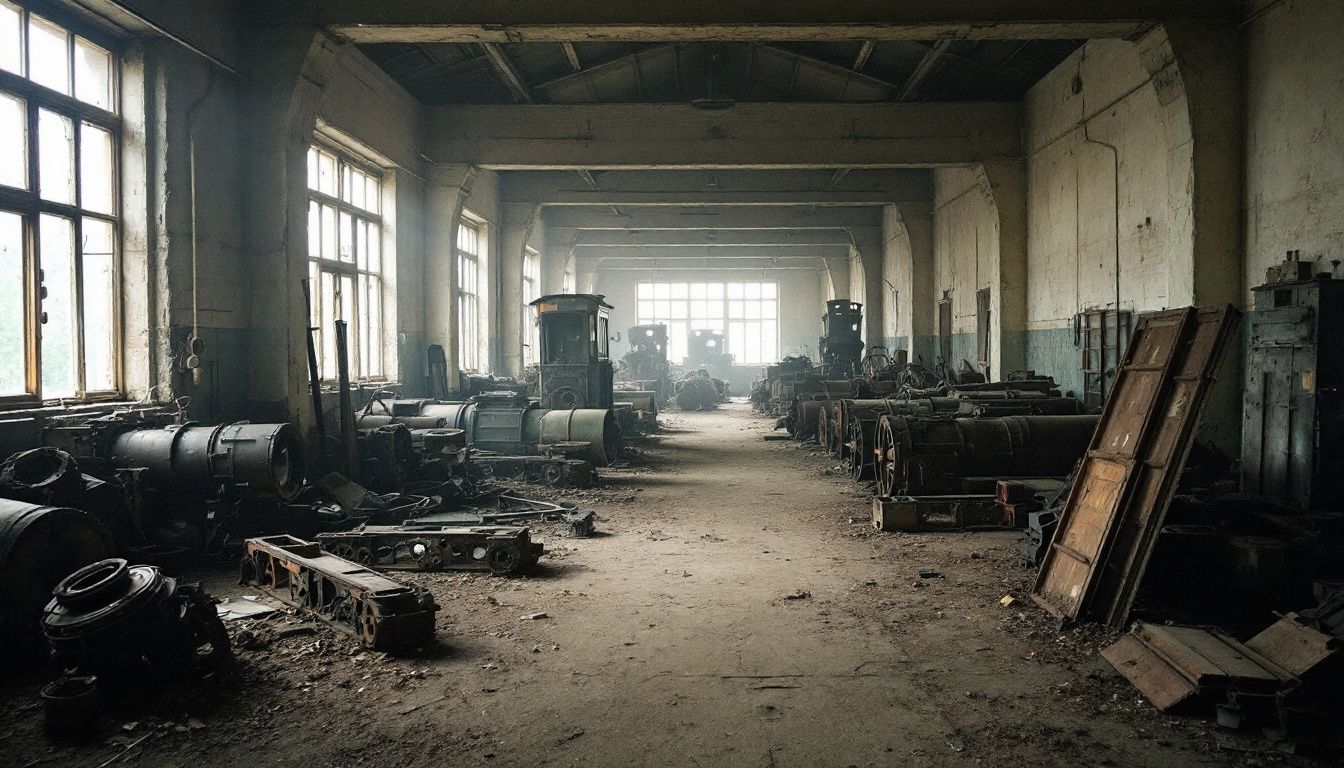
Railroad Asbestos: Health Risks, Legal Rights, and Protection for Railway Workers
Railway workers have long faced one of the most serious occupational health hazards in modern industry. Railroad asbestos exposure doesn’t announce itself — the fibres are invisible, the diseases take decades to develop, and by the time symptoms appear, the damage is already done. If you work on the railways, manage railway property, or are dealing with the aftermath of past exposure, understanding the full picture could make a life-changing difference.
Why Railroad Asbestos Remains a Serious Concern Today
The UK banned the use of asbestos in 1999, but that ban didn’t make existing asbestos disappear. Thousands of train carriages, maintenance facilities, signal boxes, and railway buildings constructed before that date still contain asbestos-containing materials (ACMs).
The material was used extensively because it was cheap, fire-resistant, and highly effective as an insulator — qualities that made it ideal for the demanding environment of rail transport. For workers maintaining older rolling stock or working in ageing infrastructure, the risk of disturbing asbestos remains very real.
Damaged, deteriorating, or poorly managed ACMs can release microscopic fibres into the air. Once inhaled, those fibres cannot be expelled from the body. Railway employers have a legal duty of care under the Control of Asbestos Regulations to identify, manage, and control asbestos risks — failing to do so doesn’t just put workers at risk, it exposes organisations to significant legal liability.
Where Railroad Asbestos Was Used
Understanding where asbestos was installed helps workers and managers identify where risks are most likely to lurk today. The material appeared in a wide range of railway applications, many of which are still in service or undergoing maintenance.
Carriage Insulation
Train carriages built before 1980 routinely incorporated asbestos in their walls, ceilings, boilers, and heating systems. The material provided excellent thermal insulation and fire protection — both critical requirements in a passenger environment. In many older carriages, asbestos insulation sits sandwiched between metal panels or beneath floor coverings, making it invisible until work begins.
The risk intensifies when insulation becomes damaged or friable. Maintenance workers removing wall panels, replacing heating components, or carrying out refurbishments are particularly vulnerable. Heritage railways and museum steam engines present similar challenges, often requiring specialist asbestos management before any restoration work can proceed.
Brake Pads and Clutch Components
Asbestos was widely used in brake pads, brake linings, and clutch plates because of its extraordinary heat resistance. These components generate intense friction and heat during operation, and asbestos handled those conditions better than most alternatives available at the time.
Workers responsible for inspecting, replacing, or servicing brake systems on older rolling stock face direct contact with asbestos-containing components. The dust generated during this work is particularly hazardous — fine particles become airborne easily in the confined spaces typical of maintenance depots and engine rooms.
Construction and Repair Materials
Beyond rolling stock, railway infrastructure itself was built with asbestos extensively. Signal boxes, station buildings, maintenance sheds, and depot facilities constructed before the late 1990s may contain asbestos in roof panels, floor tiles, ceiling tiles, pipe lagging, and fire-resistant boards.
Workers carrying out repairs, upgrades, or demolition work on these structures face significant exposure risks if asbestos is not identified and properly managed beforehand. This is precisely why commissioning a professional management survey is a legal requirement before any notifiable refurbishment or demolition work begins.
Health Conditions Caused by Railroad Asbestos Exposure
The diseases caused by asbestos exposure share a common and devastating characteristic: they take between 10 and 50 years to develop after initial exposure. By the time a worker receives a diagnosis, they may have retired decades ago with no immediate connection to their railway career.
This latency period makes asbestos-related disease particularly cruel — and particularly difficult to diagnose early.
Mesothelioma
Mesothelioma is a cancer of the mesothelium — the thin membrane lining the lungs, chest wall, and abdomen. It is almost exclusively caused by asbestos exposure and carries a very poor prognosis. The disease typically develops 20 to 50 years after exposure, which means workers exposed during the height of asbestos use in the 1960s and 1970s may only now be receiving diagnoses.
Railway workers feature disproportionately in mesothelioma statistics, reflecting the intensity and duration of their historical exposure. Early symptoms — chest pain, breathlessness, persistent dry cough — are easily attributed to other conditions, which frequently delays diagnosis. There is currently no cure, though treatment options continue to improve.
Lung Cancer
Asbestos is a recognised cause of lung cancer, and the risk is significantly elevated in workers with prolonged or heavy exposure. Unlike mesothelioma, lung cancer has multiple causes, which can complicate the process of establishing a direct link to occupational asbestos exposure — but that link is well established in medical literature for railway workers.
The latency period for asbestos-related lung cancer is typically 20 to 30 years. Workers who also smoked face a dramatically higher risk, as the two carcinogens interact synergistically rather than additively. Regular health monitoring is essential for anyone with a history of significant asbestos exposure.
Asbestosis
Asbestosis is a chronic, progressive lung disease caused by the scarring of lung tissue following prolonged asbestos inhalation. As fibres embed themselves in lung tissue, the body’s immune response creates scar tissue — fibrosis — that gradually stiffens and restricts the lungs’ ability to function.
Symptoms typically emerge 10 to 20 years after exposure and include breathlessness, a persistent dry cough, and chest tightness. The condition is irreversible; once lung tissue is scarred, it cannot be repaired. Management focuses on slowing progression, relieving symptoms, and monitoring for complications including respiratory failure.
Pleural Thickening
Pleural thickening involves the scarring and thickening of the pleura — the membrane surrounding the lungs. It is a direct consequence of asbestos fibre deposition and typically appears 10 to 20 years after exposure. As the pleura thickens, it restricts lung expansion, causing breathlessness and chest discomfort that worsens with physical activity.
Like asbestosis, pleural thickening is irreversible. It is also a marker of significant past asbestos exposure, meaning workers diagnosed with this condition may be at elevated risk of developing further asbestos-related diseases and require ongoing medical surveillance.
Current Safety Regulations and Containment Strategies
Modern rail operators are required to comply with the Control of Asbestos Regulations and follow the HSE’s guidance document HSG264, which sets out the standards for asbestos surveys and management. These obligations apply not just to rolling stock itself but to all railway premises and infrastructure.
Asbestos Management Plans
Any railway employer or duty holder responsible for non-domestic premises must have an asbestos management plan in place. This requires commissioning a survey to identify the location, condition, and extent of any ACMs on the property. The survey results inform a written plan that documents how asbestos will be managed, monitored, and — where necessary — removed.
The plan must be reviewed regularly and updated whenever circumstances change, such as when maintenance work is planned or when ACMs show signs of deterioration. Failure to maintain an adequate plan is a breach of the regulations and can result in enforcement action by the HSE.
Protective Equipment Requirements
Where work must be carried out in the presence of asbestos, workers are required to use appropriate personal protective equipment (PPE). Employers must provide this equipment free of charge and ensure workers are properly trained in its use.
Required PPE typically includes:
- Full-face respirators fitted with P3 filters
- Disposable coveralls (Type 5 minimum)
- Protective gloves and boot covers
- Decontamination procedures before leaving the work area
PPE must be inspected before each use and disposed of safely after work in asbestos-contaminated areas. Reusable respiratory equipment requires thorough decontamination between uses.
Enclosure and Air Monitoring
For higher-risk work involving friable or damaged asbestos, the work area must be enclosed using negative-pressure enclosures and plastic sheeting to prevent fibre migration. Specialist vacuum equipment fitted with HEPA filtration captures airborne fibres rather than redistributing them.
Air monitoring during and after work verifies that fibre concentrations remain below the control limit set by the HSE. Clearance certificates issued by an independent analyst are required before an enclosure can be dismantled and the area returned to normal use.
Legal Rights and Financial Support for Affected Railway Workers
Workers who develop asbestos-related diseases as a result of their railway employment have legal rights and access to financial support. The process of pursuing a claim can feel daunting, but specialist legal support is widely available.
Personal Injury Claims
Workers who can demonstrate that their employer failed to adequately protect them from asbestos exposure may be entitled to compensation through a personal injury claim. This requires establishing that the employer knew — or should have known — about the asbestos risk and failed to take reasonable steps to control it.
Given the long latency period of asbestos diseases, claims are often brought many years after the exposure occurred, and sometimes after the employing company has ceased to exist. Specialist solicitors experienced in occupational disease claims can trace liability through insurance records and corporate histories.
Industrial Injuries Disablement Benefit
Workers diagnosed with certain asbestos-related conditions — including mesothelioma, asbestosis, and diffuse pleural thickening — may be entitled to Industrial Injuries Disablement Benefit (IIDB) through the UK benefits system. This is a non-means-tested benefit available to those who developed their condition as a result of their employment.
The Pneumoconiosis etc. (Workers’ Compensation) Act also provides lump sum payments to workers — or their dependants — where the employer is no longer in existence and a civil claim is therefore not possible.
Asbestos Trust Funds
Many manufacturers of asbestos-containing products established trust funds as part of bankruptcy proceedings to compensate those harmed by their products. Railway workers whose illness can be linked to specific asbestos-containing products may be able to claim from one or more of these funds, often in addition to any employer liability claim.
Claims can be made simultaneously from multiple trust funds, and the process is generally faster than litigation. Legal advisers specialising in asbestos claims will be familiar with the available funds and the eligibility criteria for each.
The Role of Professional Asbestos Surveys in Railway Settings
For railway operators, property managers, and infrastructure owners, a professional asbestos survey is the essential first step in managing railroad asbestos safely and legally. Without an accurate, up-to-date survey, you cannot know what you’re dealing with — and you cannot manage a risk you haven’t identified.
Railway environments present unique surveying challenges. Rolling stock, tunnels, signal infrastructure, and station buildings all require different approaches, and the surveyors carrying out this work must have the knowledge and accreditation to do it correctly.
What a Survey Covers
A thorough asbestos survey in a railway context will typically assess:
- All accessible areas of station buildings and platform structures
- Maintenance depots, workshops, and storage facilities
- Signalling infrastructure and relay rooms
- Pipe lagging, ceiling tiles, floor coverings, and roof panels
- Any rolling stock undergoing refurbishment or maintenance
Samples are taken from suspected ACMs and analysed in an accredited laboratory. The resulting report documents the location, type, condition, and risk rating of every material identified, forming the foundation of your asbestos management plan.
Choosing the Right Surveying Partner
Not all asbestos surveyors have the experience or accreditation to work safely in complex railway environments. Look for a UKAS-accredited surveying company whose surveyors hold the relevant P402 qualification and whose reports conform to HSG264 standards.
If you operate railway premises across multiple regions, you’ll benefit from working with a national provider. Supernova Asbestos Surveys covers the whole of the UK, including an asbestos survey London service for operators based in the capital, as well as dedicated coverage further north — our asbestos survey Manchester team and asbestos survey Birmingham team are ready to support railway clients across those regions and beyond.
Practical Steps for Railway Employers and Duty Holders
If you manage railway premises or are responsible for the health and safety of workers who maintain older infrastructure, there are concrete actions you should take now.
- Commission a survey if you don’t already have one. An asbestos register is not optional — it is a legal requirement for non-domestic premises. If your existing survey is out of date or was carried out to a lower standard, commission a new one.
- Review your asbestos management plan. Check that it reflects current conditions, that ACMs have been reinspected recently, and that any planned maintenance work has been assessed for asbestos risk.
- Train your workforce. Anyone who might disturb asbestos in the course of their work — from maintenance engineers to cleaning staff — must receive appropriate asbestos awareness training.
- Establish a permit-to-work system. Before any work begins on older infrastructure, a formal check should confirm whether asbestos is present in the work area and what controls are required.
- Keep records. Document every survey, every inspection, every piece of remediation work, and every training session. Good records protect both workers and the organisation if questions arise later.
Frequently Asked Questions
Is railroad asbestos still a risk in the UK today?
Yes. While the use of asbestos was banned in the UK in 1999, vast amounts of asbestos-containing material remain in older railway infrastructure, station buildings, and rolling stock. Workers carrying out maintenance, refurbishment, or repair work on these structures and vehicles can still be exposed if asbestos is not properly identified and managed beforehand.
What diseases can railroad asbestos exposure cause?
Exposure to railroad asbestos can cause mesothelioma, lung cancer, asbestosis, and pleural thickening. All of these conditions have long latency periods — typically between 10 and 50 years — meaning symptoms may not appear until decades after the original exposure occurred.
What legal rights do railway workers have if they develop an asbestos-related disease?
Railway workers who develop an asbestos-related disease as a result of occupational exposure may be entitled to pursue a personal injury claim against their former employer, claim Industrial Injuries Disablement Benefit, and apply for compensation from asbestos trust funds. Specialist solicitors can advise on the best route depending on individual circumstances.
What does an asbestos management plan need to include for railway premises?
An asbestos management plan for railway premises must document the location, type, condition, and risk rating of all identified ACMs. It must set out how those materials will be managed and monitored, specify who is responsible for each action, and be reviewed and updated regularly — particularly before any maintenance or refurbishment work takes place.
How often should railway premises be resurveyed for asbestos?
There is no fixed legal interval for resurveying, but the HSE’s HSG264 guidance recommends that ACMs are reinspected at least annually and that a full resurvey is commissioned whenever the condition of materials has changed, when new areas are accessed, or when planned work may disturb existing ACMs. Any survey that is significantly out of date should be replaced.
Get Expert Support From Supernova Asbestos Surveys
Managing railroad asbestos safely is not something to leave to chance. Whether you need a first-time survey of railway premises, a reinspection of existing ACMs, or guidance on building a compliant asbestos management plan, Supernova Asbestos Surveys has the expertise and accreditation to help.
With over 50,000 surveys completed nationwide, we understand the complexity of railway environments and the standards required to keep workers safe and organisations legally protected. Call us on 020 4586 0680 or visit asbestos-surveys.org.uk to discuss your requirements with our team.