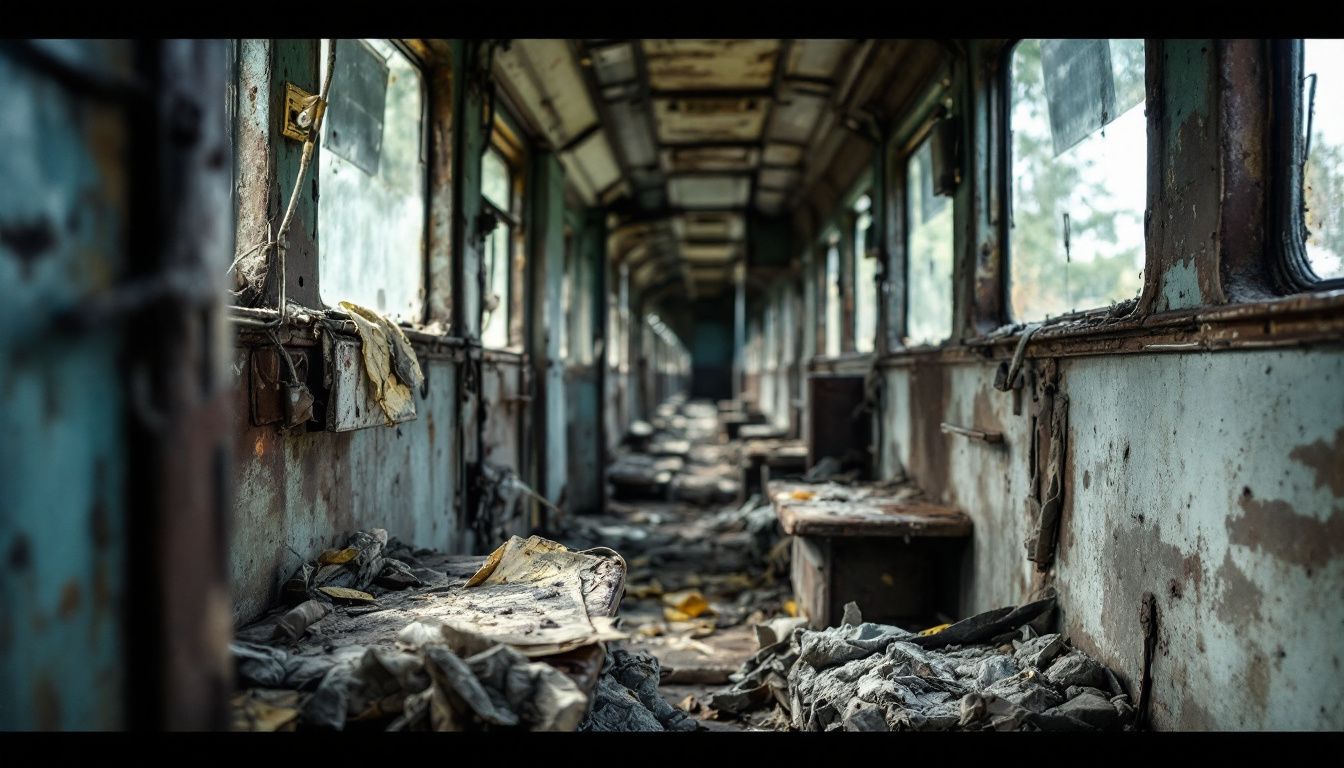
Safety Isn’t Expensive, It’s Priceless — Especially When Asbestos Is on the Line
Every day, workers across the UK step into railway stations, depots, and rolling stock that were built when asbestos was considered a wonder material. They don’t always know what’s hidden behind wall panels, wrapped around pipework, or pressed beneath floor tiles. Safety isn’t expensive, it’s priceless — and nowhere is that truth more sharply felt than in the rail sector, where asbestos exposure remains a very real and present danger.
The UK railway network is one of the oldest in the world. That heritage is something to be proud of, but it carries a serious responsibility. Structures and rolling stock built before 2000 routinely contain asbestos-containing materials (ACMs), and without proper monitoring and management, those materials put workers at risk every single working day.
This post is for railway operators, facilities managers, and duty holders who need to understand the asbestos risks in their estate — and what a legally sound, practical management programme actually looks like.
Why Asbestos Remains a Critical Risk in Railway Operations
Asbestos was used extensively in railway construction and rolling stock manufacturing throughout much of the twentieth century. Its fire-resistant and insulating properties made it a natural choice for brake linings, pipe lagging, roof panels, floor tiles, and structural insulation.
The problem is that much of this material is still in place. Damaged asbestos releases microscopic fibres into the air. When inhaled, those fibres can cause mesothelioma, asbestosis, and lung cancer — diseases that typically take decades to develop but are almost always fatal.
The UK continues to record thousands of asbestos-related deaths every year. These are not historical statistics — they reflect exposures that happened in workplaces, including railway environments, years or even decades ago. The decisions made today about asbestos management will determine the health outcomes of workers in the years to come.
Where Asbestos Hides in Railway Environments
Understanding where ACMs are typically found is the first step towards managing them effectively. In railway settings, asbestos can be present across both infrastructure and rolling stock — often in locations that aren’t immediately obvious.
Railway Buildings and Infrastructure
- Roof panels and ceiling tiles in stations, depots, and maintenance sheds
- Pipe lagging and boiler insulation in older buildings
- Sprayed coatings on structural steelwork
- Floor tiles and the adhesive used to fix them
- Partition walls and internal linings in older station buildings
- Electrical equipment housings and switchgear
Rolling Stock
- Brake pads and friction materials in older train cars
- Thermal and acoustic insulation in carriages
- Gaskets and seals in older mechanical systems
- Fire-resistant panels within the carriage structure
- Underfloor insulation boards
The Office of Rail and Road has issued guidance permitting the continued operation, sale, and rental of pre-2005 rolling stock containing asbestos, provided appropriate management measures are in place. That makes professional surveying and ongoing monitoring not just good practice — it’s a legal necessity.
Safety Isn’t Expensive, It’s Priceless: The Real Cost of Getting It Wrong
There’s a temptation in any commercial operation to view safety compliance as a cost centre. Surveys, assessments, training, and management plans all carry a price tag. But that calculation looks very different when you factor in the consequences of getting it wrong.
Enforcement action from the Health and Safety Executive (HSE) can result in significant fines and, in serious cases, prosecution. Beyond the financial penalties, there is the reputational damage of a high-profile HSE investigation. And above all else, there is the human cost — workers developing terminal illness because a risk was known and not properly managed.
The cost of a professional survey is negligible compared to the cost of a single enforcement notice, let alone a civil claim or a fatality. When safety isn’t expensive, it’s priceless — that principle should sit at the heart of every railway operator’s approach to asbestos management.
Legal Obligations for Railway Operators Under UK Asbestos Law
Railway operators are subject to the same asbestos legislation as any other duty holder managing non-domestic premises. Understanding those obligations is not optional — it is the foundation of a legally compliant safety programme.
The Control of Asbestos Regulations
The Control of Asbestos Regulations set out the core legal framework for asbestos management in Great Britain. They require duty holders to identify ACMs in their premises, assess the risk those materials present, and put in place a written management plan to control that risk.
The regulations also set out licensing requirements for certain types of asbestos work and impose notification duties on employers undertaking work that may expose employees to asbestos. For railway operators, this means surveying all buildings, depots, and relevant rolling stock, maintaining an up-to-date asbestos register, and ensuring that anyone working in or around ACMs is properly trained and equipped.
HSG264 — The Survey Standard
HSG264 is the HSE’s definitive guidance on asbestos surveying. It defines the two principal survey types — management surveys and refurbishment/demolition surveys — and sets out the methodology surveyors must follow.
Any survey that doesn’t comply with HSG264 is unlikely to satisfy your legal duty to manage. If your existing survey documentation doesn’t reference this standard, it’s worth having it reviewed by a qualified surveyor.
The Duty to Manage (Regulation 4)
Regulation 4 of the Control of Asbestos Regulations places a specific duty on those responsible for non-domestic premises to manage asbestos. This duty cannot be delegated away. It requires an active, ongoing programme of identification, risk assessment, and monitoring — not a one-off exercise carried out and filed away.
Railway operators who treat their asbestos register as a static document are already falling short of their legal obligations.
Asbestos Waste Disposal
Asbestos waste must be handled and disposed of in accordance with the relevant waste classification guidance. This applies whether you’re removing a small number of damaged tiles or undertaking a major refurbishment. Using uncertified contractors or improper disposal methods creates serious legal exposure for the duty holder.
A Practical Asbestos Management Framework for Railway Operators
Knowing the risks and understanding the law is one thing. Putting an effective management programme in place is another. Here is a practical step-by-step framework for railway operators and facilities managers.
Step 1: Commission a Professional Asbestos Survey
You cannot manage what you haven’t identified. The starting point for any asbestos management programme is a professional survey carried out by a qualified surveyor in line with HSG264.
For occupied railway buildings, a management survey will identify ACMs that could be disturbed during normal use and maintenance activities. Where refurbishment work is planned, a refurbishment survey is required — a more intrusive process that locates all ACMs in areas that will be disturbed before any work begins.
For full demolition projects, a demolition survey must be completed before any structural work starts. Skipping any of these steps is not just dangerous — it is illegal.
Step 2: Maintain an Up-to-Date Asbestos Register
The survey produces an asbestos register — a record of where ACMs are located, their type, condition, and risk rating. This register must be kept up to date and made available to anyone who might disturb those materials, including maintenance contractors and emergency services.
The register is a living document, not a filing cabinet trophy. Every time work is carried out in an area containing ACMs, the register should be reviewed and updated as necessary.
Step 3: Schedule Regular Re-Inspections
ACMs in good condition that are not being disturbed can generally be managed in place. But their condition must be monitored regularly. A re-inspection survey assesses the current condition of known ACMs and updates the risk ratings accordingly.
The HSE recommends re-inspection at least annually, though higher-risk materials or heavily used areas may require more frequent review. Don’t wait for visible deterioration before scheduling a re-inspection — by that point, fibres may already have been released.
Step 4: Train Your Workforce
Every worker who could encounter asbestos in their day-to-day role needs appropriate training. This doesn’t mean every member of staff needs to be a licensed asbestos contractor. It means they need to be able to recognise suspect materials, understand what not to do, and know who to contact if they find something that concerns them.
Supervisors and managers responsible for planning maintenance work need a higher level of awareness training. They need to understand how to use the asbestos register and how to ensure that contractors are properly briefed before work begins.
Step 5: Control Access and Use Appropriate PPE
Areas containing ACMs in poor condition should be clearly signed and access restricted to authorised personnel. Where work near ACMs is unavoidable, appropriate personal protective equipment — including respiratory protective equipment — must be provided and used correctly.
Never allow work to proceed in an area where ACMs may be disturbed without first consulting the asbestos register and, where necessary, obtaining specialist advice.
Step 6: Have a Clear Emergency Response Protocol
Accidents happen. A pipe is struck during maintenance. A ceiling tile is dislodged. A section of deteriorated lagging falls. When that happens, the response in the first few minutes matters enormously.
Stop work immediately. Evacuate the area. Prevent others from entering. Contact a licensed asbestos contractor to assess and make safe. A written emergency response procedure that all relevant staff are familiar with before an incident occurs can prevent a contained problem from becoming a major exposure event.
Step 7: Integrate Fire Safety with Asbestos Management
Railway premises often have complex fire safety requirements that intersect directly with asbestos management. A fire risk assessment should be carried out alongside your asbestos management programme to ensure that fire safety measures — including the installation or maintenance of fire doors and suppression systems — do not inadvertently disturb ACMs.
These two areas of compliance are more closely linked than many operators realise. Managing them in isolation can create gaps in both your fire safety and asbestos management obligations.
When You’re Not Sure: Testing Before You Disturb
There will be situations where a material looks suspicious but hasn’t been formally identified. Perhaps you’re dealing with an older section of a depot not covered by a previous survey, or a material that’s been disturbed and you’re not certain what it contains.
Do not assume the material is safe. A testing kit allows you to collect a sample safely for laboratory analysis, giving you a definitive answer before any further work is carried out. It’s a low-cost, fast way to resolve uncertainty and avoid the risk of inadvertent asbestos exposure.
This approach is particularly useful during reactive maintenance, where workers may encounter materials not previously catalogued in the asbestos register. If in doubt, stop and test — never assume.
Why the Principle of Safety Isn’t Expensive, It’s Priceless Matters More Than Ever
The rail sector operates under intense public scrutiny and regulatory oversight. Asbestos-related enforcement action doesn’t just result in fines — it can trigger operational disruption, reputational damage, and the kind of media coverage that no operator wants.
More fundamentally, the workers who maintain, operate, and clean railway infrastructure deserve to go home healthy. The principle that safety isn’t expensive, it’s priceless isn’t a motivational slogan — it’s a straightforward statement of fact when you consider what’s at stake.
A properly funded, professionally managed asbestos programme costs a fraction of what a single enforcement action, civil claim, or workplace fatality costs. The argument for cutting corners simply doesn’t hold up to scrutiny.
Asbestos Surveys Across the UK: Wherever Your Operations Are Based
Railway operations span the length and breadth of the country, and so do Supernova’s surveying services. Whether your estate is concentrated in one city or spread across multiple regions, we have qualified surveyors ready to carry out compliant, HSG264-standard surveys wherever you need them.
If you’re based in the capital, our team carries out asbestos survey London services across all property types, including complex railway and transport infrastructure. In the North West, our asbestos survey Manchester team covers depots, stations, and maintenance facilities across the region. And in the Midlands, our asbestos survey Birmingham service provides the same standard of professional, accredited surveying for operators managing large and complex estates.
With over 50,000 surveys completed nationwide, Supernova has the experience and the reach to support railway operators at every scale.
Bringing It All Together: What a Compliant Programme Looks Like
A compliant asbestos management programme for a railway operator isn’t a single action — it’s an ongoing cycle of identification, assessment, monitoring, and review. Here’s a summary of what that looks like in practice:
- Commission an HSG264-compliant survey for all buildings, depots, and relevant rolling stock
- Build and maintain an asbestos register that is accessible, up to date, and shared with contractors
- Schedule annual re-inspections as a minimum, with more frequent checks for higher-risk areas
- Deliver appropriate training to all workers who could encounter ACMs in their role
- Control access to areas containing damaged or deteriorating ACMs
- Establish a written emergency response procedure and ensure staff are trained in it
- Integrate fire risk assessment with your asbestos management obligations
- Test suspect materials before any work is carried out in areas not covered by existing survey data
- Review and update the programme whenever works are planned, completed, or when conditions change
None of these steps are optional. Together, they form the foundation of a programme that protects workers, satisfies the legal duty to manage, and demonstrates to regulators that your organisation takes asbestos seriously.
Get Expert Support from Supernova Asbestos Surveys
Supernova Asbestos Surveys has completed over 50,000 surveys across the UK, working with property managers, facilities teams, and duty holders in some of the country’s most complex built environments. Our surveyors are fully qualified, our reports are HSG264-compliant, and our service is built around the needs of organisations that can’t afford to get this wrong.
If you manage railway property, depots, or rolling stock and need professional asbestos surveying support, call us today on 020 4586 0680 or visit asbestos-surveys.org.uk to find out how we can help.
Safety isn’t expensive, it’s priceless. Let’s make sure your programme reflects that.
Frequently Asked Questions
Do railway operators have a legal duty to survey for asbestos?
Yes. Under the Control of Asbestos Regulations, anyone responsible for non-domestic premises — including railway stations, depots, and maintenance facilities — has a duty to manage asbestos. This requires identifying ACMs through professional surveys, assessing the risk they present, and maintaining a written management plan. The duty is ongoing and cannot be satisfied by a single survey carried out years ago.
What type of asbestos survey does a railway operator need?
The type of survey required depends on the activity being planned. A management survey is appropriate for occupied buildings where the aim is to manage ACMs in place during normal operations. A refurbishment survey is required before any intrusive maintenance or renovation work. A demolition survey must be completed before any structure is demolished. In many cases, railway operators will need all three types across different parts of their estate.
How often should asbestos re-inspections be carried out in railway premises?
The HSE recommends that known ACMs are re-inspected at least annually to assess their condition and update risk ratings. In areas of heavy footfall, frequent maintenance activity, or where ACMs are in a deteriorating condition, more frequent re-inspections may be necessary. The re-inspection schedule should be documented in the asbestos management plan and reviewed regularly.
What should a worker do if they suspect they’ve disturbed asbestos?
Work should stop immediately. The area should be evacuated and access prevented until a licensed asbestos contractor has assessed the situation. The incident should be reported to the responsible manager, and the asbestos register should be reviewed. Under no circumstances should work continue until the material has been identified and the area declared safe by a competent professional.
Can I test a suspect material myself before calling in a surveyor?
A testing kit can be used to collect a sample for laboratory analysis when a material is suspected of containing asbestos but hasn’t been formally identified. This is a practical option for isolated situations during reactive maintenance. However, a testing kit does not replace a full HSG264-compliant survey. If there are multiple suspect materials or you’re planning significant works, a professional survey is the appropriate course of action.