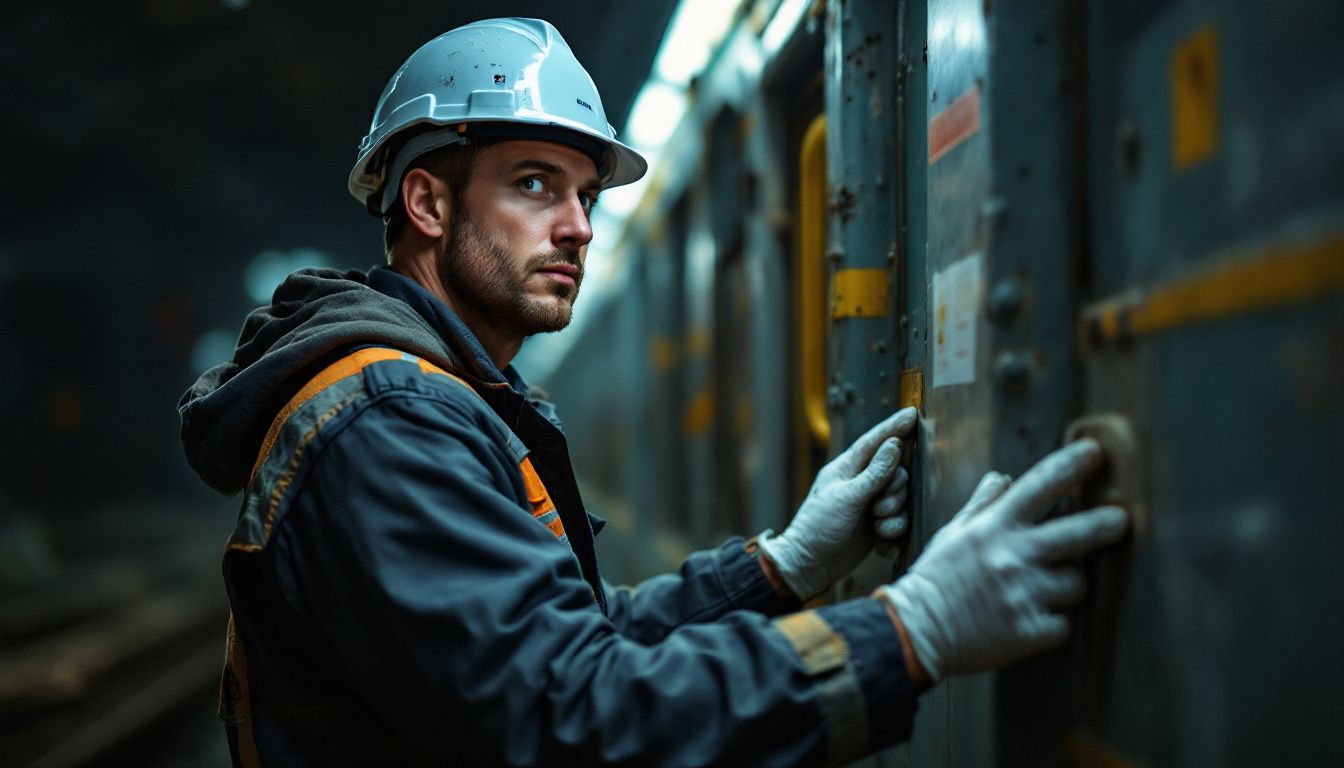
Railroad Asbestos: The Hidden Danger Still Threatening UK Railway Workers
Railroad asbestos remains one of the most serious occupational health hazards in the UK rail industry. Decades after its widespread use, thousands of tonnes of asbestos-containing materials (ACMs) are still embedded in rolling stock, station buildings, depots, and maintenance facilities across the country. If you work on the railways — or manage premises connected to the rail network — understanding this risk is not optional. It could save lives.
Why Asbestos Was So Widely Used in the Railway Industry
From the 1930s through to the 1980s, asbestos was considered an engineering marvel. It was cheap, fire-resistant, thermally insulating, and mechanically tough — qualities that made it almost irresistible to railway engineers and builders.
By the time the full scale of its dangers became undeniable, it had been worked into virtually every corner of the rail environment. Removing it entirely is a challenge the industry is still grappling with today.
Asbestos in Carriages and Rolling Stock
Train manufacturers used multiple types of asbestos throughout carriage construction. Each type carried its own specific risks:
- Chrysotile (white asbestos) — commonly used in seat dividers, exhaust systems, and gaskets
- Amosite (brown asbestos) — found in wall boards and thermal insulation beneath carriage floors
- Crocidolite (blue asbestos) — the most dangerous type, sprayed onto steel structural components as a fire-resistant coating
Brake pads and linings on older rolling stock contained significant quantities of asbestos. Maintenance engineers who routinely replaced these components were exposed to asbestos dust with every job.
Engine rooms, piston assemblies, and boiler insulation added further exposure risks for workshop staff — often without any protective equipment or awareness of the danger.
Asbestos in Railway Infrastructure
The problem extends well beyond the trains themselves. Station buildings, signal boxes, depots, and maintenance sheds constructed before 2000 frequently contain asbestos in their fabric. Common locations include:
- Ceiling tiles and suspended ceiling systems
- Wall boards and partition panels
- Floor tiles and their adhesive backing
- Pipe lagging and insulation wraps in boiler rooms and under platforms
- Roof sheets and corrugated cladding on older structures
- Electrical switchgear panels and junction boxes
- Fire-resistant doors and structural panels
- Spray coatings on steel beams and columns
These materials are not always visually obvious. ACMs are often stable and safe when undisturbed — the danger arises when they are drilled, cut, sanded, or disturbed during maintenance or refurbishment work.
The Health Consequences of Railroad Asbestos Exposure
Asbestos fibres are microscopic. When inhaled, they lodge permanently in lung tissue and the lining of the chest cavity. The body cannot break them down or expel them.
Over time — often decades — this causes a range of serious and frequently fatal diseases. The latency period is one of the most insidious aspects of asbestos-related illness: workers exposed in the 1960s and 1970s are still being diagnosed today.
Mesothelioma
Mesothelioma is a cancer of the mesothelium — the lining surrounding the lungs, heart, and abdomen. It is almost exclusively caused by asbestos exposure and carries a very poor prognosis.
The latency period between exposure and diagnosis typically ranges from 20 to 50 years. There is no established safe level of asbestos exposure for mesothelioma risk — even relatively brief or low-level contact can, in some cases, trigger the disease.
Asbestosis and Lung Cancer
Asbestosis is a chronic scarring of the lung tissue caused by prolonged asbestos inhalation. It causes progressive breathlessness, reduced lung capacity, and significantly impairs quality of life.
Lung cancer risk is also substantially elevated in those with occupational asbestos exposure, particularly among those who also smoked. The combination of smoking and asbestos exposure multiplies the risk considerably.
Pleural Plaques and Pleural Thickening
Pleural plaques are areas of fibrous thickening on the lining of the lungs. While not cancerous themselves, they are a clear marker of past asbestos exposure and indicate that ongoing medical monitoring is warranted.
Diffuse pleural thickening is a more serious condition that can restrict breathing and cause significant disability. Both conditions can develop years or decades after the original exposure.
Secondary Exposure: The Risk to Railway Workers’ Families
Railroad asbestos does not stay at the workplace. Asbestos fibres cling to clothing, boots, hair, and tools. Workers who returned home without changing or decontaminating brought those fibres into their households — exposing spouses, children, and other family members to the same carcinogenic material.
This secondary, or para-occupational, exposure has been responsible for mesothelioma diagnoses in people who never set foot in a railway depot or maintenance shed. The risk was particularly acute for those who washed work clothing at home.
Modern working practices now require workers handling ACMs to change into clean clothing before leaving the work site and to use designated washing facilities for contaminated workwear. These are not optional precautions — they are legal requirements under the Control of Asbestos Regulations.
Managing Railroad Asbestos: Surveys, Risk Assessments, and Legal Duties
The Control of Asbestos Regulations place a clear duty on those who manage non-domestic premises to identify, assess, and manage asbestos-containing materials. For railway operators and property managers, this means maintaining an asbestos register, conducting regular condition checks, and ensuring anyone who might disturb ACMs is informed of their location before work begins.
Asbestos Surveys in Railway Settings
There are two main types of survey relevant to railway premises. An asbestos management survey identifies ACMs that could be disturbed during normal occupation and routine maintenance — it is the starting point for any asbestos management plan.
A refurbishment and demolition survey is required before any intrusive work begins. It is more thorough and involves destructive inspection where necessary to locate hidden materials.
Both types must be carried out by a competent surveyor following the methodology set out in HSG264, the HSE’s definitive guidance on asbestos surveying. Surveys must not be treated as a box-ticking exercise — they are the foundation of a safe asbestos management plan.
If your railway premises are in the capital, our specialist team can carry out an asbestos survey London covering stations, depots, and maintenance facilities. We also provide a full asbestos survey Manchester for rail operators and property managers across the North West, and an asbestos survey Birmingham for sites across the Midlands rail network.
Identifying Asbestos-Containing Materials on Site
Visual identification alone is not sufficient. Suspected ACMs must be sampled and tested in an accredited laboratory. Surveyors should be examining:
- Grey or white fibrous materials in walls, ceilings, and floor coverings
- Brake pads and linings on older rolling stock
- Pipe lagging and insulation wraps in engine rooms and plant areas
- Roof sheets and panels on station buildings and depot structures
- Spray coatings on structural steelwork
- Electrical panels and switchgear installations
- Fire-resistant doors, panels, and bulkheads
All identified ACMs must be clearly recorded in an asbestos register, with their location, type, condition, and risk rating documented. Warning signs and physical demarcation should be used to prevent inadvertent disturbance.
Risk Assessments and Asbestos Management Plans
Once ACMs are identified, a written risk assessment must be produced. This should assess the likelihood of disturbance, the condition of the material, and the potential for fibre release.
From this, a management plan is developed — setting out how the ACMs will be monitored, who is responsible, and what action will be taken if conditions deteriorate. Management plans are living documents. They must be reviewed regularly and updated whenever work is carried out that might affect ACMs, or when new materials are identified.
A management survey followed by a thorough management plan is not just good practice — it is a legal requirement for duty holders in the rail sector.
Asbestos Removal from Railway Rolling Stock and Buildings
Where ACMs are in poor condition, are likely to be disturbed, or are being removed as part of refurbishment or decommissioning, licensed asbestos removal is required. Work involving higher-risk asbestos types — including sprayed coatings, lagging, and insulation board — must be carried out by a contractor licensed by the HSE.
The removal process in railway settings involves careful containment of the work area, the use of negative-pressure enclosures, full personal protective equipment for operatives, and air monitoring during and after the work. Waste must be double-bagged, labelled, and disposed of at a licensed facility.
For railway rolling stock specifically, decommissioning older carriages requires a thorough pre-demolition survey and a structured removal programme before any cutting, stripping, or dismantling takes place.
The Office of Rail and Road (ORR) oversees compliance in the rail sector alongside the HSE, and operators must notify the relevant authority of notifiable asbestos work. Our asbestos removal service covers both building structures and specialist environments, with fully licensed operatives and end-to-end project management.
The Legal Framework Protecting Railway Workers from Asbestos
The primary legislation governing asbestos in the UK workplace is the Control of Asbestos Regulations. These regulations set out the duty to manage asbestos in non-domestic premises, the requirements for licensed and notifiable non-licensed work, and the obligations on employers to protect workers from exposure.
The HSE enforces these regulations across most workplaces. In the rail sector, the ORR has specific enforcement responsibilities and conducts its own inspection programmes. Both bodies have the power to issue improvement notices, prohibition notices, and prosecute duty holders who fail to comply.
Employer Obligations in the Rail Sector
Employers in the railway sector must, as a minimum:
- Identify all ACMs in premises and rolling stock under their control
- Assess the risk those materials pose to workers and others
- Produce and maintain a written asbestos management plan
- Ensure all contractors and maintenance workers are informed of ACM locations before starting work
- Provide appropriate training for employees who may encounter asbestos in their work
- Arrange for licensed removal where required
- Keep records of all surveys, risk assessments, and asbestos-related work
Failure to meet these obligations is not simply an administrative failing — it is a criminal offence that can result in substantial fines and, in serious cases, prosecution of individuals as well as organisations.
Compensation for Railway Workers with Asbestos-Related Illness
Railway workers who develop mesothelioma, asbestosis, lung cancer, or other asbestos-related conditions as a result of occupational exposure have legal routes to compensation. Claims can be brought against former employers or their insurers, and in cases where the employer is no longer trading, the Employers’ Liability Tracing Office can help identify the relevant insurer.
The government’s Industrial Injuries Disablement Benefit scheme provides financial support to those with prescribed asbestos-related diseases. The Diffuse Mesothelioma Payment Scheme offers a route to compensation for those who cannot trace a liable employer or insurer.
Family members who developed asbestos-related disease through secondary exposure also have the right to pursue compensation. Anyone in this situation should seek specialist legal advice from a solicitor with experience in industrial disease claims as early as possible — strict time limits apply.
What Railway Workers Should Do If They Suspect Asbestos Exposure
If you work in the rail industry and believe you have been exposed to railroad asbestos — whether recently or in the past — there are clear steps you should take.
First, report any suspected ACMs to your employer or site manager immediately. Do not attempt to disturb, sample, or remove any material yourself. Work in the affected area should stop until a competent surveyor has assessed the situation.
If you have a history of asbestos exposure, inform your GP. While there is no treatment that reverses past exposure, early detection of asbestos-related disease significantly improves the options available to you. Keep a record of where and when you worked, the nature of your duties, and any known asbestos materials in those environments — this information is valuable both medically and legally.
If you are a manager or duty holder and discover previously unrecorded ACMs, you are legally required to update your asbestos register and management plan. Do not delay — the obligation to manage railroad asbestos is ongoing, not a one-time task.
Frequently Asked Questions
Is railroad asbestos still present in UK trains and stations?
Yes. Many older stations, depots, and maintenance facilities built before 2000 still contain asbestos-containing materials in their structure. Some older rolling stock that has not yet been decommissioned may also contain asbestos. Operators are legally required to identify, record, and manage these materials under the Control of Asbestos Regulations.
What types of asbestos were used in the railway industry?
All three main types of asbestos were used extensively in the rail sector. Chrysotile (white asbestos) appeared in gaskets, seals, and seat dividers. Amosite (brown asbestos) was used in thermal insulation and wall boards. Crocidolite (blue asbestos), the most hazardous type, was sprayed onto structural steelwork as a fire-resistant coating and is the most dangerous to encounter during maintenance or refurbishment work.
What survey do I need for a railway building or depot?
For occupied premises under routine use, an asbestos management survey is required. If you are planning refurbishment, renovation, or demolition work, a refurbishment and demolition survey must be completed beforehand. Both surveys must be carried out by a competent surveyor in accordance with HSG264 guidance. Supernova Asbestos Surveys can carry out both types across the UK.
Can railway workers claim compensation for asbestos-related illness?
Yes. Railway workers who develop mesothelioma, asbestosis, lung cancer, or other asbestos-related diseases as a result of occupational exposure can bring compensation claims against former employers or their insurers. Government schemes such as the Diffuse Mesothelioma Payment Scheme also exist for those who cannot trace a liable employer. Specialist legal advice should be sought as early as possible due to time limits on claims.
What should I do if I find suspected asbestos in a railway building?
Stop work in the area immediately and do not disturb the material. Report it to your employer or site manager. The material must be assessed by a competent surveyor before any further work takes place. If asbestos is confirmed, it must be added to the site’s asbestos register and a risk assessment must be carried out to determine whether it should be managed in place or removed by a licensed contractor.
Get Expert Help with Railroad Asbestos from Supernova
Supernova Asbestos Surveys has completed over 50,000 surveys across the UK, including complex industrial and infrastructure environments. Our surveyors are fully qualified, our work follows HSG264 methodology, and we provide clear, actionable reports that meet your legal obligations.
Whether you need a management survey, a pre-demolition survey, or licensed removal for a railway building or rolling stock facility, we can help. We cover the entire UK, with specialist teams operating across London, Manchester, Birmingham, and beyond.
Call us on 020 4586 0680 or visit asbestos-surveys.org.uk to book a survey or speak to one of our team about your specific requirements.