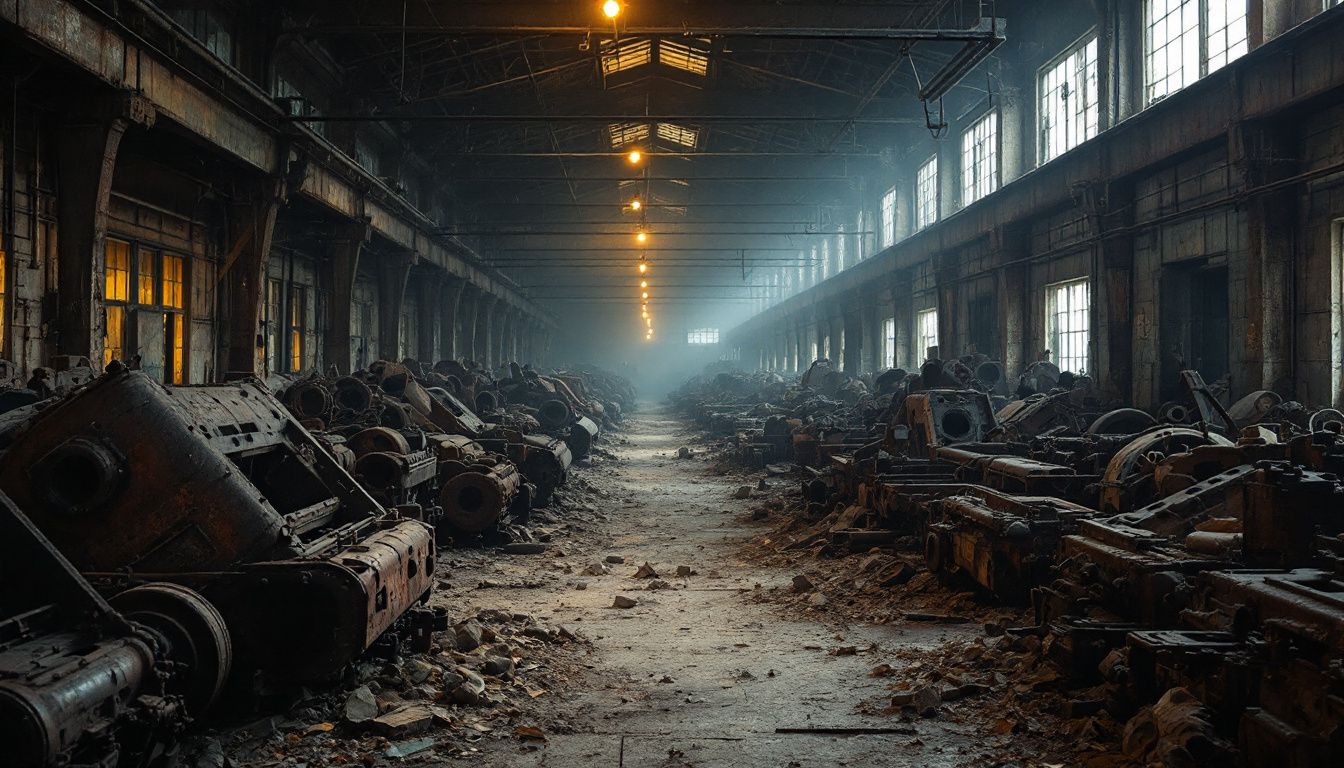
When the Workshop Becomes the Hazard: A Case Study of Asbestos Contamination in a Railway Workshop
Few industrial environments carry an asbestos legacy quite like a railway workshop. Decades of brake relining, boiler maintenance, and rolling stock overhauls created conditions where asbestos-containing materials (ACMs) were not just present — they were woven into virtually every task, every surface, and every shift. This case study of asbestos contamination in a railway workshop examines how exposure happened, what the consequences were, and what responsible management looks like today.
The railway industry relied heavily on asbestos throughout the twentieth century. Its heat resistance, durability, and low cost made it the go-to material for insulation, gaskets, brake linings, and fire protection across depots and workshops nationwide. Workers who spent their careers in these environments often had no idea what they were breathing in — and many are still paying the price today.
The Scale of Asbestos Use in Railway Workshops
Understanding the depth of the problem requires understanding just how widely asbestos was used in rail environments. It was not a niche material confined to one corner of a depot — it was embedded in the fabric of virtually every maintenance operation.
Commonly Identified Asbestos-Containing Materials in Rail Depots
Surveys of railway workshops and rolling stock have identified ACMs across a wide range of locations and components. The following materials have been found repeatedly across depot investigations:
- Brake linings and pads — white asbestos (chrysotile) was mixed into friction materials for its heat resistance during heavy braking
- Insulation boards (AIB) — used extensively to line walls, ceilings, and partitions in carriages and workshop buildings
- Pipe lagging and wraps — heating systems throughout depots were insulated with asbestos-based materials
- Gaskets and seals — fitted between metal components in engines, boilers, and pipework
- Limpet spray coatings — applied directly to steel beams and structural elements as fire protection
- Roof sheets and wall panels — asbestos cement was a standard building material for depot structures
- Floor tiles and vinyl sheets — particularly in depot offices and mess rooms
- Electrical panels and switchgear — asbestos was used as a fire-resistant backing material
- Window putty and caulking compounds — older installations frequently contained asbestos fibres
- Fire blankets and legacy safety equipment — ironically, some protective gear from earlier decades contained the very material it was meant to guard against
- Paint and sealants on rolling stock — surface coatings on older carriages and locomotives sometimes incorporated asbestos
- Door seals and draught strips — worn or damaged seals could release fibres during routine use
This variety is what made railway workshops so hazardous. Workers were not exposed to asbestos in one specific task — they encountered it throughout their entire working day, in multiple forms, without any meaningful awareness of the risk.
Key Areas of Exposure: Where the Risk Was Highest
Not all areas of a railway workshop carried equal risk. Investigations into depot environments have consistently identified certain locations where fibre concentrations were significantly elevated.
Repair sheds and engine rooms were among the most dangerous spaces. Workers here regularly disturbed brake linings, gaskets, and insulation during maintenance work, releasing fibres into the air. Without adequate ventilation or respiratory protection, those fibres were inhaled throughout the working shift.
Boiler houses presented a particular hazard. The pipe lagging and boiler insulation used in these spaces often contained amosite (brown asbestos) or crocidolite (blue asbestos) — both significantly more hazardous than chrysotile. Maintenance staff working in these confined, poorly ventilated spaces faced some of the highest cumulative exposures recorded in any industrial setting.
The spraying sections of workshops — where limpet asbestos was applied to structural steelwork — were extremely high-risk environments. Workers in adjacent areas were frequently exposed to airborne fibres because physical barriers between work zones were either absent or wholly inadequate. At one depot, plastic sheeting used to contain the spraying section was insufficient to prevent contaminated dust from reaching the sawmill area and beyond.
Case Study Findings: What Investigations Revealed
Detailed investigation of a railway workshop environment uncovered a pattern of contamination and safety failures that, in hindsight, was almost inevitable given the working practices of the time.
Specific Contamination Instances Identified
Investigators working through the depot found a series of serious contamination incidents that illustrated how deeply the problem had embedded itself into the working environment:
- AIB packers containing amosite were discovered beneath a concrete slab. The material had been sealed in place but required specialist removal teams once identified.
- Limpet asbestos in the spraying section was applied without adequate containment, meaning workers in neighbouring areas were breathing contaminated air on a daily basis.
- Old rolling stock components containing asbestos were breaking apart during repair work, and staff handled these parts without knowing they posed a risk.
- Contaminated work clothing was being carried from high-risk areas into clean zones, effectively spreading the hazard throughout the depot.
- Broken ventilation systems were redistributing contaminated air rather than extracting it, turning previously safe areas into exposure zones.
- Air monitoring results showed elevated fibre counts in active work areas, yet operations continued without adequate remediation.
- Respiratory protective equipment was available but routinely left unused during tasks that disturbed ACMs.
What these findings illustrate is not just a series of individual failures, but a systemic breakdown in how asbestos risk was managed across the facility. The hazards were not hidden — they were simply not being addressed.
The Human Cost: A Worker from Swindon Works
One of the most instructive examples of the human cost of railway asbestos exposure involves a worker from Swindon Works who was diagnosed with mesothelioma following more than thirty years of exposure to asbestos-containing materials during his career. He received a settlement of £117,500.
His case is not unusual. It reflects a pattern seen across the industry: workers who spent their careers in depot environments, often entirely unaware of the risks they faced, developing serious and frequently fatal diseases decades later. The latency period for mesothelioma — typically between twenty and fifty years — means that workers exposed in the 1960s, 70s, and 80s are still being diagnosed today.
Health Impacts on Railway Workers
The diseases caused by asbestos exposure are serious, progressive, and in many cases fatal. Railway workers who spent years in contaminated environments have been disproportionately affected by the full spectrum of asbestos-related conditions.
Mesothelioma
Mesothelioma is a cancer of the lining of the lungs or abdomen caused almost exclusively by asbestos exposure. Symptoms include chest pain, breathlessness, and unexplained weight loss. It is aggressive, currently has no cure, and diagnosis typically comes at a late stage when treatment options are limited.
Asbestosis
Asbestosis is a chronic scarring of the lung tissue caused by prolonged inhalation of asbestos fibres. Workers develop progressive breathlessness, a persistent dry cough, and chest tightness. The condition is irreversible and can severely limit quality of life.
Lung Cancer
Asbestos exposure significantly increases the risk of lung cancer, particularly in combination with smoking. Workers in railway workshops who smoked faced a multiplicative increase in risk, with symptoms often appearing at an advanced stage when treatment is far less effective.
Pleural Thickening and Pleural Plaques
Pleural thickening involves scarring of the membrane surrounding the lungs, causing breathlessness and reduced exercise tolerance. Pleural plaques are markers of past asbestos exposure and, while not themselves disabling, indicate that a worker has been exposed at levels sufficient to cause disease.
Across all of these conditions, the common thread is latency. The railway industry’s asbestos legacy has not ended — it continues to manifest in new diagnoses every year, in workers and their families across the country.
Risks and Challenges of Asbestos Abatement in Railway Environments
Managing asbestos in a working railway environment presents challenges that go well beyond a standard commercial building survey or removal project. The complexity of rolling stock, the age of depot infrastructure, and the operational pressures of keeping rail services running all create additional layers of difficulty.
Hidden ACMs are a persistent problem. Asbestos materials in railway components are frequently concealed beneath other materials, inside fabricated assemblies, or in locations that are only accessible during major overhaul work. A visual inspection alone will never identify all risks — systematic sampling and laboratory analysis are essential at every stage.
Operational constraints add further complexity. Railway depots cannot always be taken fully out of service for remediation work. Asbestos removal must therefore be planned and executed in phases, with strict controls to prevent contamination of adjacent working areas during the process.
The age of the infrastructure is another significant factor. Many railway workshop buildings date from the Victorian era or the early twentieth century. These structures may contain multiple generations of ACMs, added or modified over decades of use. A thorough refurbishment survey — conducted in accordance with HSG264 — is the only way to establish the full extent of contamination before major works begin.
Old ballast and trackside materials also require testing before recycling or disposal, as asbestos fibres can be present in materials that have been in contact with contaminated rolling stock or infrastructure over many years. This is a detail that is easily overlooked but carries real legal and health consequences.
Best Practice: Safe Handling and Removal of Asbestos in Rail Settings
The Control of Asbestos Regulations set out clear legal duties for those managing, working with, or commissioning work on asbestos-containing materials. In a railway workshop context, these duties apply to the depot operator, the maintenance contractor, and any specialist surveying or removal team involved.
Before Work Begins
No maintenance or refurbishment work should begin in a railway workshop without a current asbestos register in place. Where one does not exist — or where the scope of work goes beyond what the existing register covers — a demolition survey or refurbishment and demolition survey must be commissioned from a qualified surveyor before work starts.
Air monitoring should be established as a baseline prior to any disturbance of suspected ACMs. This provides a reference point against which subsequent monitoring results can be assessed, and is a requirement under HSE guidance for higher-risk environments.
During Removal Work
Licensed contractors must carry out removal of higher-risk ACMs, including amosite, crocidolite, and asbestos insulating board. The use of wet methods during removal suppresses fibre release and is a fundamental control measure. Enclosures, negative pressure units, and airlocks are standard requirements for licensed work.
Continuous air monitoring during removal work allows rapid identification of any breach in containment. Workers must wear appropriate respiratory protective equipment — the specific grade depending on the type of asbestos and the nature of the task — and full disposable protective suits to prevent secondary contamination.
After Removal
Clearance air testing must be conducted by an independent UKAS-accredited laboratory before an enclosure is released for reoccupation. All asbestos waste must be double-bagged, clearly labelled, and transported to a licensed disposal facility in accordance with waste carrier regulations.
Following removal, the asbestos register must be updated to reflect the current condition of the site. This is not optional — it is a legal requirement under the Control of Asbestos Regulations, and failure to maintain accurate records leaves duty holders exposed to enforcement action.
For sites requiring full strip-out prior to redevelopment, specialist asbestos removal services carried out by licensed contractors provide the safest and most legally compliant route forward.
What This Case Study Means for Duty Holders Today
Railway workshops are not the only industrial environments with a significant asbestos legacy, but they are among the most complex. The lessons from depot investigations apply broadly to any duty holder managing older industrial or commercial premises.
If you are responsible for a building constructed before the year 2000, you have a legal duty to manage asbestos under the Control of Asbestos Regulations. That duty does not disappear because a building is operational, because a previous survey was carried out, or because no one has been visibly ill. It is a continuing obligation that requires regular review and documented management.
The case study above demonstrates what happens when that duty is not taken seriously. The consequences are not abstract — they are measured in diagnoses, in settlements, and in lives cut short by entirely preventable diseases.
Supernova Asbestos Surveys operates across the UK, including dedicated teams for asbestos survey London, asbestos survey Manchester, and asbestos survey Birmingham — covering industrial, commercial, and heritage properties of all types and complexities.
Frequently Asked Questions
Why were railway workshops so heavily contaminated with asbestos?
Railway workshops used asbestos across an exceptionally wide range of applications — from brake linings and gaskets to pipe lagging, limpet spray coatings, and building materials. Workers were exposed throughout their entire working day, often in confined, poorly ventilated spaces, without any awareness of the risk or access to protective equipment.
What types of asbestos were most commonly found in railway depots?
All three main types of asbestos were present in railway environments. Chrysotile (white asbestos) was widely used in brake linings and friction materials. Amosite (brown asbestos) and crocidolite (blue asbestos) were found in insulation boards, pipe lagging, and boiler insulation — both are considered significantly more hazardous than chrysotile and require licensed removal.
What survey is required before refurbishment work in a railway workshop?
A refurbishment and demolition survey, conducted in accordance with HSG264, is required before any intrusive work begins in a building where asbestos may be present. This type of survey is destructive by design — it accesses hidden voids, structural cavities, and concealed spaces to identify all ACMs before they can be disturbed by contractors.
How long after exposure do asbestos-related diseases typically develop?
The latency period for asbestos-related diseases varies by condition. Mesothelioma typically develops between twenty and fifty years after initial exposure. This means that workers exposed in railway workshops during the 1960s, 70s, and 80s are still receiving diagnoses today, decades after their working careers ended.
Who is legally responsible for managing asbestos in a railway workshop today?
Under the Control of Asbestos Regulations, the duty to manage asbestos falls on the person or organisation with responsibility for maintaining the premises — typically the owner, employer, or facilities manager. This duty includes commissioning a suitable survey, maintaining an asbestos register, and ensuring that anyone who may disturb ACMs is made aware of their location and condition.
Survey Your Site with Supernova Asbestos Surveys
If you manage or own a railway workshop, industrial depot, or any older commercial premises and are unsure of your asbestos position, Supernova Asbestos Surveys can help. With over 50,000 surveys completed nationwide, our UKAS-accredited team provides management surveys, refurbishment and demolition surveys, and full support through the remediation process.
Call us on 020 4586 0680 or visit asbestos-surveys.org.uk to arrange a survey or speak to one of our specialists about your site.