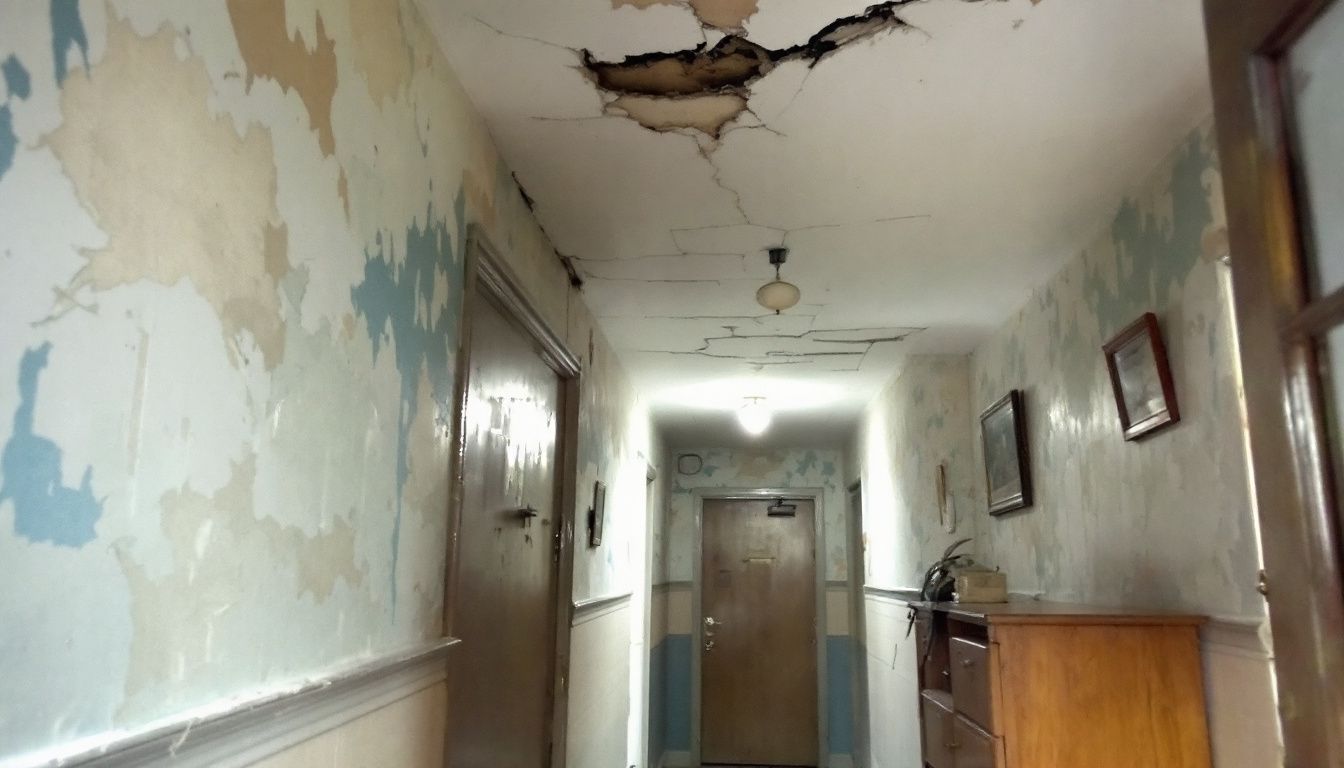
Asbestos Survey for Hotels: What Every Owner and Manager Needs to Know
Hotels carry a duty of care that goes far beyond thread counts and breakfast menus. If your property was built before 2000, there is a very real chance asbestos-containing materials are hidden inside its walls, ceilings, floors, and service areas — and the law requires you to find them. An asbestos survey for hotels is not optional paperwork. It is the foundation of every safe and legally compliant hospitality operation in the UK.
Whether you manage a grand Victorian property, a 1970s motor lodge, or an 80s city-centre chain hotel, the obligation is the same: identify what is there, assess the risk, and manage it properly.
Why Hotels Are Particularly High-Risk Asbestos Environments
Hotels are complex buildings. They combine guest-facing spaces, back-of-house service areas, plant rooms, kitchens, laundries, and often multiple floors of accommodation — many of which were built or refurbished during the decades when asbestos use was at its peak in the UK.
Unlike an office block where access is controlled, hotels have a constant flow of guests, contractors, maintenance staff, and housekeeping teams moving through every corner of the building. That footfall increases the risk of accidental disturbance to asbestos-containing materials (ACMs), especially during routine maintenance tasks like drilling into walls, replacing ceiling tiles, or working on pipework.
Any pre-2000 hotel should be treated as potentially containing asbestos until a professional survey proves otherwise. That is not alarmism — it is the legal default position under the Control of Asbestos Regulations.
Where Asbestos Hides in Hospitality Buildings
Asbestos was used extensively in UK construction because it is fire-resistant, durable, and cheap. In hospitality buildings, it tends to appear in predictable locations — but it can also turn up in surprising places during refurbishment work.
Common Locations to Check
- Ceiling tiles and suspended ceiling systems — particularly in function rooms, corridors, and kitchens
- Floor tiles and adhesives — vinyl floor tiles from the 1960s to 1980s frequently contain chrysotile asbestos
- Pipe lagging and boiler insulation — plant rooms and service risers are high-risk areas
- Sprayed coatings — used for fire protection on steel structural elements
- Artex and textured coatings — common on ceilings in older guest rooms and public areas
- Insulating board — used in fire doors, partition walls, and service ducts
- Roof materials — asbestos cement sheeting was widely used on outbuildings, extensions, and flat roofs
- Gaskets and seals — found in older boiler and heating systems
The challenge for hotel operators is that ACMs can be present in areas that are rarely inspected — inside ceiling voids, behind cladding, within service ducts. A professional survey is essential; a visual check by a maintenance team simply is not sufficient.
The Legal Framework: What the Law Requires of Hotel Dutyholders
The Control of Asbestos Regulations place a clear legal duty on anyone who owns, occupies, or manages non-domestic premises. In a hotel context, that means the owner, the operator, or in some cases the facilities manager — whoever holds responsibility for maintenance and repair.
Your Legal Obligations as a Dutyholder
- Take reasonable steps to find out whether ACMs are present in the premises
- Presume materials contain asbestos unless there is strong evidence they do not
- Assess the condition of any identified or presumed ACMs and the risk they pose
- Produce and maintain an Asbestos Management Plan that records findings and sets out how risks will be managed
- Provide information about ACM locations to anyone who might disturb them — including maintenance contractors, electricians, and plumbers
- Review and monitor the plan regularly and whenever circumstances change
Failure to comply is a criminal offence. Penalties range from substantial fines to imprisonment, and the HSE takes enforcement seriously in the hospitality sector.
The HSE’s guidance document HSG264 provides the technical standard that all asbestos surveys in the UK must meet. Any surveying company you appoint should be working to this standard as a minimum — always verify this before signing anything.
Types of Asbestos Survey for Hotels
Not all surveys are the same, and choosing the right type depends on what you need to achieve. There are two main categories under HSG264, and understanding the difference is critical for hotel operators.
Management Survey
A management survey is the standard survey required for the ongoing management of a building in normal use. It is designed to locate ACMs in accessible areas, assess their condition, and provide the information needed to produce an Asbestos Management Plan.
For most hotels, this is the starting point. It covers all areas that are reasonably accessible without causing significant damage to the building fabric. The surveyor will take samples of suspected materials for laboratory analysis, and you will receive a detailed written report. If your hotel does not already have an up-to-date asbestos register, commissioning a management survey is the first step.
Refurbishment Survey
If you are planning renovation work — remodelling a restaurant, converting bedrooms, updating a spa, or undertaking any structural work — you will need a refurbishment survey before work begins. This is a more intrusive survey that accesses areas which would be disturbed by the planned works.
This survey type is legally required before any work that could disturb the building fabric. It cannot be skipped to save time or money. Contractors who begin work without the appropriate survey in place expose themselves — and the hotel — to serious legal liability.
Demolition Survey
If you are planning to demolish any part of the structure, a demolition survey is required. This is the most thorough and intrusive of all survey types, designed to locate all ACMs throughout the entire structure before demolition work proceeds.
This is not a survey you can defer or abbreviate. Demolition without a completed survey in place is a serious breach of the regulations and carries significant legal consequences.
What Happens During an Asbestos Survey for Hotels
Understanding the process helps you prepare properly and ensures the survey delivers the most accurate results possible.
Before the Survey
A good surveying company will ask for building plans, any existing asbestos records, and details of the areas to be surveyed. For a working hotel, you will need to consider access — particularly to occupied guest rooms, back-of-house areas, and plant rooms.
It is worth planning the survey carefully to minimise disruption. Many hotels arrange for surveys to be conducted in unoccupied wings, or schedule access to plant rooms and service areas during quieter periods.
During the Survey
The surveyor will carry out a systematic inspection of the building, taking samples from materials suspected to contain asbestos. Samples are small and the process is carefully controlled to prevent fibre release. The surveyor will record the location, extent, and condition of all suspected ACMs.
For large hotels, surveys may take place over more than one day. The surveyor should be fully qualified, and the company should hold UKAS accreditation for asbestos surveying — always verify this before appointing anyone.
After the Survey
You will receive a detailed written report that includes:
- A register of all identified or presumed ACMs
- Laboratory analysis results from samples taken
- A risk assessment for each ACM based on its condition and location
- Photographs and floor plan markings showing ACM locations
- Recommendations for management, monitoring, or removal
This report becomes the foundation of your Asbestos Management Plan. At Supernova Asbestos Surveys, reports are typically delivered within 24 hours of the survey being completed.
Asbestos Testing: When Sampling Matters
Visual inspection alone cannot confirm whether a material contains asbestos. Asbestos testing through laboratory analysis of physical samples is the only reliable way to identify ACMs with certainty.
During a management or refurbishment survey, samples are taken as part of the standard process. However, there are situations where standalone asbestos testing may be needed — for example, if a specific material has been identified during maintenance work and needs to be confirmed before a contractor proceeds.
Never allow contractors to assume a material is asbestos-free without analytical confirmation. The cost of testing is minimal compared to the cost of enforcement action, decontamination, and reputational damage.
Building Your Asbestos Management Plan
Once you have your survey report, the next step is to produce — or update — your Asbestos Management Plan. This is a live document that records what ACMs are present, what condition they are in, and how you are managing the risk.
A robust plan for a hotel should include:
- A full asbestos register with locations marked on floor plans
- Risk ratings for each ACM based on condition, accessibility, and likelihood of disturbance
- A monitoring schedule — high-risk ACMs should be checked more frequently
- Contractor communication procedures — anyone working on the building must be shown the register before starting work
- Emergency procedures — clear steps for staff to follow if ACMs are accidentally disturbed
- Staff training records — evidence that relevant employees have received asbestos awareness training
- A remediation programme — timelines for repair or removal of high-risk materials
The plan must be reviewed regularly and updated whenever work is carried out, new ACMs are found, or the condition of existing materials changes.
Managing Contractors: The Hidden Risk in Hotel Refurbishments
Most asbestos-related incidents in hotels happen during maintenance and refurbishment work — not because the hotel team was unaware of asbestos, but because the information was not passed on to contractors before work started.
Before any contractor begins work on your property, you must:
- Provide them with a copy of the relevant sections of your asbestos register
- Walk them through the areas where ACMs are present or suspected
- Obtain written confirmation that they have received and understood this information
- Ensure the appropriate survey has been completed before any intrusive work begins
This is not just good practice — it is a legal requirement under the Control of Asbestos Regulations. Keeping records of these communications is essential if you ever need to demonstrate compliance to the HSE.
When Asbestos Removal Becomes Necessary
Not all ACMs need to be removed. If a material is in good condition, not likely to be disturbed, and is being properly monitored, it can often be managed in place. However, there are circumstances where asbestos removal becomes necessary:
- The material is in poor condition and deteriorating
- Planned refurbishment work will disturb the area where ACMs are present
- The material is in a high-traffic area where accidental damage is likely
- The risk assessment identifies an unacceptable risk to occupants or staff
Removal of higher-risk asbestos materials — including asbestos insulation, insulating board, and sprayed coatings — must be carried out by a licensed contractor. Only firms holding a licence issued by the HSE are permitted to undertake this work. Never allow unlicensed contractors to remove asbestos, regardless of cost considerations.
During removal work, the affected area must be sealed off, ventilation systems isolated, and air quality monitored throughout. A clearance certificate must be issued by an independent analyst before the area is returned to use.
Communicating Asbestos Risks to Staff and Guests
Your staff — particularly housekeeping, maintenance, and facilities teams — need to know where ACMs are located and what to do if they suspect they have disturbed one. This is a legal requirement as well as a practical safety measure.
Asbestos awareness training should be provided to any member of staff who might encounter ACMs in the course of their work. It does not need to be lengthy, but it must cover what asbestos is, where it is found in your building, the health risks of exposure, and the correct procedure to follow if a material is suspected of being disturbed.
As for guests — in the vast majority of cases, there is no need for direct communication about asbestos. If ACMs are properly managed and in good condition, they pose no risk to guests. However, if removal or remediation work is taking place, you should ensure affected areas are properly sealed and inaccessible to guests throughout the works.
Asbestos Surveys Across the UK: Where We Work
Supernova Asbestos Surveys operates across the UK, covering hotels and hospitality properties in every major city and region. If you manage a hotel in the capital, our team provides a full asbestos survey London service covering all property types and sizes.
For properties in the north-west, we offer a dedicated asbestos survey Manchester service, and for hotels in the Midlands, our asbestos survey Birmingham team is ready to assist. Wherever your property is located, we can mobilise quickly and work around your operational schedule to minimise disruption.
Frequently Asked Questions
Do I legally need an asbestos survey for my hotel?
Yes, if your hotel is in a building constructed before 2000, you have a legal duty under the Control of Asbestos Regulations to take reasonable steps to identify whether asbestos-containing materials are present. The most effective and legally defensible way to fulfil this duty is to commission a professional asbestos survey from a UKAS-accredited surveying company.
What type of asbestos survey does a hotel need?
Most hotels in normal operation require a management survey as their baseline. If you are planning any renovation, refurbishment, or structural work, a refurbishment survey is legally required before work begins. If demolition of any part of the building is planned, a demolition survey must be completed first. The correct survey type depends on your specific circumstances — a qualified surveyor can advise you.
How long does an asbestos survey take in a hotel?
This depends on the size and complexity of the building. A small boutique hotel may be surveyed in a single day, while a large multi-storey property with extensive plant rooms and service areas may require two or more days. Supernova Asbestos Surveys will provide a clear timeline before work begins and can work around your operational schedule to minimise disruption to guests and staff.
Can asbestos be left in place in a hotel, or does it always need to be removed?
Not all asbestos-containing materials need to be removed. If an ACM is in good condition, not at risk of disturbance, and is properly monitored, it can often be safely managed in place under an Asbestos Management Plan. Removal becomes necessary when materials are deteriorating, when planned work will disturb them, or when the risk assessment identifies an unacceptable risk. A licensed contractor must carry out any removal of higher-risk materials.
What happens if asbestos is found during a hotel renovation?
Work must stop immediately in the affected area. The area should be sealed off and ventilated to prevent fibre spread. You must notify the relevant parties and arrange for a licensed asbestos contractor to assess and, if necessary, remove the material safely before work resumes. A clearance certificate from an independent analyst is required before the area can be returned to use. This is precisely why a refurbishment survey before work begins is so important — it prevents exactly this scenario.
Get Your Hotel’s Asbestos Survey Booked Today
Supernova Asbestos Surveys has completed over 50,000 surveys across the UK, working with hotel operators, hospitality groups, and property managers to keep their buildings compliant and their people safe. Our UKAS-accredited surveyors work quickly, report within 24 hours, and understand the operational pressures of running a busy hotel.
Do not wait for a maintenance incident or an HSE inspection to prompt action. Call us today on 020 4586 0680 or visit asbestos-surveys.org.uk to book your survey or request a quote. We cover the whole of the UK and can usually mobilise within days.