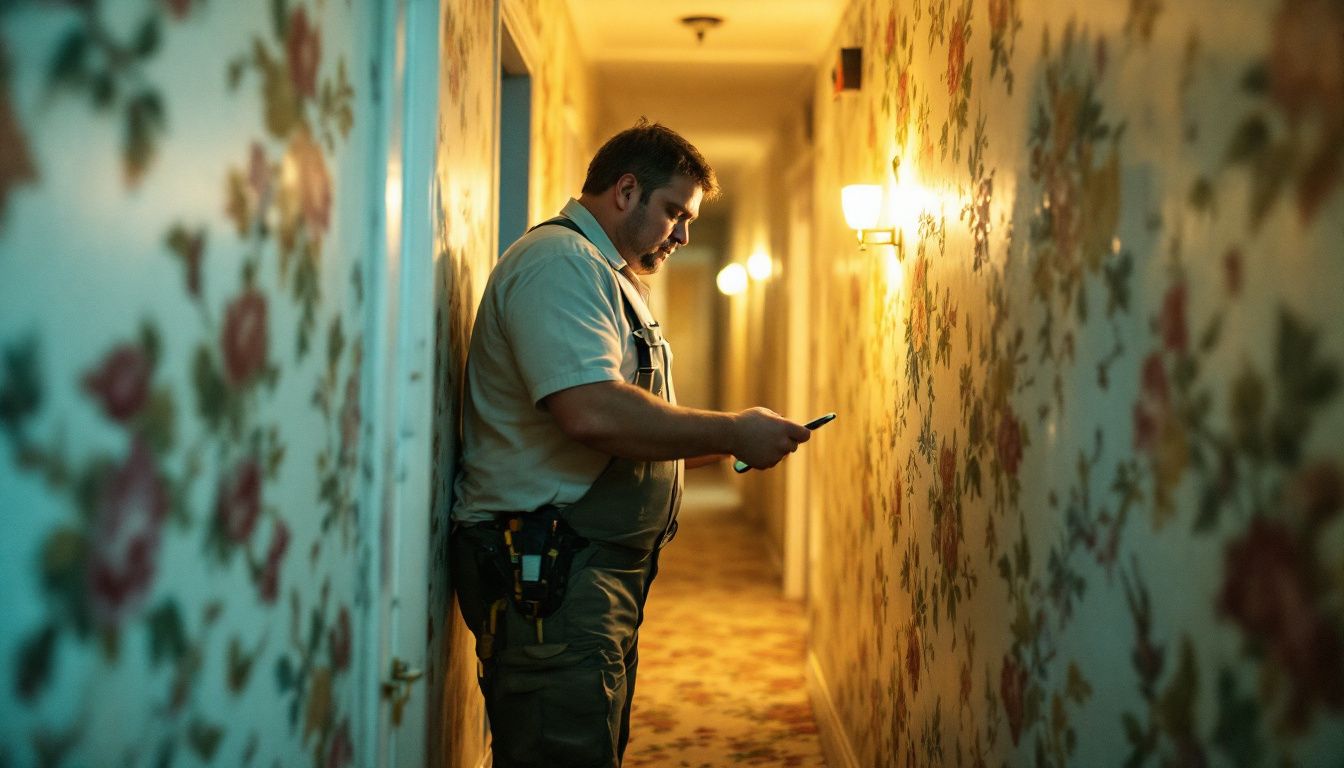
Asbestos in the Hospitality Industry: What Every Hotel, Pub and Restaurant Owner Needs to Know
Asbestos doesn’t announce itself. It sits quietly inside walls, beneath floor tiles, above suspended ceilings — and in the hospitality industry, where buildings are constantly being refurbished, deep-cleaned, and maintained, the risk of disturbing it is very real. Understanding the importance of asbestos awareness in the hospitality industry isn’t just a legal box to tick; it’s a duty of care to every member of staff and every guest who walks through your door.
Hotels, restaurants, pubs, and guest houses built before 2000 are particularly at risk. Many of these buildings contain asbestos-containing materials (ACMs) that were installed during construction and have never been properly identified or managed. That’s a problem — and in many cases, it’s also a criminal liability.
Why the Hospitality Sector Faces a Unique Asbestos Challenge
The hospitality industry operates differently from most commercial sectors. Buildings are rarely empty. Maintenance work happens around guests and staff. Refurbishments are frequent, often driven by tight deadlines and commercial pressure. And the workforce is often transient, meaning asbestos awareness training can fall through the cracks.
Hotels built between the 1950s and 1980s are particularly likely to contain asbestos. During this period, asbestos was used extensively as a building material because of its fire resistance, durability, and low cost. It was mixed into floor tiles, roof sheeting, pipe lagging, ceiling tiles, textured coatings like Artex, and insulation boards.
The UK banned the use of all asbestos in 1999, but that doesn’t mean older buildings are safe. It simply means no new asbestos has been installed since then. The legacy materials remain — and in many hospitality venues, they haven’t been properly surveyed or documented.
Where Asbestos Hides in Hospitality Buildings
You cannot identify asbestos by looking at a material. It requires laboratory analysis of a physical sample. That said, there are common locations in hotels and hospitality venues where ACMs are frequently found:
- Boiler rooms and plant rooms — pipe lagging and insulation around heating systems often contained asbestos
- Kitchens — floor tiles, insulation behind ovens, and ceiling boards
- Bathrooms and en-suites — vinyl floor tiles, textured coatings, and partition boards
- Roof spaces and loft areas — asbestos cement sheets used in roofing and guttering
- Corridors and communal areas — textured wall and ceiling coatings, suspended ceiling tiles
- Electrical cupboards and service ducts — insulation boards and fire protection panels
- Offices and back-of-house areas — partition walls and floor coverings
The danger arises when these materials are drilled into, cut, sanded, or otherwise disturbed — releasing microscopic fibres into the air that, once inhaled, can cause fatal diseases including mesothelioma, asbestosis, and lung cancer.
These aren’t remote risks. They’re the documented reality of what happens when asbestos management is neglected in busy, working buildings.
The Legal Duties of Hotel Owners and Managers
The Control of Asbestos Regulations places a clear legal duty on those responsible for non-domestic premises — including hotels, restaurants, bars, and guest houses — to manage asbestos. This is known as the “duty to manage” and it applies to anyone who owns, occupies, or manages a non-domestic building.
Under these regulations, duty holders must:
- Take reasonable steps to find out whether ACMs are present in the premises
- Assess the condition of any ACMs found
- Prepare and implement an Asbestos Management Plan
- Review and monitor the plan regularly
- Provide information about ACMs to anyone who might disturb them
Failure to comply is not treated lightly. Magistrates’ courts can impose fines of up to £20,000 and custodial sentences of up to 12 months. Crown Court convictions can result in unlimited fines and up to two years in prison.
Beyond the legal penalties, the reputational damage to a hospitality business can be devastating. The cost of compliance is always lower than the cost of getting it wrong.
The HSE’s guidance document HSG264 provides detailed technical guidance on asbestos surveying and is the standard against which all professional surveys in the UK are assessed. Any survey your business commissions should be carried out in accordance with HSG264.
What Type of Asbestos Survey Does a Hospitality Business Need?
If your hospitality premises were built or refurbished before 2000, you almost certainly need an asbestos survey. The question is which type.
Asbestos Management Survey
An asbestos management survey is the standard survey required for occupied premises. It’s designed to locate ACMs that could be disturbed during normal occupancy, including routine maintenance. It involves a visual inspection and the taking of samples from suspected materials, which are then analysed in a laboratory.
For most operational hotels, restaurants, and pubs, this is your starting point. It gives you the information you need to create an Asbestos Management Plan and meet your legal obligations under the Control of Asbestos Regulations.
Refurbishment and Demolition Survey
If you’re planning significant refurbishment or demolition work — such as knocking through walls, replacing a roof, or fitting out a new kitchen — you’ll need a demolition survey instead. This is a more intrusive investigation that must be completed before any work begins, without exception.
Attempting to start refurbishment without this survey in place is a serious legal breach and puts workers at immediate risk. Don’t rely on a management survey to cover refurbishment work — they serve different purposes and one cannot substitute for the other.
The Importance of Asbestos Awareness in the Hospitality Industry: Staff Training
The importance of asbestos awareness in the hospitality industry extends well beyond management and ownership. Anyone who could come into contact with ACMs in the course of their work needs appropriate training — maintenance staff, housekeeping teams, kitchen fitters, electricians, and even IT contractors running cables through ceiling voids.
Asbestos awareness training — often referred to as Category A training — should cover:
- What asbestos is and where it’s likely to be found
- The health risks associated with asbestos exposure
- How to recognise materials that might contain asbestos
- What to do if you suspect you’ve disturbed asbestos
- The importance of not disturbing suspected ACMs
- Emergency procedures and who to notify
The HSE recommends that asbestos awareness training is refreshed annually. In the hospitality sector, where staff turnover can be high, it’s worth building this into your onboarding process as well as your annual training calendar.
Trained staff are your first line of defence. A housekeeper who knows what textured ceiling coatings look like and understands not to scrape them during cleaning could prevent a serious exposure incident. That knowledge is only possible through proper training.
Building an Effective Asbestos Management Plan
Once your management survey is complete, the findings must be translated into a working Asbestos Management Plan (AMP). This isn’t a document that sits in a drawer — it’s a live record that needs to be maintained, reviewed, and acted upon.
What Your AMP Must Include
- Location records — floor plans and building maps showing exactly where ACMs are located
- Condition assessments — a risk rating for each ACM, based on its type, condition, and likelihood of disturbance
- Action plans — what needs to be done with each material (monitor, encapsulate, or remove)
- Contractor information — details of who to contact for specialist work
- Review dates — when the plan was last reviewed and when the next review is due
- Training records — evidence that relevant staff have received asbestos awareness training
Keeping the Plan Current
Your AMP should be reviewed at least annually, and immediately following any building work, incident, or change in the condition of known ACMs. If you carry out maintenance or refurbishment work, contractors must be informed of the location of any ACMs before they begin.
This is one of the most frequently overlooked requirements in the hospitality sector. A maintenance contractor who drills into an asbestos insulation board because nobody told them it was there is not the only one at fault — the duty holder shares that liability.
Managing Asbestos Risks for Guests and Employees
The duty to manage asbestos isn’t just about paperwork — it’s about actively protecting the people in your building. For hospitality businesses, that means both employees and the paying guests who have no idea what’s in the walls around them.
Protecting Your Workforce
Staff who work in maintenance roles carry the highest risk of asbestos exposure. Before any work is carried out on the fabric of the building — however minor it might seem — the relevant section of your AMP must be checked. If the area is unknown or unrecorded, sampling must take place before work begins.
Provide appropriate personal protective equipment (PPE) where there is any risk of exposure, and ensure that anyone working in areas where ACMs are present understands the risks and the controls in place.
Protecting Your Guests
Guests staying in your hotel have a reasonable expectation that their accommodation is safe. If refurbishment work is taking place, affected areas must be properly sealed off and air monitoring should be considered.
Never allow guests to occupy rooms adjacent to areas where asbestos work is being carried out without proper precautions. Good communication matters here too — if work is taking place that might affect guests, be transparent about the precautions you’ve taken. This protects your reputation as well as their health.
When Asbestos Removal Becomes Necessary
Not all asbestos needs to be removed. In many cases, ACMs that are in good condition and unlikely to be disturbed are best left in place and managed. However, there are circumstances where asbestos removal becomes the right — or legally required — course of action.
Removal is typically necessary when:
- ACMs are in poor condition and cannot be repaired or encapsulated
- Refurbishment or demolition work will disturb the materials
- The risk assessment concludes that the material poses an unacceptable ongoing risk
- The material is in a location where it cannot be adequately protected from damage
The removal of most ACMs — particularly friable or high-risk materials such as asbestos insulation, lagging, and sprayed coatings — must be carried out by a contractor licensed by the HSE. Using an unlicensed contractor is a criminal offence, and the duty holder can be held liable even if they were unaware of the contractor’s status.
Always verify that any contractor you engage holds a current HSE asbestos licence before work begins. A reputable contractor will provide this documentation without hesitation.
The Health Consequences of Getting It Wrong
Asbestos-related diseases kill more people in the UK each year than any other single work-related cause. The diseases caused by asbestos exposure — mesothelioma, asbestosis, and asbestos-related lung cancer — have long latency periods, meaning symptoms may not appear for 20 to 40 years after exposure. By the time a diagnosis is made, the damage is irreversible.
This makes asbestos uniquely insidious. A maintenance worker exposed to asbestos fibres during a hotel refurbishment decades ago may only now be developing symptoms. The hospitality industry has a long tail of legacy exposure, and the decisions made today — to survey, train, and manage properly — will determine the health outcomes of workers for decades to come.
There is no safe level of asbestos exposure. Every fibre inhaled carries risk. That reality should sit at the heart of every decision you make about your building.
Asbestos Surveys Across the UK: Getting Started
Whether you operate a boutique hotel in the capital or a pub in the Midlands, your legal obligations under the Control of Asbestos Regulations are the same. Location doesn’t change the duty — but it does affect who you call.
Supernova Asbestos Surveys operates nationwide. If you need an asbestos survey in London, our teams are ready to mobilise quickly across all London boroughs. For venues in the North West, our asbestos survey in Manchester service covers the full Greater Manchester area and beyond. And for hospitality businesses in the West Midlands, our asbestos survey in Birmingham team provides fast, professional surveys across the region.
All surveys are carried out by qualified, accredited surveyors in full compliance with HSG264. You’ll receive a clear, actionable report — not a document designed to confuse you.
Practical Steps Every Hospitality Business Should Take Now
If you’re unsure where your business stands, here’s a straightforward checklist to work through:
- Establish when your building was constructed or last significantly refurbished. If it was before 2000, an asbestos survey is almost certainly required.
- Check whether a valid asbestos survey already exists. If one was carried out more than a few years ago, or before significant building work took place, it may need to be updated.
- Commission a management survey if one isn’t in place. This is your legal baseline for occupied premises.
- Create or update your Asbestos Management Plan based on the survey findings. Make sure it’s accessible to relevant staff and contractors.
- Deliver asbestos awareness training to all staff who could come into contact with ACMs, and repeat it annually.
- Before any refurbishment or demolition work, commission a refurbishment and demolition survey — regardless of how minor the work seems.
- Verify contractor credentials. Any contractor carrying out licensed asbestos work must hold a current HSE licence.
None of these steps are complicated. They do, however, require commitment — and in many cases, they require the support of a professional asbestos surveying company that understands the specific demands of the hospitality sector.
Frequently Asked Questions
Do I need an asbestos survey if my hotel was built after 2000?
If your building was constructed entirely after 1999, it is unlikely to contain asbestos-containing materials, as the UK banned all asbestos use in 1999. However, if the building incorporates older structural elements, or if refurbishment work used materials sourced before the ban, a survey may still be advisable. When in doubt, seek professional advice.
What happens if I don’t have an Asbestos Management Plan in place?
Operating a non-domestic premises without an Asbestos Management Plan — where ACMs are present or suspected — is a breach of the Control of Asbestos Regulations. Enforcement action by the HSE can result in improvement notices, prohibition notices, and prosecution. Penalties range from significant fines to custodial sentences for the most serious cases.
Can I use the same asbestos survey for both routine management and a planned refurbishment?
No. A management survey and a refurbishment and demolition survey serve different purposes and have different scopes. A management survey covers accessible areas under normal occupancy conditions. A refurbishment and demolition survey is far more intrusive and must be completed before any work that could disturb the building fabric begins. Using a management survey in place of a refurbishment survey is a legal breach and a serious safety risk.
How often should asbestos awareness training be refreshed for hospitality staff?
The HSE recommends that asbestos awareness training — Category A training — is refreshed annually. In the hospitality sector, where staff turnover tends to be high, it’s also good practice to include asbestos awareness as part of the induction process for new employees, particularly those in maintenance, housekeeping, or facilities roles.
Is all asbestos removal work the same, or are there different requirements depending on the material?
Not all asbestos removal work requires an HSE-licensed contractor, but the most hazardous materials — including asbestos insulation, lagging, and sprayed coatings — do. These are classified as licensable work under the Control of Asbestos Regulations. Other materials may fall into the category of notifiable non-licensed work, which still requires notification to the relevant enforcing authority. A professional asbestos surveyor will advise you on the appropriate removal route for any ACMs identified in your building.
Talk to Supernova About Your Hospitality Premises
Supernova Asbestos Surveys has completed over 50,000 surveys across the UK. We work with hotels, restaurants, pubs, guest houses, and leisure venues of all sizes — and we understand the operational pressures that come with managing a live hospitality environment.
Whether you need a management survey for an operational venue, a refurbishment survey ahead of a fit-out, or specialist advice on your Asbestos Management Plan, our team is ready to help. We work to HSG264 standards, use UKAS-accredited laboratories for all sample analysis, and deliver clear, jargon-free reports that give you exactly what you need to stay compliant.
Call us on 020 4586 0680 or visit asbestos-surveys.org.uk to request a quote or speak to a surveyor directly. Don’t wait for a refurbishment project or an HSE inspection to find out what’s in your building — find out now, while you still have control over the outcome.