Why Every Restaurant Owner Must Take Asbestos Seriously
If your restaurant occupies a building constructed before 2000, there is a very real chance that asbestos-containing materials are hidden somewhere within its fabric. Behind the plasterwork, beneath the floor tiles, above the suspended ceiling — this hazardous material does not announce itself. A restaurant asbestos survey is the only reliable way to know what you are dealing with, and the law requires you to find out.
This is not a concern reserved for large hotel chains or luxury venues. Independent restaurants, cafés, pubs, and takeaways across the UK face exactly the same risk. Asbestos was used extensively in construction until its full ban in 1999, meaning decades’ worth of hospitality premises could contain it right now — and many owners have no idea.
Where Asbestos Hides in Restaurant Buildings
Asbestos was valued by builders for its fire resistance, insulation properties, and durability. Those same qualities mean it ended up in a wide range of building materials — many of which are still in place in older hospitality premises today.
Ceiling Tiles and Suspended Ceilings
Many restaurants installed suspended ceilings during the 1960s, 70s, and 80s. The tiles used in these systems frequently contained asbestos, particularly amosite (brown asbestos). If your restaurant still has its original ceiling, those tiles may well be a concern.
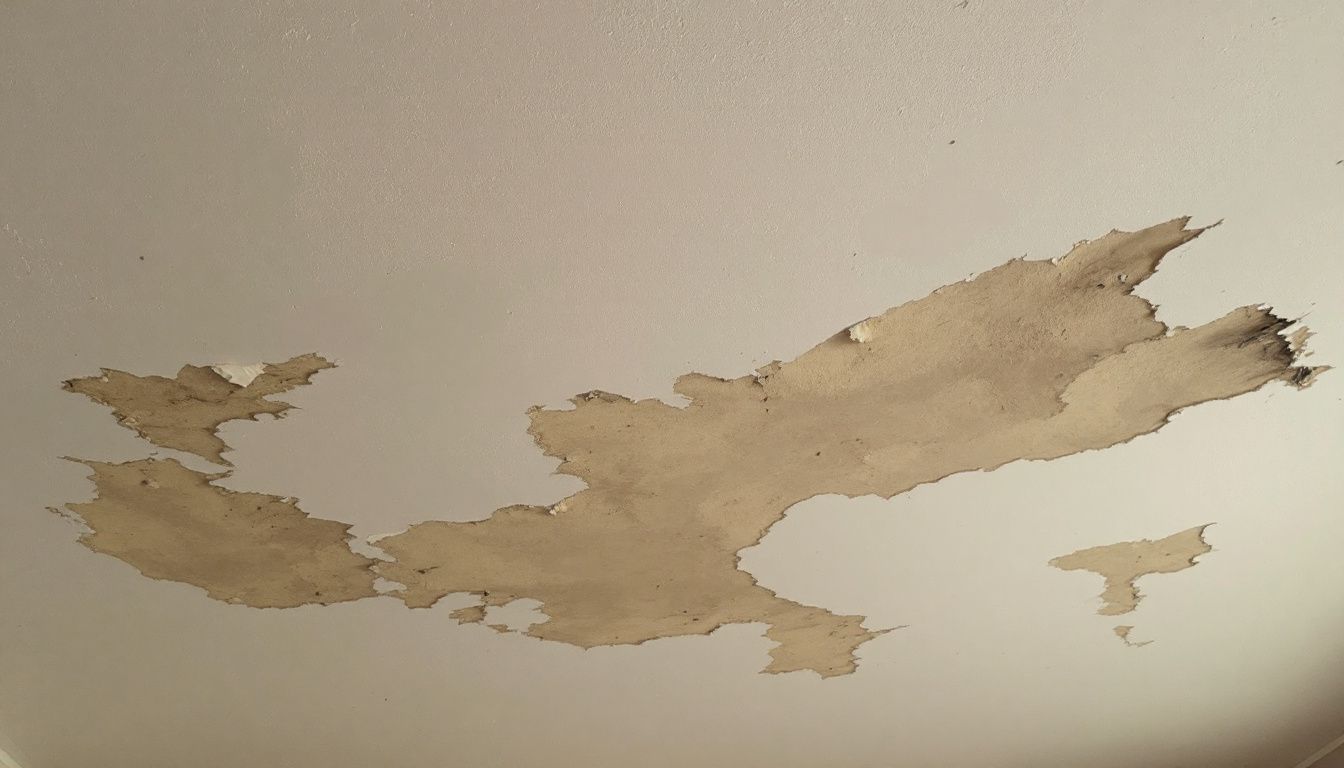
Damaged or crumbling tiles are the real danger. Intact tiles left undisturbed pose a lower immediate risk, but any maintenance, renovation, or even a leak from above can disturb them and release fibres into the air your staff and customers are breathing.
Floor Tiles and Adhesives
Vinyl floor tiles laid before 2000 are a common source of asbestos in commercial kitchens and dining areas. The adhesive used to bond them to the subfloor — often referred to as black mastic — also frequently contained asbestos fibres.
Replacing or sanding these tiles without a prior survey is one of the most common ways restaurant workers are accidentally exposed to asbestos. The fibres released during this kind of work are invisible to the naked eye and can remain airborne for hours.
Pipe Lagging and Boiler Rooms
Older pipe insulation — particularly around heating and hot water systems — was routinely wrapped in asbestos lagging. Restaurant boiler rooms and plant areas are therefore high-risk zones, especially in buildings that have not been significantly modernised.
Staff carrying out routine maintenance in these areas, or contractors brought in for heating repairs, can unknowingly disturb this material. Without a survey and a proper asbestos register, no one may even know the risk exists.
Walls, Partitions, and Spray Coatings
Asbestos insulation board was used widely in partition walls and as fire protection around structural steelwork. Spray-applied asbestos coatings were also used on ceilings and structural elements for fireproofing purposes.
These materials are among the most hazardous because they can be friable — meaning they crumble and release fibres easily when disturbed. If your restaurant has undergone any kind of fit-out or refurbishment without a prior asbestos survey, there is a real risk these materials were disturbed without anyone realising.
The Health Risks Are Severe and Long-Lasting
Asbestos-related diseases are caused by inhaling microscopic fibres that become permanently lodged in lung tissue. These conditions develop slowly — often taking 20 to 40 years to manifest — which means exposure today may not show up as illness until decades from now.
Mesothelioma
Mesothelioma is an aggressive cancer of the lining of the lungs or abdomen. It is almost exclusively caused by asbestos exposure and is invariably fatal. The UK has one of the highest rates of mesothelioma in the world, a direct legacy of the widespread use of asbestos in construction throughout the twentieth century.
Lung Cancer and Asbestosis
Asbestos exposure significantly increases the risk of lung cancer, particularly in combination with smoking. Asbestosis is a chronic scarring of the lung tissue that causes progressive breathlessness and has no cure.
Both conditions are entirely preventable — but only if exposure is prevented in the first place. For restaurant staff who work in the same building day after day, repeated low-level exposure is a genuine concern. The duty to protect them falls squarely on the employer and the dutyholder for the premises.
Your Legal Obligations as a Restaurant Owner
The Control of Asbestos Regulations place a legal duty on those responsible for non-domestic premises to manage the risk from asbestos. As a restaurant owner or operator, that duty falls on you — regardless of whether you own the building or lease it.
The Duty to Manage
The duty to manage requires you to identify whether asbestos-containing materials are present in your premises, assess their condition, and put a management plan in place to prevent exposure. This duty applies to all non-domestic premises, regardless of size.
Failing to comply is a criminal offence. The Health and Safety Executive can issue improvement notices, prohibition notices, and prosecute dutyholders. Fines can be substantial, and in serious cases, custodial sentences are possible.
What the Regulations Require in Practice
In practical terms, your obligations include:
- Commissioning a suitable asbestos survey of your premises
- Maintaining an up-to-date asbestos register
- Producing and implementing an asbestos management plan
- Making information about asbestos locations available to anyone who may disturb them — including contractors
- Reviewing the register and plan regularly
HSE guidance document HSG264 sets out how surveys should be conducted and what they must cover. Surveys must be carried out by a competent surveyor — not a general contractor or a member of your own staff.
Before Any Refurbishment or Building Work
If you are planning any building work — a kitchen refit, a new extraction system, structural alterations, redecoration — you need a refurbishment survey before work begins. This applies even if you already have a management survey in place, because a management survey is not intrusive enough to clear areas for physical work.
Starting refurbishment work without an appropriate survey puts your contractors at risk and exposes you to serious legal liability. There is no grey area here.
The Types of Restaurant Asbestos Survey You Need to Know About
Not all asbestos surveys are the same. The type you need depends on what you intend to do with the information and the nature of any planned work.
Management Survey
A management survey is the standard survey required for the ongoing safe management of a building. It identifies asbestos-containing materials in accessible areas, assesses their condition, and provides the information you need to build your asbestos register and management plan.
This is the survey most restaurant owners will need as a baseline. It does not involve significant intrusion into the building fabric — it covers materials that could be disturbed during normal occupancy and routine maintenance.
Refurbishment Survey
An asbestos refurbishment survey is required before any work that will disturb the building fabric. It is more intrusive than a management survey — surveyors will open up walls, lift floor coverings, and access areas that are not normally accessible in order to locate all asbestos-containing materials in the areas to be worked on.
For a restaurant planning a refit, this survey is not optional. It is a legal requirement, and any contractor worth working with will insist on seeing it before they start.
Demolition Survey
If your restaurant is being demolished or partially demolished, a demolition survey is required. This is the most thorough and intrusive type, designed to locate all asbestos-containing materials throughout the entire structure before any demolition work begins. It leaves no area unchecked.
What Happens During a Restaurant Asbestos Survey
Understanding what to expect makes it easier to prepare and minimises disruption to your business.
The Survey Process
A qualified surveyor will visit your premises and carry out a systematic inspection of all accessible areas. This includes the kitchen, dining areas, storage rooms, staff areas, plant rooms, and any other spaces within the building.
Where materials are suspected to contain asbestos, the surveyor will take small samples for laboratory analysis. These samples are collected carefully to minimise fibre release, and the area is cleaned and sealed afterwards.
The Survey Report
After the survey, you will receive a detailed report identifying the location, type, condition, and risk rating of any asbestos-containing materials found. This report forms the basis of your asbestos register and management plan.
At Supernova Asbestos Surveys, reports are typically delivered within 24 hours of the survey being completed. The report will also include recommendations for how each identified material should be managed — whether that means leaving it in place with monitoring, encapsulation, or removal.
Minimising Disruption to Your Business
A management survey for a typical restaurant can usually be completed in a few hours. Surveyors are used to working around operational businesses and can often schedule visits outside trading hours or during quieter periods.
The survey itself does not require the building to be vacated, although access to all areas — including the kitchen and any plant rooms — is essential for a thorough inspection.
Managing Asbestos Once It Has Been Found
Finding asbestos in your restaurant does not automatically mean it needs to be removed. In many cases, materials that are in good condition and are not at risk of disturbance can be safely managed in place.
Asbestos Management Plans
Your asbestos management plan should set out how each identified material will be managed, who is responsible for monitoring it, and what action will be taken if its condition changes. The plan needs to be a living document — reviewed regularly and updated whenever work is carried out or conditions change.
Critically, the plan must be accessible to any contractor working on your premises. Giving contractors the information they need before they start work is a legal requirement and a basic duty of care.
When Removal Becomes Necessary
Removal becomes necessary when materials are in poor condition, when they are at risk of disturbance during planned work, or when they pose an unacceptable ongoing risk. Only licensed contractors can remove the most hazardous asbestos materials — such as sprayed coatings, pipe lagging, and asbestos insulation board.
Notification to the HSE is required before licensed removal work begins, and strict controls govern how the work is carried out, how the waste is contained, and how it is disposed of at licensed sites.
Special Considerations for Hospitality Premises
Restaurants present specific challenges that make a thorough restaurant asbestos survey particularly important — beyond what you might face with a standard office or retail unit.
High Footfall and Vulnerable Occupants
Restaurants are occupied not just by employees but by members of the public, including children and elderly individuals who may be more vulnerable to health impacts. Any airborne fibre release in a busy dining environment could affect a large number of people before anyone realises something is wrong.
This makes the stakes higher than in many other commercial settings, and it is one more reason why having an up-to-date asbestos register and management plan is non-negotiable.
Frequent Maintenance and Fit-Outs
Hospitality premises tend to undergo more frequent refurbishment than many other building types. Kitchens are upgraded, dining areas are redesigned, extraction systems are replaced. Each of these activities carries the potential to disturb asbestos-containing materials if the correct surveys have not been carried out beforehand.
Every time a contractor is brought in to carry out work on your premises, they must be given access to your asbestos register. If the register does not exist — or if it has not been updated to reflect recent changes — you are exposing both your workers and your business to serious risk.
Tenanted and Leased Premises
Many restaurant operators lease rather than own their premises. In a leased property, the duty to manage asbestos may fall on the landlord, the tenant, or be shared between them — depending on the terms of the lease and what areas each party controls.
Do not assume your landlord has dealt with this. Check your lease, understand your responsibilities, and commission a survey if one is not already in place. If your landlord has an existing asbestos register for the building, request a copy before you begin any work.
Asbestos Surveys for Restaurants Across the UK
Supernova Asbestos Surveys operates nationwide, with experienced surveyors covering every region of the UK. Whether your restaurant is in the heart of a major city or a smaller market town, we can arrange a survey quickly and with minimal disruption to your operations.
If you need an asbestos survey London for a restaurant or hospitality venue in the capital, our team is familiar with the wide variety of building types found across London’s boroughs — from Victorian terraces to post-war commercial units.
For venues in the North West, our team providing an asbestos survey Manchester covers the full range of commercial premises across Greater Manchester and the surrounding area.
In the Midlands, our asbestos survey Birmingham service supports restaurant and hospitality operators across the city and beyond, with fast turnaround times and clear, actionable reports.
What to Do Right Now
If you do not have an asbestos survey for your restaurant premises, the time to act is now — not when a contractor discovers something unexpected during a refit, and not after an HSE inspection.
Here is a straightforward checklist to get started:
- Establish whether your building was constructed or refurbished before 2000
- Check whether an asbestos survey has ever been carried out — and whether it is still current
- If no survey exists, commission a management survey as your baseline
- If any building work is planned, commission a refurbishment survey before work begins
- Ensure your asbestos register and management plan are documented and accessible to contractors
- Review your plan regularly and update it after any work that affects the building fabric
Supernova Asbestos Surveys has completed over 50,000 surveys across the UK. Our UKAS-accredited surveyors understand the specific demands of hospitality premises and will work around your trading hours wherever possible. Call us on 020 4586 0680 or visit asbestos-surveys.org.uk to arrange your restaurant asbestos survey today.
Frequently Asked Questions
Do I need a restaurant asbestos survey if my building was built after 2000?
If your building was constructed entirely after 1999, it is very unlikely to contain asbestos-containing materials, as asbestos was banned from use in construction in the UK from that point. However, if the building underwent significant refurbishment using older salvaged materials, or if you are unsure of the exact construction date, it is worth seeking professional advice. For any building with uncertainty around its age or history, a survey provides certainty and peace of mind.
What is the difference between a management survey and a refurbishment survey for a restaurant?
A management survey is designed for the ongoing safe management of a building in normal use. It covers accessible areas and identifies asbestos-containing materials that could be disturbed during routine maintenance or occupancy. A refurbishment survey is required before any work that will disturb the building fabric — such as a kitchen refit or structural alterations. It is more intrusive and is legally required before refurbishment work begins. Having a management survey does not remove the need for a refurbishment survey when building work is planned.
Who is responsible for asbestos management in a leased restaurant premises?
Responsibility depends on the terms of the lease and which party has control over which parts of the building. In many cases, the landlord retains responsibility for the structure and common areas, while the tenant is responsible for the areas they occupy and control. However, this varies significantly between leases. Both parties should review their obligations carefully. If you are a restaurant tenant and are unsure, seek legal advice and request any existing asbestos survey documentation from your landlord before carrying out any work.
How long does a restaurant asbestos survey take?
The duration depends on the size and complexity of the premises. A management survey for a small to medium-sized restaurant can typically be completed in a few hours. Larger premises with extensive plant rooms, multiple floors, or complex layouts will take longer. Supernova Asbestos Surveys will provide you with a clear indication of the expected duration before the survey takes place, and our surveyors can often work outside normal trading hours to minimise disruption.
Does finding asbestos mean I have to close my restaurant?
Not necessarily. The discovery of asbestos-containing materials does not automatically require closure or removal. If materials are in good condition and are not at risk of disturbance during normal use, they can often be safely managed in place under a documented asbestos management plan. Closure or removal is typically only required when materials are in poor condition, are actively releasing fibres, or when planned building work means they will be disturbed. Your survey report will include clear recommendations on the appropriate course of action for each material identified.