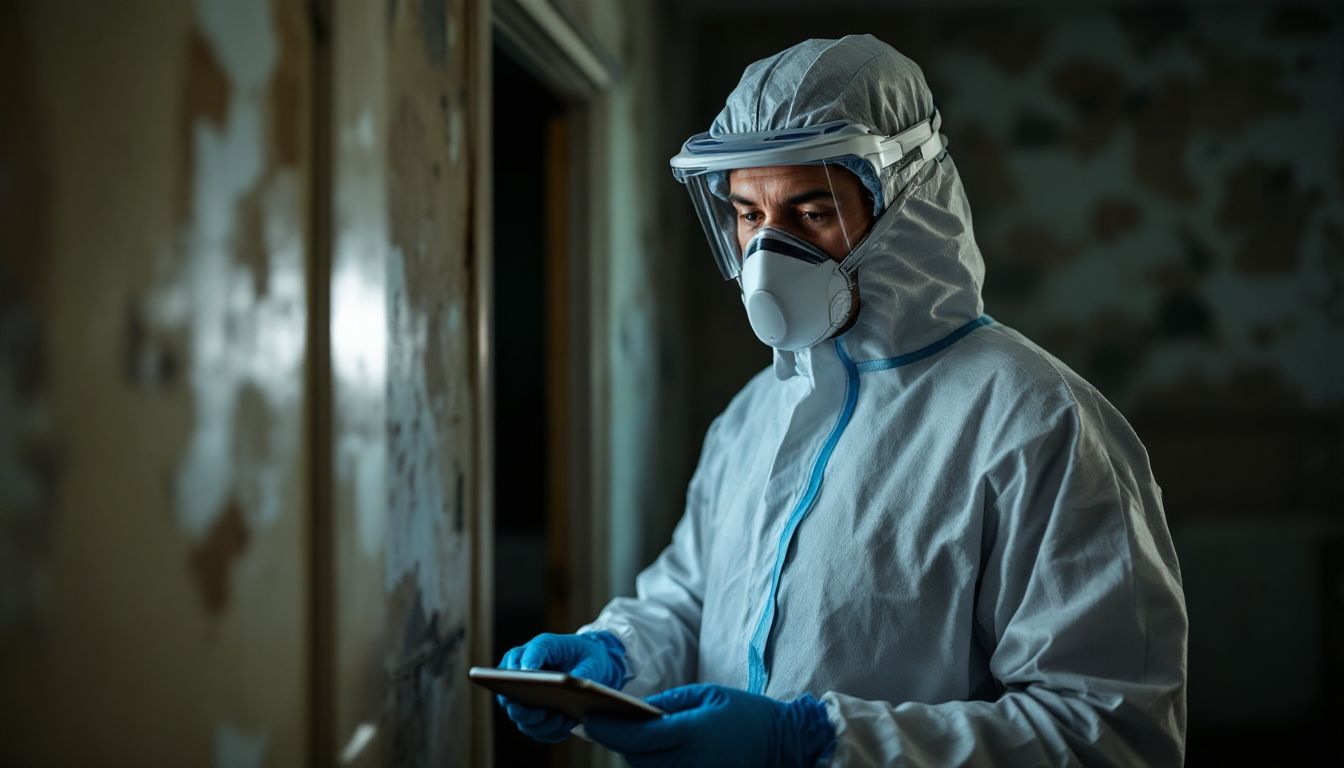
Why Every Hotel Built Before 2000 Needs an Asbestos Survey
If your hotel was built or refurbished before the year 2000, there is a very real chance asbestos-containing materials are hidden somewhere in the fabric of the building. Walls, ceiling voids, boiler rooms, pipe lagging, floor tiles — asbestos was used extensively across the construction industry for decades, and the hospitality sector is no exception.
An asbestos survey for hotels is not just a legal formality. It is the foundation of a safe, compliant, and well-managed property. Whether you run a boutique city-centre hotel, a large resort, or a chain of serviced apartments, the obligations are the same — and the consequences of getting it wrong are serious.
The Legal Duty to Manage Asbestos in Hotels
Under the Control of Asbestos Regulations, anyone who owns, manages, or holds responsibility for a non-domestic premises is classified as a dutyholder. That includes hotel owners, general managers, and in some cases, facilities management contractors.
The dutyholder’s obligations are clearly defined:
- Identify whether asbestos-containing materials (ACMs) are present in the building
- Assess the condition and risk of any ACMs found
- Produce and maintain an Asbestos Management Plan (AMP)
- Ensure anyone who may disturb ACMs is made aware of their location
- Monitor the condition of ACMs on a regular basis
Failing to meet these obligations is a criminal offence. Penalties range from fines of up to £20,000 and 12 months’ imprisonment at magistrates’ court, up to unlimited fines and two years’ imprisonment at Crown Court.
The HSE takes enforcement in the hospitality sector seriously. There are documented cases of hotel operators receiving significant fines following unsafe asbestos work. Commissioning a proper asbestos survey for your hotel is not optional — it is a legal requirement.
Where Asbestos Hides in Hotel Buildings
Asbestos was used in an enormous variety of building products, which is precisely why it is so difficult to identify without professional testing. In a hotel environment, ACMs can appear in locations regularly accessed by both guests and maintenance staff.
Common locations to check
- Ceiling tiles and textured coatings — particularly Artex-style finishes applied before the late 1990s
- Pipe lagging and boiler insulation — especially in plant rooms and service corridors
- Floor tiles and adhesives — vinyl floor tiles from the mid-twentieth century frequently contained chrysotile asbestos
- Roof materials — asbestos cement was widely used in flat and pitched roof construction
- Partition walls and ceiling voids — asbestos insulating board (AIB) was a common material in fire-resistant partitions
- Sprayed coatings on structural steelwork — found in older hotel buildings with exposed steel frames
- Water tanks and service ducts — particularly in older utility areas
The critical point is this: you cannot identify asbestos by looking at a material. Only laboratory analysis of a sample taken by a trained professional can confirm whether asbestos is present. Visual identification alone is never sufficient.
Types of Asbestos Survey for Hotels
Not all asbestos surveys are the same. The type of survey required depends on what you intend to do with the building. HSG264 — the HSE’s guidance document on asbestos surveying — sets out the framework for survey types, and choosing the right one matters significantly.
Management Survey
A management survey is the standard survey for a hotel in normal day-to-day operation. It is designed to locate ACMs that could be disturbed during routine maintenance, cleaning, or minor works — without causing significant disruption to the building or its occupants.
The surveyor will inspect accessible areas, take samples where ACMs are suspected, and produce a report detailing the location, condition, and risk rating of any materials found. This forms the basis of your Asbestos Register and Management Plan.
Management surveys must be kept up to date. If the building’s condition changes, or if new areas are accessed during maintenance, the register should be reviewed and updated accordingly.
Refurbishment Survey
If you are planning any renovation, refitting, or structural alteration work — even something as straightforward as replacing a bathroom suite or knocking through a wall — you will need a refurbishment survey before work begins.
This survey is more intrusive than a management survey. It involves accessing areas that would normally remain undisturbed, including ceiling voids, wall cavities, and floor substrates. The area being surveyed must typically be vacated during the inspection.
A refurbishment survey ensures that contractors working on the hotel are not inadvertently disturbing hidden ACMs — one of the most common causes of accidental asbestos exposure on renovation sites.
Demolition Survey
If any part of your hotel is being demolished — whether a single outbuilding or the entire structure — a demolition survey is a legal requirement before any demolition work commences.
This is the most thorough and intrusive type of survey. Every part of the building must be inspected and sampled, including areas that are structurally inaccessible under normal circumstances. The goal is to produce a complete picture of all ACMs present so that they can be safely removed prior to demolition.
Demolition surveys must be carried out by a UKAS-accredited surveying organisation, and the findings must be made available to the principal contractor before any demolition work starts.
Developing an Asbestos Management Plan for Your Hotel
Once a management survey has been completed, the findings feed directly into your Asbestos Management Plan. This is a living document — not something you produce once and file away. It needs to be actively maintained and regularly reviewed.
What a good AMP contains
- A full Asbestos Register listing all known or presumed ACMs, their location, condition, and risk rating
- Floor plans or annotated drawings showing where ACMs are located throughout the property
- Details of the actions required for each material — whether monitoring, encapsulation, or removal
- A schedule for re-inspection of ACMs being managed in situ
- Emergency procedures in the event of accidental disturbance
- Records of all training provided to staff who may encounter ACMs
- Details of any remedial or removal work carried out, including contractor details and waste transfer notes
Communicating the AMP to your team
The AMP is only effective if the right people know about it. Maintenance staff, housekeeping supervisors, and any contractors working on site must be made aware of the Asbestos Register before starting any work that could disturb building materials.
This is not just good practice — it is a legal requirement under the Control of Asbestos Regulations. Keep the AMP accessible, review it at least annually, and update it whenever the building’s condition changes or new work is carried out.
Staff turnover in the hospitality industry is high. New team members need to be inducted on asbestos awareness as part of their onboarding — a straightforward, inexpensive step that significantly reduces risk.
When Asbestos Removal Becomes Necessary
Not all asbestos needs to be removed immediately. ACMs that are in good condition and are unlikely to be disturbed can often be safely managed in place. However, there are circumstances where removal is the appropriate course of action.
Situations that typically require removal
- ACMs that are damaged, deteriorating, or friable (crumbling)
- Areas that are being refurbished, extended, or demolished
- Materials in high-traffic areas where regular disturbance is likely
- ACMs that cannot be practically managed in situ due to their location
When removal is required, it must be carried out by a licensed contractor in most cases. Certain non-licensed asbestos work can be carried out by trained operatives, but the majority of ACMs found in older hotel buildings — particularly AIB, pipe lagging, and sprayed coatings — fall into the licensed category.
Our team provides full asbestos removal services, working to strict HSE-approved procedures to ensure the safety of your guests, staff, and contractors throughout the process.
What safe asbestos removal involves
Licensed asbestos removal is a controlled, methodical process. Before any work begins, the contractor must notify the HSE using an ASB5 form. A regulated work area is then established — sealed with heavy-duty polythene sheeting, fitted with negative pressure units to prevent fibre escape, and clearly signed to prevent unauthorised access.
Workers must wear appropriate personal protective equipment (PPE) including respiratory protective equipment (RPE) to the correct assigned protection factor, disposable coveralls, and gloves. All equipment must be checked before use.
Once the ACMs have been removed, the area undergoes a thorough decontamination process. Air monitoring is carried out by an independent analyst before the enclosure is dismantled and the area is cleared for reoccupation. All asbestos waste must be double-bagged, labelled, and disposed of at a licensed waste facility — with waste transfer notes retained as part of your records.
Preventing Accidental Asbestos Exposure in Your Hotel
The most common cause of asbestos exposure in hotels is not a major construction project — it is routine maintenance work carried out without adequate knowledge of what is in the building. A maintenance engineer drilling into a ceiling to fix a light fitting, or a contractor cutting through a partition wall, can release significant quantities of asbestos fibres without either party realising the risk.
Practical steps to reduce risk
- Ensure all maintenance staff and contractors receive a briefing on your Asbestos Register before starting any work
- Introduce a permit-to-work system for any task that involves disturbing building fabric
- Display clear signage in areas where ACMs are present
- Never allow drilling, cutting, sanding, or scraping in areas where ACMs have been identified without first consulting the AMP
- Carry out regular re-inspections of known ACMs — at least annually, or more frequently if materials are in a vulnerable location
- Induct new staff on asbestos awareness as part of their standard onboarding process
Training is not a one-off event. With high staff turnover common across the hospitality sector, asbestos awareness must be embedded into your induction process and refreshed regularly. It is one of the simplest risk-reduction measures available to any hotel operator.
Asbestos Surveys for Hotels Across the UK
Supernova Asbestos Surveys operates nationwide, supporting hotels, guest houses, serviced apartments, and hospitality venues of all sizes. Whether you manage a boutique property in the city centre or a large resort hotel, our UKAS-accredited surveyors carry out the full range of surveys with minimal disruption to your operation.
We cover major cities and regions across England, Scotland, and Wales. If you are based in the capital, our asbestos survey London team is available for fast turnaround. For properties in the North West, our asbestos survey Manchester service covers the wider region. For the Midlands, our asbestos survey Birmingham team is on hand to help.
With over 50,000 surveys completed, we understand the operational pressures that come with managing a live hotel environment. We work around your schedule, prioritise minimal disruption, and deliver clear, actionable reports that give you everything you need to stay compliant and protect everyone on your premises.
To book an asbestos survey for your hotel, call us on 020 4586 0680 or visit asbestos-surveys.org.uk to request a quote. Our team is ready to help you meet your legal obligations and keep your property safe.
Frequently Asked Questions
Do hotels legally need an asbestos survey?
Yes. Under the Control of Asbestos Regulations, hotel owners and managers are classified as dutyholders and are legally required to identify whether asbestos-containing materials are present in their premises. This obligation applies to all non-domestic buildings, including hotels, guest houses, and serviced accommodation. A management survey is the standard starting point for any hotel that is in active use.
What type of asbestos survey does a hotel need?
The type of survey depends on what you plan to do with the building. A management survey is required for hotels in normal operation and forms the basis of your Asbestos Register and Management Plan. A refurbishment survey is needed before any renovation or alteration work begins. A demolition survey is legally required before any part of the building is demolished. In many cases, hotel operators will need more than one type of survey over the lifetime of the property.
Can asbestos be left in place in a hotel?
Yes, in many cases. ACMs that are in good condition and are not at risk of being disturbed can be safely managed in place under an Asbestos Management Plan. Removal is not always necessary or even advisable — disturbing intact materials can create more risk than leaving them undisturbed. However, damaged, deteriorating, or friable materials, and any ACMs in areas being refurbished or demolished, will typically need to be removed by a licensed contractor.
How often should a hotel’s asbestos management plan be reviewed?
Your Asbestos Management Plan should be reviewed at least annually as a minimum. It should also be updated whenever the condition of known ACMs changes, when new areas of the building are accessed or altered, or when any remedial or removal work is carried out. The plan is a live document — not a one-time exercise — and keeping it current is a legal obligation under the Control of Asbestos Regulations.
Who can carry out an asbestos survey for a hotel?
Asbestos surveys must be carried out by a competent, trained surveyor. For management and refurbishment surveys, the surveyor should hold the relevant P402 qualification or equivalent. Demolition surveys must be carried out by a UKAS-accredited organisation. Supernova Asbestos Surveys is UKAS-accredited and operates nationwide, with experienced surveyors who understand the specific challenges of surveying occupied hospitality premises.