Selling a House with Asbestos: What Every Homeowner Needs to Know
Selling a house with asbestos is far more common than most people realise — and far more manageable than many fear. If your property was built before 2000, there is a realistic chance that asbestos-containing materials (ACMs) are present somewhere, and how you handle that fact will directly shape your sale price, your legal standing, and your buyer’s confidence.
The good news is that asbestos does not have to derail your sale. With the right approach, you can sell successfully, legally, and without unnecessary stress.
Where Is Asbestos Likely to Be Found in Older Homes?
Asbestos was used extensively in UK construction right up until its full ban in 1999. It was valued for its fire resistance, durability, and insulating properties — which is precisely why it ended up in so many different parts of a building.
If your home was built or renovated before that date, the following areas are worth paying close attention to:
- Roof materials — cement roof sheets, corrugated panels, and felt underlay frequently contained asbestos fibres
- Floor tiles — vinyl floor tiles from before the 1980s often contain chrysotile (white asbestos)
- Ceiling tiles and textured coatings — Artex and similar textured finishes applied before 2000 commonly contained asbestos
- Pipe and boiler lagging — thermal insulation around pipes, boilers, and heating systems was a prime application for asbestos
- Duct insulation — heating and ventilation ducts were frequently wrapped in asbestos-based materials
- Soffit boards and fascias — external boards around the roofline were often manufactured from asbestos cement
- Plaster and wall coatings — asbestos was sometimes added to plaster mixes for fire resistance
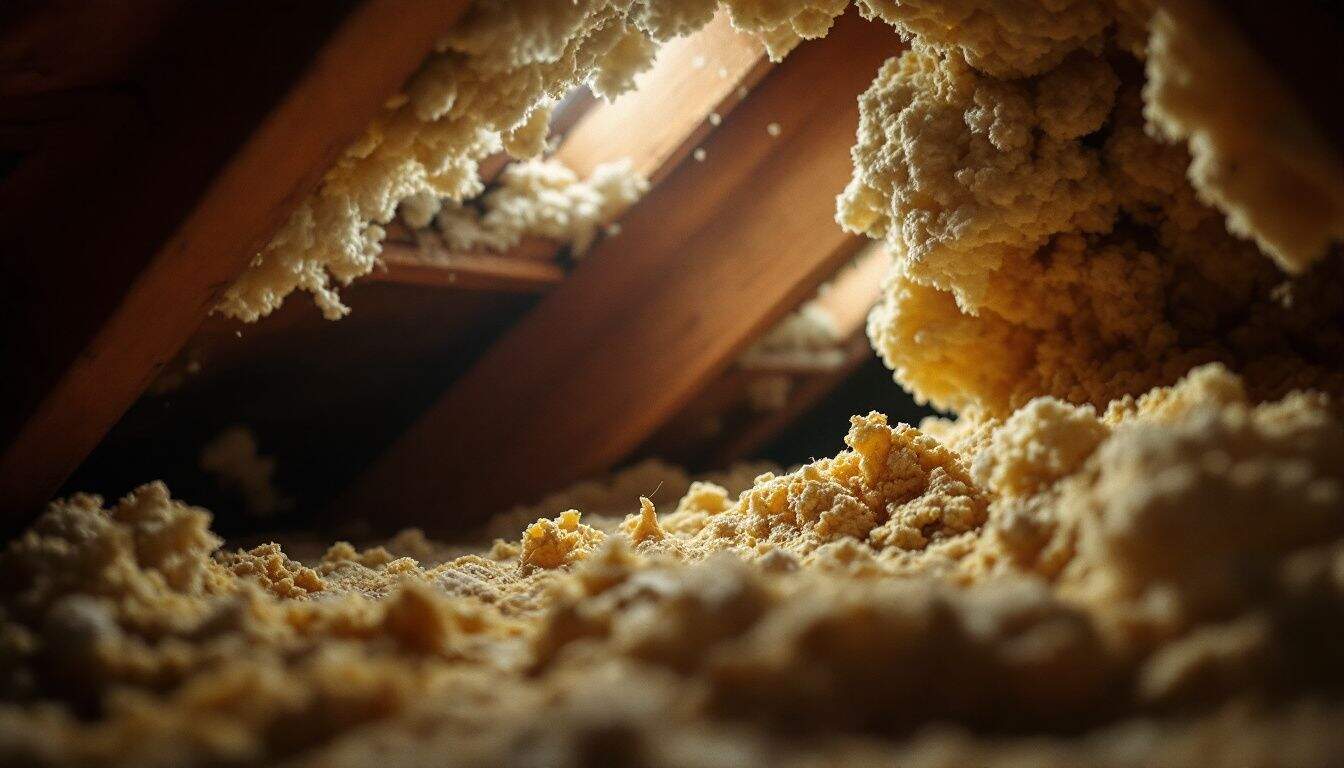
- Attic insulation — loose-fill insulation in loft spaces occasionally included asbestos, particularly in properties from the 1960s and 1970s
The key point to understand is that the mere presence of asbestos does not automatically make a property dangerous. Asbestos that is in good condition and left undisturbed poses a very low risk. The danger arises when materials are damaged, deteriorating, or disturbed during renovation work.
Why a Professional Asbestos Survey Matters Before You Sell
Guessing is not a strategy. If you suspect asbestos is present in your home, the only reliable way to confirm it — and understand its condition — is through a professional asbestos survey.
A qualified surveyor will inspect the property, take samples from suspected materials, and have them analysed in a UKAS-accredited laboratory. You will receive a written report detailing exactly where ACMs are located, what type of asbestos is present, and what condition it is in.
This report is valuable for several reasons:
- It gives you accurate information to disclose to buyers — which is a legal requirement
- It helps you and your estate agent price the property correctly
- It demonstrates to buyers that you have acted responsibly
- It can prevent deals falling through during conveyancing when solicitors start asking questions
If you are in or around the capital, our team offers a full asbestos survey London service covering residential and commercial properties. We also provide surveys across the country, including an asbestos survey Manchester service and an asbestos survey Birmingham service for homeowners in those regions.
Where a survey identifies suspect materials, asbestos testing of samples taken from those materials will confirm whether asbestos is actually present and identify the fibre type. This removes all ambiguity and gives everyone involved in the transaction the facts they need.
Your Legal Obligations When Selling a House with Asbestos
This is the section that matters most from a legal standpoint. In England and Wales, property sellers are required to disclose material facts about a property that could affect a buyer’s decision to purchase. Asbestos is unquestionably a material fact.
Failing to disclose known asbestos — or actively concealing it — can expose you to claims of misrepresentation after the sale completes. The Control of Asbestos Regulations set out the framework for managing asbestos safely in the UK, and while these regulations are primarily aimed at non-domestic premises, they establish the broader legal context around asbestos management that informs best practice in residential sales.
Sellers should also be aware that solicitors acting for buyers are increasingly asking specific questions about asbestos during the conveyancing process. Being unprepared for these questions can slow your sale or cause buyers to walk away.
What You Must Tell Buyers
If you are aware of asbestos in your property — whether through a formal survey or through prior knowledge — you must disclose it. This includes:
- The location of any known ACMs
- The condition of those materials (good, damaged, or deteriorating)
- Any surveys, test results, or management plans you hold
- Any previous removal or encapsulation work carried out
Providing buyers with a copy of your asbestos survey report is the cleanest way to fulfil this obligation. It shows transparency and removes any doubt about what you knew and when.
What Happens If You Do Not Disclose?
If a buyer discovers undisclosed asbestos after completion, they may have grounds to pursue a misrepresentation claim. This can result in costly legal proceedings, compensation demands, or in serious cases, the unwinding of the transaction.
The short-term discomfort of disclosure is far preferable to the long-term consequences of concealment. Transparency protects you legally and keeps the sale on track.
Your Options for Handling Asbestos Before the Sale
Once you know what you are dealing with, you have several practical options. The right choice depends on the type and condition of the asbestos, your budget, and the current state of the property market.
Option 1: Professional Asbestos Removal
Having the asbestos professionally removed before marketing the property is the most straightforward approach if you want to sell with minimal complications. Licensed contractors will safely strip out the ACMs, dispose of them in accordance with waste regulations, and provide you with a clearance certificate confirming the work is complete.
This removes the issue entirely from the sales process. Buyers have nothing to worry about, mortgage lenders have no grounds for concern, and your solicitor can proceed without additional caveats in the contract.
The cost of asbestos removal varies depending on the volume and type of material involved. Larger jobs — such as removing an asbestos cement roof or extensive pipe lagging — will cost significantly more than removing a small area of floor tiles. Always obtain at least two or three quotes from licensed contractors before committing.
Option 2: Encapsulation (Sealing in Place)
If the asbestos is in good condition and not in a location where it is likely to be disturbed, encapsulation can be a cost-effective alternative to removal. This involves applying specialist sealants or coatings that bind the asbestos fibres and prevent them from becoming airborne.
Encapsulation is generally less expensive than full removal and can be a sensible choice for materials like intact floor tiles beneath a new floor covering, or asbestos cement panels that are undamaged. However, encapsulation manages the risk rather than eliminating it — buyers and future owners will still need to be made aware of the ACMs and treat them accordingly.
Option 3: Offer a Buyer Credit
Some sellers choose not to carry out any remediation work and instead factor the cost into the sale price or offer a buyer credit specifically earmarked for asbestos remediation. This is a legitimate approach, provided full disclosure is made.
A buyer credit gives the purchaser control over how and when the work is done, which some buyers — particularly developers and cash buyers — may actually prefer. Agree the credit amount based on realistic quotes from licensed contractors, not guesswork.
Option 4: Sell the Property As-Is
Selling as-is means marketing the property in its current condition, with asbestos disclosed, and reflecting that in the asking price. This is particularly common with properties sold to investors, developers, or buyers who specifically seek older homes and understand what they are taking on.
Use clear contract language to set expectations, and ensure your solicitor includes appropriate wording in the transfer documents. This approach is entirely legal and can result in a clean, quick transaction with the right buyer.
How Selling a House with Asbestos Affects Property Value
There is no fixed rule for how much asbestos will reduce a property’s value — it depends heavily on the type of asbestos, its location, its condition, and how it has been managed. What is certain is that undisclosed or poorly handled asbestos will cause more damage to your sale than asbestos that has been properly surveyed and documented.
A property with a clear survey report showing ACMs in good condition, accompanied by a management plan, is in a much stronger position than a property where asbestos is suspected but unconfirmed. Buyers and their surveyors will always assume the worst in the absence of information.
Pricing Your Property Realistically
Work with an estate agent who has experience selling properties with asbestos. They will help you price the home in a way that accounts for the asbestos without unnecessarily underselling the property.
A good agent will also know which buyers are likely to be comfortable purchasing a home with managed asbestos and how to present the survey findings in a straightforward, factual way. If you have obtained quotes for removal or encapsulation, use these figures to anchor any price negotiations — buyers who understand the actual cost of remediation are less likely to make unrealistically low offers.
Mortgage and Insurance Considerations
Most mortgage lenders will lend on properties containing asbestos, provided the material is in good condition and has been professionally assessed. Where asbestos is in a deteriorating state or poses an active risk, some lenders may require remediation before releasing funds.
It is worth speaking to a mortgage broker early in the process if you anticipate this being an issue. Home insurers may also ask about asbestos when you renew or transfer a policy — transparency with your insurer is just as important as transparency with your buyer.
Choosing the Right Professionals
Not all asbestos surveyors and contractors are equal. When instructing anyone to survey, test, or remove asbestos from your home, check the following:
- Surveyors should hold a relevant qualification (such as the BOHS P402 certificate) and ideally be members of a recognised professional body
- Laboratories used for sample analysis should be UKAS-accredited
- Removal contractors working with licensable asbestos materials must hold a licence issued by the HSE — always ask to see this before instructing them
- Estate agents should have demonstrable experience handling asbestos property sales, not just a passing familiarity with the subject
For homeowners who want independent confirmation of what materials are present, our asbestos testing service provides laboratory-confirmed results from samples taken by our qualified surveyors, giving you a clear and legally defensible picture of your property’s condition.
Practical Steps to Take Right Now
If you are planning to sell a house with asbestos, work through these steps in order:
- Commission a professional asbestos survey — do this before you instruct an estate agent or set an asking price
- Review the survey report carefully — understand what is present, where it is, and what condition it is in
- Decide on your remediation approach — removal, encapsulation, buyer credit, or as-is sale, based on the findings and your budget
- Disclose everything to your solicitor — they need the full picture to advise you correctly and draft appropriate contract terms
- Brief your estate agent — make sure they understand the asbestos situation and can present it accurately and positively to prospective buyers
- Keep copies of everything — survey reports, test results, contractor certificates, and any correspondence relating to asbestos should be retained and handed over at completion
Taking these steps in the right order protects you legally, gives buyers confidence, and keeps your sale moving forward without unnecessary delays.
What Buyers and Their Surveyors Will Be Looking For
It helps to understand what is going through a buyer’s mind — and their surveyor’s — when asbestos comes up during a sale. A buyer’s surveyor will flag any suspected ACMs in their report, which can alarm buyers who are unfamiliar with asbestos. Without your own professional survey to refer to, that alarm can quickly translate into reduced offers, requests for costly specialist reports, or withdrawal from the purchase altogether.
When you already have a professional asbestos survey in hand, the dynamic changes. You are in control of the narrative. You can demonstrate that the materials have been assessed by a qualified professional, that their condition is understood, and that appropriate steps have been taken or planned. That is a far stronger position to negotiate from.
Cash buyers and property investors tend to be more relaxed about asbestos than first-time buyers purchasing with a mortgage. If your property has significant ACMs, targeting your marketing towards buyers who are comfortable with older properties and their associated quirks can save considerable time and frustration.
Managing the Conversation with Buyers
Many sellers dread the moment asbestos comes up in negotiations, but handled correctly, it need not be a difficult conversation. Lead with the facts: what was found, where it is, what condition it is in, and what options exist for managing or removing it.
Avoid being defensive or minimising the issue — buyers can tell when something is being played down, and it erodes trust. Instead, present the survey findings as evidence of your diligence and transparency. Most reasonable buyers will respect a seller who has taken the trouble to get a professional assessment done rather than hoping nobody notices.
If a buyer attempts to use asbestos as leverage for an unreasonably large price reduction, your survey report and contractor quotes give you solid grounds to counter with realistic figures. Negotiations grounded in actual data are far easier to manage than those based on speculation and anxiety.
Frequently Asked Questions
Can I legally sell a house that contains asbestos?
Yes, absolutely. There is no legal prohibition on selling a residential property that contains asbestos. The legal requirement is that you disclose any known asbestos to the buyer. Provided you are transparent about what is present and its condition, the sale can proceed entirely lawfully. Many thousands of older UK homes are sold each year with asbestos-containing materials in place.
Do I have to remove asbestos before selling my house?
No, removal is not a legal requirement before selling. You have several options: professional removal, encapsulation, a buyer credit, or an as-is sale with full disclosure and a price that reflects the situation. The right choice depends on the type and condition of the asbestos, your budget, and the type of buyer you are targeting. A professional asbestos survey will give you the information you need to make that decision.
Will asbestos stop me getting a sale agreed?
Not necessarily. Asbestos in good condition that has been professionally surveyed and documented is unlikely to prevent a sale. The greater risk comes from undisclosed or unassessed asbestos, which can cause buyers and their mortgage lenders to pull out. Having a professional survey in hand before you go to market puts you in a much stronger position and gives buyers the reassurance they need to proceed with confidence.
How much will asbestos reduce the value of my property?
There is no fixed formula. The impact on value depends on the type of asbestos, its location, its condition, and whether it has been professionally managed. Asbestos in poor condition in a high-risk location will have a greater effect on value than intact asbestos cement panels in an outbuilding, for example. Working with an experienced estate agent and using actual contractor quotes to anchor negotiations will help you achieve a fair price.
What is the difference between an asbestos survey and asbestos testing?
An asbestos survey is a physical inspection of the property carried out by a qualified surveyor. During the survey, the surveyor will identify suspected ACMs and take samples. Those samples are then sent for asbestos testing at a UKAS-accredited laboratory, which confirms whether asbestos is present and identifies the fibre type. Both steps together give you a complete, legally defensible picture of your property’s condition.
Ready to Move Forward? Supernova Can Help
At Supernova Asbestos Surveys, we have completed over 50,000 surveys nationwide and work with homeowners, landlords, and property professionals across the UK every day. Whether you need a residential survey before listing your property, laboratory-confirmed testing of suspect materials, or guidance on next steps after a survey, our qualified team is ready to help.
Call us on 020 4586 0680 or visit asbestos-surveys.org.uk to book your survey or speak to a member of the team. Selling a house with asbestos is manageable — and it starts with getting the right information.