Do Houses Built in the 70s Have Asbestos? What Every UK Homeowner Needs to Know
If you own or are buying a 1970s property, there is a very real chance it contains asbestos. Homes built during this decade were constructed at a time when asbestos was one of the most widely used building materials in the UK — cheap, fire-resistant, and considered perfectly safe. We now know otherwise. So, do houses built in the 70s have asbestos? In most cases, yes, and understanding where it hides and what to do about it could protect your health and your wallet.
Why Were 1970s Houses Built With Asbestos?
Asbestos use in UK construction peaked between the 1950s and early 1980s. Builders favoured it because it was affordable, durable, and resistant to heat and fire. It was mixed into everything from ceiling coatings to floor tiles, wall boards to pipe insulation.
The UK did not ban all forms of asbestos until 1999. That means any property built or refurbished before that date could contain asbestos-containing materials (ACMs), but 1970s homes are particularly high-risk because they were built right in the middle of peak usage.
Unlike properties from the 1930s or 1940s where asbestos use was more selective, 1970s construction embraced it across almost every element of a building. This is why a professional survey is so important before any work begins.
Where Is Asbestos Commonly Found in 1970s Houses?
Asbestos does not announce itself. It can look identical to ordinary building materials, which is why visual identification is never reliable. Here are the most common locations to be aware of in a 1970s home.
Textured Ceiling Coatings
Artex and similar textured finishes were enormously popular in the 1970s. Many of these products contained chrysotile (white asbestos), particularly those applied before the mid-1980s. If your ceilings have a swirled or stippled pattern, do not sand, drill, or scrape them without first having them tested.
Even a thin skim coat of newer plaster on top does not eliminate the risk — the original coating beneath may still contain asbestos fibres.
Floor Tiles, Adhesives, and Underlays
Vinyl floor tiles from the 1970s frequently contained asbestos, as did the black bitumen adhesive used to fix them down. Linoleum-style products are another common source. These materials appear most often in kitchens, hallways, and bathrooms.
If there is modern flooring laid on top of the original, do not assume the older layers have been removed. They are often still there. Sanding, cutting, or lifting these materials can release fibres instantly.
Insulation Boards and Wall Panels
Asbestos insulation boards (AIBs) were widely used in internal walls, partition panels, behind boilers, around heating ducts, and inside airing cupboards. These boards were common in both private homes and council properties throughout the 1970s.
AIBs are considered high-risk because they are a more friable form of asbestos — meaning they release fibres more readily when disturbed. Drilling, cutting, or removing them without proper controls is extremely dangerous.
Pipe Lagging and Boiler Insulation
Older heating systems in 1970s homes were often insulated with asbestos lagging around pipes and boiler flues. This material can degrade over time, and damaged lagging is one of the most hazardous forms of ACM because fibres can become airborne without any active disturbance.
If you have an old boiler system, a back boiler behind a gas fire, or older pipework that has never been updated, treat the insulation as suspect until it has been assessed by a qualified surveyor.
Roof Tiles, Soffits, and Cement Sheets
Asbestos cement was used extensively in roofing, soffits, fascias, guttering, and external cladding. It was also used in garages and outbuildings. In good condition, asbestos cement is considered lower risk, but weathering, cracking, or drilling can release fibres.
Do not pressure-wash, cut, or drill asbestos cement without professional advice. Even materials in apparently sound condition should be identified and logged before any external renovation work.
Loft Spaces, Airing Cupboards, and Service Voids
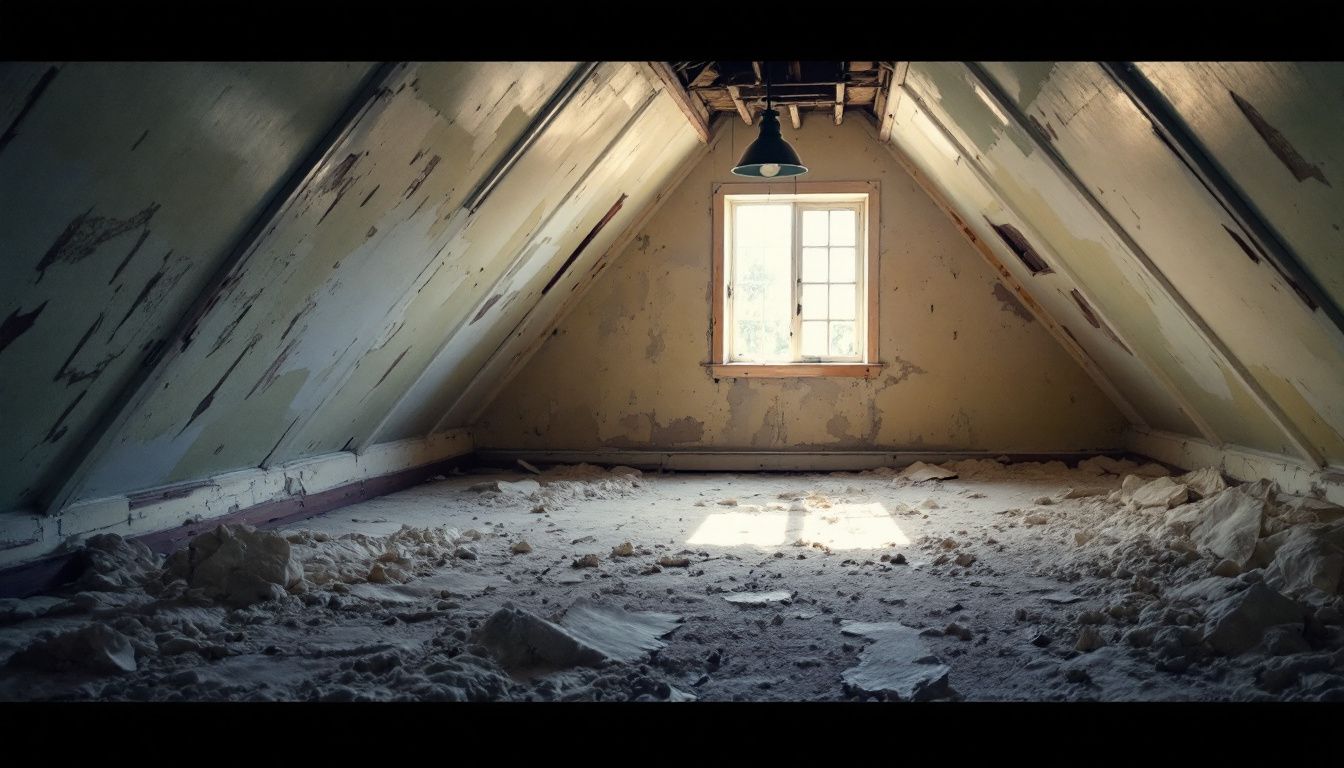
Tucked-away areas are often overlooked but can contain some of the most significant asbestos risks. Loose-fill asbestos insulation — sometimes poured between joists in loft spaces — was used in some 1970s properties and is considered extremely hazardous. Boards, panels, and lagging in airing cupboards and service voids are also common.
Never disturb materials in these areas without a professional assessment first.
The Health Risks: Why Disturbing Asbestos Is So Dangerous
Asbestos fibres are microscopic. When materials are cut, drilled, sanded, or broken, fibres are released into the air and can be inhaled without any visible sign. Once lodged in the lungs, they cannot be expelled by the body.
The diseases caused by asbestos exposure include:
- Mesothelioma — an aggressive cancer of the lining of the lungs or abdomen, almost exclusively caused by asbestos exposure
- Asbestos-related lung cancer — risk is significantly increased by smoking in combination with asbestos exposure
- Asbestosis — scarring of the lung tissue that causes progressive breathing difficulty
- Pleural thickening — thickening of the membrane surrounding the lungs, leading to breathlessness
These diseases typically take 20 to 40 years to develop after exposure, which is why people who worked with asbestos in the 1970s and 1980s are still being diagnosed today. There is no safe level of exposure.
Tradespeople — plumbers, electricians, plasterers, and builders — are at particular risk because they regularly work in older properties without knowing what materials they are disturbing. Homeowners who carry out DIY work in 1970s properties are also at risk.
What UK Law Says About Asbestos in Homes
The Control of Asbestos Regulations place clear legal duties on those who manage or work in buildings containing asbestos. While domestic homeowners are not subject to the same duty to manage as commercial property owners, the regulations still apply when work is being carried out.
Under the Control of Asbestos Regulations, anyone carrying out work that could disturb asbestos must take appropriate precautions. Licensed contractors are required for work on the most hazardous materials, including asbestos insulation boards and pipe lagging. HSE guidance, including HSG264, sets out the standards for asbestos surveys and how they should be conducted.
Before any refurbishment or demolition work on a pre-2000 property, a refurbishment survey is required by law. This applies to domestic properties as well as commercial ones when contractors are involved.
Landlords have additional responsibilities. If you rent out a 1970s property, you have a duty to manage asbestos risks and ensure any contractors working on the property are aware of potential hazards.
The Difference Between a Management Survey and a Refurbishment Survey
Not all asbestos surveys are the same, and choosing the right one matters.
Management Survey
A management survey is designed to locate and assess ACMs in a property that is in normal use. It is less intrusive and focuses on materials that could be disturbed during everyday occupation or routine maintenance. This is the starting point for most homeowners and landlords who want to understand what is in their property.
Refurbishment Survey
An asbestos refurbishment survey is required before any significant renovation, alteration, or demolition work. It is more intrusive — surveyors will access areas that would normally be sealed, including wall cavities and floor voids — because all ACMs in the work area must be identified before work starts. This survey is a legal requirement when contractors will be involved.
If you are planning an extension, a loft conversion, a new kitchen, or any structural work on a 1970s home, a refurbishment survey is not optional — it is a legal necessity.
Can You Test for Asbestos Without a Full Survey?
If you have a specific material you are concerned about — a ceiling tile, a floor tile, a piece of board — it is possible to arrange sample analysis to have it tested in a laboratory. This can give you a definitive answer about whether a particular material contains asbestos.
However, sample analysis of a single material does not replace a full survey. It will not tell you about other ACMs elsewhere in the property. If you are planning any significant work, a professional survey is always the safer and more legally defensible route.
Critically, you should never attempt to collect samples yourself from materials you suspect may contain asbestos. Any sampling should be carried out by a trained professional who can do so safely and without releasing fibres.
Asbestos in Council Houses and Social Housing From the 1970s
Council-built properties from the 1950s through to the 1970s are among the highest-risk buildings in the UK for asbestos. Large-scale social housing programmes during this period used asbestos cement sheets, insulation boards, and textured coatings extensively to keep costs down and meet fire resistance requirements.
Tenants in these properties should be aware that their landlord — whether a local authority or housing association — has a legal duty to manage asbestos. If you are a tenant and work is being carried out on your property, you have the right to ask whether an asbestos survey has been completed and whether the contractors are aware of any identified ACMs.
If you are a housing manager responsible for a portfolio of 1970s properties, a systematic programme of management surveys is not just good practice — it is a legal obligation under the Control of Asbestos Regulations.
What Happens If Asbestos Is Found?
Finding asbestos in a 1970s house is not automatically a crisis. The condition of the material matters as much as its presence. ACMs that are in good condition, undisturbed, and not at risk of being damaged can often be managed in place rather than removed.
Your surveyor will assess each material and categorise it by risk. The result is an asbestos register — a document that records the location, type, and condition of all identified ACMs. This becomes the foundation of your asbestos management plan.
Where materials are damaged, deteriorating, or in an area where work will take place, asbestos removal by a licensed contractor is the appropriate course of action. Licensed removal is legally required for the most hazardous materials, including asbestos insulation boards and pipe lagging.
The removal process involves sealing off the work area, using negative pressure enclosures to prevent fibre spread, and carrying out air monitoring before the area is cleared for re-occupation. All waste must be double-bagged, labelled, and disposed of at a licensed facility.
Buying or Selling a 1970s Property: What You Need to Know
Asbestos surveys are not currently a legal requirement when buying or selling a residential property, but they are increasingly expected — particularly for older homes. A survey carried out before listing a property demonstrates transparency and can prevent a sale from falling through if a buyer commissions their own survey and finds ACMs that were not disclosed.
For buyers, commissioning a survey before exchange gives you a clear picture of what you are taking on. If ACMs are found, you can factor the cost of management or removal into your offer, or negotiate with the seller to have work carried out before completion.
Mortgage lenders and insurers are also increasingly asking about asbestos in older properties. Having a current survey on file can smooth the process considerably.
Supernova Asbestos Surveys: Nationwide Coverage for 1970s Properties
Supernova Asbestos Surveys has completed over 50,000 surveys across the UK, working with homeowners, landlords, housing associations, and commercial property managers. Our UKAS-accredited surveyors follow HSE guidance and HSG264 standards on every inspection.
Whether you need a management survey for a rental property, a refurbishment survey ahead of renovation work, or specialist advice about a specific material, we can help. We cover the whole of the UK, with dedicated teams in major cities.
- Need an asbestos survey London? Our London team covers all boroughs and surrounding areas.
- Looking for an asbestos survey Manchester? We operate throughout Greater Manchester and the North West.
- Searching for an asbestos survey Birmingham? Our Midlands team is ready to help.
Call us on 020 4586 0680 or get a free quote online at asbestos-surveys.org.uk. Do not start any work on a 1970s property without knowing what you are dealing with.
Frequently Asked Questions
Do all houses built in the 70s have asbestos?
Not every single 1970s house contains asbestos, but the vast majority do. Asbestos was used so widely in UK construction during this period that it is safer to assume it is present until a professional survey proves otherwise. Common locations include textured ceiling coatings, floor tiles, insulation boards, pipe lagging, and asbestos cement products.
Is asbestos in a 1970s house dangerous if I leave it alone?
Asbestos-containing materials that are in good condition and left undisturbed pose a low risk. The danger arises when materials are damaged, deteriorating, or disturbed through drilling, cutting, sanding, or renovation work. A management survey will assess the condition of any ACMs and advise on whether they need to be managed in place or removed.
Do I legally need an asbestos survey before renovating a 1970s house?
Yes. Under the Control of Asbestos Regulations and HSE guidance set out in HSG264, a refurbishment survey is required before any work that could disturb asbestos-containing materials. This applies to domestic properties when contractors are involved. Failure to carry out a survey before refurbishment work is a breach of the regulations and can result in prosecution.
How much does an asbestos survey cost for a 1970s house?
Survey costs vary depending on the size of the property and the type of survey required. A residential management survey typically starts from around £250 plus VAT. A refurbishment survey for a larger property or one with complex access requirements will cost more. Contact Supernova Asbestos Surveys on 020 4586 0680 or visit asbestos-surveys.org.uk for a free, no-obligation quote.
Can I remove asbestos myself from a 1970s house?
For some lower-risk materials, such as asbestos cement roof sheets, a non-licensed but notifiable approach may be permitted under specific conditions. However, for high-risk materials — including asbestos insulation boards, pipe lagging, and sprayed coatings — only a licensed contractor may carry out removal. Attempting to remove these materials yourself is illegal and extremely dangerous. Always consult a qualified surveyor before touching any suspected ACM.