Asbestos in Victorian Houses: What Every Owner Needs to Know
Victorian houses are admired for their high ceilings, ornate cornicing, and solid construction — but many hide a hazard that wasn’t fully understood until long after these homes were built. Asbestos in Victorian houses is a genuine concern, particularly when renovation or refurbishment work is planned. Although asbestos use peaked in the mid-twentieth century, materials containing it were retrofitted into Victorian properties for decades, meaning a house built in 1880 can easily contain asbestos-containing materials (ACMs) added during the 1950s, 1960s, or even the 1990s.
If you own, manage, or are buying a Victorian property, understanding where asbestos might be hiding — and what to do about it — is not optional. It is a legal and moral responsibility.
Why Victorian Houses Can Contain Asbestos
The UK’s full ban on asbestos didn’t arrive until 1999. Before that, asbestos-containing materials were routinely used in construction, insulation, and renovation work across all property types — including Victorian terraces, semi-detached villas, and converted townhouses.
Victorian properties have typically changed hands many times and been updated across multiple eras. A house built in 1895 may have had its heating system upgraded in the 1950s, its roof repaired in the 1970s, and its kitchen refitted in the 1980s — each phase potentially introducing ACMs. This layered history makes asbestos identification more complex in Victorian homes than in post-war new builds.
The key point is this: the age of the original build is less important than the age of the materials inside it. Any pre-2000 renovation work is a potential source of asbestos.
Where to Look for Asbestos in Victorian Houses
Victorian properties present a wide range of locations where asbestos may have been introduced over the decades. A thorough inspection should cover all of the following areas.
Pipe Insulation and Boiler Lagging
When Victorian homes were updated with central heating during the mid-twentieth century, pipe lagging and boiler insulation often contained asbestos. This insulation was applied directly to pipes and around boilers as a fire-resistant and thermally efficient material.
Friable asbestos in pipe lagging is particularly hazardous because it crumbles easily, releasing fibres into the air. If you see old, chalky, or deteriorating insulation around pipes in a Victorian property, do not touch it — arrange professional asbestos testing before any work begins.
Textured Wall and Ceiling Coatings
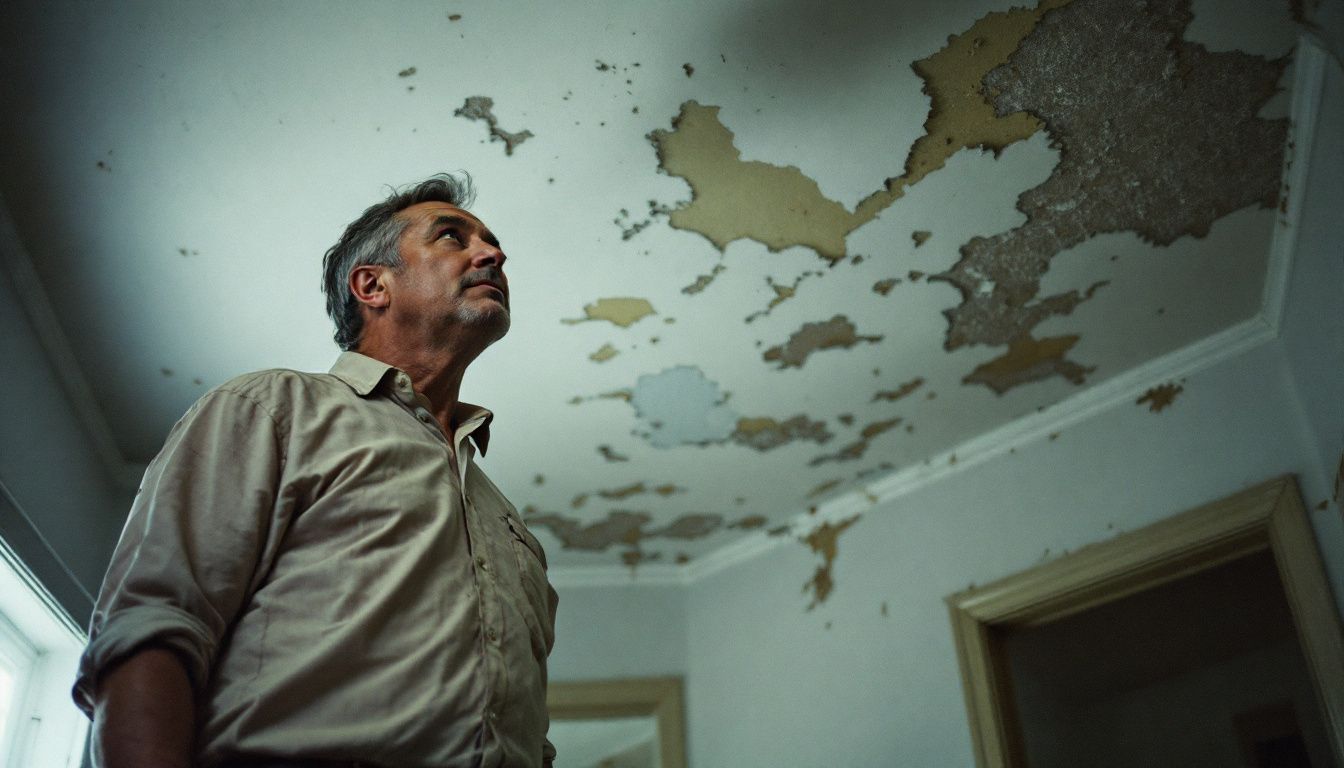
Artex and similar textured coatings were widely applied to ceilings and walls from the 1950s through to the late 1990s. Many formulations produced before the mid-1980s contained chrysotile (white asbestos). Victorian homes with later decorative updates are commonly found to have these coatings on original plasterwork.
Sanding, scraping, or drilling through textured coatings without first confirming their composition is a serious health risk. Always test before you touch.
Floor Coverings and Adhesives
Vinyl floor tiles and sheet flooring laid in Victorian properties during the 1950s to 1980s frequently contained asbestos fibres. The adhesive used to fix these tiles — sometimes called black mastic — can also contain asbestos.
These materials often sit beneath newer flooring layers. When a Victorian kitchen or hallway floor is lifted during renovation, older tiles below can be disturbed without the occupant realising the risk.
Asbestos Insulating Board (AIB)
Asbestos Insulating Board was a popular material for fire protection, partition walls, ceiling tiles, and hearth panels. In Victorian homes, AIB was commonly added around fireplaces, in service cupboards, and as partition linings during twentieth-century upgrades.
AIB is considered a higher-risk material because it is relatively easy to drill, cut, or break — all of which release fibres. It can look deceptively similar to ordinary plasterboard or hardboard.
Roof Sheeting, Soffits, and Guttering
Asbestos cement was used extensively for roof tiles, corrugated sheeting, soffits, gutters, and downpipes. Victorian outbuildings, rear extensions, and lean-to structures are particularly likely to feature asbestos cement roofing added during the mid-twentieth century.
Asbestos cement is generally considered lower risk when intact and undisturbed, but weathering, moss growth, and physical damage can cause it to deteriorate and release fibres over time.
Loft and Cavity Insulation
Loose-fill asbestos insulation — sometimes described as fluffy, grey, or white granular material — was used in some UK lofts during the 1960s and 1970s. Victorian homes that had loft insulation installed during this period may contain this extremely hazardous material.
Loose-fill asbestos is one of the most dangerous forms because fibres disperse with minimal disturbance. If you discover unusual loose material in a Victorian loft, leave the area immediately and seek professional advice.
Electrical Fittings and Meter Cupboards
Older electrical systems installed in Victorian properties may include asbestos-containing components such as fuse board linings, heat-resistant pads behind consumer units, and insulation within wiring ducts. Meter cupboards are a frequently overlooked location during routine checks.
Any electrical upgrade work on a Victorian property should be preceded by an asbestos assessment of the relevant areas.
Water Tanks and Cisterns
Cold water storage tanks, toilet cisterns, and some drainage components were manufactured from asbestos cement during the mid-twentieth century. Victorian properties that retained original or early-replacement plumbing may still have these items in place, particularly in loft spaces.
The Health Risks of Disturbing Asbestos
Asbestos fibres are invisible to the naked eye. They cannot be smelled or tasted, and there is no immediate sensation when they are inhaled. This is precisely what makes them so dangerous — exposure can occur without any warning, and the resulting health conditions may not manifest for decades.
Inhaling asbestos fibres is associated with mesothelioma (a cancer of the lining of the lungs and other organs), lung cancer, and asbestosis (a chronic scarring of lung tissue). The HSE is clear that there is no known safe level of asbestos exposure.
The risk is greatest when ACMs are disturbed — through drilling, cutting, sanding, or demolition. This is why renovation work on Victorian properties carries particular risk. Well-intentioned improvement projects can unknowingly expose homeowners, tradespeople, and future occupants to significant harm.
Legal Duties for Victorian Property Owners and Managers
The Control of Asbestos Regulations place clear duties on those responsible for non-domestic premises. If your Victorian property is a commercial building, a house in multiple occupation (HMO), or any other non-domestic premises, you have a legal duty to manage asbestos risk.
This means identifying whether ACMs are present, assessing their condition, and putting a management plan in place. HSE guidance document HSG264 sets out how surveys should be conducted and what records must be kept.
For private residential owners, there is no strict legal duty to survey your own home — but the practical and moral case is just as strong. Anyone carrying out work on your property has a right to know what hazards they may encounter. Providing that information starts with a proper survey.
A management survey is the standard starting point for most Victorian properties. If you are planning significant refurbishment or demolition, a more intrusive refurbishment and demolition survey will be required under HSG264.
What to Do If You Suspect Asbestos in Your Victorian Home
If you suspect the presence of asbestos — or if you are about to commission any work on a Victorian property — follow these steps:
- Stop any work immediately. If work has already started and you suspect ACMs have been disturbed, evacuate the area, close doors and windows, and do not vacuum or sweep.
- Do not touch, drill, sand, or remove suspicious materials. This applies to pipe lagging, old floor tiles, ceiling coatings, board panels, and any other materials of unknown composition.
- Commission a professional asbestos survey. Only a qualified, P402-accredited surveyor can reliably identify ACMs and assess their condition.
- Arrange laboratory analysis. Visual identification alone is not sufficient. Samples must be analysed by an accredited laboratory to confirm fibre type and content.
- Follow the surveyor’s recommendations. Depending on the findings, options may include leaving materials undisturbed and in good condition, encapsulation to seal the surface, or licensed asbestos removal by a licensed contractor.
- Keep a written record. Maintain an asbestos register for the property, including survey reports, photographs, and details of any work carried out.
- Inform contractors before work begins. Anyone working on the property must be made aware of any known or suspected ACMs before they start.
Asbestos Testing: Confirming What You Are Dealing With
A visual inspection — even by an experienced surveyor — cannot definitively confirm whether a material contains asbestos. Laboratory analysis of physical samples is the only reliable method of identification.
During a survey, the surveyor will collect small samples from suspect materials and send them to an accredited laboratory for analysis. Results typically confirm the type of asbestos present (chrysotile, amosite, crocidolite, or others) and its concentration within the material.
If you need standalone asbestos testing for a specific material — perhaps ahead of a small repair — this can be arranged separately from a full survey. However, for any significant renovation of a Victorian property, a full survey is always the more prudent approach.
Buying or Selling a Victorian Property
Asbestos can affect property transactions. Buyers of Victorian homes are increasingly aware of the potential for ACMs, and many commission asbestos surveys as part of their pre-purchase due diligence.
As a seller, having a current asbestos survey report available demonstrates transparency and can prevent delays or renegotiations during the conveyancing process. If ACMs are identified, having a clear management plan in place is far more reassuring to buyers than an unknown situation.
Estate agents and solicitors are not asbestos specialists. If asbestos is flagged in a survey, seek advice from a qualified asbestos professional rather than relying on general property advice.
How Supernova Asbestos Surveys Can Help
Supernova Asbestos Surveys has completed over 50,000 surveys across the UK. Our qualified surveyors work with Victorian property owners, landlords, housing associations, and commercial clients to identify and manage asbestos risk safely and in line with current HSE guidance.
We cover the whole of the UK, with local surveyors available for an asbestos survey in London, an asbestos survey in Manchester, an asbestos survey in Birmingham, and locations nationwide.
Our surveys are carried out by P402-accredited professionals. Reports are delivered within 24 hours, and we can typically arrange a survey within 24 to 48 hours of your enquiry.
Whether you need a management survey, a refurbishment survey, or standalone asbestos testing, we provide clear, accurate reports that give you everything you need to manage risk and comply with your legal duties.
Call us on 020 4586 0680, visit asbestos-surveys.org.uk, or get a free quote online in minutes.
Frequently Asked Questions
Does my Victorian house definitely contain asbestos?
Not necessarily — but it is very likely that some asbestos-containing materials were introduced during renovation or maintenance work carried out between the 1950s and 1999. The original Victorian construction predates widespread asbestos use, but decades of updates mean most Victorian properties have at least some ACMs present. A professional survey is the only way to know for certain.
Is asbestos in a Victorian house dangerous if I leave it alone?
ACMs that are in good condition and left completely undisturbed pose a low risk. The danger arises when materials are damaged, deteriorating, or disturbed during work. However, you cannot assess condition or risk accurately without a professional survey. Even materials that appear intact may be in poor condition internally.
Do I need a survey before renovating a Victorian property?
Yes. HSE guidance is clear that a survey should be carried out before any refurbishment or demolition work on a pre-2000 property. This applies to Victorian houses regardless of whether they are residential or commercial. For non-domestic premises, a refurbishment and demolition survey is a legal requirement before intrusive work begins.
How much does an asbestos survey for a Victorian house cost?
Prices vary depending on the size and complexity of the property. Residential management surveys typically start from £250 plus VAT. Supernova Asbestos Surveys provides free quotes — call 020 4586 0680 or use the online quote tool at asbestos-surveys.org.uk for a response within 15 minutes.
Can I remove asbestos from my Victorian house myself?
In most cases, no. Licensed asbestos removal is required for higher-risk materials such as asbestos insulating board, pipe lagging, and loose-fill insulation. Even for lower-risk materials where unlicensed removal may technically be permitted, it is strongly advisable to use a qualified professional. Incorrect removal can release fibres and create a far greater hazard than leaving the material in place.