
Misunderstanding asbestos regulations in residential property can create far more than an admin problem. It can expose contractors and residents to avoidable risk, halt planned works, trigger enforcement action and leave landlords or managing agents explaining why nobody checked the asbestos information before work started.
If you manage housing built before 2000, asbestos is still a live issue. The legal position depends on who controls the area, what work is planned and whether asbestos-containing materials could be disturbed during normal occupation, maintenance, refurbishment or demolition.
How asbestos regulations apply in residential properties
The key point is that asbestos regulations do apply in residential settings, but not in exactly the same way everywhere. The main distinction is between private domestic space and the common parts or non-domestic areas that a dutyholder controls.
Under the Control of Asbestos Regulations, the duty to manage covers non-domestic premises and the common parts of domestic premises. In practice, that means shared areas in blocks of flats, HMOs and managed estates can fall squarely within legal duties.
Typical examples include:
- Communal corridors and stairwells
- Lift shafts and plant rooms
- Service risers and meter cupboards
- Boiler rooms and bin stores
- Garages, stores and outbuildings
- Roof voids, external panels and shared service areas
Inside a single private dwelling, the duty to manage does not usually apply in the same way. Even so, asbestos still matters if contractors are due on site, if materials are damaged, or if refurbishment is planned.
Who is usually the dutyholder?
The answer depends on control, not just ownership. If you arrange repairs, instruct contractors or manage shared areas, you may hold duties under asbestos regulations.
- Landlords often control common parts and sometimes structural elements
- Managing agents may take on duties through management agreements
- Freeholders often retain responsibility for communal fabric and services
- Housing associations and local providers usually hold duties across managed stock
- Residents’ management companies may be responsible where they control maintenance
- Contractors must still work safely and check asbestos information before starting
If responsibility is unclear, review leases, tenancy agreements, repair obligations and management contracts. One of the most common failures is assuming someone else is dealing with asbestos.
What the Control of Asbestos Regulations expect from dutyholders
The Control of Asbestos Regulations are not simply about removal. They require a structured approach to identifying, assessing and controlling the risk of exposure.
For most property managers and landlords, the practical duties are clear:
- Find out whether asbestos is present, or presume it is if there is no reliable evidence
- Record the location and condition of known or presumed asbestos-containing materials
- Assess the risk of exposure
- Prepare a plan to manage that risk
- Put the plan into practice
- Review and update the plan regularly
- Share relevant asbestos information with anyone liable to disturb the material
That is the heart of compliance. Good asbestos management is about preventing exposure, not removing every asbestos-containing material on sight.
Where HSG264 fits in
HSG264 sets out the survey standard expected by the HSE. It matters because decisions on maintenance, refurbishment and contractor safety are only as good as the survey information behind them.
A poor survey creates gaps in the register, hidden risks during works and false confidence for the people on site. If you commission the wrong survey, or rely on an outdated one, your wider asbestos management system can fail very quickly.
Approved Code of Practice and HSE guidance
HSE guidance and the Approved Code of Practice explain how the regulations should work in practice. For residential property managers, that means using sensible systems for risk assessment, contractor control, training, information sharing, reinspection and decisions about whether materials should be managed, repaired, encapsulated or removed.
If you are planning works, the practical question is simple: do the people starting the job have accurate asbestos information for the area they will disturb?
Why asbestos is still found in homes and communal areas
Many residential buildings still contain asbestos because it was used in a wide range of construction products. It appears in obvious places, but it is also hidden in materials that are easy to disturb during routine maintenance.

Common examples include:
- Textured coatings
- Asbestos insulation board
- Pipe lagging
- Cement roof sheets and wall panels
- Floor tiles and bitumen adhesive
- Soffits and partition boards
- Bath panels, toilet cisterns and boxing
- Fire doors and ceiling void materials
- Flues, gutters and service duct linings
The presence of asbestos does not automatically mean immediate danger. Risk depends on the product type, its condition, how easily it releases fibres and whether anyone is likely to disturb it.
An intact asbestos cement panel may present relatively low risk if left alone and monitored. Damaged asbestos insulation board in a service cupboard is a different matter entirely. That is why asbestos regulations focus on assessment and control rather than blanket removal.
The real consequences of getting asbestos management wrong
The most serious consequence is exposure to airborne asbestos fibres. That can happen during what looks like a routine task: drilling into a panel, lifting old floor tiles, opening a riser, replacing a ceiling fitting or removing boxing around pipework.
Residential buildings generate these jobs every day. Electricians, plumbers, telecoms engineers, fire alarm contractors, heating engineers and general maintenance teams all work in areas where asbestos-containing materials may be present.
Health risks and asbestos-related disease
Illnesses associated with asbestos exposure include mesothelioma, asbestos-related lung cancer, asbestosis and diffuse pleural thickening. The danger is one reason asbestos regulations are enforced so closely.
Exposure may not cause immediate symptoms. A worker can disturb asbestos during a short job and only discover the long-term consequences years later. That delay does not reduce the legal or moral duty to prevent exposure in the first place.
Operational and legal consequences
When asbestos is disturbed unexpectedly, the impact is immediate. Work stops, areas may need to be isolated, further access can be restricted and emergency cleaning or remediation may be required.
You may also face:
- Project delays and contractor disputes
- Unexpected remedial costs
- Resident complaints
- HSE scrutiny or enforcement action
- Insurance and liability issues
- Problems proving you shared asbestos information before work started
The practical lesson is straightforward. Do not allow intrusive work to begin until the asbestos information has been checked, shared and understood.
Reducing the risk of an accident at work
A safe system should not rely on a contractor saying they will be careful. Under asbestos regulations, evidence matters.
Dutyholders should have the following in place:
- A current asbestos survey covering the relevant areas
- An up-to-date asbestos register
- A management plan with named responsibilities
- Contractor sign-in or permit-to-work controls
- Pre-start asbestos information issued before work begins
- Reinspection arrangements for known materials
- A clear escalation process if suspect materials are found
Choosing the right asbestos survey
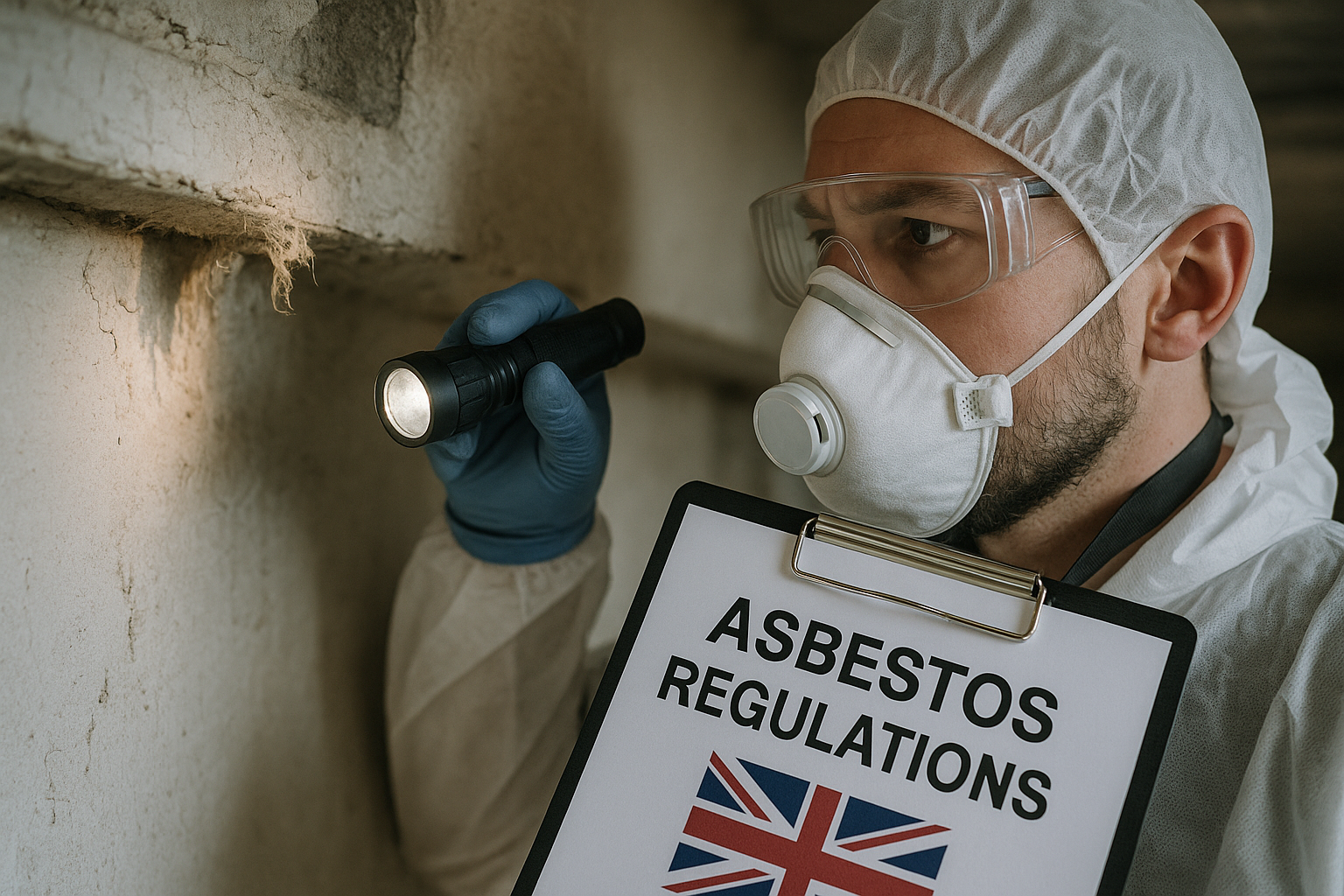
Surveying is where many asbestos problems are either prevented early or built into the project from day one. HSG264 sets out the main survey types, and choosing the correct one is essential.
Management survey
A management survey is designed to locate, as far as reasonably practicable, the presence and extent of asbestos-containing materials that could be damaged or disturbed during normal occupation, routine maintenance or foreseeable installation work.
This is usually the right survey where a building remains in use and no major intrusive works are planned. It supports compliance with asbestos regulations by helping you build an asbestos register and management plan for day-to-day control.
Typical situations include:
- Blocks of flats with communal areas
- Managed residential portfolios
- Estate service buildings
- Housing association stock
- Buildings where maintenance contractors attend regularly
Refurbishment and demolition survey
If intrusive works are planned, a management survey is not enough. You need a survey that targets the specific area affected by the works and looks for hidden asbestos before the building fabric is disturbed.
For strip-out or structural removal, a demolition survey is required before work starts. This type of survey is intrusive and may involve destructive inspection because hidden asbestos must be identified in advance.
Starting refurbishment or demolition without the correct survey is one of the clearest ways to breach asbestos regulations. It also creates the conditions for uncontrolled fibre release, contractor exposure and costly delays.
Sampling and testing
Sometimes a full survey is not the immediate starting point, but a suspect material still needs to be identified. In those situations, targeted sampling may help confirm whether asbestos is present.
For simple checks in lower-risk circumstances, a laboratory-analysed testing kit can be useful. It should not replace a survey where legal duties or planned works require one, but it can help you decide whether further professional action is needed.
Practical steps for landlords, managing agents and housing providers
The most effective way to comply with asbestos regulations is to treat asbestos management as a working system, not a document that sits in a drawer. That system needs current information, clear responsibilities and regular review.
Build and maintain an asbestos register
Your asbestos register should record each known or presumed asbestos-containing material, where it is, what condition it is in and what action is required. If materials are removed, encapsulated, damaged or reassessed, the register must be updated.
A register that was accurate several years ago but has not been reviewed is unlikely to support compliance. Buildings change, maintenance happens and materials deteriorate.
Prepare a workable management plan
A management plan should do more than repeat the survey findings. It should explain how the risk will be controlled in practice.
A useful plan normally includes:
- Who is responsible for asbestos management
- How contractors will access asbestos information
- How often known materials will be reinspected
- What happens if damage is reported
- When specialist advice or removal is required
- How residents or staff report concerns
If your team cannot follow the plan during a busy repairs week, it is not practical enough.
Share information before works start
One of the simplest ways to avoid exposure is to give contractors the right asbestos information before they arrive on site. That means relevant survey extracts, register entries and any site-specific precautions.
Do not rely on verbal summaries. Provide written information and make sure someone checks that it has been read and understood.
Reinspect known materials
Asbestos-containing materials left in place should be monitored. Reinspection intervals depend on the material, its condition, the likelihood of disturbance and the building use.
If a material is in a vulnerable location, inspected areas should be checked more closely. If the condition deteriorates, the management plan may need to change quickly.
Know when removal is necessary
Asbestos does not always need to be removed. If it is in good condition, unlikely to be disturbed and can be managed safely, leaving it in place may be the right option.
Removal may be necessary where:
- The material is damaged or deteriorating
- It is likely to be disturbed during planned works
- Its location makes ongoing management unrealistic
- Encapsulation or repair would not control the risk adequately
The right decision should be based on survey evidence, risk assessment and competent advice.
Common mistakes that lead to breaches of asbestos regulations
Most asbestos failures are not dramatic at the start. They come from routine shortcuts, poor communication and outdated records.
Watch for these common mistakes:
- Assuming a building is asbestos-free without evidence
- Using an old survey for new refurbishment works
- Failing to survey communal areas properly
- Not updating the asbestos register after works
- Allowing contractors to start before seeing asbestos information
- Confusing a management survey with a refurbishment or demolition survey
- Leaving damaged materials without prompt action
- Storing asbestos records where nobody on site can access them
If any of those sound familiar, review your process now rather than after an incident.
Asbestos regulations for different types of residential property
Not every residential property presents the same asbestos management challenge. The legal principles are consistent, but the practical controls vary depending on the building type.
Blocks of flats
These often have the clearest dutyholder responsibilities in communal areas. Shared corridors, risers, service cupboards, roof spaces, plant rooms and external stores all need to be considered under asbestos regulations.
Contractor activity is frequent in these buildings, so access to current asbestos information is essential.
HMOs and converted buildings
HMOs can include both private rooms and shared spaces. Kitchens, hallways, stairs, utility areas and service routes may all require active asbestos management if they fall within the landlord’s control.
Converted older buildings can also contain hidden asbestos in partition walls, soffits, ceiling voids and service boxing.
Housing association and local authority stock
Larger portfolios need consistency. Standardised surveying, centralised registers, clear contractor controls and reliable reinspection programmes are vital if asbestos regulations are to be met across multiple sites.
The bigger the stock, the more important it is to avoid fragmented records and local workarounds.
Single let houses
Even where the duty to manage is more limited, asbestos still matters when repairs or upgrades are planned. Before drilling, cutting, rewiring, replacing heating systems or carrying out refurbishment, suspect materials should be checked properly.
When to seek local asbestos surveying support
Fast access to competent surveying makes a real difference when repairs or projects are time-sensitive. If you manage property in the capital, arranging an asbestos survey London service can help you deal quickly with communal area checks, planned maintenance and pre-works requirements.
For North West portfolios, using an asbestos survey Manchester team can speed up decision-making when urgent access, sampling or contractor coordination is needed.
In the Midlands, an asbestos survey Birmingham appointment can support everything from routine management surveys to intrusive pre-refurbishment inspections.
Wherever the property is based, the principle is the same. The right survey, delivered at the right time, helps you comply with asbestos regulations and avoid preventable disruption.
Frequently Asked Questions
Do asbestos regulations apply inside private homes?
The duty to manage under the Control of Asbestos Regulations generally applies to non-domestic premises and the common parts of domestic premises. Inside a single private home, the duty does not apply in the same way, but asbestos still needs careful handling if contractors are working or refurbishment is planned.
Do landlords need an asbestos survey for residential property?
If a landlord controls communal areas or other relevant parts of a residential building, a suitable asbestos survey is often the starting point for compliance. The correct survey type depends on whether the building is in normal use or whether intrusive works are planned.
What is the difference between a management survey and a demolition survey?
A management survey supports day-to-day occupation and routine maintenance by identifying asbestos that could be disturbed during normal use. A demolition survey is intrusive and is required before demolition or major structural strip-out so hidden asbestos can be found before work begins.
Does asbestos always need to be removed?
No. If asbestos-containing material is in good condition, unlikely to be disturbed and can be managed safely, it may remain in place. The key requirement under asbestos regulations is preventing exposure, not automatic removal.
What should I do if a contractor finds a suspect material?
Stop work in the affected area immediately and prevent further disturbance. Isolate the area if necessary, seek competent advice, and arrange appropriate inspection or sampling before work resumes.
If you need clear, practical help with asbestos regulations, Supernova Asbestos Surveys can assist with management surveys, refurbishment and demolition surveys, sampling and ongoing support for residential portfolios across the UK. Call 020 4586 0680 or visit asbestos-surveys.org.uk to book a survey or speak to our team.