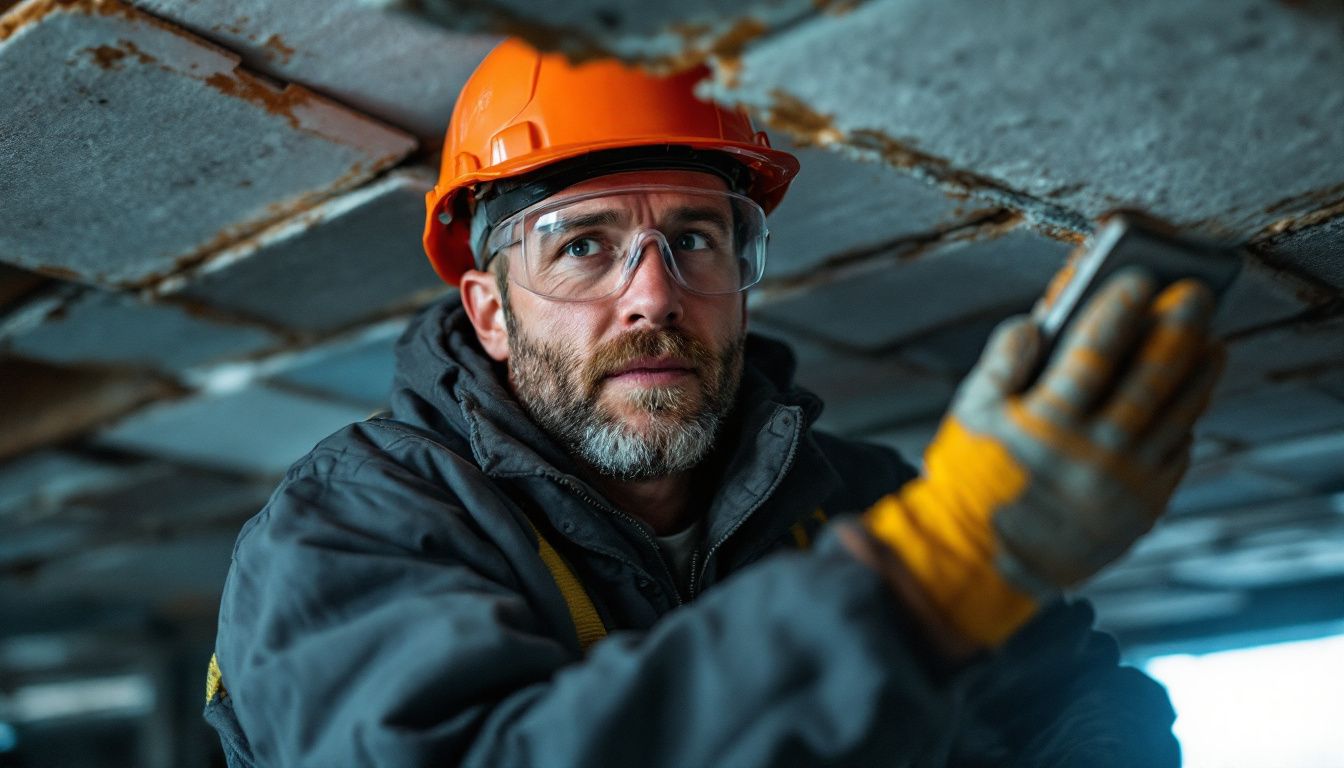
Preventing Asbestos Exposure in Construction: Why It Still Costs Lives
Asbestos doesn’t announce itself. It sits quietly inside walls, ceiling tiles, pipe lagging, and floor coverings — and the moment someone starts drilling, cutting, or demolishing, invisible fibres fill the air. Preventing asbestos exposure in construction isn’t a box-ticking exercise; it’s the difference between a workforce that goes home healthy and one that faces a devastating diagnosis decades down the line.
Asbestos-related disease claims around 5,000 lives every year in Great Britain. The construction industry carries a disproportionate share of that burden. If you manage a site, employ tradespeople, or work with your hands in older buildings, understanding your obligations — and the practical steps that actually protect people — is non-negotiable.
Understanding the Scale of the Problem
The UK banned the use of all asbestos types in 1999, but that ban didn’t remove the material already embedded in the built environment. A vast quantity of asbestos-containing materials (ACMs) remain in commercial buildings, schools, hospitals, and homes constructed before the year 2000.
Electricians chasing cables through old walls, plumbers cutting through lagged pipework, plasterers disturbing artex ceilings — these are the everyday scenarios where exposure happens, often without the worker even realising it. Roughly 1.3 million workers in the UK construction industry are at risk of encountering ACMs during their day-to-day work.
The diseases caused by asbestos exposure — mesothelioma, asbestosis, and asbestos-related lung cancer — can take 20 to 40 years to develop. By the time symptoms appear, the damage is done. There is no cure for mesothelioma.
That latency period is precisely why preventing asbestos exposure in construction demands consistent, proactive action rather than a reactive response. Waiting until a problem surfaces isn’t a strategy — it’s a failure of duty.
Know Before You Disturb: The Role of Asbestos Surveys
The single most effective step in preventing asbestos exposure on a construction site is knowing what you’re dealing with before any work begins. A professional asbestos survey identifies where ACMs are located, what condition they’re in, and what risk they pose to anyone working in the area.
There are two survey types most relevant to construction work.
Management Survey
A management survey is designed for buildings in normal occupation and use. It locates ACMs that could be disturbed during routine maintenance and produces a risk-rated register that duty holders must keep current.
If you manage a commercial premises or are responsible for a building where ongoing trades work is carried out, this is your baseline legal requirement. The register produced must be shared with every contractor before they set foot on site — not filed away in a drawer.
Refurbishment Survey
Before any significant renovation, fit-out, or demolition work, a refurbishment survey is legally required. This is a more intrusive inspection that examines all areas likely to be disturbed during the planned works.
It must be completed before work starts — not during, and certainly not after someone has already knocked a wall through. Both survey types must be carried out by a qualified surveyor following HSG264 guidance.
Legal Duties Under the Control of Asbestos Regulations
The Control of Asbestos Regulations set out clear duties for employers, duty holders, and contractors. Understanding these obligations is fundamental to preventing asbestos exposure in construction environments.
The Duty to Manage
Regulation 4 places a legal duty on those responsible for non-domestic premises to manage asbestos. This means identifying ACMs, assessing the risk they present, and putting a written management plan in place. Failure to comply is a criminal offence, not just a civil liability.
Licensing Requirements
Certain types of asbestos work — particularly work involving sprayed coatings, lagging, and asbestos insulating board — can only be carried out by HSE-licensed contractors. Using an unlicensed contractor for licensable work puts workers at serious risk and exposes the employer to significant legal consequences.
Notification and Planning
For licensable work, the HSE must be notified before work begins. A written plan of work must be prepared, detailing how the work will be done safely. For non-licensed but notifiable work, records must be kept and health surveillance arranged.
Keeping Records Current
An asbestos register is only useful if it’s kept up to date. After any work that disturbs or removes ACMs, the register must be updated. Periodic re-inspection survey visits are essential to monitor the condition of known ACMs and identify any changes that affect risk ratings.
Treating the register as a living document — rather than a one-off exercise — is what separates effective asbestos management from paper compliance.
Practical Safety Measures on Site
Legal compliance sets the framework, but it’s the practical, day-to-day measures that actually prevent fibres reaching workers’ lungs. Here’s what good practice looks like on a live construction site.
Personal Protective Equipment
PPE is the last line of defence, not the first — but it’s essential. Workers in areas where asbestos may be disturbed must wear:
- Respiratory protective equipment (RPE) fitted with HEPA filters — typically a half or full-face respirator, depending on the risk level
- Disposable coveralls (Type 5 minimum) to prevent fibre contamination of clothing
- Disposable gloves to avoid hand contamination
- Disposable overshoes where there is a risk of tracked contamination
RPE must be correctly fitted and face-fit tested for each individual wearer. A mask that doesn’t seal properly provides no meaningful protection. Face-fit testing is a legal requirement, not an optional extra.
Dust Control Measures
Controlling dust at source is far more effective than relying on PPE alone. Key measures include:
- Using wet methods — damping down materials before cutting or removal — to suppress fibre release
- Shadow vacuuming with H-class vacuum equipment during any cutting or drilling
- Never dry sweeping debris that may contain asbestos — always use H-class vacuum equipment or wet methods
- Never using power tools on suspected ACMs without appropriate dust suppression and extraction
- Enclosing work areas where higher-risk work is being carried out
Decontamination Procedures
Contamination doesn’t stay on site unless proper procedures are followed. Workers must decontaminate before leaving a work area — removing coveralls carefully to avoid shaking fibres loose, and using decontamination units where required for higher-risk work.
Contaminated PPE must be disposed of as asbestos waste, not placed in general site bins. This is a step that gets skipped under time pressure — and it’s a step that matters enormously.
Waste Disposal
Asbestos waste is classified as hazardous waste under UK law. It must be double-bagged in clearly labelled asbestos waste sacks, transported by a registered waste carrier, and disposed of at a licensed facility.
Fly-tipping asbestos waste is a serious criminal offence — the consequences extend well beyond a fixed penalty notice.
Training and Awareness: Building a Safety Culture
Preventing asbestos exposure in construction requires more than rules and equipment — it requires a workforce that understands the risks and knows how to act on them. Training is a legal requirement under the Control of Asbestos Regulations, and it must be appropriate to the level of risk each worker faces.
Asbestos Awareness Training
Any worker who could inadvertently disturb asbestos — which includes a very wide range of construction trades — must receive asbestos awareness training. This covers what asbestos is, where it’s found, the health risks, and what to do if suspected ACMs are encountered.
This training must be refreshed regularly; it’s not a one-time certificate that covers a worker for life.
Category A, B, and C Training
Workers carrying out non-licensed asbestos work require additional training beyond basic awareness. Licensed contractors must complete formal training courses specific to the type of work they undertake. The level of training must match the level of risk — this isn’t a one-size-fits-all requirement.
Health Surveillance
Workers engaged in licensed asbestos work are legally required to undergo health surveillance, including a pre-employment medical and periodic reviews. While this doesn’t prevent exposure, it supports early detection and provides important data on occupational health trends across the workforce.
Stop and Check Culture
One of the most valuable things a site manager can instil is a culture where workers feel empowered to stop work and raise concerns when they encounter suspect materials. If something looks like it might contain asbestos and it wasn’t on the survey, work stops, the area is secured, and a specialist is called.
No programme deadline is more important than that response. Speed is not an excuse to bypass procedure — it’s a reason to have a clear procedure ready before you need it.
What to Do If You Suspect Unidentified Asbestos on Site
Even with a thorough survey, construction work can uncover ACMs that weren’t previously identified. This is particularly common in older buildings with complex histories. The response must be immediate and methodical.
- Stop work immediately in the affected area
- Secure the area — prevent other workers from entering
- Do not disturb the material further — leave it in place
- Report to the site manager and record the discovery
- Arrange for sampling and analysis — if you need a rapid result, an asbestos testing kit can be used to collect a sample for laboratory analysis
- Do not resume work in the area until the material has been identified and, if necessary, removed or made safe by a competent contractor
Having this procedure written down and communicated to the whole site team before work begins is not bureaucracy — it’s basic risk management.
Where you need professional asbestos testing carried out by an accredited laboratory, Supernova can arrange sampling and analysis quickly, with results typically returned within 24 to 48 hours.
Common ACM Locations in Construction Settings
Knowing where asbestos is most likely to be found helps construction teams prioritise their survey requirements and focus attention during works. In buildings constructed before 2000, ACMs can appear in a wide range of locations, including:
- Ceiling tiles and textured coatings — artex and similar decorative finishes frequently contain chrysotile asbestos
- Pipe lagging and duct insulation — particularly in plant rooms, boiler houses, and ceiling voids
- Floor tiles and adhesives — vinyl floor tiles and the bitumen adhesives used to fix them are common ACMs
- Asbestos cement products — roof sheeting, gutters, downpipes, and soffit boards in commercial and industrial buildings
- Asbestos insulating board (AIB) — used extensively in fire doors, partition walls, ceiling panels, and electrical cupboards
- Sprayed coatings — applied to structural steelwork and concrete as fireproofing in older commercial buildings
- Gaskets and rope seals — found in boilers, flues, and industrial plant
This list isn’t exhaustive. In buildings with long or complex histories, ACMs can appear in unexpected locations. A professional survey is the only reliable way to identify what’s present and where.
Asbestos Risks Beyond the Construction Phase
Preventing asbestos exposure in construction doesn’t end when the project is handed over. ACMs in buildings create ongoing risks for occupants, facilities managers, and maintenance workers long after the initial construction phase is complete.
Building managers have a continuing duty to manage asbestos in occupied premises. This means maintaining an accurate asbestos register, ensuring contractors are briefed before undertaking any work, and arranging periodic re-inspections to monitor the condition of known ACMs.
Where buildings also present fire safety concerns, a fire risk assessment should be carried out alongside asbestos management. The two disciplines frequently overlap in older commercial properties, and addressing them together is both practical and efficient.
If you need to verify whether a specific material contains asbestos before arranging a full survey, a professional asbestos testing service provides laboratory-confirmed results that hold up to regulatory scrutiny.
Supernova Asbestos Surveys: Supporting Construction Teams Nationwide
Supernova has completed over 50,000 asbestos surveys across the UK. Our BOHS-qualified surveyors work with construction firms, principal contractors, property managers, and duty holders to deliver surveys, testing, and management support that meets every requirement under the Control of Asbestos Regulations.
Whether you need an asbestos survey in London or an asbestos survey in Manchester, our nationwide team is ready to mobilise quickly — including for urgent pre-works surveys where project timelines are tight.
If you prefer to collect a sample yourself before committing to a full survey, our testing kit is available to order online, with laboratory analysis included in the price.
Call us on 020 4586 0680 or visit asbestos-surveys.org.uk to discuss your requirements with our team.
Frequently Asked Questions
What is the biggest risk for construction workers when it comes to asbestos?
The biggest risk is disturbing ACMs without knowing they’re there. Drilling, cutting, or demolishing materials that contain asbestos releases fibres into the air that are invisible to the naked eye. Inhaling those fibres can cause mesothelioma, asbestosis, and lung cancer — diseases that may not appear until decades after exposure. A professional survey before any work begins is the most effective way to eliminate this risk.
Is a refurbishment survey always required before renovation work?
Yes, for any building constructed before 2000 where the structure or fabric will be disturbed, a refurbishment survey is a legal requirement under the Control of Asbestos Regulations. It must be completed before work starts, and the results must be shared with all contractors. Carrying out renovation work without one exposes both the principal contractor and the client to significant legal liability.
What should a construction worker do if they suspect they’ve disturbed asbestos?
Stop work immediately and leave the area without disturbing the material further. Inform the site manager, secure the area to prevent others from entering, and arrange for sampling and analysis by an accredited laboratory. Do not resume work until the material has been confirmed safe or appropriately managed by a licensed contractor. Having a clear written procedure for this scenario — agreed before work begins — is essential.
How often does an asbestos register need to be updated?
An asbestos register must be updated whenever work is carried out that disturbs or removes ACMs. Beyond that, periodic re-inspections — typically annually for commercial premises — are required to monitor the condition of known ACMs and update risk ratings accordingly. The register should be treated as a live document, not a one-off survey report that sits on a shelf.
Can I test a material for asbestos myself before calling a surveyor?
You can collect a sample using a professional testing kit and send it to an accredited laboratory for analysis. This is a practical option when you need a quick answer about a specific material. However, a testing kit is not a substitute for a full survey — it only tells you about the one material sampled. Where multiple materials are present or extensive works are planned, a professional survey by a qualified surveyor is the appropriate route.