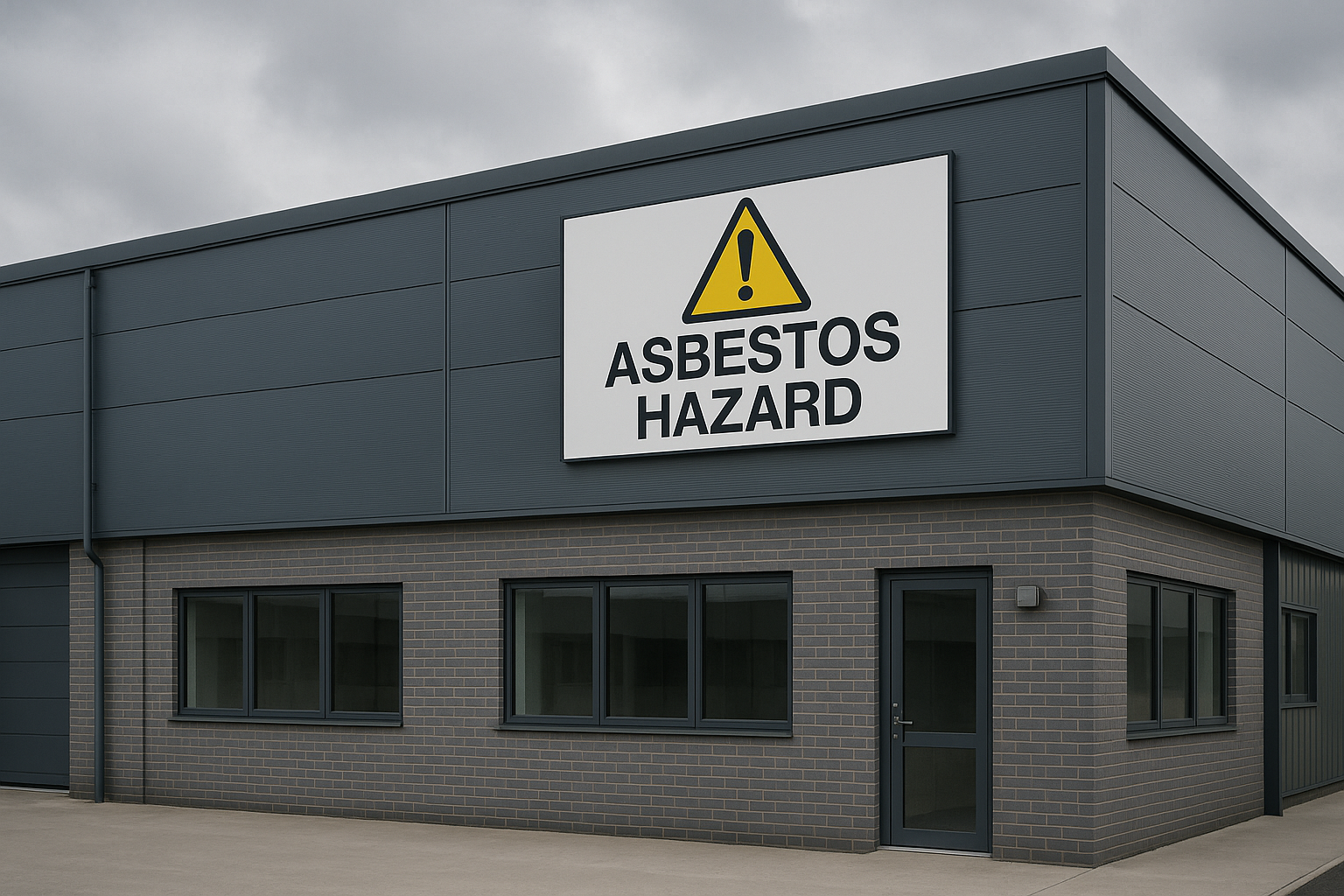
Asbestos Hazards in Construction: What Every Duty Holder Needs to Know
One drilled soffit, one stripped plant room lining, one ceiling void opened without a second thought — that is all it takes for asbestos hazards in construction to shift from a paperwork concern to a genuine health emergency. On UK building sites, the danger rarely announces itself. It hides in ordinary materials, gets disturbed during routine work, and is often only recognised after fibres have already been released into the air.
Asbestos is no longer manufactured or used in UK construction, but it remains embedded in a vast number of older buildings. If you manage property, commission contractors or plan works in premises built before 2000, understanding asbestos hazards in construction is not optional — it is a legal and moral duty.
Why Asbestos Hazards in Construction Still Demand Attention
Construction workers, maintenance teams and tradespeople continue to face asbestos exposure because older building materials are still in place across the country. This is not a risk confined to large demolition schemes. Small, everyday tasks — drilling, running cables, replacing a boiler, repairing a ceiling, lifting old floor tiles — can all disturb asbestos-containing materials just as effectively as a demolition crew stripping an entire floor.
The mechanism is straightforward. Asbestos fibres are microscopic. When materials containing them are cut, broken, sanded or otherwise disturbed, those fibres become airborne. Once inhaled, they can lodge permanently in lung tissue. The health consequences are serious, well documented and irreversible.
The Control of Asbestos Regulations place strict duties on those who manage buildings and those who carry out work within them. For property managers and duty holders, the practical lesson is this: never assume a material is safe because it looks intact, sealed or familiar. If the building predates 2000, asbestos must remain on your risk register until a suitable survey or test confirms otherwise.
How Asbestos Exposure Affects Construction Workers’ Health
One of the most insidious aspects of asbestos exposure is that the harm is rarely immediate. A worker can inhale fibres on a Monday morning and feel completely well for the next twenty or thirty years. That long latency period leads some people to underestimate the seriousness of asbestos hazards in construction — which is precisely why prevention must come before everything else.
Asbestos exposure is associated with several serious and life-limiting diseases. These conditions can develop after repeated low-level exposure or after a single significant disturbance event, depending on the amount of fibre inhaled and individual susceptibility.
The Main Asbestos-Related Diseases
- Mesothelioma — an aggressive cancer affecting the lining of the lungs or abdomen, strongly and specifically associated with asbestos exposure.
- Lung cancer — asbestos exposure significantly increases the risk, particularly where other respiratory risks are also present.
- Asbestosis — progressive scarring of lung tissue that permanently restricts breathing capacity.
- Pleural thickening — thickening of the lung lining that reduces lung function and causes persistent breathlessness.
These are not theoretical outcomes. They are the reason HSE guidance places such strong emphasis on identifying asbestos before work begins, controlling exposure rigorously, and using competent professionals at every stage.
Why the Latency Period Changes How Sites Must Be Managed
Because symptoms can take decades to appear, workers may be exposed without any immediate indication that something has gone wrong. That makes proactive site management absolutely critical. By the time visible harm appears, the damage has long since been done.
For employers and duty holders, the only rational approach is prevention first:
- Identify suspect materials before work begins — not during it.
- Share asbestos information with every person who might disturb those materials.
- Stop work immediately if unexpected suspect materials are found.
- Bring in competent surveyors and analysts rather than relying on assumption or guesswork.
Where Asbestos Hazards in Construction Are Commonly Found
Asbestos was widely used in UK construction because it resisted heat, improved insulation and added structural strength. That means it can still appear in a surprisingly broad range of materials across commercial, industrial, public and residential buildings of almost every type.
Some materials carry relatively low risk when they are in good condition and left undisturbed. Others are highly friable — meaning they release fibres very easily — and present a serious hazard even with minor disturbance. The level of risk depends on the specific product, its current condition, and the nature of the work being carried out nearby.
Common Asbestos-Containing Materials Found on Site
- Pipe insulation and thermal lagging
- Asbestos insulating board in partitions, service risers, soffits and ceiling voids
- Sprayed coatings on structural steelwork or ceilings
- Textured coatings on walls and ceilings
- Vinyl floor tiles and bitumen adhesives beneath them
- Roof sheets, wall cladding and rainwater goods made from asbestos cement
- Gaskets, rope seals and insulation around plant, pipework and boilers
- Ceiling tiles, panels and service duct linings
On many projects, asbestos is encountered in areas that contractors open up as part of normal working. Ceiling voids, service risers, boxing, plant rooms, undercroft areas and roof spaces are all well-established trouble spots. Where no intrusive survey has been carried out, those hidden spaces can present serious and unquantified danger.
Construction Activities That Carry the Highest Risk
Certain tasks create a significantly higher chance of fibre release than others. These include:
- Demolition and full strip-out works
- Refurbishment and fit-out projects
- Drilling, chasing and core cutting through walls or floors
- Removing old floor finishes and adhesives
- Accessing plant rooms and service ducts
- Roof repairs on older sheeted or panelled roofs
- Electrical and plumbing upgrades in older premises
Even minor works can trigger significant exposure if the planning is inadequate. A contractor routing a new cable can disturb asbestos insulating board just as effectively as a demolition team removing an entire wall.
Who Is Most at Risk on Construction Projects
Asbestos hazards in construction do not affect only specialist removal operatives. In practice, a wide range of trades face exposure when they work in older buildings without reliable asbestos information to hand.
Trades Commonly Exposed to Asbestos
- Demolition operatives
- Builders and general labourers
- Electricians
- Plumbers and heating engineers
- Carpenters and joiners
- Roofers
- Flooring contractors
- Painters and decorators carrying out surface preparation
- Maintenance teams and facilities management staff
Property managers should also bear in mind that exposure is not limited to the person holding the tool. When asbestos dust is released, other workers in the vicinity, occupants in adjacent areas and cleaning staff can all be put at risk without realising it.
Legal Duties for Managing Asbestos Hazards in Construction
The legal position is clear and unambiguous. The Control of Asbestos Regulations require duty holders, employers and those in control of premises to prevent exposure so far as reasonably practicable. For non-domestic premises, the duty to manage asbestos is a central and enforceable requirement.
That means knowing whether asbestos is present, assessing the condition of any materials found, keeping accurate records, and ensuring that anyone liable to disturb asbestos has the information they need before work starts.
What Duty Holders Are Required to Do
- Determine whether asbestos is present and, if so, where it is located
- Assess the condition of asbestos-containing materials
- Presume materials contain asbestos if there is reasonable suspicion and no evidence to the contrary
- Maintain an up-to-date asbestos register and management plan
- Review information regularly and after any relevant works
- Provide asbestos information to contractors, maintenance teams and anyone planning work in the building
Survey work should align with HSG264, the HSE’s guidance on asbestos surveying. HSE guidance is also clear that the right type of survey depends on the work being planned. A basic record of known materials is not sufficient where the project involves intrusive refurbishment or demolition.
What Employers and Contractors Must Do
Employers must carry out suitable risk assessments and ensure workers have the right information, instruction and training before they start. Contractors should never begin intrusive work in an older building without first checking the available asbestos information.
If survey data is missing, out of date or clearly incomplete, the correct response is to stop and resolve that gap — not to press on and hope for the best. Proceeding without adequate information is exactly how uncontrolled exposure events happen.
Surveys and Testing That Reduce Asbestos Hazards in Construction
The most effective way to control asbestos hazards in construction is to identify the risk before tools come out. That means using the right type of survey, the right sampling approach, and the right level of follow-up based on the planned works.
Management Survey
A management survey is designed for buildings in normal occupation and those subject to routine maintenance. It helps duty holders locate, as far as reasonably practicable, the presence and extent of asbestos-containing materials that could be disturbed during everyday use. This survey is essential for ongoing compliance in occupied premises, but it is not a substitute for a more intrusive survey where major works are planned.
Refurbishment and Demolition Planning
For refurbishment, strip-out or demolition projects, you need a survey intrusive enough to inspect all areas affected by the planned works. Hidden voids, enclosed spaces and materials concealed behind surfaces often present the greatest risk, so assumptions simply are not good enough.
Obtain the correct asbestos information before the programme is fixed. That avoids delays, emergency stoppages and unsafe decisions being made under pressure on site.
Re-Inspection Survey
Where asbestos is known and remains in place, a re-inspection survey confirms whether the condition of materials has changed and whether your management plan still reflects the actual risk. This is particularly valuable in buildings with frequent maintenance activity or areas subject to wear and accidental damage.
Asbestos Testing and Sampling
Sometimes a suspect material needs to be confirmed quickly and accurately. Professional asbestos testing allows samples to be analysed in an accredited laboratory so that decisions are based on evidence rather than assumption.
For some straightforward situations, a compliant asbestos testing kit can be a practical option, provided the sampling is carried out carefully and the material is accessible and undamaged. If the material is friable, damaged, difficult to access or high risk, always use a professional rather than attempting to sample it yourself.
Where laboratory confirmation is needed through a dedicated service, you can also arrange asbestos testing directly. The key principle is always to match the method to the level of risk involved.
Practical Steps to Control Asbestos Hazards on Site
Good asbestos management is not simply about having a survey report sitting in a folder. It is about translating that information into site controls that people actually understand and follow.
Before Work Starts
- Check the age and construction history of the building
- Review the asbestos register and all relevant survey reports
- Confirm whether the planned works are covered by the available information
- Brief contractors fully before they mobilise to site
- Mark or isolate known asbestos-containing materials where appropriate
- Build asbestos controls into method statements and risk assessments
If anything is unclear, resolve it before the first fix team arrives. Uncertainty about asbestos should always delay a task — never be quietly ignored.
If Suspect Asbestos Is Found During Works
- Stop work immediately and keep people out of the affected area.
- Do not sweep, vacuum with standard equipment or disturb any debris.
- Report the issue to the site manager or duty holder without delay.
- Arrange assessment, sampling or surveying by a competent specialist.
This straightforward response prevents a small issue becoming a full contamination event. Acting quickly also preserves evidence about what was disturbed and where, which matters both for remediation and for any subsequent investigation.
PPE and Cleaning Controls
PPE has a role, but it is never the first line of defence. The priority is always to avoid disturbing asbestos in the first place. Where work with asbestos is properly planned and permitted, suitable respiratory protective equipment, disposable coveralls and controlled cleaning methods will be required.
Never use ordinary household or standard commercial vacuum cleaners on asbestos dust. Specialist equipment and procedures are required, and contaminated areas must be treated as hazardous until properly assessed and cleared.
Asbestos Surveys Across the UK: Local Expertise Where You Need It
Asbestos hazards in construction are present in buildings across every part of the country, from city centre office blocks to suburban industrial estates. Wherever your project is located, local survey expertise matters.
If you are managing works in the capital, an asbestos survey London service gives you access to experienced surveyors who understand the specific building stock and regulatory environment in the city. For projects in the North West, an asbestos survey Manchester can be arranged quickly to keep your programme on track. And for works across the Midlands, an asbestos survey Birmingham provides the same standard of professional assessment from surveyors who know the region’s building types well.
Supernova Asbestos Surveys operates nationwide, with over 50,000 surveys completed. Wherever your building is, the same rigorous standards apply.
Why Asbestos Management Must Be Ongoing, Not One-Off
A single survey carried out years ago is not sufficient if the building has been subject to works, changes in use or deterioration since then. Asbestos management is an ongoing responsibility, not a box-ticking exercise.
Materials that were in good condition five years ago may have been damaged. New works may have opened up voids that were not previously assessed. Contractors may have disturbed materials without reporting it. Regular review, re-inspection and updated records are what keep people genuinely safe — not a static document gathering dust.
For duty holders managing multiple premises or complex buildings, building asbestos management into planned maintenance cycles is far more effective than reacting to incidents. The cost of proper management is always lower than the cost of an uncontrolled exposure event, a prohibition notice or a prosecution.
Frequently Asked Questions
What are the most common asbestos hazards in construction work?
The most common hazards arise from disturbing asbestos-containing materials during drilling, cutting, demolition, refurbishment and maintenance tasks. Asbestos insulating board, pipe lagging, textured coatings, floor tiles and asbestos cement products are among the materials most frequently encountered on older building sites. The risk increases significantly when work is carried out without prior survey information.
Which buildings are most likely to contain asbestos?
Any building constructed or refurbished before 2000 may contain asbestos. This includes commercial offices, schools, hospitals, industrial units, residential flats and houses, and public buildings. The risk is not limited to large or old structures — even buildings from the 1980s and 1990s can contain asbestos-containing materials, particularly in plant rooms, roof areas and service ducts.
What should a contractor do if they suspect they have disturbed asbestos?
Work should stop immediately. The area should be vacated and kept clear. No sweeping, standard vacuuming or further disturbance should take place. The site manager or duty holder must be informed, and a competent asbestos specialist should be called in to assess the situation, take samples if required, and advise on any remediation needed before work resumes.
What type of survey do I need before starting refurbishment works?
For any refurbishment, strip-out or demolition project, you need a survey that is intrusive enough to inspect all areas affected by the planned works — this goes beyond a standard management survey. HSG264 sets out the HSE’s guidance on survey types and their appropriate use. A competent surveyor will advise on the right approach based on the scope and location of the works.
How often should an asbestos management plan be reviewed?
The Control of Asbestos Regulations require duty holders to review and, where necessary, revise their asbestos management plan at regular intervals and following any works that may have affected asbestos-containing materials. In practice, annual review is considered good practice, with additional reviews triggered by any significant maintenance activity, change of use or damage to known materials.
Supernova Asbestos Surveys has completed over 50,000 surveys across the UK, helping duty holders, property managers and contractors manage asbestos hazards in construction safely and compliantly. Whether you need a management survey, a refurbishment survey, re-inspection or laboratory testing, our UKAS-accredited team is ready to help.
Call us on 020 4586 0680 or visit asbestos-surveys.org.uk to book a survey or request a quote.