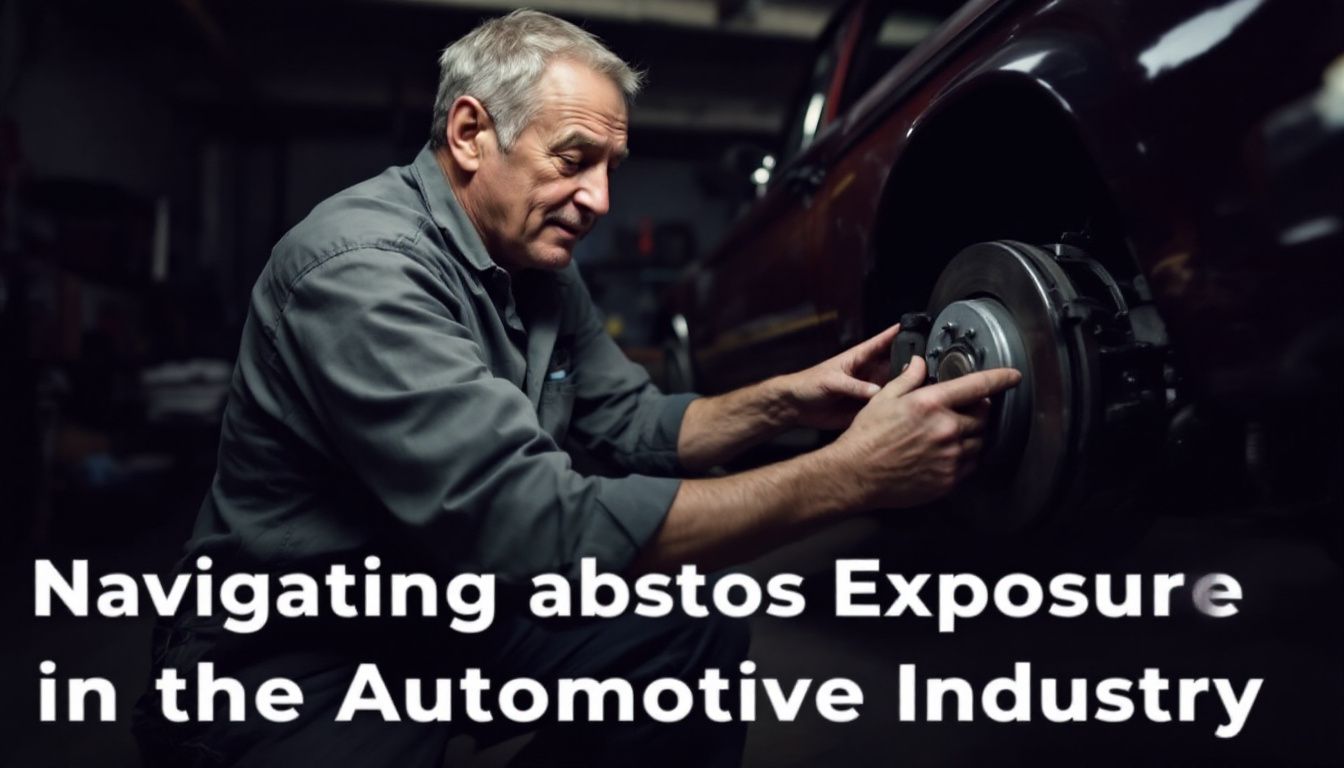
Asbestos and Automotive Workplace Safety: What Every Mechanic and Workshop Owner Must Know
Automotive workplace safety has never been more critical — and one of the most persistent, invisible threats facing mechanics, technicians, and workshop owners is asbestos. Despite a UK-wide ban on asbestos-containing materials, the danger has not disappeared. It is hiding in older vehicles, imported parts, and the very workshops where skilled tradespeople earn their living every day.
This is not a historical footnote. It is an ongoing occupational health crisis that continues to claim lives decades after initial exposure — and it demands urgent attention from anyone responsible for a garage, MOT centre, or automotive workshop.
The Historical Use of Asbestos in Vehicle Manufacturing
From the early 1900s right through to the 1980s, asbestos was considered an engineering marvel. Its extraordinary heat resistance and durability made it the material of choice for components that faced extreme friction and temperature — precisely the conditions found throughout a vehicle’s drivetrain and braking system.
At its peak, automotive parts contained asbestos in significant proportions. Brake pads, clutch linings, gaskets, soundproofing materials, and engine insulation all relied heavily on it. Major manufacturers and suppliers continued using asbestos well into the 1980s, and some aftermarket parts containing asbestos were still being sold into the late 1990s.
The UK enacted a total ban in 1999, prohibiting the production, supply, and use of all asbestos-containing materials. But by then, millions of vehicles already on the road — and countless more in storage, restoration, or salvage — were carrying the legacy of decades of asbestos use.
Why Automotive Workplace Safety Is Still at Risk Today
The ban did not erase the problem — it simply changed its character. Today’s risks are concentrated in three main areas:
- Legacy vehicles: Any car, van, or lorry manufactured before the late 1990s may contain original asbestos components that have never been replaced.
- Imported parts: Some countries continue to manufacture asbestos-containing brake pads, clutch components, and gaskets. These parts can enter the UK supply chain through grey-market imports, posing serious risks to mechanics who handle them unknowingly.
- Vintage and classic car restoration: This growing sector regularly involves stripping down vehicles that were built when asbestos use was standard practice — often in poorly ventilated workshops without adequate protective measures.
Mechanics working on older vehicles are particularly vulnerable. Brake and clutch repairs generate fine dust, and chrysotile fibres found in brake dust from older components can be released into the air within seconds of sanding, grinding, blowing out, or dry-brushing these parts without proper controls.
Which Automotive Parts Are Most Likely to Contain Asbestos
Understanding where asbestos was used is the first practical step in protecting your workforce. The most common asbestos-containing components found in older vehicles include the following.
Brake Pads and Linings
Brake components were among the heaviest users of asbestos in the automotive industry. The material’s heat resistance made it ideal for absorbing the friction generated during braking. When these older pads wear down or are worked on during servicing, they release fine dust that can carry dangerous fibres.
Any vehicle predating the mid-1990s should be treated with caution during brake work, regardless of whether replacement parts appear modern.
Clutch Facings and Pressure Plates
Clutch assemblies in older vehicles frequently contained asbestos for the same reasons as brake components — high heat, high friction. Mechanics replacing clutches on classic cars or pre-1990s commercial vehicles should assume asbestos is present until confirmed otherwise.
Gaskets and Seals
Engine gaskets — particularly head gaskets, exhaust manifold gaskets, and those used in high-temperature areas — were routinely manufactured with asbestos. Removing or disturbing these gaskets during engine work can release fibres, especially when old gasket material is scraped off metal surfaces.
Soundproofing and Insulation Materials
Asbestos-containing insulation was used behind dashboards, under bonnets, and around exhaust systems in older vehicles. This is particularly relevant for restoration work, where panels and trims are stripped back to bare metal — exposing materials that may have been undisturbed for decades.
The Health Consequences of Asbestos Exposure in Automotive Work
Asbestos-related diseases are among the most serious occupational illnesses recognised under UK law. The conditions caused by asbestos fibre inhalation include:
- Mesothelioma: A rare and aggressive cancer affecting the lining of the lungs or abdomen. It is almost exclusively caused by asbestos exposure and has no cure. The latency period between exposure and diagnosis can span several decades, meaning a mechanic exposed in the 1980s may only be receiving a diagnosis today.
- Asbestos-related lung cancer: Distinct from mesothelioma, this form of lung cancer is directly linked to occupational asbestos exposure and carries a poor prognosis.
- Asbestosis: A chronic lung condition caused by scarring of lung tissue from inhaled fibres. It causes progressive breathlessness and significantly reduces quality of life.
- Pleural plaques and pleural thickening: Scarring of the pleura — the lining around the lungs — which can restrict breathing and signal significant prior exposure.
Secondary exposure is also a documented risk. Workers who carried asbestos dust home on their clothing unknowingly exposed family members — a tragedy that has resulted in mesothelioma diagnoses among people who never set foot in a workshop.
Who Is Most at Risk in the Automotive Sector
Certain roles carry a disproportionately higher risk of asbestos exposure. If your workforce includes any of the following, targeted risk assessments and training are essential.
Vehicle Mechanics and Service Technicians
Anyone performing brake, clutch, or gasket work on older vehicles faces the most direct exposure risk. The combination of disturbing aged components and working in enclosed spaces — inspection pits, tight engine bays — can concentrate airborne fibres rapidly.
Classic and Vintage Vehicle Restorers
Restoration work often involves stripping vehicles down to their original components, many of which pre-date any asbestos restrictions. This work demands the same rigour as a formal asbestos removal operation, with appropriate controls and supervision throughout.
Automotive Plant and Factory Workers
Workers in manufacturing environments that processed asbestos-containing materials faced some of the highest historical exposure levels. Many of those workers are now living with the long-term consequences of prolonged exposure in poorly controlled environments.
Salvage Yard and Parts Recycling Workers
Handling old vehicle components — particularly brake assemblies and engine parts — from salvage vehicles presents ongoing exposure risks that are frequently underestimated in this sector. Routine asbestos awareness training is rarely in place at these sites, which compounds the problem significantly.
UK Regulations Governing Asbestos in Automotive Workplaces
Automotive workplace safety in the UK is governed by a clear legal framework. The Control of Asbestos Regulations place a duty on employers to manage asbestos risks and protect workers from exposure. Key obligations include:
- Identifying whether asbestos-containing materials are present in any workplace, including workshops and garages
- Assessing the risk of disturbance and exposure
- Implementing a written asbestos management plan
- Ensuring workers are trained in asbestos awareness
- Using licensed contractors for higher-risk asbestos work
The HSE’s guidance document HSG264 provides the framework for asbestos surveys and management in non-domestic premises — which includes commercial garages, MOT centres, and automotive workshops. If your premises were built before the year 2000, an asbestos survey is not just advisable — it may be a legal requirement under your duty to manage.
Enforcement of asbestos regulations in the automotive sector has historically been inconsistent. The presence of imported parts containing asbestos, combined with a lack of routine testing of components, means that compliance gaps persist across the industry.
Best Practices for Reducing Asbestos Exposure in Automotive Workplaces
Protecting your team requires a combination of practical controls, proper training, and a culture of genuine awareness. Here is what effective automotive workplace safety looks like in practice.
Asbestos Awareness Training
Every person working with older vehicles or in premises built before 2000 should receive asbestos awareness training. This training should cover where asbestos is likely to be found, what it looks like, how to avoid disturbing it, and what to do if suspected asbestos is encountered.
Training is not a one-off exercise — it should be refreshed regularly and documented as part of your health and safety records.
Assume Asbestos Is Present
As a working principle, mechanics should treat all brake and clutch components on pre-2000 vehicles as potentially containing asbestos. This precautionary approach prevents complacency and reduces the risk of uncontrolled exposure during routine servicing tasks.
Use Appropriate Personal Protective Equipment
When working with suspected asbestos-containing components, PPE is non-negotiable. This includes:
- Respiratory protective equipment (RPE) with HEPA filtration — at minimum an FFP3 mask
- Disposable coveralls to prevent fibre contamination of clothing
- Gloves and eye protection
- Dedicated work footwear that remains in the workshop
Wet Methods and Controlled Cleaning
Dry brushing, compressed air, and blowing out brake assemblies must be avoided entirely. Wetting components before work begins suppresses dust and significantly reduces fibre release.
HEPA-filtered vacuum equipment should be used for clean-up — never a standard workshop vacuum, which will simply redistribute fibres into the air.
Safe Disposal of Asbestos-Containing Parts
Old brake pads, clutch facings, and gaskets that are suspected or confirmed to contain asbestos must be treated as hazardous waste. They should be double-bagged in heavy-duty polythene, clearly labelled as asbestos waste, and disposed of through a licensed hazardous waste facility.
Placing these materials in general waste skips is illegal and puts others at risk. This is not a grey area — it is a clear legal obligation under UK hazardous waste regulations.
Workplace Surveys and Management Plans for Automotive Premises
If your automotive workshop is based in premises built before 2000, you need a professional asbestos survey. An management survey will identify the location, type, and condition of any asbestos-containing materials in your building — forming the foundation of a legally compliant asbestos management plan.
Where you are planning refurbishment, extension, or significant structural work on your premises, a refurbishment survey is required before any work begins. This is a legal requirement, not an optional extra, and applies to automotive workshops just as it does to any other commercial premises.
If asbestos-containing materials are identified and need to be removed, professional asbestos removal by a licensed contractor is the only legally compliant route. Attempting to remove asbestos without the appropriate licence and controls is a criminal offence under UK law.
The Legal and Financial Stakes
Asbestos-related litigation in the automotive sector has resulted in substantial compensation awards against employers and manufacturers. Workers who develop mesothelioma or other asbestos-related diseases as a result of occupational exposure have a legal right to pursue compensation — and courts have consistently found in their favour where employers failed to implement adequate controls.
Beyond compensation claims, businesses that fail to comply with the Control of Asbestos Regulations face enforcement action from the HSE, including improvement notices, prohibition notices, and prosecution. The reputational damage of a successful enforcement action can be severe and long-lasting.
Insurance implications are equally significant. Employers’ liability insurers are increasingly scrutinising asbestos management arrangements, and inadequate controls can affect the validity of cover at precisely the moment it is most needed.
Asbestos Surveys for Automotive Businesses Across the UK
Supernova Asbestos Surveys provides professional asbestos surveys for automotive businesses throughout the UK. Whether you operate a single-bay workshop or a multi-site operation, our qualified surveyors work to HSG264 standards and deliver clear, actionable reports that support your legal compliance obligations.
If you are based in the capital, our team provides asbestos survey London services covering all commercial property types, including garages, workshops, and MOT centres. For businesses in the north-west, we offer a full asbestos survey Manchester service with rapid turnaround times. And for automotive businesses in the West Midlands, our asbestos survey Birmingham team is ready to help you meet your duty-to-manage obligations.
With over 50,000 surveys completed nationwide, Supernova has the experience and accreditation to support automotive businesses of every size. Call us today on 020 4586 0680 or visit asbestos-surveys.org.uk to request a quote or speak with a surveyor.
Frequently Asked Questions
Do I need an asbestos survey for my automotive workshop?
If your workshop premises were built before the year 2000, you have a legal duty to manage asbestos under the Control of Asbestos Regulations. This means you must determine whether asbestos-containing materials are present, assess the risk they pose, and put a management plan in place. A professional management survey carried out by a qualified surveyor is the standard way to fulfil this obligation. Failing to do so leaves you exposed to enforcement action from the HSE and potential liability if workers are harmed.
Can mechanics be exposed to asbestos during routine brake or clutch work?
Yes — and this is one of the most commonly underestimated risks in the automotive sector. Brake pads, clutch facings, and associated components in vehicles manufactured before the late 1990s frequently contained asbestos. Disturbing these components through sanding, grinding, blowing out, or dry-brushing can release airborne fibres within seconds. Mechanics should treat all pre-2000 brake and clutch components as potentially containing asbestos and use appropriate PPE and wet methods as standard practice.
Are imported vehicle parts a genuine asbestos risk?
Yes. While the UK banned asbestos-containing materials in 1999, some countries continue to manufacture components — including brake pads and gaskets — that contain asbestos. These parts can enter the UK market through grey-market imports and online suppliers. There is no reliable way to identify asbestos-containing materials by sight alone, which is why a precautionary approach to all older or unverified components is essential for automotive workplace safety.
What PPE should mechanics use when working with suspected asbestos-containing components?
At minimum, mechanics should use an FFP3 respirator with HEPA filtration, disposable coveralls, gloves, and eye protection. Clothing worn during suspected asbestos work should not be taken home — fibres carried on clothing have caused secondary exposure in family members. A HEPA-filtered vacuum should be used for clean-up, and components should be wetted before work begins to suppress dust. If there is any doubt about the level of risk, work should stop and a professional assessment should be sought before proceeding.
What should I do if I discover suspected asbestos in my workshop building?
Stop any work that could disturb the material and keep the area clear. Do not attempt to sample or remove the material yourself. Contact a professional asbestos surveyor to arrange an assessment — they will take samples for laboratory analysis and advise on the appropriate course of action. If the material is confirmed to contain asbestos and needs to be removed, only a licensed asbestos removal contractor can legally carry out that work. Supernova Asbestos Surveys can arrange both the survey and, where necessary, safe removal. Call us on 020 4586 0680 to get started.