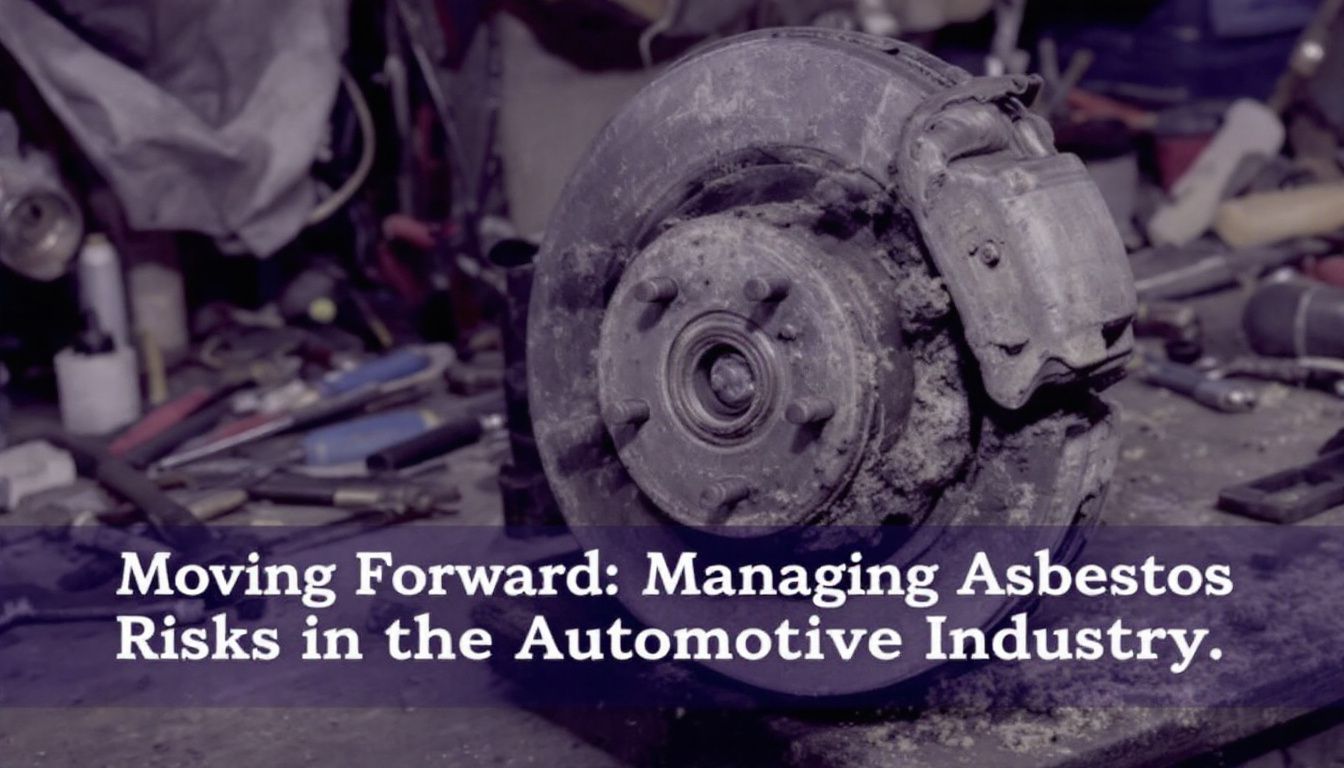
Why Health and Safety in the Automotive Industry Still Means Managing Asbestos
Decades after the UK banned asbestos in vehicles, workshops across the country are still dealing with the fallout. Older cars, classic vehicles, and imported parts continue to present genuine exposure risks — and the mechanics, restorers, and hobbyists handling them are frequently unaware of the danger sitting in their hands.
Health and safety in the automotive industry goes well beyond slips, trips, and manual handling. For anyone working on vehicles built before the late 1980s, asbestos remains one of the most serious occupational hazards on the workshop floor — and the law leaves no room to treat it as someone else’s problem.
The History of Asbestos in Vehicle Manufacturing
From the 1920s through to the late 1980s, asbestos was deeply embedded in vehicle production. Its heat resistance and durability made it the material of choice for high-friction components, and manufacturers relied on it at almost every stage of the process.
Parts commonly found to contain asbestos included:
- Brake linings and pads
- Clutch facings and discs
- Gaskets and seals
- Heat shields and insulation materials
- Exhaust manifold wrapping
Asbestos content in brake linings and clutch components could be substantial — its use was so thoroughly integrated into production that even after health warnings emerged, the industry was slow to change course.
The UK formally banned asbestos in vehicles by 1999. However, concerns have continued to surface about imported automotive parts containing asbestos even after that date — which means the risk has not entirely disappeared from modern workshops, particularly where cheaper aftermarket components are sourced internationally.
Health Risks Every Automotive Worker Needs to Understand
Asbestos fibres are microscopic. When asbestos-containing materials are disturbed — through sanding, grinding, blowing out brake dust, or removing a worn clutch — those fibres become airborne and invisible to the naked eye.
Once inhaled, they lodge permanently in lung tissue. The diseases that follow can take decades to develop, which is precisely what makes them so insidious. By the time symptoms appear, significant damage has already been done.
Mesothelioma
Mesothelioma is a cancer of the lining of the lungs and chest cavity. It is almost exclusively caused by asbestos exposure and carries a very poor prognosis. Symptoms — including chest pain, breathlessness, and persistent fatigue — typically don’t appear until the disease is well advanced.
Automotive workers who spent years working on brake and clutch components face an elevated risk of this disease. The latency period between first exposure and diagnosis can span 20 to 50 years, meaning workers exposed in the 1970s and 1980s are still receiving diagnoses today.
Lung Cancer and Asbestosis
Prolonged asbestos exposure also increases the risk of lung cancer, particularly in those who smoke. Asbestosis — a chronic scarring of the lung tissue — causes progressive breathlessness and significantly reduces quality of life over time.
Pleural plaques, whilst not cancerous themselves, indicate past asbestos exposure and are often discovered incidentally during investigations for other conditions. Their presence signals that more serious conditions may follow.
Risks for Hobbyists and DIY Mechanics
Professional mechanics are not the only people at risk. Anyone working on older vehicles at home — restoring a classic car, replacing brake pads on a vehicle from the 1980s, or stripping a clutch — faces the same exposure hazards, without the benefit of workplace safety systems or trained supervision.
Using compressed air to blow out brake dust is particularly dangerous. It disperses fibres across a wide area and creates a contaminated environment that affects not just the person doing the work, but anyone else nearby — including family members who happen to be in the garage.
UK Regulations Governing Asbestos in the Automotive Sector
Health and safety in the automotive industry is underpinned by robust UK legislation. Employers and duty holders cannot treat asbestos as a legacy problem that no longer requires active management — the law is unambiguous about their responsibilities.
The Control of Asbestos Regulations
The Control of Asbestos Regulations set out the legal framework for managing asbestos in all workplaces, including automotive workshops and garages. Key duties under the regulations include:
- Identifying whether asbestos-containing materials (ACMs) are present on the premises or in the materials being worked on
- Carrying out a suitable risk assessment before any work that could disturb ACMs
- Ensuring that workers likely to disturb asbestos are trained to an appropriate level
- Using correct control measures to prevent or minimise fibre release
- Disposing of asbestos waste in accordance with hazardous waste regulations
Failure to comply carries serious consequences. Employers found in breach can face unlimited fines and custodial sentences of up to two years. The regulations apply to every business operating in the sector, regardless of size.
HSE Guidance for Automotive Workplaces
The Health and Safety Executive (HSE) publishes specific guidance for the automotive sector, and HSG264 sets out the methodology for asbestos surveys — directly relevant to any garage or workshop operating from premises built before 2000.
If your workshop is located in an older building, the structure itself may contain asbestos in roofing sheets, floor tiles, pipe lagging, or ceiling panels — entirely separate from any asbestos risks in the vehicles being serviced. Both must be identified and managed under the same legal framework.
Managing Asbestos Risks in Automotive Workshops: Practical Steps
Understanding the risk is one thing. Putting effective controls in place is another. Here is what good asbestos management looks like in an automotive setting.
Worker Training
Every person working in an automotive environment where older vehicles are handled should receive asbestos awareness training. This is not optional — it is a legal requirement under the Control of Asbestos Regulations.
Training should cover:
- How to identify parts that may contain asbestos, including brake pads, clutch components, and gaskets
- The health risks associated with asbestos fibre inhalation
- Safe working methods that minimise dust generation
- Correct use of personal protective equipment (PPE)
- Procedures for reporting suspected ACMs
- Secondary exposure risks — how fibres can be carried home on clothing
Training should be refreshed regularly and updated whenever regulations or best practice guidance changes.
Safe Handling Methods
When working on components that may contain asbestos, these control measures are essential:
- Wet methods: Applying water or a wet paste to components before disturbing them suppresses fibre release. Never dry-grind or dry-sand suspect materials under any circumstances.
- HEPA vacuums: Standard vacuum cleaners will not capture asbestos fibres. Only a vacuum fitted with a HEPA filter rated for asbestos use is suitable for clean-up work.
- No compressed air: Never use an air line to blow out brake drums or clutch housings. This is one of the most dangerous practices in any automotive workshop.
- Negative-pressure enclosures: For higher-risk tasks, setting up a negative-pressure environment prevents contaminated air from spreading to other areas of the workshop.
- RPE: Appropriate respiratory protective equipment — at minimum a half-face respirator with a P3 filter — must be worn. Disposable overalls, gloves, and eye protection are also required.
- Safe disposal: Asbestos waste must be double-bagged in heavy-duty polythene bags, clearly labelled as asbestos waste, and disposed of via a licensed waste contractor.
Air Quality Monitoring
Regular air monitoring in workshop environments helps confirm that control measures are working effectively. If airborne fibre levels are elevated, it indicates that current procedures are inadequate and need immediate review.
Air monitoring must be carried out by a competent person with appropriate equipment and training. This is not something that can be assessed visually — asbestos fibres are entirely invisible to the naked eye.
Secondary Exposure: Protecting the Families of Automotive Workers
Asbestos fibres cling to clothing, hair, skin, and footwear. A worker who handles asbestos-containing brake components and then travels home without changing can inadvertently expose their family — including young children — to the same fibres they encountered at work.
This secondary exposure route has been linked to mesothelioma cases in people who have never set foot in a workshop. The risk is real and entirely preventable.
Practical steps to reduce secondary exposure include:
- Changing out of work clothing before leaving the workshop
- Showering before returning home where possible
- Washing work clothes separately from household laundry
- Keeping work footwear at the workplace
- Storing contaminated PPE in sealed bags at work, not in a personal vehicle
Employers have a duty to communicate these risks clearly and to provide facilities that make it practical for workers to follow them. This is not a courtesy — it is a legal obligation.
Legal Accountability and Compensation for Asbestos-Related Illness
Workers who develop asbestos-related diseases as a result of their employment have legal routes to seek compensation from former employers and, in some cases, manufacturers of asbestos-containing components. Product liability law means that manufacturers who supplied parts containing asbestos without adequate warning can be held accountable.
Several major automotive parts manufacturers have established compensation trusts to handle claims — a recognition of the scale of harm caused by decades of asbestos use in the industry.
If you or a family member has been diagnosed with mesothelioma, asbestosis, or another asbestos-related condition linked to automotive work, specialist legal advice should be sought without delay. Time limits apply to personal injury claims, and early action matters.
Asbestos in Automotive Workshop Buildings
The vehicles themselves are not the only asbestos concern for automotive businesses. Many garages, workshops, and dealerships operate from premises built during the period when asbestos-containing construction materials were in widespread use.
Asbestos may be present in:
- Corrugated roofing sheets (asbestos cement)
- Floor tiles and associated adhesives
- Pipe and boiler lagging
- Ceiling tiles and partition boards
- Textured coatings on walls and ceilings
If your workshop is in a building constructed before 2000, a professional asbestos survey is the only reliable way to establish what is present and where. For most non-domestic premises, managing asbestos is not just good practice — it is a legal duty under the Control of Asbestos Regulations.
An management survey is the standard starting point for any business that needs to identify and manage asbestos-containing materials in an occupied building. This type of survey locates ACMs that could be disturbed during normal occupation and day-to-day maintenance work.
Where premises are being refurbished or demolished, a demolition survey is required to locate all ACMs before any structural work begins. This is a legal requirement, not an optional precaution, and must be completed before contractors move in.
For automotive businesses in the capital, our asbestos survey London service provides fast, professional assessment of workshop and garage premises across Greater London. For businesses in the North West, our asbestos survey Manchester team covers the full Greater Manchester area and surrounding regions. And for automotive operators in the Midlands, our asbestos survey Birmingham service is available across the region.
The Future: Asbestos-Free Automotive Manufacturing
The automotive industry has made significant progress in eliminating asbestos from new vehicles and components. Modern brake and clutch systems use ceramic composites, aramid fibres, and other engineered materials that match or exceed the thermal performance of asbestos without the associated health risks.
Research into basalt fibre composites and plant-based polymers continues to advance, offering further options for manufacturers seeking durable, heat-resistant materials that carry no occupational health burden.
However, the shift to asbestos-free materials in new production does not resolve the legacy problem. There are millions of older vehicles still on UK roads, and many more in private collections, restoration projects, and salvage yards. The workshops servicing those vehicles will be managing asbestos risks for decades to come.
Good health and safety in the automotive industry means acknowledging that reality and putting the right systems in place to manage it — not waiting for a diagnosis to prompt action.
What Automotive Businesses Should Do Right Now
If you operate a garage, workshop, or dealership and have not yet addressed asbestos formally, the following steps represent a practical starting point:
- Commission a building survey if your premises were built before 2000. You need to know what is in the structure before you can manage it.
- Review your parts sourcing and ensure you have assurances from suppliers that components are asbestos-free. This is particularly relevant for imported aftermarket parts.
- Implement an asbestos register for your premises and keep it updated. This is a legal requirement for duty holders under the Control of Asbestos Regulations.
- Deliver asbestos awareness training to all staff who may encounter older vehicles or disturb building fabric during maintenance work.
- Review your PPE provision and ensure appropriate respiratory protective equipment is available, properly fitted, and actually used.
- Establish safe disposal routes for any asbestos waste generated during vehicle work or building maintenance.
None of these steps is optional. Each one is either a direct legal requirement or a practical measure that reduces the risk of enforcement action, civil liability, and — most importantly — serious harm to the people working in your business.
Frequently Asked Questions
Does health and safety in the automotive industry really still need to address asbestos?
Yes. The UK banned asbestos in vehicles by 1999, but millions of older vehicles remain in use and in workshops. Mechanics working on pre-1990s brake, clutch, and gasket components can still encounter asbestos-containing materials. Concerns about imported aftermarket parts also mean the risk has not entirely disappeared from modern workshops.
What are the most dangerous tasks for asbestos exposure in an automotive workshop?
The highest-risk activities include dry-grinding brake linings, using compressed air to blow out brake drums, removing clutch discs, and cutting or sanding gaskets. Any task that generates dust from suspect components carries a risk of fibre release. Wet methods and HEPA-filtered vacuums are essential controls for these activities.
Does my garage building need an asbestos survey?
If your premises were built before 2000, a professional survey is strongly recommended and may be a legal requirement if you are the duty holder for the building. Asbestos cement roofing, floor tiles, pipe lagging, and ceiling tiles are all common in older workshop buildings. A management survey will identify what is present and help you put a compliant management plan in place.
Can family members be affected by asbestos brought home from a workshop?
Yes. Secondary exposure — where fibres are carried home on clothing, skin, or footwear — has been linked to mesothelioma diagnoses in people with no direct occupational exposure. Changing work clothes before leaving the workshop, showering, and washing work clothing separately are all effective preventive measures. Employers are legally required to make these precautions practicable for their staff.
What type of asbestos survey does an automotive business need?
For an occupied, operational workshop, a management survey is the appropriate starting point. It identifies ACMs that could be disturbed during normal occupation and maintenance. If you are planning to refurbish or demolish the building, a demolition and refurbishment survey is required before any work begins. Supernova Asbestos Surveys carries out both types across the UK — call 020 4586 0680 or visit asbestos-surveys.org.uk to arrange a survey.
Speak to Supernova Asbestos Surveys
Supernova Asbestos Surveys has completed over 50,000 surveys across the UK. Our surveyors understand the specific challenges facing automotive businesses — from occupied workshop environments to complex older buildings — and we deliver clear, actionable results that help you meet your legal obligations.
Whether you need a management survey for an operational garage, a demolition survey ahead of a site redevelopment, or straightforward advice on what your duties are, our team is ready to help.
Call us on 020 4586 0680 or visit asbestos-surveys.org.uk to book a survey or speak to one of our team.