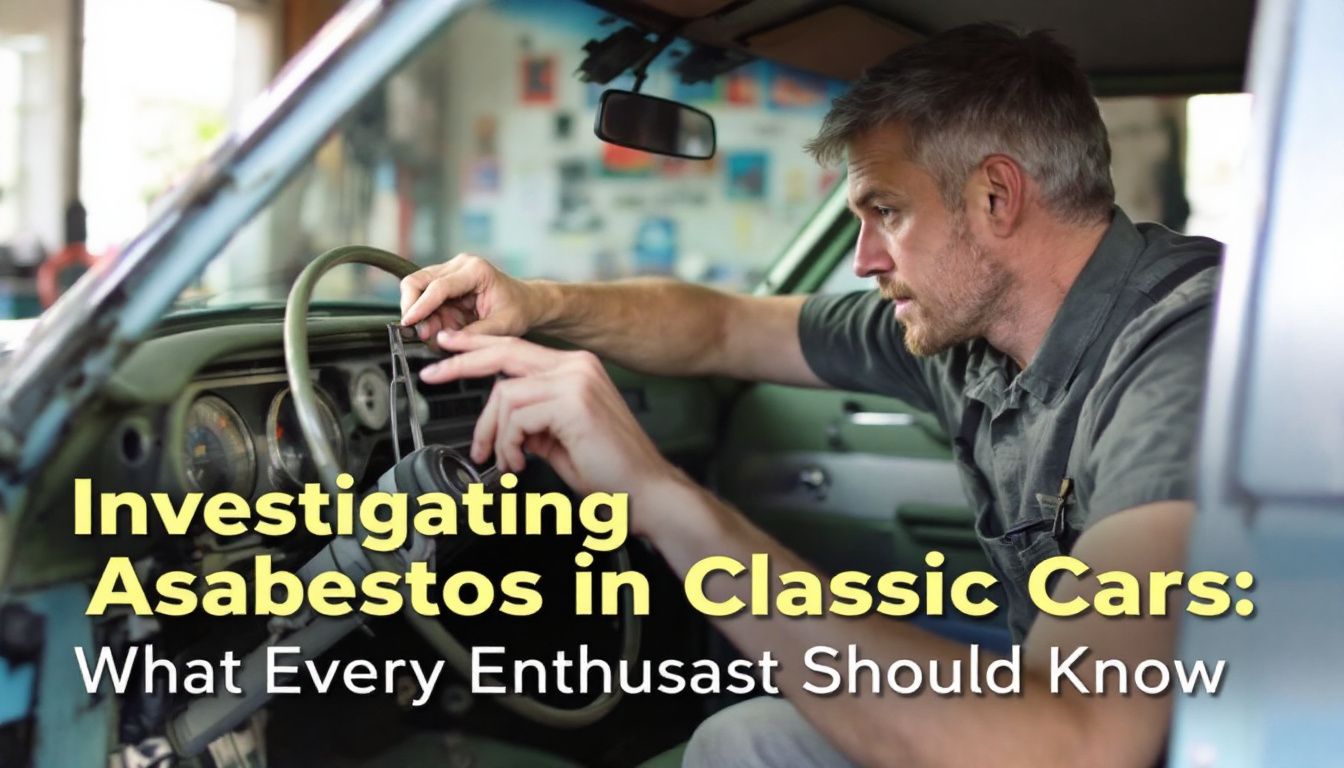
When Did They Stop Using Asbestos in Cars? What Classic Car Owners Must Know
If you own or restore a classic car, asbestos is not a piece of industrial history — it is a live hazard sitting in your garage right now. Understanding when they stopped using asbestos in cars is the first step to protecting yourself, your family, and anyone else who picks up a spanner near a vintage vehicle.
Asbestos was built into vehicles for decades because it handled heat and friction exceptionally well. The problem is that millions of those vehicles are still being driven, cherished, and restored — and they are still capable of releasing dangerous fibres the moment someone starts working on them.
When Did They Stop Using Asbestos in Cars? The UK Timeline
Asbestos found its way into vehicle manufacturing as far back as the late 1870s, but its use accelerated sharply through the mid-twentieth century. By the 1950s, 1960s, and 1970s, asbestos was embedded in a wide range of car components as standard industry practice.
In the UK, the import and supply of asbestos was banned in 1999. However, this did not mean asbestos disappeared from vehicles overnight. Pre-1973 vehicles were permitted to continue using existing asbestos-containing components until 2004 under transitional arrangements.
To answer the question directly: the UK automotive industry effectively stopped introducing new asbestos into vehicles during the 1980s and 1990s, but components manufactured before the ban were legally permitted in older vehicles until 2004. Any vehicle built before the mid-1980s should be treated as potentially containing asbestos until proven otherwise.
Why the Date Matters
If your vehicle is more than 40 years old, there is a realistic chance it contains original asbestos-containing materials that have never been replaced. Age alone does not neutralise asbestos — in fact, older and more degraded materials are often more dangerous because the fibres are more likely to become airborne when disturbed.
Restoration work, routine maintenance, or even a thorough clean can be enough to release fibres if you do not know what you are handling. This is not a theoretical risk — it is the kind of exposure that has caused serious illness in mechanics and hobbyists alike.
Which Car Parts Contained Asbestos?
Asbestos was not limited to one or two components. It appeared throughout vehicles wherever heat resistance, friction management, or insulation was needed. The following parts are most likely to contain asbestos in classic vehicles.
Brake Pads and Linings
Brake components are among the most common sources of asbestos in classic cars. Chrysotile (white) asbestos was widely used in moulded brake linings from the 1920s onwards because it handled the intense heat generated during braking without breaking down.
Drum brake systems, which were standard on most vehicles until disc brakes became widespread, almost universally used asbestos linings. If the brake pads or linings on your classic car have never been replaced, assume they contain asbestos.
Never use compressed air to blow dust off brake parts — this is one of the most dangerous things you can do during classic car restoration. Even light cleaning or inspection of these components can release fibres.
Clutch Facings
Clutch facings experienced the same heat and friction demands as brakes, and asbestos was the material of choice for decades. During removal or replacement of clutch components, asbestos dust can become airborne very quickly.
Mechanics who worked on vehicles professionally before the bans came into effect had significantly higher occupational exposure to asbestos than the general population — largely because of brake and clutch work carried out without adequate protection.
Gaskets and Seals
Engine gaskets — particularly head gaskets and valve cover gaskets — frequently contained asbestos because of its ability to withstand extreme temperatures and create reliable seals. These materials can appear entirely intact and undamaged while still being hazardous if disturbed.
When scraping old gaskets off engine components during a rebuild, fibres can be released. This is a task that requires proper precautions, not just a screwdriver and a pair of work gloves.
Bonnet Liners and Heat Shields
Bonnet liners were commonly manufactured with asbestos to insulate the engine bay and reduce heat and noise transfer into the cabin. These liners can deteriorate with age, and damaged or crumbling bonnet liners are a significant source of airborne fibres.
Heat shields around exhaust systems and engine components also frequently contained asbestos. Any work in the engine bay of a pre-1990 vehicle should be approached with this in mind.
Other Components to Be Aware Of
- Exhaust manifold gaskets — high heat exposure made asbestos the standard choice
- Firewall insulation — asbestos was used to protect the cabin from engine heat
- Floor underlay and insulation — some vehicles used asbestos-containing materials beneath carpets
- Transmission components — certain automatic transmission seals contained asbestos
The Health Risks of Asbestos Exposure During Car Restoration
Asbestos fibres are microscopic. You cannot see them, smell them, or feel them entering your lungs. That invisibility is precisely what makes them so dangerous — exposure can happen without any obvious warning signs, and the health consequences may not appear for decades.
Inhaling asbestos fibres can cause:
- Mesothelioma — an aggressive cancer of the lining of the lungs or abdomen, almost exclusively caused by asbestos exposure
- Asbestosis — a chronic scarring of lung tissue that progressively impairs breathing
- Lung cancer — asbestos is a known carcinogen, and the risk is significantly elevated in those who smoke
- Pleural plaques and thickening — changes to the lining of the lungs that can cause breathlessness
There is no safe level of asbestos exposure. Even a single significant exposure event carries risk, and repeated low-level exposure over time compounds that risk substantially.
Classic car enthusiasts who regularly work on vintage vehicles without knowing what materials they are handling face a genuine long-term health risk. Hobbyists are not protected by the occupational health frameworks that cover professional mechanics, which makes personal awareness even more critical.
How to Identify Whether Your Classic Car Contains Asbestos
You cannot identify asbestos by looking at it. Asbestos-containing materials look identical to non-asbestos alternatives in most cases. The only reliable way to confirm whether a material contains asbestos is laboratory analysis of a sample taken by a trained professional.
That said, you can use the following indicators to assess risk before commissioning a test:
- Age of the vehicle — any vehicle manufactured before the mid-1980s should be treated as potentially containing asbestos in brake, clutch, and gasket components
- Service history — if you cannot confirm that brake pads, clutch facings, and gaskets have been replaced with modern materials, assume the originals are still in place
- Condition of components — deteriorating, crumbling, or friable materials are higher risk regardless of whether you know they contain asbestos
- Vehicle origin and manufacturer — some manufacturers used asbestos more extensively than others; research the specific make and model if possible
If there is any doubt, commission professional asbestos testing before starting work. This is not an area where it pays to guess.
Safe Working Practices When Asbestos May Be Present
If you are working on a classic car and suspect asbestos-containing materials are present, the following precautions are not optional extras — they are the difference between safe restoration and a serious health incident.
Personal Protective Equipment
- Wear a properly fitted respirator with a P3 filter as a minimum — a standard dust mask offers no meaningful protection against asbestos fibres
- Use disposable coveralls to prevent fibres from contaminating your clothing and being carried into your home
- Wear nitrile gloves when handling suspected asbestos-containing parts
Controlling Dust and Fibres
- Dampen surfaces before handling them — wet methods significantly reduce the release of airborne fibres
- Never use compressed air, angle grinders, or high-speed tools on suspected asbestos materials
- Use a HEPA-filtered vacuum for cleaning — standard vacuum cleaners allow fibres to pass straight through and back into the air
- Use damp cloths rather than dry rags for wiping surfaces
Disposal of Asbestos-Containing Materials
- Seal removed components in double plastic bags, clearly labelled as asbestos waste
- Do not place asbestos waste in standard household or skip waste — it must be disposed of as hazardous waste in accordance with current regulations
- Contact your local authority or a licensed waste contractor for guidance on collection and disposal
After the Work
- Wash work clothing separately from household laundry, or dispose of disposable coveralls as hazardous waste
- Shower before leaving the work area if possible
- Keep children and pets away from any area where asbestos work has taken place
UK Regulations That Apply to Classic Cars and Asbestos
The Control of Asbestos Regulations set out the legal framework for managing asbestos in the UK. While these regulations primarily address asbestos in buildings and workplaces, the underlying duty of care applies to anyone handling asbestos-containing materials — including in a private garage.
The HSE’s HSG264 guidance document provides detailed advice on the identification of asbestos-containing materials. Professional surveyors working to this guidance can assess whether materials in a vehicle contain asbestos and advise on the appropriate course of action.
It is now illegal to use, supply, or install asbestos-containing components in any vehicle in the UK. If you are replacing parts on a classic car, you must use modern, asbestos-free alternatives regardless of the vehicle’s age or original specification.
Importing and Exporting Classic Cars: Asbestos Compliance
International trade in classic cars is subject to strict regulations in many jurisdictions. Australia, for example, has banned asbestos outright and requires proof that imported vehicles are free from asbestos-containing materials. Failing to comply can result in vehicles being refused entry, seized, or subject to significant fines.
If you are buying, selling, or transporting a classic car internationally, check the asbestos regulations of both the origin and destination country before proceeding. A professional asbestos testing inspection provides the documentation you may need to demonstrate compliance and avoid costly delays at the border.
Modern Replacement Materials for Asbestos Components
The good news for classic car enthusiasts is that modern replacement materials perform as well as — or better than — the original asbestos-containing components in most applications. There is no performance reason to retain asbestos parts.
Common alternatives include:
- Ceramic and semi-metallic brake pads — excellent heat resistance without the health risks
- Aramid fibre gaskets — used widely in modern engines as a direct replacement for asbestos gaskets
- Fibreglass and mineral wool insulation — suitable replacements for asbestos-containing bonnet liners and heat shields
- Modern clutch facings — manufactured to perform under the same conditions as original asbestos components
Replacing original asbestos-containing parts with modern alternatives not only removes the health risk but also ensures your vehicle remains legal to work on, sell, and export.
Why Professional Asbestos Testing Matters for Classic Car Owners
Many classic car enthusiasts assume that because their vehicle is a car rather than a building, professional asbestos surveying does not apply to them. This assumption is incorrect and potentially dangerous.
A qualified asbestos surveyor can take samples from suspected components, arrange laboratory analysis, and provide a clear written report confirming whether asbestos is present and in what condition. This gives you the information you need to make safe decisions about restoration, sale, or disposal.
If you are based in or around the capital and need expert support, an asbestos survey London from a qualified professional will give you the clarity you need before any restoration work begins. For those in the north-west, an asbestos survey Manchester is equally accessible, and for those in the Midlands, an asbestos survey Birmingham can be arranged quickly and professionally.
The cost of a professional assessment is minimal compared to the cost of a serious asbestos-related illness — or the legal liability that can arise from selling or passing on a vehicle with undisclosed asbestos-containing materials.
Buying or Selling a Classic Car? Asbestos Is Your Responsibility
If you are selling a classic car, you have a moral — and potentially legal — obligation to disclose known asbestos-containing materials to the buyer. Equally, if you are buying a classic car, you should ask for documentation confirming whether asbestos-containing components have been replaced.
A pre-purchase asbestos inspection is a sensible investment for any vehicle built before the mid-1980s. It protects you as a buyer, ensures you are not inheriting a hidden health liability, and gives you a clear picture of what restoration work lies ahead.
Classic car clubs and restoration specialists are increasingly aware of asbestos risks, but awareness alone is not sufficient. Only laboratory-confirmed testing can tell you definitively what you are dealing with.
Frequently Asked Questions
When did they stop using asbestos in cars in the UK?
The UK effectively stopped introducing new asbestos into vehicle manufacturing during the 1980s and 1990s, with the full import and supply ban coming into force in 1999. However, pre-1973 vehicles were permitted to retain existing asbestos-containing components until 2004 under transitional arrangements. Any vehicle built before the mid-1980s should be treated as potentially containing asbestos until professionally tested.
Which parts of a classic car are most likely to contain asbestos?
The most common sources of asbestos in classic vehicles are brake pads and linings, clutch facings, engine gaskets (particularly head gaskets), bonnet liners, heat shields, firewall insulation, and floor underlay. Brake and clutch components are considered the highest risk because they generate dust during normal use and during maintenance work.
Can I test my classic car for asbestos myself?
No. Asbestos cannot be identified visually, and attempting to take samples without proper training and equipment can itself cause dangerous fibre release. The only reliable method is laboratory analysis of samples taken by a qualified professional. A trained asbestos surveyor will take samples safely, have them analysed by an accredited laboratory, and provide you with a written report.
Is it illegal to drive or restore a classic car that contains asbestos?
Driving a classic car that contains asbestos in its original components is not automatically illegal, but it is illegal to use, supply, or install asbestos-containing replacement parts. If you are carrying out restoration work, you must use modern asbestos-free alternatives when replacing components. Knowingly exposing others to asbestos without taking appropriate precautions can also carry legal consequences under health and safety legislation.
Do I need a professional survey before working on my classic car?
If your vehicle was built before the mid-1980s and you cannot confirm that key components such as brakes, clutch, and gaskets have been replaced with modern materials, a professional asbestos inspection is strongly advisable before starting any work. This is particularly important if the work will involve disturbing brake or clutch components, scraping gaskets, or working with bonnet liners and insulation materials.
Get Expert Asbestos Support from Supernova
At Supernova Asbestos Surveys, we have completed over 50,000 surveys across the UK and our qualified surveyors understand the specific risks associated with classic vehicles and asbestos-containing materials. Whether you need a pre-restoration inspection, a pre-sale report, or documentation for international export, we can help.
Call us on 020 4586 0680 or visit asbestos-surveys.org.uk to discuss your requirements and arrange a survey at a time that suits you. Do not start work on a classic car until you know exactly what you are dealing with.