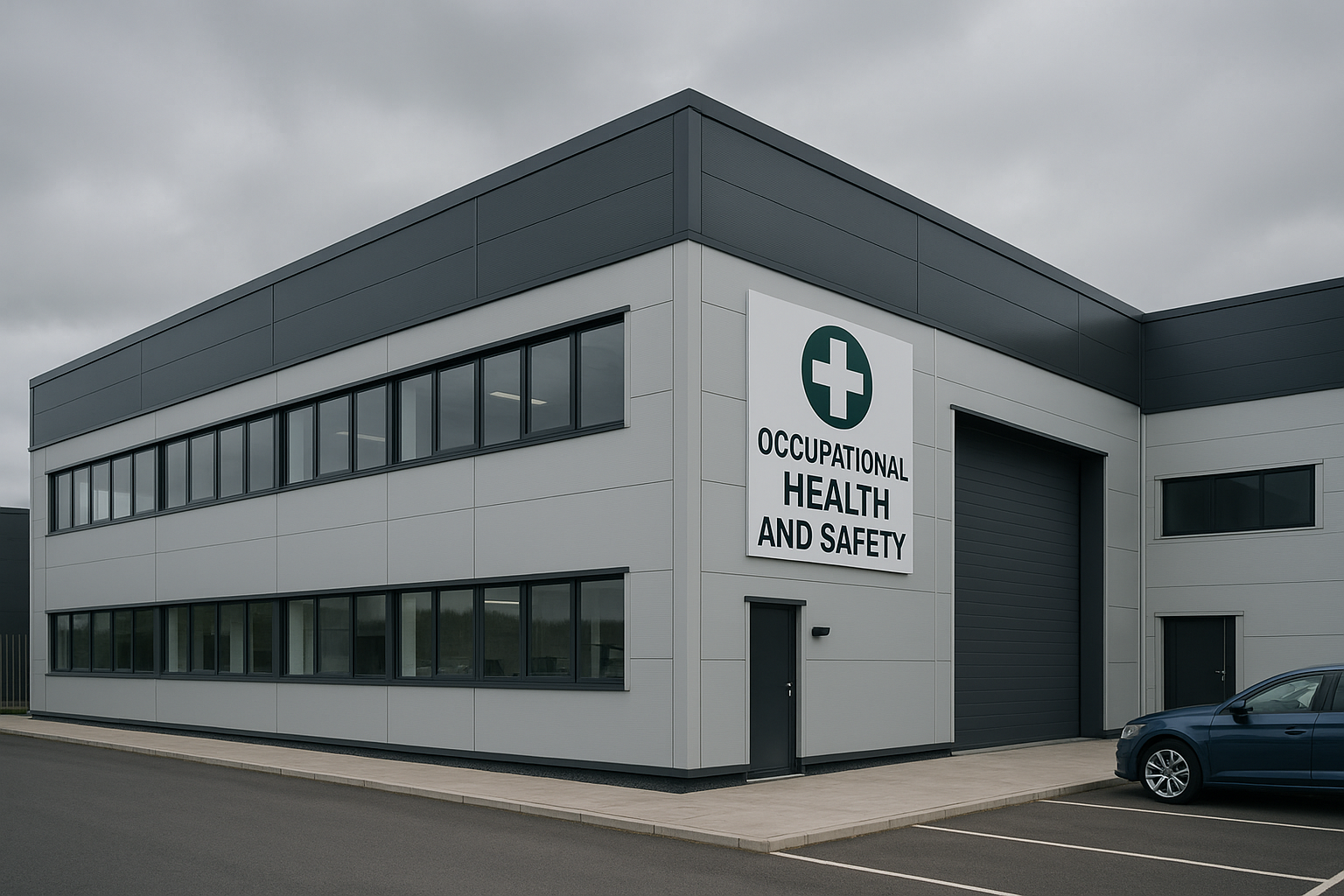
One burst airline, one unstable vehicle lift, one contractor drilling into an old ceiling panel: that is all it takes to turn a normal day in a garage into a serious incident. Occupational health and safety in automotive industry settings is not a paper exercise. It is the day-to-day system that protects technicians, valeters, panel beaters, apprentices, visitors and contractors while keeping your site compliant and operational.
Automotive workplaces are unusually complex. You may be dealing with moving vehicles, lifting equipment, flammable liquids, welding fumes, battery charging, paint products and asbestos in the same building. For workshop owners, depot managers and property professionals, the challenge is making sure these risks are controlled together rather than treated as separate issues.
That matters even more in older garages, MOT stations, body shops and industrial units. Many automotive premises were built or refurbished when asbestos-containing materials were still widely used. If the building fabric is not properly assessed and managed, routine maintenance can create avoidable exposure risks for your staff and anyone working on site.
Why occupational health and safety in automotive industry matters
Automotive work combines physical hazards, hazardous substances and building-related risks in one place. A safe workshop is not simply one with PPE on a shelf. It is one where the site layout, equipment, maintenance routines, contractor controls and emergency planning all work together.
When occupational health and safety in automotive industry environments is handled properly, you reduce downtime, prevent injuries and make it easier for staff to work consistently. You also put yourself in a far stronger position if an insurer, enforcing authority or client asks how risk is being managed.
In practical terms, good standards usually come down to a few basics done well:
- Clear risk assessments based on the actual site
- Regular inspection and maintenance of equipment
- Safe storage and handling of chemicals and fuels
- Strong housekeeping and traffic management
- Competent asbestos management for older premises
- Effective fire precautions and emergency procedures
- Training that reflects real tasks, not generic slides
If your workshop feels busy, reactive and slightly chaotic, that is usually the first sign your controls are not joined up. Start by looking at how the site actually operates during a normal day, not how procedures say it should operate.
The legal duties every automotive business should understand
Most workshops do not need more paperwork than necessary. They need the right paperwork, backed by controls that work on the ground. If you manage a non-domestic automotive premises, you have duties to protect employees and anyone else who may be affected by your activities.
The exact legal position depends on your role, but the main framework usually includes the following:
- Health and Safety at Work etc. Act for the overall duty to provide safe workplaces and systems of work
- Management of Health and Safety at Work Regulations for suitable and sufficient risk assessments and preventive measures
- COSHH for hazardous substances such as solvents, paints, oils, fumes and cleaning chemicals
- PUWER for safe use, condition and maintenance of work equipment
- LOLER where lifting equipment and lifting operations are involved
- Fire safety law requiring suitable precautions and a current fire risk assessment
- Control of Asbestos Regulations for the duty to manage asbestos in non-domestic premises where applicable
For older automotive buildings, asbestos duties are often the part people overlook. Yet they sit right at the heart of occupational health and safety in automotive industry environments, especially where maintenance, repairs and minor alterations happen regularly.
What the duty to manage asbestos means in practice
If you are responsible for a garage, workshop, depot or trade premises, you need to know whether asbestos is present, where it is, what condition it is in and how it will be managed. The usual starting point for an occupied building is a professional survey carried out in line with HSG264 guidance.
For most premises in normal use, a professional management survey is the appropriate first step. This identifies asbestos-containing materials that could be damaged or disturbed during routine occupation, maintenance or minor works.
Survey findings should then feed into an asbestos register and management plan. That register should be available to staff, contractors and anyone planning works that could affect the building fabric.
Common hazards affecting occupational health and safety in automotive industry workplaces
The biggest mistake in workshop safety is treating hazards in isolation. A contractor changing lights may disturb asbestos. A leaking fuel line can increase fire risk near hot works. Poor ventilation can make welding fumes, exhaust emissions and solvent vapours build up quickly.
Looking at the whole workplace is the only sensible approach. In most garages and depots, the real risk comes from several smaller failures lining up at the same time.
Vehicle lifts and raised loads
Vehicle lifts are essential, but they are also one of the most serious sources of risk in a workshop. Incorrect loading, poor maintenance, damaged components or rushed operation can lead to collapse, crushing injuries and major disruption.
To manage lift risks properly:
- Use competent engineers for inspection and maintenance
- Keep examination and service records organised and accessible
- Train staff on pre-use checks, load limits and correct positioning
- Take defective lifts out of service immediately
- Keep lift zones clear of obstructions and unnecessary foot traffic
- Review whether older lifts are still suitable for current vehicle types and workloads
If a lift has a history of faults, do not rely on temporary workarounds. Isolate it and get it assessed properly.
Chemicals, fumes and hazardous substances
Automotive operations involve oils, fuels, brake cleaners, degreasers, paints, adhesives, refrigerants, battery acid and more. Add exhaust emissions, welding fumes and dust from grinding, and the exposure picture becomes more complicated very quickly.
Your COSHH arrangements should include:
- An up-to-date inventory of hazardous products
- Current safety data sheets
- Task-specific COSHH assessments for higher-risk work
- Suitable ventilation or local exhaust extraction
- Clear storage and segregation arrangements
- Spill response procedures and equipment
- Suitable gloves, eye protection and skin protection where needed
If staff are using aerosols, solvents or coatings in enclosed areas, check whether ventilation is genuinely effective. Smell is not a reliable measure of safety.
Manual handling and awkward postures
Tyres, gearboxes, wheels, batteries and exhaust sections are heavy, awkward and often handled repeatedly. Even when the load is not extreme, poor positioning and repetitive strain can lead to musculoskeletal injuries.
Practical controls include:
- Using lifting aids, tyre handlers and transmission jacks
- Storing heavy items between knee and shoulder height where possible
- Reducing twisting and overreaching in workstations
- Breaking loads down where practical
- Reviewing repetitive tasks, not just one-off lifts
Training helps, but it does not fix a badly designed task. If people are routinely lifting awkward items in cramped spaces, the task needs redesigning.
Slips, trips and vehicle movement
Workshops are busy environments with hoses, tools, oil residues and moving vehicles. A simple slip or reversing incident can cause serious injury, especially where pedestrians and vehicles share space.
Good control measures include marked walkways, prompt clean-up of spills, sensible storage, one-way systems where possible and clear supervision of vehicle movements. If your reception, workshop and yard flow is chaotic, start by reviewing traffic routes rather than adding more warning signs.
Asbestos risks in garages, body shops and older workshops
Asbestos remains one of the most overlooked issues in occupational health and safety in automotive industry premises. Many managers focus on visible operational risks but forget the hidden risk in the building itself.
If your site was built or refurbished before 2000, asbestos could be present. It was widely used for fire resistance, insulation and durability, which means it can still be found in many automotive premises across the UK.
Where asbestos is often found in automotive buildings
Common asbestos-containing materials in garages and workshops include:
- Corrugated cement roof sheets and wall cladding
- Asbestos insulating board in partitions, fire breaks and ceiling panels
- Pipe insulation and boiler room materials
- Vinyl floor tiles and associated bitumen adhesives
- Soffits, rainwater goods and cement products
- Textured coatings in offices, reception areas and welfare rooms
Damage often happens during ordinary works rather than major refurbishment. Drilling for signage, replacing lights, fitting ductwork or running new cables can all disturb hidden materials if nobody has checked first.
That is why an asbestos management survey is so valuable in occupied automotive premises. It gives you the information needed to identify likely asbestos-containing materials, assess their condition and manage them properly.
Creating and maintaining an asbestos register
Your survey should lead to a live asbestos register, not a PDF that gets filed away and forgotten. The register should record:
- The location of suspected or confirmed asbestos-containing materials
- The type of material
- Its condition and risk of disturbance
- Recommended actions such as monitoring, encapsulation or removal
- Dates of review and any changes affecting the area
If the building changes, the register should change too. New partitions, altered layouts, roof repairs or service installations can all affect asbestos management arrangements.
For multi-site operators, consistency is essential. Whether you need an asbestos survey London service, an asbestos survey Manchester appointment or an asbestos survey Birmingham visit, the key is making sure each site follows the same standard for identification, recording and contractor communication.
Asbestos in older vehicles and legacy components
The building is not always the only source of concern. Some classic, vintage and imported vehicles may contain asbestos in friction materials or heat-resistant components. Workshops involved in restoration or specialist maintenance need to factor that into their risk assessments.
Historically, asbestos could be present in:
- Brake linings and brake shoes
- Clutch facings
- Gaskets and seals
- Heat shields and insulation materials
This is a distinct but related part of occupational health and safety in automotive industry work. Staff may be highly alert to workshop hazards while overlooking risks from the vehicle components themselves.
Safe handling of suspect legacy parts
If you are dealing with older components and cannot rule out asbestos, avoid dry brushing, compressed air cleaning and aggressive abrasion. Those methods can release fibres into the air and spread contamination.
Safer steps include:
- Segregating dusty tasks into controlled areas
- Using wet cleaning methods where appropriate
- Using suitable class H vacuum equipment where required
- Briefing staff on what suspect components may look like
- Arranging testing of suspect materials if there is uncertainty
- Using suitable respiratory protective equipment where the risk assessment requires it
If you are unsure whether the risk lies in the building, the vehicle or both, get competent advice before work starts. Assumptions are where exposure incidents begin.
Risk assessments that work in the real world
Good risk assessments are site-specific. They reflect how the workshop actually operates, not how a template says it should operate. In automotive settings, that means looking at movement, equipment, substances, building condition and contractor activity together.
A useful assessment process will usually review:
- Workshop layout and traffic routes
- Pedestrian segregation from active work zones
- Lift use, maintenance and examination arrangements
- COSHH storage and ventilation
- Hot works controls
- Fire precautions and escape routes
- Condition of building materials and known asbestos risks
- Contractor access and permit arrangements
- Welfare facilities and housekeeping standards
- Emergency response procedures
One of the simplest improvements is to walk the site during normal operations with a supervisor, technician and maintenance contact. You will often spot practical issues in ten minutes that never appear in a desktop review.
Contractor control is where many sites slip
Contractors can create serious risk if they arrive without clear information, especially in older premises. Before any intrusive work starts, they should know whether asbestos is present, what areas are restricted and what permit or authorisation process applies.
A sensible contractor control process should include:
- Checking the scope of works before anyone starts
- Reviewing the asbestos register for the affected area
- Confirming whether further survey work is needed
- Briefing contractors on local hazards, traffic routes and emergency procedures
- Monitoring the work rather than assuming the paperwork is enough
This is one of the most practical ways to strengthen occupational health and safety in automotive industry premises. Many asbestos incidents happen during minor works because someone assumed the area was clear.
Fire, emergency planning and site coordination
Automotive sites deal with ignition sources and combustible materials every day. Fuel vapours, paint products, battery charging, hot works and waste storage all increase the chance of a fire starting and spreading quickly.
That makes emergency planning a core part of occupational health and safety in automotive industry management, not a separate compliance exercise. If your fire precautions are weak, every other control on site is under pressure.
Practical fire precautions for workshops
- Keep escape routes clear and clearly marked
- Store flammable liquids in suitable containers and locations
- Control hot works with permits where necessary
- Maintain extinguishers and alarm systems properly
- Separate waste materials and remove them regularly
- Review battery charging areas for ventilation and ignition control
- Train staff on shutdown, evacuation and first response arrangements
If your workshop has changed use over time, revisit your fire arrangements. A former light industrial unit used as a vehicle repair workshop may need different controls than the building was originally designed for.
Training, supervision and safety culture on busy automotive sites
Even well-written procedures fail if supervisors are stretched and new starters learn by copying bad habits. Training needs to be relevant to the actual jobs people do, the equipment they use and the building they work in.
For most sites, that means covering:
- Safe use of lifts and workshop equipment
- COSHH controls and correct PPE use
- Manual handling for routine tasks
- Housekeeping and spill response
- Vehicle movement rules
- Asbestos awareness for anyone who may disturb the fabric of the building
- Emergency procedures and reporting arrangements
Supervisors should also know how to challenge unsafe shortcuts early. If people are bypassing controls to save a few minutes, the issue is usually operational pressure, poor planning or unclear accountability.
Simple ways to improve standards fast
If you need practical wins rather than a full system overhaul, start here:
- Inspect the workshop floor, stores and yard at the start of each day
- Tag out defective equipment immediately
- Check extraction and ventilation systems are actually being used
- Review your asbestos information before maintenance tasks begin
- Update risk assessments when the site layout or workflow changes
- Keep service records, training records and survey documents easy to find
These steps are not glamorous, but they prevent a large share of avoidable incidents. Strong occupational health and safety in automotive industry settings usually looks like disciplined routine rather than dramatic interventions.
How property managers and multi-site operators should approach compliance
If you oversee several automotive properties, consistency matters just as much as technical quality. One site with a good asbestos register and clear contractor controls does not protect the rest of the estate if another building has outdated survey information and no clear process for minor works.
A practical multi-site approach should include:
- A standard format for surveys, registers and management plans
- Clear responsibility for reviewing asbestos information
- A trigger process for refurbishment or intrusive maintenance
- Consistent contractor induction requirements
- Routine checks that local managers are following the same system
This is where external support can save time and reduce risk. A competent surveying partner can help create a repeatable process rather than leaving each site to interpret its duties differently.
Frequently Asked Questions
Why is occupational health and safety in automotive industry settings more complex than in many other workplaces?
Automotive premises often combine moving vehicles, lifting operations, hazardous substances, hot works and building-related risks such as asbestos. These hazards interact with each other, so controls need to be coordinated rather than managed in isolation.
When does a garage or workshop need an asbestos survey?
If you are responsible for a non-domestic building and asbestos could be present, you need enough information to manage that risk. In occupied premises, a survey in line with HSG264 is often the starting point, particularly where routine maintenance or contractor work may disturb the fabric of the building.
Can asbestos still be a risk in automotive work if the building seems modern?
Yes. Some sites have older extensions, hidden service areas or refurbished sections containing asbestos-containing materials. There can also be asbestos risks from legacy vehicle components such as older brakes, clutches, gaskets or heat-resistant parts.
What should be included in an asbestos register for an automotive premises?
An asbestos register should record the location of suspected or confirmed asbestos-containing materials, the material type, condition, risk of disturbance and recommended actions. It should also be reviewed and updated when the building changes or new information becomes available.
What is the first practical step to improve occupational health and safety in automotive industry premises?
Start with a site walk-through during normal operations. Review traffic routes, equipment condition, housekeeping, hazardous substance controls, fire precautions and any asbestos information for the building. That usually reveals the most urgent gaps far faster than relying on paperwork alone.
If you manage a garage, workshop, depot or automotive property and need clear advice on asbestos risks, surveys or compliance, speak to Supernova Asbestos Surveys. We provide professional surveying support nationwide, including management surveys for occupied premises. Call 020 4586 0680 or visit asbestos-surveys.org.uk to arrange the right survey for your site.