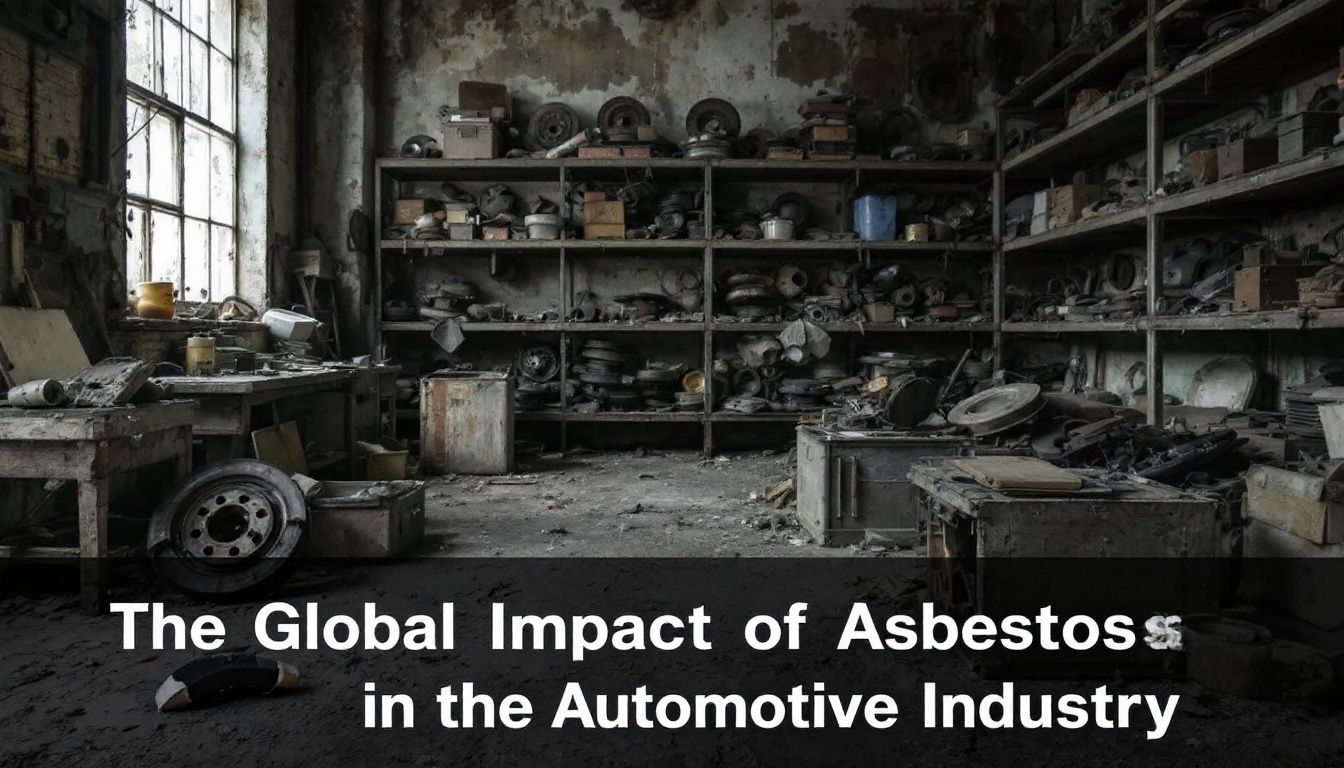
Friction Materials Such as Brake and Clutch Linings Often Contain Asbestos — And the Consequences Are Still Being Felt
Friction materials such as brake and clutch linings often contain asbestos, which can cause mesothelioma, a type of fatal cancer. That single fact has shaped decades of industrial tragedy — mechanics breathing invisible fibres in poorly ventilated garages, factory workers receiving terminal diagnoses forty years after their last day on the shop floor.
If you work with older vehicles, manage a garage, or restore classic cars, understanding how asbestos became embedded in the automotive industry is not optional. It is essential.
Why Asbestos Was Used in Automotive Friction Materials
Asbestos was not used carelessly. It was chosen deliberately because it solved real engineering problems. Brake and clutch components generate enormous heat through friction, and asbestos handled that heat exceptionally well — it was cheap, durable, and widely available.
The material could absorb and dissipate heat without degrading, acted as a thermal barrier in engine bays, and reduced fire risk in high-temperature environments. For manufacturers prioritising performance and cost, it was an obvious choice throughout the mid-twentieth century.
The bitter irony is that a material deployed as a safety feature turned out to be one of the most lethal industrial substances ever used. The engineering logic was sound. The human cost was catastrophic.
Which Vehicle Components Contained Asbestos?
Between the 1960s and 1980s, asbestos appeared across a wide range of vehicle components. The scale of use was extraordinary, and millions of classic and vintage vehicles still contain these original materials today.
- Brake linings — containing up to 65% asbestos by composition
- Brake pads — which could hold up to 60% asbestos
- Clutch facings — typically 35% to 60% asbestos content
- Gaskets — used throughout engine systems for heat resistance and sealing
- Engine insulation panels — reducing heat transfer into the cabin
- Heat shields — protecting components from exhaust systems
- Transmission components — reinforced with asbestos for wear resistance
- Seals in pumps and pipes — exploiting asbestos’s chemical resistance in fuel and coolant systems
The breadth of this list matters. Working on an older vehicle is not simply a question of avoiding the brakes. Asbestos could be present throughout the engine bay, beneath the vehicle, and within the cabin structure itself.
The Health Impact: Why Mesothelioma Is the Central Concern
Friction materials such as brake and clutch linings often contain asbestos, which can cause mesothelioma — a cancer of the lining of the lungs, abdomen, or heart. Mesothelioma is almost exclusively linked to asbestos exposure, has a latency period that can exceed four decades, and remains incurable in the vast majority of cases.
When brake pads or clutch linings are worn, repaired, or replaced, asbestos fibres become airborne. These fibres are microscopic — they cannot be seen, smelled, or tasted. Once inhaled, they lodge permanently in lung tissue, where they cause scarring, inflammation, and eventually malignant disease.
The long gap between exposure and diagnosis is one of the most dangerous aspects of this disease. A mechanic who routinely worked with brake linings in the 1970s may not receive a mesothelioma diagnosis until decades later — by which point treatment options are severely limited and the prognosis is typically poor.
The Full Range of Diseases Linked to Automotive Asbestos Exposure
Mesothelioma is the most well-known consequence, but it is not the only one. Mechanics and factory workers exposed to asbestos in friction materials face a range of serious conditions:
- Mesothelioma — a fatal cancer of the mesothelial lining, almost always caused by asbestos
- Lung cancer — risk significantly elevated by asbestos exposure, particularly in smokers
- Asbestosis — progressive scarring of lung tissue that reduces breathing capacity over time
- Pleural plaques — thickening of the pleural membrane, indicating past exposure
- Pleural effusion — fluid accumulation around the lungs causing breathlessness
None of these conditions are minor. All of them are preventable — which is why understanding the risk is so critical for anyone working in or around automotive environments today.
What the Evidence Shows About Automotive Workers
Research has consistently identified automotive workers as a high-risk group for asbestos-related disease. Studies have found elevated rates of mesothelioma among mechanics compared to the general population — a direct consequence of routine exposure to brake dust and clutch debris during repair work.
Brake dust itself is a particular hazard. Analysis of brake dust from asbestos-containing components has shown it can carry high concentrations of chrysotile fibres. The historical practice of blowing brake dust out with compressed air was one of the most dangerous activities a mechanic could perform — dispersing fibres directly into the breathing zone in a confined, poorly ventilated space.
The absence of visible dust gave workers a false sense of safety. In reality, the most dangerous asbestos fibres are too small to see with the naked eye. Workers had no way of knowing they were being harmed.
How Asbestos Exposure Happens in Automotive Settings
Understanding the specific exposure routes helps explain why automotive work carried such significant risk — and why that risk persists in certain contexts today.
During Brake and Clutch Repairs
Removing worn brake pads, turning brake drums, and replacing clutch facings all disturb asbestos-containing materials. Without proper controls, fibres become airborne immediately.
The confined space of a workshop — or a pit beneath a vehicle — concentrates those fibres in exactly the area where a mechanic is working and breathing. Safe alternatives to compressed air cleaning were available — wet cleaning methods and HEPA-filtered vacuum systems — but were rarely adopted without regulatory pressure. The risk was real long before it was widely acknowledged.
During Classic and Vintage Vehicle Restoration
This is where risk persists most acutely today. Vehicles manufactured before the late 1990s may still have their original asbestos-containing friction components in place. Enthusiasts and specialist mechanics working on classic car restoration may encounter brake linings and clutch facings that have never been replaced.
Without awareness of the risk, these individuals may disturb asbestos-containing materials without any protective measures whatsoever. The HSE’s guidance under the Control of Asbestos Regulations is clear: any work liable to disturb asbestos must be approached with appropriate controls, regardless of how informal the work appears.
If you operate a classic vehicle workshop in a major city, professional asbestos advice is readily available. A specialist asbestos survey London provider can assess your premises for asbestos-containing materials in the building fabric itself — not just in the vehicles — ensuring your workshop is properly managed.
In Developing Countries and Unregulated Markets
In parts of the world where asbestos bans have not been implemented, asbestos-containing friction materials are still manufactured and sold. Workers in these regions face daily exposure with little or no protection, and the global death toll from asbestos continues to rise as a result.
Imported vehicles also present a hidden risk. There have been documented cases of vehicles arriving in markets where asbestos is banned — complete with asbestos-containing components. This cross-border contamination is difficult to police and represents an ongoing challenge for regulators worldwide.
Regulations and Bans: The UK and Global Picture
The UK banned the use of asbestos in vehicles in 1999, bringing automotive components in line with the broader prohibition on asbestos use across British industry. The Control of Asbestos Regulations provide the current legal framework governing how asbestos must be managed wherever it is found, and the HSE’s guidance document HSG264 sets out the standards for asbestos surveys and material assessment.
Other countries followed different timelines:
- Australia — total ban on asbestos use, including automotive parts, enforced from December 2003
- European Union — asbestos banned across all industries, including vehicles, by 2005
- Canada — strict prohibition on asbestos in vehicle manufacturing introduced in December 2018
- South Korea — asbestos banned in most products, including automotive, by 2009
- Brazil — national ban on chrysotile asbestos use enacted in November 2017
- New Zealand — import and use of asbestos products, including car parts, prohibited from October 2016
Despite these bans, enforcement remains uneven. Countries with strict domestic bans still face risks from imported vehicles and parts manufactured elsewhere. Asbestos does not respect borders, and a global problem demands coordinated global regulation.
For workshops and garages operating in the UK’s major industrial cities, compliance with the Control of Asbestos Regulations is non-negotiable. Businesses in the North West can access specialist support through an asbestos survey Manchester provider to ensure their premises meet current legal requirements.
What Replaced Asbestos in Friction Materials?
The automotive industry has largely moved away from asbestos, driven by regulation and liability rather than voluntary action. The transition has been broadly successful in countries where bans are properly enforced, though the legacy of decades of use continues to affect workers diagnosed today.
The materials that replaced asbestos in brake pads and clutch linings include:
- Aramid fibres — synthetic fibres with high heat resistance and good friction characteristics
- Fibreglass — used in some friction material composites
- Ceramic composites — increasingly common in high-performance braking systems
- Steel fibres — used in heavy-duty applications where thermal performance is critical
These alternatives are not without their own environmental and health considerations, but none carry the catastrophic disease burden associated with asbestos. For anyone purchasing replacement brake or clutch components today, ensuring parts are sourced from reputable suppliers with clear material declarations is a sensible precaution.
Environmental Contamination from Automotive Asbestos
The impact of asbestos in the automotive sector extends beyond individual health. Manufacturing facilities that produced asbestos-containing friction materials released fibres into the air, water, and soil surrounding them. Communities near these sites faced — and in some cases continue to face — elevated health risks from environmental contamination.
Brake dust released during normal vehicle use has also been identified as a source of environmental asbestos contamination, particularly in areas with heavy traffic. Rainwater washes brake residue from road surfaces into drainage systems, potentially carrying fibres into waterways and soil.
Improper disposal of asbestos-containing automotive parts compounds the problem. When old brake pads or clutch components are discarded without following hazardous waste protocols, fibres can leach into the environment over time. Safe disposal is not optional — it is a legal requirement under UK waste regulations.
Protecting Workers: What Good Practice Looks Like
For anyone working with older vehicles where asbestos-containing friction materials may be present, the following controls represent the minimum standard required to protect health — not optional extras.
- Never use compressed air to clean brake assemblies — this remains one of the highest-risk activities in automotive work
- Use wet cleaning methods or HEPA-filtered vacuum systems specifically designed for asbestos-containing dust
- Wear appropriate respiratory protective equipment — at minimum an FFP3 mask, and ideally a half-face respirator with a P3 filter for higher-risk tasks
- Work in well-ventilated areas — and never in enclosed spaces without extraction equipment
- Treat all pre-2000 friction components as potentially asbestos-containing until proven otherwise through sampling and analysis
- Dispose of waste correctly — asbestos-containing materials must be double-bagged, clearly labelled, and disposed of at a licensed facility
- Keep records — document any suspected or confirmed asbestos-containing materials encountered during vehicle work
These controls are not bureaucratic formalities. They are the difference between safe work and a diagnosis that arrives thirty years later.
Getting Your Workshop Assessed
If you manage an automotive workshop, garage, or restoration facility, the building itself may also contain asbestos — not just the vehicles inside it. Asbestos was widely used in construction materials, including roof sheeting, floor tiles, ceiling tiles, and pipe insulation, throughout the same era that saw its peak use in vehicle components.
Under the Control of Asbestos Regulations, duty holders are legally required to manage asbestos in non-domestic premises. That obligation applies to garages, workshops, and commercial premises of all sizes. Businesses in the West Midlands can arrange a professional asbestos survey Birmingham to identify and assess any asbestos-containing materials in their premises, ensuring legal compliance and protecting the health of everyone who works there.
A management survey will identify the location, condition, and type of any asbestos-containing materials present. Where materials are in poor condition or likely to be disturbed by maintenance or renovation work, a refurbishment and demolition survey provides the more detailed assessment required before work begins.
The Answer Is Asbestos — And the Question Still Matters
The answer to the question — friction materials such as brake and clutch linings often contain what, which can cause mesothelioma? — is unambiguously asbestos. Not solvent, not toxic oil, not hydraulic fluid. Asbestos. A naturally occurring mineral fibre that was woven into the fabric of twentieth-century industry and is still claiming lives today.
Understanding that fact is not just academic. It has direct practical implications for mechanics, restorers, workshop managers, and anyone responsible for maintaining older vehicles. The fibres released when asbestos-containing brake and clutch components are disturbed are invisible, odourless, and permanently damaging. The diseases they cause are serious, progressive, and largely irreversible.
The good news is that the risks are manageable — provided they are taken seriously. Proper controls, appropriate protective equipment, professional surveys, and correct disposal procedures all make a meaningful difference. What does not help is assuming the risk has gone away simply because asbestos was banned in new vehicle components decades ago. The legacy materials are still out there, and they still matter.
Frequently Asked Questions
Friction materials such as brake and clutch linings often contain what substance that causes mesothelioma?
The correct answer is asbestos. Asbestos was widely used in brake linings, clutch facings, and other friction materials throughout the mid-twentieth century because of its exceptional heat resistance. When these components are disturbed, microscopic asbestos fibres become airborne and can be inhaled, where they cause mesothelioma — a fatal cancer of the lining of the lungs, abdomen, or heart. The other options sometimes listed in this context — solvent, toxic oil, and hydraulic fluid — do not cause mesothelioma.
Are asbestos-containing brake and clutch components still found in vehicles today?
Yes. Although the UK banned asbestos in new vehicle components in 1999, millions of classic and vintage vehicles manufactured before that date may still have their original asbestos-containing friction materials in place. Anyone working on vehicles from the 1960s, 1970s, or 1980s should treat brake linings, clutch facings, and related components as potentially asbestos-containing until proven otherwise through professional sampling and analysis.
What should a mechanic do if they suspect asbestos in a vehicle’s braking system?
Stop work immediately and do not use compressed air to clean the area. The component should be treated as asbestos-containing until a sample has been taken and analysed by an accredited laboratory. In the meantime, use wet cleaning methods or a HEPA-filtered vacuum system, wear appropriate respiratory protective equipment, and ensure the work area is well ventilated. If you are unsure, seek advice from a qualified asbestos professional before proceeding.
Does mesothelioma only affect people who worked directly with asbestos?
No. Mesothelioma can also affect people who experienced secondary or para-occupational exposure — for example, family members who washed the work clothes of mechanics or factory workers, or individuals who lived near asbestos manufacturing facilities. Even relatively low levels of exposure carry a risk, which is why the Control of Asbestos Regulations impose strict controls on any work liable to disturb asbestos-containing materials.
How does Supernova Asbestos Surveys help businesses in the automotive sector?
Supernova Asbestos Surveys provides management surveys, refurbishment and demolition surveys, and asbestos sampling services for garages, workshops, and commercial premises of all sizes across the UK. Our surveys identify the location, type, and condition of any asbestos-containing materials in your building, helping you meet your legal obligations under the Control of Asbestos Regulations and protect the health of your staff and customers. With over 50,000 surveys completed nationwide, we have the experience to support automotive businesses in managing their asbestos risk effectively.
Speak to Supernova Asbestos Surveys
If you manage an automotive workshop, garage, or commercial premises and need expert asbestos advice, Supernova Asbestos Surveys is here to help. We are the UK’s leading asbestos surveying company, with over 50,000 surveys completed across the country.
Whether you need a management survey to meet your legal obligations, a refurbishment survey before renovation work begins, or professional sampling to identify whether specific materials contain asbestos, our accredited surveyors can provide the answers you need.
Call us on 020 4586 0680 or visit asbestos-surveys.org.uk to book your survey or request a quote. Do not wait for a problem to become a crisis — get the right information now.